Table of Contents
- What Is a Giant Ball Pit for Adults?
- Why Adults May Benefit From Ball Pits
- Giant Ball Pit for Adults in Sensory Rooms
- Giant Ball Pit for Adults With Autism
- Giant Ball Pit for Adults With Anxiety or Stress
- Adult Ball Pit for Occupational Therapy
- Adult Ball Pit for Day Programs and Group Homes
- Size Considerations for an Adult Ball Pit
- How Deep Should an Adult Ball Pit Be?
- How Many Balls Are Needed for a Giant Ball Pit?
- Ball Size for Adult Ball Pits
- Safety Features for a Giant Ball Pit for Adults
- Entry and Exit Planning
- Cleaning a Giant Ball Pit for Adults
- Ball Pit Hygiene Rules
- Giant Ball Pit for Adults vs Crash Pad
- Giant Ball Pit for Adults vs Soft Play Area
- Choosing a Giant Ball Pit for Adults
- Adult Ball Pit for Home Sensory Rooms
- Adult Ball Pit for Clinics and Therapy Centers
- Adult Ball Pit for Schools and Transition Programs
- Adult Ball Pit for Relaxation Rooms
- Sensory Benefits of a Giant Ball Pit
- Tactile Input
- Proprioceptive Input
- Vestibular Input
- Visual Input
- Deep Pressure
- Activities for a Giant Ball Pit for Adults
- Safety Tips for Adult Ball Pit Activities
- Signs a Ball Pit May Be Helpful
- Signs a Ball Pit May Not Be the Right Fit
- Products to Pair With a Giant Ball Pit for Adults
- Giant Ball Pit for Adults Buying Checklist
- Where to Buy Sensory Room and Ball Pit Support Products Online
- How Ball Pits Can Help Autistic Adults
- FAQs
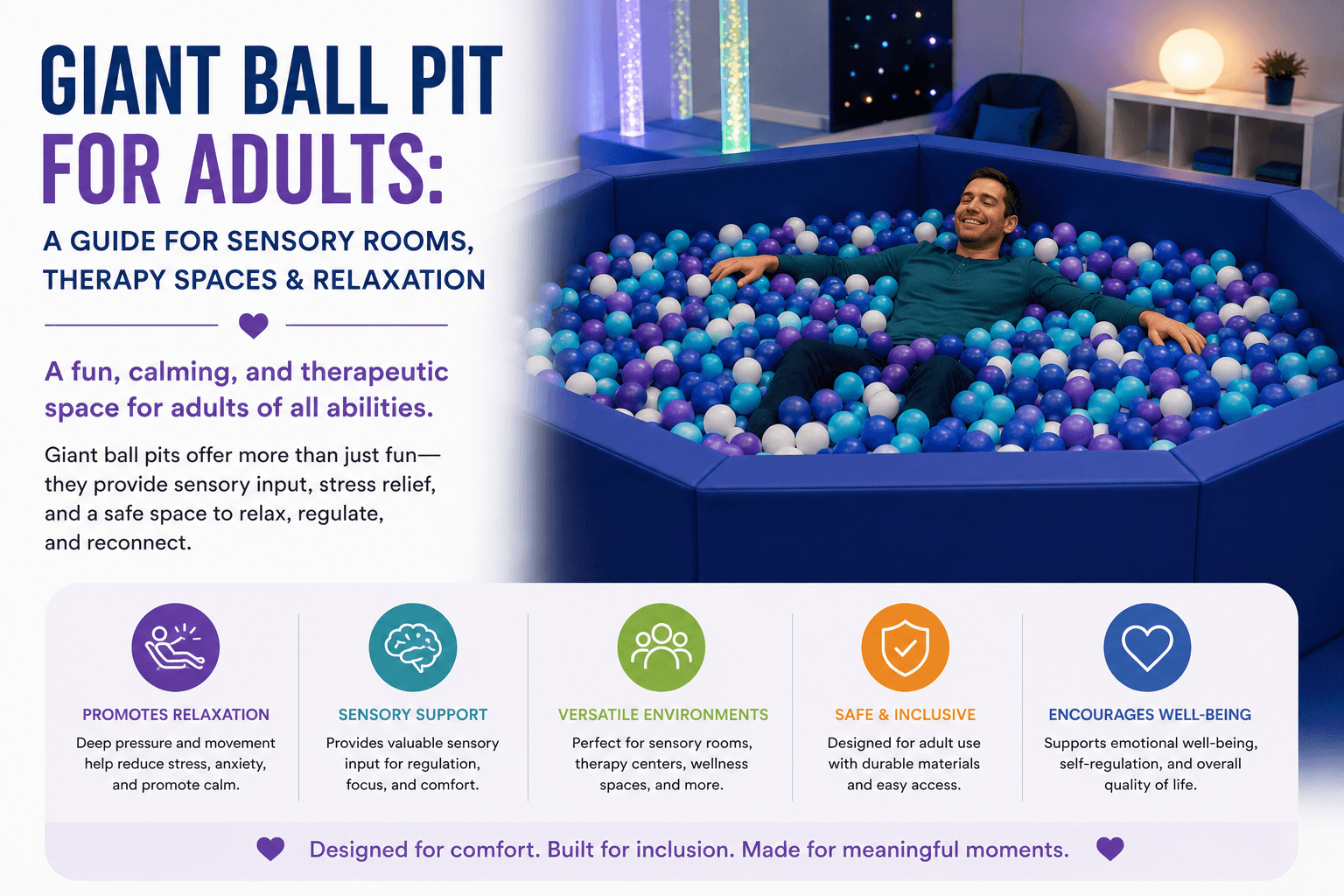
A giant ball pit for adults can create a fun, calming, and sensory rich space for movement, relaxation, deep pressure, body awareness, and therapeutic play. While ball pits are often associated with children, many adults with sensory processing needs, autism, anxiety, developmental disabilities, physical disabilities, stress, or occupational therapy goals may also benefit from a larger ball pit designed with adult size, comfort, and safety in mind.
For homes, sensory rooms, therapy clinics, schools, day programs, group homes, and care facilities, an adult sized ball pit can offer a supportive place to decompress, move, stretch, sit, roll, or enjoy tactile input. The key is choosing the right size, depth, padding, ball quantity, safety setup, and supervision plan for the adults who will use it.
Families, caregivers, therapists, and organizations can explore related sensory and therapy products through eSpecial Needs, including sensory room equipment, sensory motor tools, tactile stimulation products, calming sensory products, crash pads, and soft play products.
What Is a Giant Ball Pit for Adults?
A giant ball pit for adults is a larger ball pit space designed to accommodate adult bodies, adult weight, and adult movement needs. It may be used for sensory input, relaxation, occupational therapy, recreation, adaptive play, or calming routines.
An adult ball pit may be used for:
Sensory regulation
Deep pressure input
Tactile stimulation
Body awareness
Relaxation
Stress relief
Occupational therapy activities
Adaptive recreation
Group home sensory spaces
Adult day program activities
Therapy clinic use
Calming room design
Movement breaks
Social participation
A giant ball pit should be planned differently than a small children’s ball pit. Adults need more space, stronger materials, better support, safer entry and exit, and enough balls to create meaningful sensory input.
Giant Budget Ball Pit
$1,718.95
$1,935.00
The Giant Budget Ball Pit is a durable, large-format ball pit designed for sensory play, active movement, and therapy use in homes, schools, clinics, and care settings. It offers the size and function of a larger recreational ball pit for… read more

Why Adults May Benefit From Ball Pits
Adults need sensory support too. Many adults seek calming input, movement, tactile feedback, and safe spaces for regulation. A giant ball pit for adults can provide a unique mix of pressure, texture, movement resistance, and playful engagement.
A ball pit may help support:
Calming after overstimulation
Tactile sensory input
Proprioceptive input
Body awareness
Relaxation routines
Gentle movement
Stress reduction
Sensory seeking needs
Therapy goals
Mood support
Social interaction
Adaptive recreation
Safe sensory exploration
For adults with autism, developmental disabilities, anxiety, or sensory processing differences, a ball pit can be part of a broader sensory room plan.
Giant Ball Pit for Adults in Sensory Rooms
A giant ball pit can be a central feature in an adult sensory room. It offers a full body sensory experience that is different from fidgets, weighted lap pads, or sensory seating. The balls provide tactile input against the skin and body, while the depth of the pit can offer gentle pressure and resistance.
An adult sensory room with a ball pit may also include:
Crash pads
Soft floor mats
Bean bags
Weighted products
Bubble tubes
Fiber optic lights
Sensory wall panels
Calming lights
Tactile toys
Swings when appropriate
Soft play blocks
Quiet seating
Visual timers
Helpful eSpecial Needs categories include sensory room equipment, bubble tubes, sensory wall panels, weighted products, and sensory seating.
Giant Ball Pit for Adults With Autism
A giant ball pit for adults with autism may provide a calming or organizing sensory experience, depending on the individual’s preferences. Some autistic adults enjoy the pressure, enclosure, texture, and repetitive movement of lying, sitting, or gently moving through the balls.
A ball pit may support autistic adults who:
Seek deep pressure
Enjoy tactile input
Need a calm down space
Prefer enclosed sensory environments
Benefit from predictable movement
Need a break from noise or crowds
Enjoy sensory play
Use sensory rooms for regulation
Need adaptive recreational activities
Not every autistic adult will enjoy a ball pit. Some may dislike the texture, sound, depth, or enclosed feeling. Offer choice, respect preferences, and never force use.
Giant Ball Pit for Adults With Anxiety or Stress
A ball pit can create a relaxing sensory environment for some adults who experience stress, anxiety, or sensory overload. The gentle pressure of the balls and the ability to sink into a soft space may feel grounding.
A calming ball pit setup may include:
Soft lighting
Quiet environment
Slow breathing routine
Weighted blanket nearby
Low stimulation colors
Comfortable entry point
Optional music
Clear time limits
Visual timer
Calm seating nearby
For calming spaces, explore calming sensory products, weighted products, and sensory room equipment.
Adult Ball Pit for Occupational Therapy
Occupational therapists may use ball pits as part of sensory motor activities, body awareness work, tactile tolerance, motor planning, and regulation support. A giant ball pit for adults can be useful in clinics or programs serving older teens and adults who need larger equipment.
Therapy activities may include:
Reaching for objects hidden in the balls
Rolling side to side
Sitting balance practice
Gentle weight shifting
Deep pressure breaks
Tactile exploration
Visual scanning tasks
Motor planning activities
Transition support
Relaxation after active therapy
Social interaction games
Therapy use should be individualized. Some adults may need assistance entering and exiting, while others may need supervision for safety.
Adult Ball Pit for Day Programs and Group Homes
Adult day programs, group homes, and care facilities may use a giant ball pit as part of a sensory room, activity area, calming room, or adaptive recreation program.
A ball pit may support:
Sensory breaks
Group activities
Individual regulation plans
Relaxation routines
Movement opportunities
Social engagement
Recreation
Tactile exploration
Occupational therapy carryover
Staff supported sensory plans
Facilities should create clear rules for use, cleaning, supervision, transfer support, and safe entry and exit.
Size Considerations for an Adult Ball Pit
A giant ball pit for adults should be large enough for the user to sit, recline, or move comfortably. A small ball pit may not provide enough space or sensory input for an adult.
When planning size, consider:
User height
User weight
Number of users at one time
Whether users will sit or lie down
Space for caregiver assistance
Entry and exit needs
Room size
Ball depth
Wall height
Floor padding
Accessibility
A larger pit may feel more immersive, but it also requires more space, more balls, and more cleaning.
How Deep Should an Adult Ball Pit Be?
Depth depends on safety, sensory goals, and user needs. A shallow pit may be easier to enter and exit. A deeper pit may provide more full body sensory input but can also be harder to move through.
Depth considerations include:
Mobility level
Balance
Transfer ability
Fall risk
Sensory preference
Supervision
Ability to stand or crawl out
Need for caregiver assistance
Safety of wall height
Adults who have limited mobility may need a shallower pit or a transfer friendly design.
How Many Balls Are Needed for a Giant Ball Pit?
A giant ball pit for adults usually requires many more balls than a small children’s ball pit. The exact number depends on pit length, width, depth, ball size, and desired fullness.
A lightly filled pit may offer less pressure and easier movement. A fuller pit may offer more sensory input and a more immersive feel.
When planning ball quantity, consider:
Pit dimensions
Ball diameter
Desired depth
User body size
Sensory goals
Cleaning capacity
Storage needs
Replacement balls
For adult use, choose balls that are durable, smooth, and appropriate for repeated use.
Ball Size for Adult Ball Pits
Ball size affects comfort, depth, and sensory feel. Larger balls may be easier to clean and more comfortable for some adults. Smaller balls may create more pressure points and a denser sensory experience.
Consider:
Comfort
Durability
Cleaning needs
Choking safety for settings with mixed age users
Sensory preference
Pit depth
Replacement availability
Facility hygiene needs
In adult care settings, durability and cleaning are especially important.
Safety Features for a Giant Ball Pit for Adults
Safety should be planned before installation or purchase. Adult users may have different mobility, balance, sensory, and transfer needs.
Important safety features may include:
Soft padded walls
Padded floor
Stable pit structure
Non slip surrounding floor
Safe entry point
Clear exit path
Appropriate wall height
Enough caregiver access
Clean balls
Supervision plan
Transfer support when needed
No sharp edges
Space away from hazards
Weight appropriate materials
The ball pit should be used according to the needs of the adults using it.
Entry and Exit Planning
Getting in and out of a giant ball pit can be the hardest part for adults with mobility challenges. A safe entry and exit plan is essential.
Consider:
Low entry wall
Transfer platform
Nearby grab bar when appropriate
Caregiver assistance
Clear floor space
Wheelchair access nearby
Stable seating close to the pit
Non slip flooring
Therapist recommendations
Staff training
If a user cannot safely enter or exit, the ball pit design should be adjusted or another sensory option may be better.
Cleaning a Giant Ball Pit for Adults
Cleaning is one of the most important parts of maintaining a ball pit. Balls, floor padding, walls, and surrounding surfaces should be cleaned regularly, especially in shared spaces.
Cleaning considerations include:
Number of users
Facility hygiene policy
Skin sensitivities
Body fluids risk
Food and drink rules
Cleaning product safety
Ball washing routine
Drying process
Damaged ball replacement
Surface disinfection
Storage during deep cleaning
Shared ball pits should have clear cleaning schedules and rules.
Ball Pit Hygiene Rules
To keep the ball pit clean and comfortable, create simple hygiene rules.
Rules may include:
No food or drinks in the ball pit
Shoes off before entry
Clean socks required
Do not use when sick
Cover open wounds
Clean spills immediately
Remove damaged balls
Wash hands before and after use
Follow facility cleaning routines
Limit use after heavy sweating until cleaned
Care settings should create written policies for staff and users.
Giant Ball Pit for Adults vs Crash Pad
A giant ball pit and crash pad both provide sensory input, but they are different tools.
A ball pit may offer:
Tactile input
Full body pressure from balls
Enclosed sensory experience
Visual and playful interaction
Resistance during movement
Hidden object activities
A crash pad may offer:
Deep pressure
Landing support
Jumping or crashing activities
Easier cleaning
Less setup
Smaller space needs
Many sensory rooms use both. Browse crash pads and sensory motor tools to compare options.
Giant Ball Pit for Adults vs Soft Play Area
A soft play area may include foam mats, wedges, tunnels, blocks, and padded shapes. A ball pit is usually more focused on tactile and immersive sensory input.
Soft play may support:
Climbing
Crawling
Balance
Motor planning
Strength
Movement exploration
Ball pits may support:
Tactile exploration
Deep pressure
Relaxation
Body awareness
Sensory regulation
For adult sensory rooms, a combination of soft play products, sensory motor tools, and a ball pit may create a more complete experience.
Choosing a Giant Ball Pit for Adults
When choosing a giant ball pit for adults, consider the user, setting, and purpose.
Ask:
Who will use the ball pit?
Is it for one adult or multiple adults?
Will it be used at home, clinic, school, group home, or day program?
Does the user need transfer support?
Is the user able to enter and exit safely?
What sensory input is desired?
How much floor space is available?
How deep should it be?
How many balls are needed?
How will it be cleaned?
Who will supervise use?
Are there behavior or safety concerns?
Are there mobility limitations?
Is a therapist recommending the setup?
A good adult ball pit should be sensory friendly, size appropriate, cleanable, and safe for the intended users.
Adult Ball Pit for Home Sensory Rooms
A home sensory room may include a giant ball pit if there is enough space and a clear safety plan. It can be used for relaxation, sensory breaks, movement, and calming routines.
Home planning tips:
Measure the room carefully
Leave open space around the pit
Choose easy clean materials
Use padded flooring nearby
Set rules for use
Keep food and drinks away
Supervise when needed
Choose a safe depth
Store extra balls properly
Plan cleaning time
Consider privacy and comfort
A home ball pit should fit the household’s daily routine, not create more stress.
Adult Ball Pit for Clinics and Therapy Centers
Therapy clinics may use a giant ball pit for sensory integration activities, occupational therapy, adult therapy programs, or adaptive recreation.
Clinic planning tips:
Choose durable materials
Create cleaning policies
Train staff
Check accessibility
Use clear safety rules
Keep transfer space open
Limit user count
Match activities to therapy goals
Monitor sensory responses
Document precautions when needed
A clinic ball pit should support therapy, not simply recreation.
Adult Ball Pit for Schools and Transition Programs
Older students in special education, transition programs, or adult life skills programs may benefit from sensory spaces designed for larger bodies. A child sized ball pit may not be appropriate for teens or young adults.
A giant ball pit may support:
Sensory breaks
Transition routines
Regulation plans
Life skills program spaces
Occupational therapy
Adaptive recreation
Social interaction
Movement opportunities
Schools should consider supervision, hygiene, accessibility, and IEP related sensory supports when appropriate.
Adult Ball Pit for Relaxation Rooms
Some adult sensory rooms are designed for relaxation rather than active play. In these spaces, a ball pit may be used as a quiet body awareness and calming tool.
A relaxation focused setup may include:
Dim lighting
Soft music
Bubble tube nearby
Weighted products
Comfortable room temperature
Gentle sensory tools
Low noise rules
Limited users at one time
Visual timer
Calm transition plan
Explore calming sensory products and sensory room equipment for related ideas.
Sensory Benefits of a Giant Ball Pit
A giant ball pit for adults may provide several forms of sensory input.
Tactile Input
The balls touch the skin and body, creating tactile stimulation. This may be calming for some adults and alerting for others.
Proprioceptive Input
Moving through the balls requires pushing, shifting, rolling, and using body strength. This can provide resistance and body awareness input.
Vestibular Input
Changing body position in the pit may provide mild movement and balance input, depending on how the person moves.
Visual Input
The color, motion, and texture of the balls may create visual interest. Some users enjoy watching the balls move around them.
Deep Pressure
The surrounding balls may create a gentle feeling of pressure and enclosure, which some adults find grounding.
Activities for a Giant Ball Pit for Adults
Activities should match the adult’s mobility, comfort, and therapy goals.
Ideas include:
Quiet sitting
Deep breathing
Gentle rolling
Reaching for colored balls
Sorting balls by color
Finding hidden objects when safe
Naming colors
Social turn taking
Body awareness games
Slow stretching
Therapy guided movement
Relaxation after a busy activity
Visual scanning tasks
Gentle weight shifting
Activities should be respectful, age appropriate, and based on the adult’s interests.
Safety Tips for Adult Ball Pit Activities
Follow these safety tips:
Supervise as needed
Limit the number of users
Avoid rough play
Keep the area clear
Use safe entry and exit
Watch for signs of distress
Stop if the user feels trapped
Avoid use during dizziness or nausea
Clean regularly
Remove broken balls
Keep shoes and sharp objects out
Follow therapist recommendations
Respect the user’s choice to leave
The ball pit should feel safe and enjoyable.
Signs a Ball Pit May Be Helpful
A giant ball pit for adults may be helpful if the person:
Seeks deep pressure
Enjoys tactile input
Likes enclosed sensory spaces
Benefits from sensory breaks
Needs calming routines
Enjoys adaptive recreation
Responds well to body awareness activities
Needs a safe sensory room feature
Enjoys gentle movement
Participates in occupational therapy
A trial session can help determine whether the ball pit is a good fit.
Signs a Ball Pit May Not Be the Right Fit
A ball pit may not be appropriate if the person:
Feels trapped or anxious in the balls
Cannot enter or exit safely
Has medical restrictions that make floor level activity unsafe
Has open wounds that cannot be covered
Has high infection risk
Throws balls unsafely
Puts balls in the mouth
Becomes overstimulated
Has severe balance risks without support
Cannot be supervised when needed
Choose another sensory tool if the ball pit causes stress or safety concerns.
Products to Pair With a Giant Ball Pit for Adults
A giant ball pit can work well with other sensory room products.
Helpful pairings include:
Crash pads
Soft play mats
Sensory wall panels
Bubble tubes
Fiber optic lights
Weighted lap pads
Bean bag seating
Sensory swings when appropriate
Tactile toys
Visual timers
Calm lighting
Adaptive seating
Browse sensory room equipment, soft play products, crash pads, weighted products, and sensory wall panels.
Giant Ball Pit for Adults Buying Checklist
Before buying or building a giant ball pit for adults, ask:
Is the ball pit large enough for adult users?
Is the structure strong and padded?
Is there enough room for safe movement?
Can users enter and exit safely?
Is caregiver access available?
What ball depth is safest?
How many balls are needed?
Are the balls durable and cleanable?
Is the floor padded?
Is there a cleaning plan?
Will the pit be used by one person or shared?
Are there supervision rules?
Is it appropriate for the user’s mobility level?
Has a therapist recommended any precautions?
A well planned ball pit can be a valuable sensory room tool.
Where to Buy Sensory Room and Ball Pit Support Products Online
Families, caregivers, therapists, schools, clinics, and organizations can shop sensory room and adaptive play products through eSpecial Needs.
Helpful categories include:
Calming Sensory Products
Crash Pads
Weighted Products
Sensory Seating
These collections can help create sensory rooms, calming spaces, therapy areas, adult day program rooms, and adaptive recreation spaces for people with sensory and movement needs.
How Ball Pits Can Help Autistic Adults
A giant ball pit for adults can be a fun and meaningful sensory room feature when it is planned with adult size, safety, accessibility, cleaning, and sensory needs in mind. For adults with autism, sensory processing differences, developmental disabilities, anxiety, or therapy goals, a ball pit may provide tactile input, deep pressure, body awareness, relaxation, and adaptive recreation.
The best adult ball pit is not just bigger. It should be safer, stronger, easier to clean, easier to enter and exit, and matched to the adults who will use it. Families, therapists, schools, day programs, group homes, and care facilities should consider user needs, space, depth, supervision, hygiene, and therapy guidance before choosing a setup.
eSpecial Needs offers sensory room equipment, soft play products, crash pads, tactile tools, calming sensory products, sensory seating, and weighted products that can help build supportive sensory spaces for adults, teens, and children with diverse needs.
FAQs
What is a giant ball pit for adults?
A giant ball pit for adults is a larger sensory play and relaxation space designed to fit adult users comfortably. It may be used in sensory rooms, therapy clinics, adult day programs, group homes, schools, or home sensory spaces to support tactile input, body awareness, deep pressure, relaxation, and adaptive recreation.
Can adults use ball pits for sensory support?
Yes. Adults can use ball pits for sensory support when the setup is designed for adult size, safety, comfort, and accessibility. Many adults with autism, sensory processing differences, developmental disabilities, anxiety, or occupational therapy goals may enjoy the pressure, texture, and calming input of a ball pit.
Who may benefit from a giant ball pit for adults?
A giant ball pit for adults may benefit adults with autism, developmental disabilities, sensory processing challenges, anxiety, stress, motor planning needs, low body awareness, or occupational therapy goals. It may also be useful in adult day programs, therapy spaces, group homes, transition programs, and calming sensory rooms.
How can a giant ball pit help adults with autism?
A giant ball pit may help some autistic adults by providing tactile input, deep pressure, a defined sensory space, and a predictable calming activity. Some autistic adults may find the feeling of being surrounded by balls relaxing or grounding. Others may not enjoy the texture or depth, so choice and comfort should always guide use.
Is a giant ball pit for adults good for anxiety?
A giant ball pit may help some adults with anxiety feel calmer by offering gentle pressure, tactile input, and a quiet space for relaxation. A calming setup may include soft lighting, reduced noise, a visual timer, nearby weighted products, and clear entry and exit routines.
What sensory input does a ball pit provide?
A ball pit can provide tactile input from the feel of the balls, proprioceptive input from pushing and moving through the balls, deep pressure from being surrounded by them, and visual input from the movement and color of the balls. Some users may also receive mild vestibular input when rolling, shifting, or changing position.
How big should a ball pit for adults be?
A ball pit for adults should be large enough for the user to sit, recline, move, and exit safely. The right size depends on the user’s height, weight, mobility, whether one or more adults will use it, and how much caregiver access is needed. Adult ball pits usually need more space, stronger materials, and more balls than children’s ball pits.
How deep should an adult ball pit be?
The depth should match the user’s mobility, balance, comfort, and safety needs. A shallower ball pit may be easier to enter and exit, while a deeper ball pit may offer stronger sensory input. Adults with limited mobility or balance concerns may need a lower depth and caregiver support.
What safety features should an adult ball pit have?
Important safety features may include padded walls, a padded floor, stable construction, non slip flooring around the pit, enough open space, easy entry and exit, caregiver access, durable balls, and clear supervision rules. Facilities should also have written hygiene and use guidelines.
Can a giant ball pit be used in a group home?
Yes. Group homes may use a giant ball pit as part of a sensory room, calming space, or adaptive recreation area. Staff should create rules for supervision, hygiene, scheduling, transfer support, cleaning, and safe use.
How do you clean a giant ball pit for adults?
Cleaning should include regularly washing or disinfecting the balls, wiping the padded walls and floor, removing damaged balls, and following facility hygiene policies. Shared ball pits should have a written cleaning schedule and clear rules about food, drinks, shoes, illness, and body fluids.