Table of Contents
- What Is the Jungle Jumparoo?
- Why the Jungle Jumparoo Is Different From a Traditional Trampoline
- How the Jungle Jumparoo Supports Sensory Motor Play
- Vestibular Input Through Bouncing and Movement
- Proprioceptive Input Through Climbing, Gripping, and Hanging
- Gross Motor Benefits of the Jungle Jumparoo
- Fine Motor and Hand Strength Benefits
- Best Places to Use the Jungle Jumparoo
- Jungle Jumparoo for Home Play
- Jungle Jumparoo for Schools and Therapy Spaces
- Jungle Jumparoo for Sensory Rooms and Sensory Motor Areas
- Who May Benefit From the Jungle Jumparoo?
- Important Safety Considerations
- Jungle Jumparoo Specifications
- How to Set Up a Movement Friendly Play Area
- How to Add the Jungle Jumparoo to a Sensory Diet
- Indoor vs. Outdoor Use
- What to Pair With the Jungle Jumparoo
- Is the Jungle Jumparoo Right for Your Child?
- Shop at eSpecial Needs
- FAQs
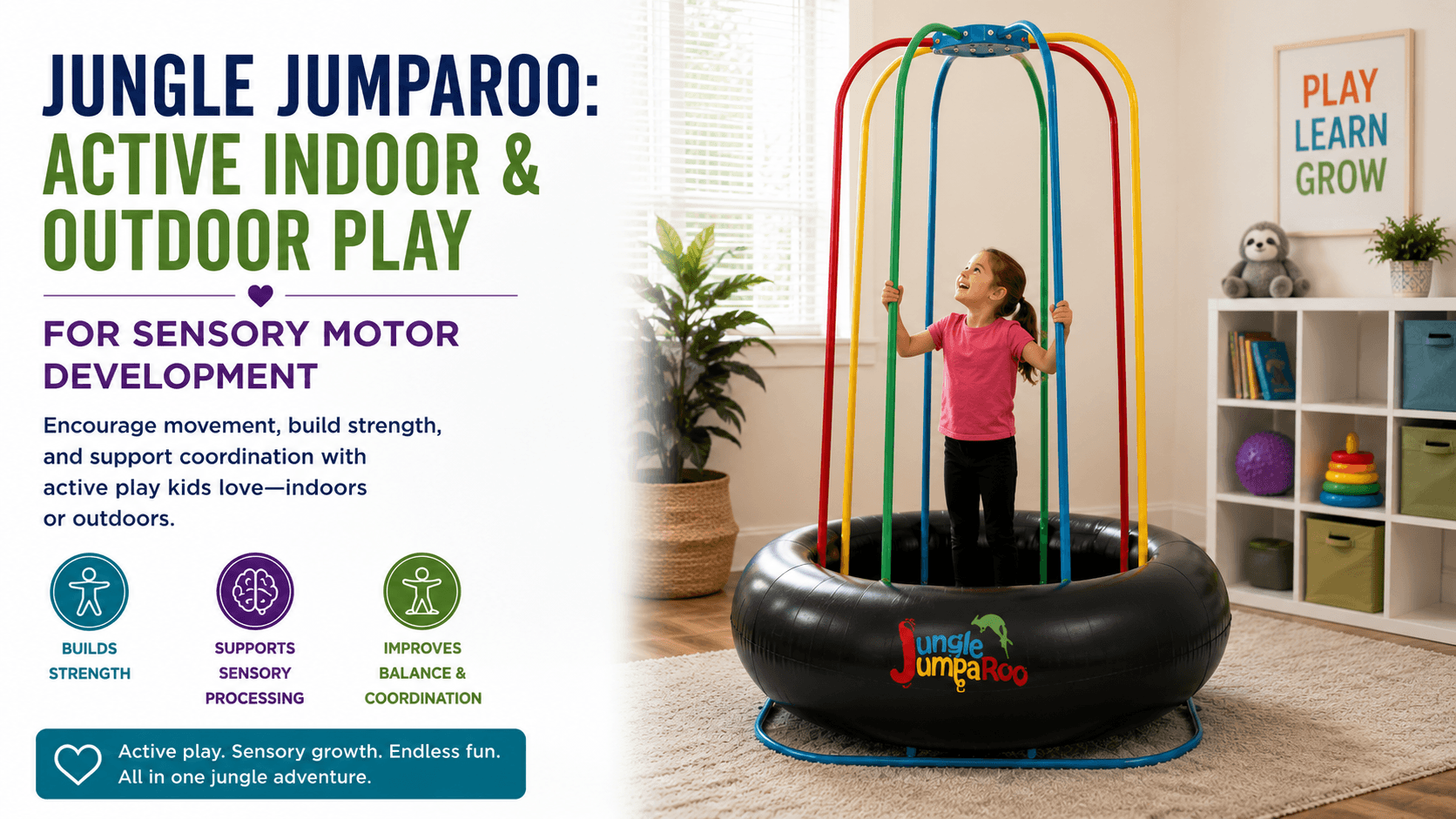
The Jungle Jumparoo is an indoor and outdoor bouncing and climbing play structure designed to give kids a fun, movement rich way to jump, climb, hang, grip, and play. For children who love active movement or need frequent sensory motor breaks, the Jungle Jumparoo can be a playful way to support balance, coordination, strength, body awareness, and gross motor confidence.
Unlike a traditional trampoline, the Jungle Jumparoo combines bouncing with climbing and gripping. It features a sturdy steel frame with easy grip bars surrounding an inflatable inner tube, giving children multiple ways to move and explore. Kids can hold the bars while bouncing, climb around the frame, hang, swing, or create their own movement based games.
This makes the Jungle Jumparoo a strong option for families, schools, therapy spaces, recreation centers, sensory motor rooms, and active play areas. It can be used in appropriate indoor or outdoor spaces and is designed for multiple children to enjoy at the same time.
Shop the Jungle Jumparoo, or explore more Sensory Motor Tools, Indoor Therapy Gyms, Soft Play, Sensory Room Equipment, and Adapted Toys, Games and Equipment at eSpecial Needs.
What Is the Jungle Jumparoo?
The Jungle Jumparoo is an active play structure that blends the movement benefits of a bouncing toy with the climbing and gripping opportunities of a play frame. Instead of a flat trampoline surface, it uses an inflatable inner tube surrounded by a durable steel frame.
Children can use it for:
Bouncing
Climbing
Hanging
Gripping
Swinging
Balancing
Jumping games
Imaginative play
Sensory motor breaks
Group play
The open design encourages creative movement. A child may bounce while holding the bars, climb around the frame, hang from the structure, or use it as part of an obstacle course. This flexibility makes it useful for children who need more than one type of movement input.
Jungle Jumparoo – Indoor & Outdoor Bouncing and Climbing Play Structure
$449.00
The Jungle Jumparoo gives kids a fun, movement-rich way to bounce, climb, hang, and play while building balance, coordination, strength, and gross motor confidence. Designed for both indoor and outdoor use, this active play structure combines the excitement of bouncing with… read more

Why the Jungle Jumparoo Is Different From a Traditional Trampoline
A traditional trampoline is mainly designed for bouncing. The Jungle Jumparoo adds climbing, gripping, hanging, and upper body engagement to the experience.
Key differences include:
The Jungle Jumparoo has easy grip bars around the structure
The frame gives children handholds during bouncing and climbing
The inflatable inner tube creates a different bounce surface
Children can use the structure for more than jumping
The open frame supports creative movement play
It can be used for individual or group activity
It is designed for indoor or outdoor use in appropriate spaces
For families looking for a trampoline alternative with more full body play options, the Jungle Jumparoo offers a unique combination of bouncing and climbing.
How the Jungle Jumparoo Supports Sensory Motor Play
Many children need movement to feel calm, focused, alert, or organized. The Jungle Jumparoo can provide movement input through bouncing, climbing, hanging, gripping, and active body play.
Sensory motor play may support:
Vestibular input
Proprioceptive input
Balance
Coordination
Strength
Motor planning
Body awareness
Rhythm
Gross motor confidence
Energy release
Active play routines
The Jungle Jumparoo may be especially appealing for children who seek jumping, climbing, crashing, hanging, or heavy work activities.
Vestibular Input Through Bouncing and Movement
Vestibular input comes from movement and balance. Bouncing, rocking, swinging, and changing body position can all provide vestibular input.
When children bounce, they may practice:
Balance reactions
Rhythm
Coordination
Upright posture
Movement control
Body position awareness
Motor planning
Some children find bouncing calming. Others use it to increase alertness and release energy. The best use depends on the child’s sensory profile and adult supervision.
Proprioceptive Input Through Climbing, Gripping, and Hanging
Proprioceptive input comes from the muscles and joints. It is often created through pushing, pulling, climbing, carrying, gripping, jumping, and other heavy work activities.
This can support proprioceptive input when children:
Grip the bars
Pull themselves around the frame
Climb carefully
Hang with supervision
Push through their legs while bouncing
Use their arms and core to stabilize
Move their body around the structure
This type of input may help some children feel more grounded and organized.
Gross Motor Benefits of the Jungle Jumparoo
It encourages full body movement. Children can use their arms, legs, core, hands, and balance systems during play.
Gross motor skills that may be supported include:
Jumping
Climbing
Reaching
Gripping
Pulling
Hanging
Balancing
Coordinating both sides of the body
Changing positions
Moving around obstacles
Following movement sequences
Because the structure encourages open ended play, children can use it in many different ways as their strength and confidence grow.
Fine Motor and Hand Strength Benefits
Although it's mainly a gross motor play structure, it can also support hand strength and upper body engagement. The easy grip bars encourage children to hold, pull, climb, and stabilize themselves.
This may help build:
Grip strength
Hand endurance
Upper body strength
Shoulder stability
Bilateral coordination
Motor planning
Confidence during climbing activities
For children working on hand use and coordination, climbing and gripping activities may complement other fine motor tools and therapy activities.
Best Places to Use the Jungle Jumparoo
This product is designed for both indoor and outdoor use in appropriate spaces. It can be a strong fit for homes, schools, therapy settings, and group activity areas.
Common settings include:
Backyards
Playrooms
Sensory rooms
Sensory motor areas
Therapy clinics
Schools
Recreation centers
Indoor activity spaces
Outdoor play spaces
Group play settings
Always place on a safe, level surface with enough clearance around the structure.
Jungle Jumparoo for Home Play
At home, it can give children a structured place to burn energy, take movement breaks, and engage in active play. It may be useful before homework, after school, during indoor playtime, or as part of a backyard routine.
Home benefits may include:
Active movement without needing a playground trip
Sensory motor breaks during the day
A fun outlet for energy
Group play for siblings or friends
Indoor or outdoor flexibility
A playful alternative to screen time
Support for gross motor confidence
Caregivers should set clear safety rules and supervise use.
Jungle Jumparoo for Schools and Therapy Spaces
Schools, occupational therapy rooms, therapy clinics, and recreation programs may use this as part of sensory motor activities or structured movement breaks.
It may support:
Sensory breaks
Gross motor play
Therapy warm ups
Movement based learning
Group activities
Body awareness
Balance practice
Strength building
Active indoor play
Outdoor recreation
For therapy and school use, staff should review safety procedures, space requirements, supervision needs, and cleaning routines.
Jungle Jumparoo for Sensory Rooms and Sensory Motor Areas
A sensory room or sensory motor area often includes tools that support movement, calming, tactile exploration, deep pressure, and body awareness. This can serve as an active movement station within that type of space.
It may pair well with:
For children who need both movement and calming input, caregivers can create a routine that includes active play followed by quieter sensory tools.
Who May Benefit From the Jungle Jumparoo?
It may be a good fit for active children who enjoy bouncing, climbing, and full body movement. It may also be useful for children who seek vestibular or proprioceptive input.
It may be helpful for:
Active kids who need movement breaks
Children who enjoy bouncing
Children who enjoy climbing
Children who seek heavy work activities
Children who need gross motor play opportunities
Sensory seekers
Families creating a sensory friendly play area
Schools building movement spaces
Therapy programs supporting sensory motor goals
Recreation centers offering active group play
This product is not the right fit for every child. Consider safety awareness, motor ability, balance, supervision needs, and any medical precautions before use.
Important Safety Considerations
Adult supervision is recommended during use. Because it's designed for active bouncing, climbing, gripping, and hanging, safety planning is important.
Before use, consider:
Place it on a safe, level surface
Keep adequate clearance around the structure
Follow all manufacturer instructions
Check weight and use guidelines
Inspect the frame and inner tube regularly
Make sure children understand play rules
Supervise active play
Avoid overcrowding
Keep the area free of sharp furniture or hard obstacles
Use only in appropriate indoor or outdoor spaces
Stop use if any part appears damaged
Consider the child’s balance, strength, and safety awareness
For children with medical, orthopedic, seizure, balance, or mobility concerns, ask a healthcare professional or therapist whether bouncing and climbing activities are appropriate.
Jungle Jumparoo Specifications
The Jungle Jumparoo product specifications:
Product weight: 95 pounds
Assembled height: 77 inches
Assembled width: 55 inches
Assembled length: 55 inches
Inflated inner tube size: 5 feet by 5 feet
These dimensions are important when planning where to place it. Make sure your indoor or outdoor space has enough room for the assembled product and additional clearance around it for safe movement.
How to Set Up a Movement Friendly Play Area
This works best when it is part of a safe, planned movement area. Whether you are using it at home, school, or in a therapy space, think about the full environment.
Helpful setup tips include:
Choose a level surface
Leave open space around the structure
Remove hard furniture nearby
Keep toys and clutter out of the play zone
Set clear play rules
Use visual rules if helpful
Supervise children during use
Add soft landing or rest areas nearby when appropriate
Keep water, shoes, and loose items away from the bounce area
Inspect equipment before play
Store or cover as directed when not in use
A movement area should encourage play while still supporting safety and structure.
How to Add the Jungle Jumparoo to a Sensory Diet
A sensory diet is a planned set of sensory activities used throughout the day to support regulation and participation. An occupational therapist may help create a sensory diet based on a child’s specific needs.
The Jungle Jumparoo may fit into a sensory diet as:
A movement break before seated work
A heavy work activity after school
A gross motor warm up
A reward after completing a routine
A backyard play activity
Part of an obstacle course
A transition tool between activities
A way to release energy before calming activities
A child may benefit from a predictable routine, such as bounce, climb, rest, drink water, then move to a quiet activity.
Indoor vs. Outdoor Use
The Jungle Jumparoo is designed for both indoor and outdoor use, but each setting requires different planning.
Indoor Use
For indoor use, consider:
Ceiling height
Floor space
Clearance around the structure
Flooring surface
Nearby furniture
Noise level
Supervision visibility
Storage needs
Whether multiple children will use it
Indoor use may be helpful for playrooms, therapy gyms, sensory motor spaces, and large activity rooms.
Outdoor Use
For outdoor use, consider:
Level ground
Weather conditions
Surface safety
Sun exposure
Moisture
Wind
Outdoor storage
Supervision
Clearance from fences, trees, furniture, or play equipment
Outdoor use may be helpful for backyards, school yards, recreation areas, and outdoor therapy spaces.
What to Pair With the Jungle Jumparoo
This can be part of a broader sensory motor setup. Pairing it with other tools can help create a more complete movement and regulation space.
Helpful pairings may include:
Crash pads for heavy work breaks
Soft play shapes for obstacle courses
Sensory wall panels for tactile play
Weighted lap pads for calming after movement
Bean bags or sensory seating for rest
Fidgets for quiet transitions
Visual timers for structured play
Communication tools for requesting turns
Adaptive seating for post activity focus
Explore Sensory Room Equipment, Sensory Room Packages, and Sensory Bundles and Kits to build out a full sensory space.
Is the Jungle Jumparoo Right for Your Child?
It may be a good choice if your child enjoys active movement, bouncing, climbing, and full body play. It may also be useful if you are building a sensory motor space at home, school, or in a therapy setting.
Before choosing ask:
Does my child enjoy bouncing or climbing?
Does my child seek movement throughout the day?
Does my child have enough safety awareness for supervised use?
Do we have enough indoor or outdoor space?
Is the surface level and safe?
Can an adult supervise use?
Will multiple children use it?
Does my child have any medical or mobility precautions?
Do we need additional calming tools after movement?
Will this fit our sensory room, playroom, or backyard plan?
When in doubt, ask an occupational therapist, physical therapist, or healthcare professional whether this type of movement equipment is appropriate for your child.
Shop at eSpecial Needs
The Jungle Jumparoo gives kids a fun, active way to bounce, climb, hang, grip, and play while supporting movement rich sensory motor activity. Its durable steel frame, inflatable inner tube, indoor and outdoor design, and group play potential make it a strong choice for families, schools, therapy spaces, recreation centers, and sensory motor environments.
You can also explore related categories at eSpecial Needs, including Sensory Motor Tools, Indoor Therapy Gyms, Soft Play, Crash Pads, Sensory Room Equipment, and Adapted Toys, Games and Equipment.
FAQs
What age group is the Jungle Jumparoo for?
The Jungle Jumparoo is designed for children, but families, schools, and therapy spaces should always review the product’s current age, weight, and use guidelines before purchasing or setting it up.
Adult supervision is recommended, especially for younger children or children with balance, safety awareness, sensory, or motor challenges.
Is the Jungle Jumparoo good for children who seek movement?
The Jungle Jumparoo may be a good fit for children who enjoy bouncing, climbing, hanging, and active movement. It can provide a structured place for movement breaks, sensory motor play, and energy release.
Children who seek strong movement input should still be supervised and guided with clear safety rules.
Can multiple children use the Jungle Jumparoo at the same time?
The Jungle Jumparoo is designed for active play and may allow group play depending on the product’s current use guidelines. Always follow the manufacturer’s instructions for number of users, weight limits, spacing, and supervision.
Avoid overcrowding, rough play, pushing, or unsafe climbing.
Is the Jungle Jumparoo good for sensory rooms?
The Jungle Jumparoo can be a strong addition to a sensory room or sensory motor area when there is enough space and supervision. It may work especially well as an active movement station for children who need vestibular and proprioceptive input.
It can be paired with calming tools such as crash pads, weighted lap pads, sensory seating, or quiet fidgets for regulation after movement.