Table of Contents
- What Are Sensory Wall Panels?
- How Sensory Wall Panels Differ from Other Sensory Room Equipment
- Why Sensory Wall Panels Belong in Every School
- Benefits for Students with Autism Spectrum Disorder
- Supporting Sensory Processing Disorder in the Classroom
- Benefits for Toddlers and Early Childhood Programs
- How Sensory Walls Support OT and PT Goals
- Types of Sensory Wall Panels for Schools
- Tactile Sensory Wall Panels
- Visual Sensory Panels
- Interactive Sensory Wall Toys and Cause and Effect Panels
- Auditory Sensory Wall Panels
- Outdoor Sensory Wall Panels
- Multi Sensory Wall Panel Kits and Bundles
- How to Choose the Right Sensory Wall Panels for Your School
- Step 1: Identify Your Student Population and Sensory Needs
- Step 2: Define Therapy and Educational Goals
- Step 3: Choose the Right Panel Types for Your Space
- Step 4: Evaluate Safety, Durability, and Hygiene
- Step 5: Consider Installation and Wall Space
- Sensory Wall Panels for Specific School Settings
- Special Education Classrooms
- School Therapy Rooms
- Calming Corners and Break Spaces
- Toddler and Preschool Environments
- Placement Strategies for Maximum Engagement
- Optimal Height and Accessibility
- Combining Panels with Other Sensory Equipment
- Rotating and Refreshing Panels
- Budgeting and Funding Sensory Wall Panels
- Purchase Orders and School Procurement
- Requesting a Quote
- Funding Sources for Schools
- Shop Sensory Wall Panels for Schools at eSpecial Needs
- FAQs
Sensory Wall Panels for Schools: How to Choose the Right Ones
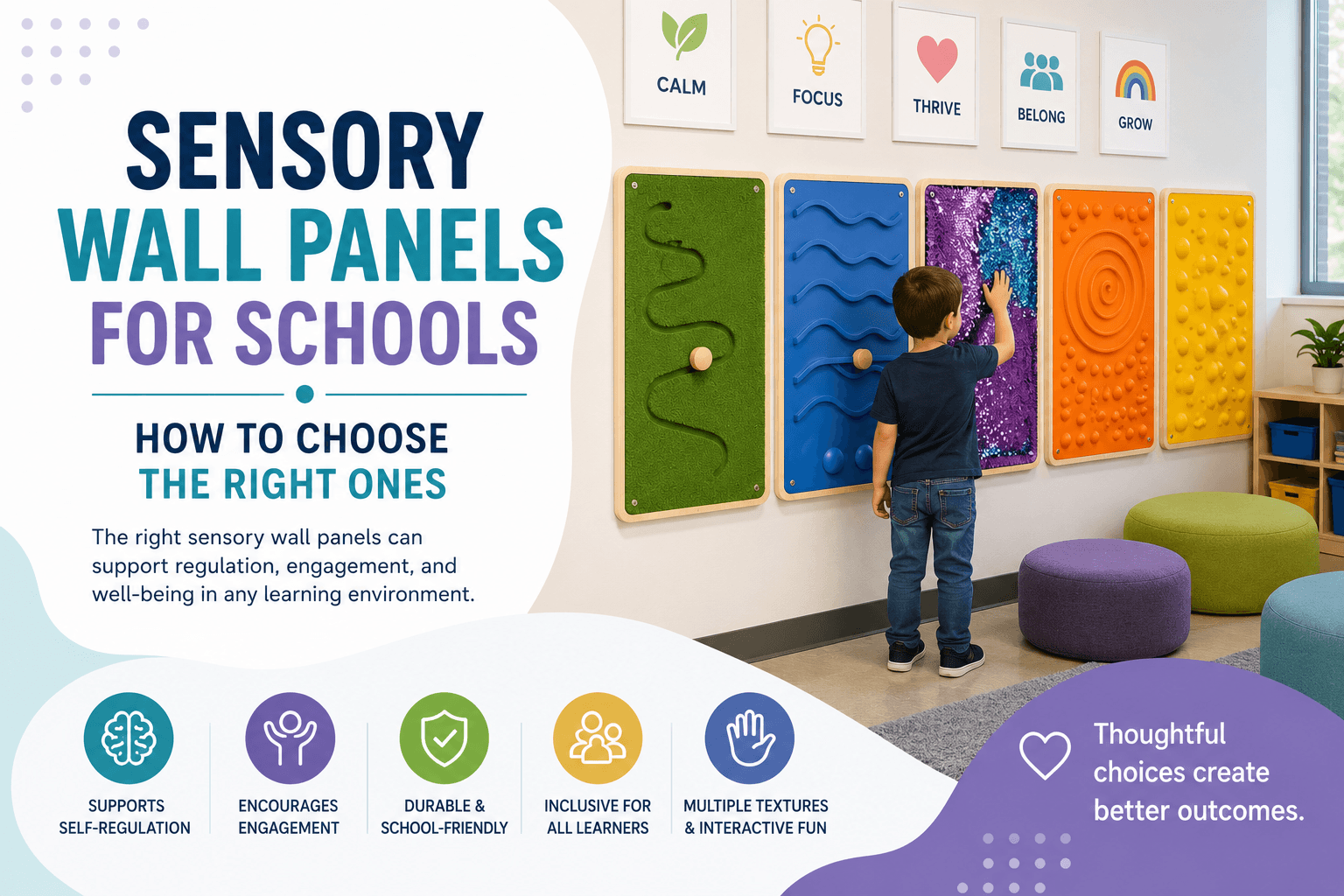
Sensory wall panels for schools give students a hands on way to explore touch, movement, light, sound, color, cause and effect, and fine motor activities without taking up valuable classroom floor space. For students with autism, sensory processing disorder, developmental delays, ADHD, anxiety, or physical disabilities, the right wall mounted sensory tools can support regulation, attention, motor development, and inclusive participation throughout the school day. In many classrooms, space is limited. Teachers and therapists may not have room for large sensory equipment, therapy swings, crash mats, or full sensory rooms. Sensory wall panels solve that problem by turning unused wall space into an interactive learning and regulation area.
They can be used in special education classrooms, therapy rooms, calming corners, hallways, early childhood spaces, sensory rooms, and school playgrounds. With the right design, sensory wall panels for schools can support both therapeutic goals and everyday classroom routines. This guide explains what sensory wall panels for schools are, why they matter, the different types available, how to choose the right panels, and how schools can budget, fund, and purchase them with confidence.
Large Razzle-Dazzle Marble LED Sensory Wall Panel - Visual & Tactile Stimulation
$1,500.00
$1,650.00
The Large Razzle-Dazzle Marble LED Sensory Wall Panel is an interactive sensory wall panel designed to support visual, tactile, and auditory stimulation in sensory rooms, therapy spaces, classrooms, and care environments. With more than 2,000 colored marbles, built-in LED lighting,… read more

What Are Sensory Wall Panels?
Sensory wall panels for schools are mounted activity panels designed to provide structured sensory input through touch, sight, sound, movement, or interaction. They may include textures, lights, mirrors, switches, gears, beads, locks, wheels, fiber optics, sound elements, or cause and effect features.
The goal is to give students a safe and accessible way to engage their senses while building important developmental and learning skills.
Sensory wall panels may support:
- Fine motor development
- Hand eye coordination
- Tactile exploration
- Visual tracking
- Cause and effect learning
- Sensory regulation
- Focus and attention
- Independent engagement
- Motor planning
- Emotional calming
Unlike loose sensory toys that can be misplaced, thrown, or scattered, wall panels remain fixed in one location. This makes them especially useful for schools that need durable, organized, and easy to supervise sensory supports.
Paradiddle Percussion Activity Wall Panel
$856.95
Explore rhythm and sound as your child creates their own musical masterpiece on our new Paradiddle Percussion Busy Board. This wall panel comes jam-packed with lots of ways to "jam," such as bells, drum panels, a xylophone, and much more.… read more

How Sensory Wall Panels Differ from Other Sensory Room Equipment
Sensory rooms often include equipment like swings, bubble tubes, crash pads, soft seating, fiber optic lighting, ball pits, and deep pressure products. These tools are valuable, but they usually require floor space, storage space, supervision, or installation planning.
Sensory wall panels offer a different advantage.
They are:
- Space saving
- Easy to access
- Visually organized
- Durable for repeated use
- Useful for individual or small group engagement
- Appropriate for classrooms, therapy rooms, hallways, and calm down areas
- Easier to supervise than many loose sensory items
- Helpful for students who need sensory input without leaving the classroom
For schools with limited space, sensory wall panels for schools are one of the most practical ways to add sensory support without creating clutter.
Locks & Latches Busy Board Sensory Activity Panel
$249.95
The new Locks and Latches Busy Board from eSpecial Needs is loaded with motor skill developing activities that children with want to explore again and again. Featuring solid plywood construction and rust-proof hardware, each activity teaches children an everyday skill… read more

Why Sensory Wall Panels Belong in Every School
Students learn best when they feel regulated, engaged, and supported. For many students with sensory needs, a standard classroom can feel overwhelming or under stimulating. Sensory wall panels give educators another way to meet those needs within the school environment.
They can help students who need a calming break, a tactile activity, a fine motor challenge, or a visual focus point before returning to academic work.
Benefits may include:
- Improved sensory regulation
- Increased engagement
- Better fine motor practice
- Reduced classroom disruption
- More inclusive sensory access
- Support for IEP and therapy goals
- Better use of limited classroom space
- Safe independent exploration
- Increased motivation during therapy tasks
Because they can be used by students with a wide range of needs, sensory wall panels for schools are a smart addition to special education programs, early childhood classrooms, therapy spaces, and sensory rooms.
Gears Activity Wall Panel
$299.95
Take a spin with the Gears Activity Wall Panel! This activity wall panel lets kids engineer their own fun as they manipulate the colorful gears across the board. The Gears Wall Panel keeps children engaged while reinforcing hand-eye coordination and… read more

Benefits for Students with Autism Spectrum Disorder
Many autistic students experience sensory input differently. Some may seek texture, movement, sound, light, or repetition. Others may avoid loud, bright, unpredictable, or overwhelming environments. Sensory wall panels can help by providing predictable, structured sensory experiences.
For autistic students, sensory wall panels may support:
- Calming during transitions
- Tactile exploration
- Visual focus
- Cause and effect learning
- Fine motor development
- Reduced sensory seeking in unsafe ways
- Independent sensory breaks
- Engagement before or after academic tasks
A student who seeks movement may benefit from panels with spinning wheels, sliding parts, or moving beads. A student who needs calming visual input may benefit from soft light panels or simple tactile panels. A student working on communication may use the panel as part of a choice making or requesting activity.
Tactile Activity Busy Board Wall Panel
$550.00
The Spark Sensory Solutions Tactile Busy Board Activity Wall Panel offers several sensory experiences to explore in one place. Kids will love pulling the colorful tubes, tugging the ropes, manipulating the gears and abacus, gripping the hand web, or running… read more

Supporting Sensory Processing Disorder in the Classroom
Students with sensory processing disorder may have difficulty receiving, organizing, or responding to sensory information. Some students are highly sensitive to touch, sound, or visual input. Others may not notice sensory input enough and seek stronger experiences. Sensory wall panels can support both types of needs when chosen carefully.
For sensory sensitive students, low stimulation tactile or visual panels can provide gentle exploration in a controlled way. For sensory seeking students, interactive panels with movement, texture, sound, or resistance can provide needed input without disrupting the classroom. This makes sensory wall panels for schools useful tools for helping students regulate within the classroom rather than always needing to leave for a separate sensory space.
HABA Pro Sensory Learning Wall: 3-Piece Set
$1,868.10
The HABA Pro Sensory Learning Wall – 3-Piece Set is an interactive wall-mounted system designed to support sensory exploration, fine motor development, and early learning through hands-on play. Featuring three engaging activity panels, this set encourages children to touch, move,… read more

Benefits for Toddlers and Early Childhood Programs
Toddlers and preschool students learn through hands on exploration. Sensory wall panels can support early learning by encouraging children to touch, move, look, listen, problem solve, and experiment.
In early childhood programs, sensory wall panels may help develop:
- Curiosity
- Fine motor skills
- Hand strength
- Visual attention
- Early problem solving
- Cause and effect understanding
- Tactile tolerance
- Turn taking
- Language development
For younger students, panels should be mounted low enough for easy access and made from safe, durable materials. Avoid small loose parts and choose panels designed for early childhood use.
HABA Pro The Orchard Wall Activity Panel
$724.95
Who can collect the fruit faster, the raven or the players? If the children have picked all the fruit before the raven reaches the 5th step - they win! Develops fine motor skills Fixed elements - nothing gets lost Playable… read more

How Sensory Walls Support OT and PT Goals
Occupational therapists and physical therapists often use sensory wall panels to support specific therapy goals in school settings.
Occupational therapy goals may include:
- Fine motor development
- Tactile exploration
- Hand strengthening
- Bilateral coordination
- Visual motor integration
- Sensory regulation
- Motor planning
- Attention to task
Physical therapy goals may include:
- Standing tolerance
- Reaching
- Weight shifting
- Postural control
- Balance
- Upper body engagement
- Endurance during supported standing
A student using a stander or adaptive seating system may interact with a wall panel during therapy to practice reaching, tracking, grasping, or maintaining posture. This makes wall panels both engaging and functional.
HABA Pro Ball Run Catch Bin - Sensory Wall Panel System
$167.70
The HABA Pro Ball Run Catch Bin (H1120263001) is an essential component for creating complete ball track systems in sensory rooms, classrooms, and therapeutic environments. This German-engineered catch bin serves as the collection point for ball run activities, completing your… read more

Types of Sensory Wall Panels for Schools
There are many types of sensory wall panels. The best choice depends on student age, sensory needs, therapy goals, safety requirements, and available wall space.
Tactile Sensory Wall Panels
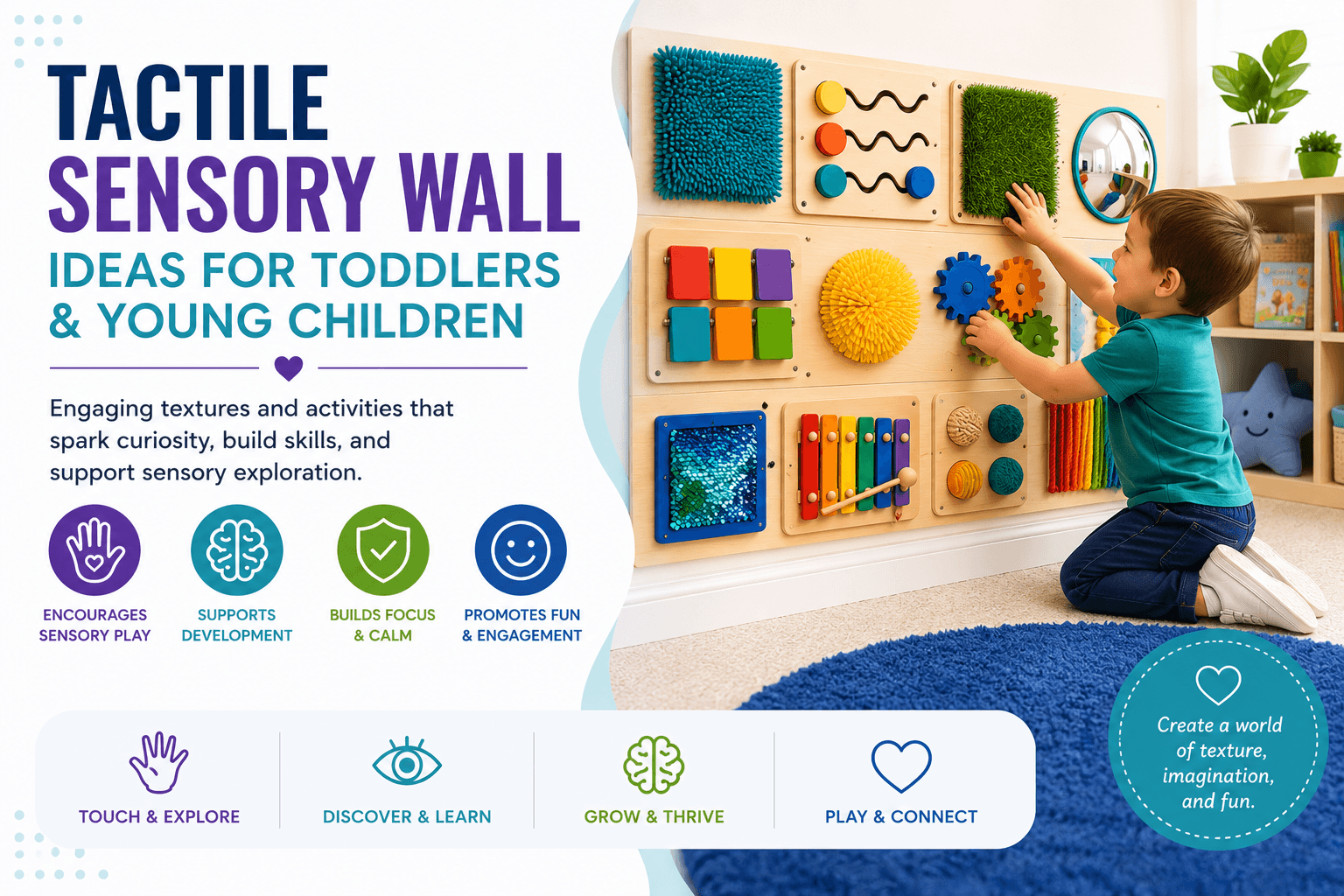
Tactile panels focus on touch. They may include different textures, fabrics, raised shapes, smooth surfaces, rough surfaces, soft materials, or movable tactile pieces. These panels help students explore texture in a structured way.
They may support:
- Touch discrimination
- Tactile tolerance
- Fine motor engagement
- Sensory exploration
- Descriptive language
- Calming routines
Tactile panels are a strong choice for early childhood classrooms, special education rooms, and OT spaces.
Visual Sensory Panels
Visual sensory panels use light, color, reflection, movement, or contrast to engage the visual system.
Examples include:
- LED panels
- Fiber optic panels
- Color changing panels
- Mirror panels
- Light up activity panels
- Visual tracking panels
- Marble or bead movement panels
Visual panels can be calming or stimulating depending on brightness, speed, color, and complexity. For students who become overwhelmed easily, choose soft or slow moving visual input. For students who need engagement, interactive visual panels may be more effective.
Interactive Ladderlite
$3,309.25
The Interactive Ladderlite is a striking sensory light feature designed to bring bright visual stimulation and sound-activated engagement to sensory rooms, classrooms, therapy spaces, and care environments. Standing approximately 60 inches high, it creates an eye-catching focal point that encourages… read more

Interactive Sensory Wall Toys and Cause and Effect Panels
Interactive panels encourage students to manipulate objects and observe results. These panels may include switches, buttons, gears, latches, wheels, sliders, spinners, locks, beads, or sound producing elements. Cause and effect panels help students understand that their actions create a response.
They may support:
- Problem solving
- Motor planning
- Early learning
- Fine motor coordination
- Attention
- Motivation
- Communication opportunities
These panels are especially useful for students who benefit from hands on learning.
Scallywaggles Activity Play Panel
$982.80
The Scallywaggles Activity Play Panel by Gressco is an engaging, wall-mounted activity designed to support fine motor development, hand-eye coordination, and imaginative play in early learning and therapeutic environments. Featuring colorful, interactive elements, this panel encourages children to explore, manipulate,… read more

Auditory Sensory Wall Panels
Auditory panels include sound, rhythm, music, bells, chimes, or cause and effect noise elements. They may help students explore sound in a controlled way. They can support auditory processing, listening skills, communication, and engagement. However, auditory panels should be selected carefully. In classrooms with sound sensitive students, loud or unpredictable noise may be overwhelming. Choose panels with controlled volume or place them in areas where sound will not disrupt learning.
Sound Wall Interactive Musical Sensory Panel
$3,930.00
The T21334 Sound Wall is an interactive musical sensory panel that lets users create sounds by touching colorful hand-shaped buttons. Designed for children and adults, this wall-mounted activity panel supports cause and effect learning, music exploration, auditory stimulation, and interactive… read more

Outdoor Sensory Wall Panels
Outdoor sensory wall panels for schools bring sensory learning to playgrounds, courtyards, and outdoor classrooms. These panels are typically built with weather resistant materials and durable construction.
Outdoor panels may include:
- Musical panels
- Tactile boards
- Activity walls
- Spinning elements
- Outdoor mirrors
- Fine motor panels
- Inclusive playground activity panels
They can support sensory exploration during recess while giving students who may not enjoy traditional playground equipment another way to participate.
Multi Sensory Wall Panel Kits and Bundles
Multi sensory wall kits combine several panel types into one setup. A bundle may include tactile, visual, auditory, fine motor, and cause and effect elements. For schools starting from scratch, bundles can be a cost effective way to create a complete sensory wall without choosing every panel separately.
Multi sensory kits are useful for:
- Special education classrooms
- School sensory rooms
- Therapy spaces
- Early childhood centers
- Hallways
- Waiting areas
- Calm down spaces
Sensory wall panels for schools can be purchased individually or as part of a larger sensory wall system depending on budget and student needs.
How to Choose the Right Sensory Wall Panels for Your School
Choosing sensory wall panels for schools should start with students, not products. The best panel is the one that meets a real need in your classroom or therapy environment.
Step 1: Identify Your Student Population and Sensory Needs
Start by asking:
- What age group will use the panels?
- Are students mostly sensory seeking, sensory avoidant, or both?
- Will students use the panels independently or with staff?
- Are students working on fine motor goals?
- Do students need calming visual input?
- Are there students using wheelchairs or standers?
- Do any students have sound sensitivities?
- Will the panels be used in a classroom, therapy room, hallway, or playground?
This helps narrow your choices.
Step 2: Define Therapy and Educational Goals
Panels should support specific goals whenever possible.
Examples include:
- Fine motor practice
- Sensory regulation
- Visual tracking
- Cause and effect learning
- Tactile tolerance
- Standing balance
- Communication
- Turn taking
- Independent engagement
- Emotional regulation
If a panel supports IEP goals or therapy objectives, it is easier to justify the purchase and measure its value.
Step 3: Choose the Right Panel Types for Your Space
Different spaces need different panels. A calm down corner may need low stimulation tactile or visual panels. A therapy room may need panels that support reaching, grasping, standing, and motor planning. A preschool classroom may need safe, colorful, simple panels. A hallway may need durable panels that are easy to supervise.
For schools with limited square footage, sensory wall panels for schools are especially useful because they add sensory value without reducing movement space.
Step 4: Evaluate Safety, Durability, and Hygiene
Schools need equipment that can handle frequent use.
Look for:
- Durable materials
- Smooth edges
- Secure mounting
- Non toxic finishes
- Easy cleaning
- No small loose parts for young users
- Age appropriate design
- Strong hardware
- Clear manufacturer guidelines
- Appropriate safety certifications when available
Cleanability is especially important in classrooms, therapy spaces, and early childhood programs.
Step 5: Consider Installation and Wall Space
Before buying, measure the wall area and check the mounting surface.
Consider:
- Wall width and height
- Stud placement or mounting support
- Student reach
- Wheelchair accessibility
- Clearance around the panel
- Traffic flow
- Staff visibility
- Nearby furniture or equipment
- Whether the panel needs professional installation
Panels should be secure, reachable, and placed where they will not create congestion.
Sensory Wall Panels for Specific School Settings
The right setup depends on where the panels will be used.
Special Education Classrooms
In special education classrooms, sensory wall panels for schools should support multiple needs and IEP goals.
Good options include:
- Tactile panels
- Fine motor panels
- Cause and effect panels
- Calming visual panels
- Multi sensory kits
- Low mounted accessible panels
These panels can be used during sensory breaks, therapy carryover, independent work, transitions, and small group activities.
School Therapy Rooms
Therapy rooms often need panels that support OT and PT goals.
Useful options include:
- Tactile exploration panels
- Visual tracking panels
- Reaching and grasping panels
- Standing activity panels
- Motor planning panels
- Fine motor activity boards
Therapists can use panels as part of structured sessions, especially for students practicing posture, coordination, or sensory integration.
Calming Corners and Break Spaces
Calming spaces should avoid overwhelming students.
Best options include:
- Soft tactile panels
- Simple visual panels
- Slow moving visual panels
- Quiet fine motor panels
- Low contrast designs
- Predictable cause and effect panels
The goal is regulation, not overstimulation.
Toddler and Preschool Environments
Young children need safe, simple, low mounted panels.
Choose panels that are:
- Durable
- Easy to clean
- Bright but not overwhelming
- Free from unsafe small parts
- Mounted at toddler height
- Designed for early fine motor exploration
For early childhood programs, sensory wall panels for schools can support both play and developmental skill building.
Placement Strategies for Maximum Engagement
Panel placement affects how often and how successfully students use them.
Optimal Height and Accessibility
Mount panels at a height that matches the users.
Consider:
- Toddlers need lower mounting
- Wheelchair users need seated reach access
- Standing students need panels at chest or shoulder height
- Students in standers may need therapist guided positioning
- Panels should not require unsafe reaching
Accessible placement helps all students participate.
Combining Panels with Other Sensory Equipment
Sensory wall panels for schools work well with other sensory supports.
Pair them with:
- Soft seating
- Floor mats
- Bubble tubes
- Weighted lap pads
- Sensory lighting
- Calm down tools
- Therapy balls
- Adaptive seating
- Visual schedules
A full sensory space may include both wall mounted and floor based equipment.
Rotating and Refreshing Panels
Students may lose interest if the same panel is always used the same way. If possible, rotate activities, introduce new prompts, move portable panels, or add seasonal themes.
Ways to refresh engagement include:
- Add communication prompts
- Use panels during therapy games
- Pair panels with matching activities
- Create turn taking routines
- Use panels as transition stations
- Add visual choice cards
- Change the order of activity stations
Small changes can increase student motivation.
Budgeting and Funding Sensory Wall Panels
Sensory wall panels for schools vary in cost depending on size, materials, features, and quantity. Schools can start small with one or two panels or create a complete sensory wall over time.
Purchase Orders and School Procurement
Many schools purchase sensory equipment through purchase orders. This helps districts manage approval, budgeting, and documentation.
Purchase orders may be used for:
- Sensory wall panels
- Sensory room equipment
- Therapy tools
- Adaptive seating
- Special education classroom supplies
- Outdoor sensory panels
- Multi sensory kits
Working with a supplier that supports school procurement can make the process easier.
Requesting a Quote
A quote helps schools compare product options and plan budgets.
When requesting a quote, include:
- Student age range
- Number of students served
- Room type
- Wall dimensions
- Therapy goals
- Budget range
- Preferred panel types
- Installation needs
- Any OT or PT recommendations
Adaptive equipment specialists can help match sensory wall panels for schools to specific environments and student needs.
Funding Sources for Schools
Schools may be able to fund sensory wall panels through:
- Special education budgets
- IDEA related funds
- Title I funds when appropriate
- Occupational therapy budgets
- School grants
- Local education foundations
- PTA or PTO fundraising
- Community donations
- District improvement funds
- Classroom grant platforms
Funding rules vary by school, district, and program. Connecting panels to IEP goals, sensory regulation, accessibility, or therapy objectives may help support funding requests.
Shop Sensory Wall Panels for Schools at eSpecial Needs
eSpecial Needs offers sensory wall panels, sensory room equipment, tactile panels, visual sensory tools, interactive sensory products, and school friendly adaptive equipment for classrooms, therapy rooms, sensory spaces, and early childhood programs.
Schools can explore sensory wall panels for schools by student need, room type, budget, and therapy goal. Whether you are creating a small calming corner, upgrading a special education classroom, designing a therapy room, or building a complete sensory wall, eSpecial Needs can help you find equipment that supports regulation, engagement, learning, and inclusion.
Request a quote to get expert product recommendations and make school purchasing easier.
FAQs
What are sensory wall panels for schools?
Sensory wall panels for schools are wall mounted activity panels designed to provide students with structured sensory input through touch, sight, sound, movement, and interactive play. They may include textures, lights, mirrors, gears, beads, switches, latches, sound features, or cause and effect activities that support sensory regulation, fine motor development, and classroom engagement.
How do sensory wall panels help students?
Sensory wall panels can help students explore sensory input in a safe and structured way. They may support fine motor skills, tactile exploration, visual tracking, hand eye coordination, attention, emotional regulation, cause and effect learning, and independent engagement during the school day.
Are sensory wall panels good for students with autism?
Yes. Sensory wall panels can be helpful for autistic students because they provide predictable sensory experiences. Depending on the panel type, they may support calming, tactile exploration, visual focus, sensory seeking needs, fine motor practice, and structured sensory breaks.
Can sensory wall panels help students with sensory processing disorder?
Yes. Students with sensory processing disorder may benefit from sensory wall panels because they offer controlled sensory input within the classroom or therapy environment. Tactile, visual, auditory, and interactive panels can help students self regulate, explore sensory input, and stay more engaged in learning activities.
What types of sensory wall panels are best for schools?
Common types include tactile sensory panels, visual sensory panels, auditory panels, cause and effect panels, fine motor activity panels, outdoor sensory panels, and multi sensory wall panel kits. The best choice depends on student age, sensory needs, therapy goals, available wall space, and the school setting.
What are tactile sensory wall panels?
Tactile sensory wall panels include different textures, shapes, fabrics, or surfaces that students can touch and explore. They help support touch discrimination, tactile tolerance, sensory exploration, hand strength, and fine motor engagement.
What are visual sensory wall panels?
Visual sensory panels use light, color, reflection, movement, or contrast to engage the visual system. Examples may include LED panels, fiber optic panels, mirror panels, marble panels, color changing panels, and visual tracking panels. These can be calming or stimulating depending on the design.
What are cause and effect sensory wall panels?
Cause and effect panels allow students to interact with switches, buttons, gears, sliders, latches, wheels, lights, sounds, or moving parts. These panels help students understand that their actions create a response, which can support early learning, problem solving, communication, and motor planning.
Are sensory wall panels useful in special education classrooms?
Yes. Sensory wall panels are especially useful in special education classrooms because they support a wide range of IEP goals, sensory needs, and developmental skills. They can be used during sensory breaks, transitions, independent work, therapy carryover, small group activities, and calming routines.
Can sensory wall panels be used in general education classrooms?
Yes. Sensory wall panels can benefit students in general education classrooms as well, especially when used in calm down corners, early childhood classrooms, inclusive classrooms, or sensory friendly learning areas. They can support focus, regulation, fine motor practice, and hands on engagement.
Are sensory wall panels good for toddlers and preschoolers?
Yes. Sensory wall panels can support early childhood development by encouraging curiosity, tactile exploration, fine motor skills, hand strength, visual attention, cause and effect learning, and early problem solving. For toddlers and preschoolers, panels should be age appropriate, securely mounted, easy to clean, and free from unsafe small parts.
Can sensory wall panels support occupational therapy goals?
Yes. Occupational therapists may use sensory wall panels to support fine motor skills, tactile exploration, visual motor integration, bilateral coordination, hand strengthening, attention, motor planning, and sensory regulation. Panels can also be used as part of school based therapy sessions.
Can sensory wall panels support physical therapy goals?
Yes. Physical therapists may use sensory wall panels to encourage reaching, standing tolerance, weight shifting, balance, postural control, and upper body engagement. Panels can be helpful for students using standers, adaptive seating, or supported standing positions.
Where should sensory wall panels be installed in a school?
Sensory wall panels can be installed in special education classrooms, therapy rooms, sensory rooms, calm down corners, hallways, early childhood classrooms, waiting areas, resource rooms, and playgrounds. Placement should be based on student access, safety, supervision, traffic flow, and therapy goals.
How high should sensory wall panels be mounted?
Mounting height should match the students using the panels. Toddlers need lower panels, wheelchair users need seated reach access, and standing students may need panels at chest or shoulder height. Schools should consider accessibility for all students before installation.
Are sensory wall panels accessible for wheelchair users?
They can be when installed at the proper height and placed in an accessible location. Schools should make sure wheelchair users can reach the panel comfortably, turn safely, and access the space without blocked pathways or crowded furniture.
Do sensory wall panels save classroom space?
Yes. One major benefit of sensory wall panels is that they use vertical wall space instead of floor space. This makes them ideal for classrooms, therapy rooms, hallways, and sensory areas where large equipment may not fit.
How do sensory wall panels compare to sensory toys?
Sensory toys are often portable and flexible, but they can be misplaced, thrown, or difficult to organize. Sensory wall panels stay mounted in one location, making them easier to supervise, keep clean, and include in structured routines.
Are sensory wall panels safe for schools?
Sensory wall panels can be safe when they are age appropriate, securely installed, made from durable materials, and used according to manufacturer guidelines. Schools should look for smooth edges, strong mounting hardware, non toxic materials, and designs appropriate for the intended age group.
Do sensory wall panels require professional installation?
Some sensory wall panels may be simple to install, while larger or heavier panels may require professional installation. Schools should always follow manufacturer instructions and make sure the wall surface, mounting hardware, and installation height are appropriate.
Can sensory wall panels be installed outdoors?
Yes, outdoor sensory wall panels are available for playgrounds, courtyards, and outdoor learning spaces. Outdoor panels should be weather resistant, durable, securely mounted, and designed for school playground use.
How do schools clean sensory wall panels?
Cleaning depends on the panel materials. Many panels can be wiped down with school approved cleaning products. Schools should follow manufacturer cleaning instructions and avoid harsh chemicals unless approved for the product.
How often should sensory wall panels be cleaned?
Panels should be cleaned regularly, especially in classrooms, therapy rooms, early childhood programs, and shared sensory spaces. High touch panels may need daily or frequent cleaning depending on school hygiene policies and student use.
What should schools consider before buying sensory wall panels?
Schools should consider student age, sensory needs, IEP goals, therapy goals, wall space, accessibility, safety, durability, cleaning requirements, installation needs, supervision, and budget. Choosing panels based on student needs leads to better long term value.
What sensory wall panels are best for calming corners?
Calming corners usually work best with low stimulation panels, soft tactile panels, quiet fine motor panels, simple visual panels, and slow moving visual features. Avoid loud, bright, or overly complex panels if the goal is emotional regulation.
What sensory wall panels are best for therapy rooms?
Therapy rooms may benefit from tactile panels, fine motor panels, visual tracking panels, reaching panels, standing activity panels, and cause and effect panels. The best choice depends on OT and PT goals.
What sensory wall panels are best for preschool classrooms?
Preschool classrooms should use durable, age appropriate panels with safe textures, simple activities, bright but not overwhelming visuals, and low mounting heights. Panels should be easy to clean and free from unsafe small loose parts.
Can sensory wall panels be used in hallways?
Yes. Hallways can be a good location for sensory wall panels when schools want to create sensory paths, transition supports, or structured engagement areas. Panels should not block traffic flow or create congestion.
Can sensory wall panels help with transitions?
Yes. Sensory wall panels can be used as transition stations where students pause, regulate, complete a short sensory activity, and move to the next part of the day. This can be helpful for students who struggle with changes in routine.
How do sensory wall panels support IEP goals?
Sensory wall panels can support IEP goals related to fine motor skills, sensory regulation, attention, communication, turn taking, standing tolerance, reaching, visual tracking, motor planning, and independent engagement. Teachers and therapists can connect panel use to specific student objectives.
Can sensory wall panels be part of a sensory room?
Yes. Sensory wall panels are a valuable part of a sensory room because they add tactile, visual, auditory, and interactive input without taking up floor space. They pair well with bubble tubes, soft seating, weighted products, lighting, crash mats, and sensory tools.
Should schools buy individual panels or a sensory wall panel kit?
Individual panels are useful when a school has a specific goal or limited budget. Sensory wall panel kits are helpful when schools want a complete multi sensory setup with several activity types. Kits can save time and provide a more balanced sensory wall.
How much do sensory wall panels for schools cost?
Costs vary depending on size, materials, features, brand, and whether the school buys individual panels or a full kit. Simple tactile panels may cost less, while large interactive, LED, outdoor, or multi sensory panels may require a larger investment.
How can schools fund sensory wall panels?
Schools may be able to use special education budgets, IDEA related funds, Title I funds when appropriate, occupational therapy budgets, grants, local education foundations, PTA or PTO fundraising, district improvement funds, community donations, or classroom grant platforms.
Can schools buy sensory wall panels with purchase orders?
Yes. Many schools and districts use purchase orders to buy sensory wall panels and other adaptive equipment. Purchase orders help streamline school procurement, approvals, budgeting, and documentation.
Should schools request a quote before buying sensory wall panels?
Yes. A quote can help schools compare options, plan budgets, document costs, and match panels to student needs. A quote is especially helpful when purchasing multiple panels, building a sensory room, or using school procurement systems.
Where can schools buy sensory wall panels?
Schools should purchase sensory wall panels from a trusted adaptive equipment supplier that understands sensory rooms, special education classrooms, therapy spaces, school procurement, and student safety needs.
How can eSpecial Needs help schools choose sensory wall panels?
eSpecial Needs offers sensory wall panels, sensory room equipment, tactile panels, visual sensory tools, interactive products, and school friendly adaptive equipment. Schools can compare products, request quotes, and find sensory wall panel options for classrooms, therapy rooms, calming corners, early childhood spaces, and sensory rooms.