Table of Contents
- What Is Sensory Gym Equipment?
- Defining a Sensory Gym: More Than Just Play
- The Role of Sensory Integration in Therapy
- Who Benefits from a Sensory Gym?
- Core Therapy Goals Supported by Sensory Gym Equipment
- Vestibular Processing and Balance
- Proprioception and Deep Pressure Input
- Gross Motor Skills and Strength Development
- Emotional Regulation and Calming
- The Ultimate Sensory Gym Equipment List
- Swings and Vestibular Equipment
- Climbing Frames, Monkey Bars, and Ladders
- Balance Boards, Beams, and Wobble Tools
- Crash Mats, Foam Pits, and Body Socks
- Deep Pressure Products
- Tunnels, Barrels, and Crawling Equipment
- Chill Out Chairs and Calming Corners
- Sensory Wall Panels and Tactile Stations
- Sensory Gym Ideas: How to Design Your Space
- Planning Your Layout: Zones and Flow
- Sensory Gym Setup for Home Use
- Sensory Gym Setup for Therapy Clinics and Schools
- Sensory Room vs Sensory Gym
- Sensory Gym Equipment for Autism
- Building a Sensory Diet into Your Gym Routine
- Sensory Gym Equipment for Adults with Disabilities
- Indoor Therapy Gym Safety
- Weight Limits and Installation
- Flooring and Fall Protection
- Supervision and Structured Sessions
- Request a Free Quote from Special Needs Professionals
- Why Sensory Gym Equipment Matters
- FAQs
Sensory Gym Equipment: The Ultimate Setup Guide for Homes, Schools, and Therapy Clinics
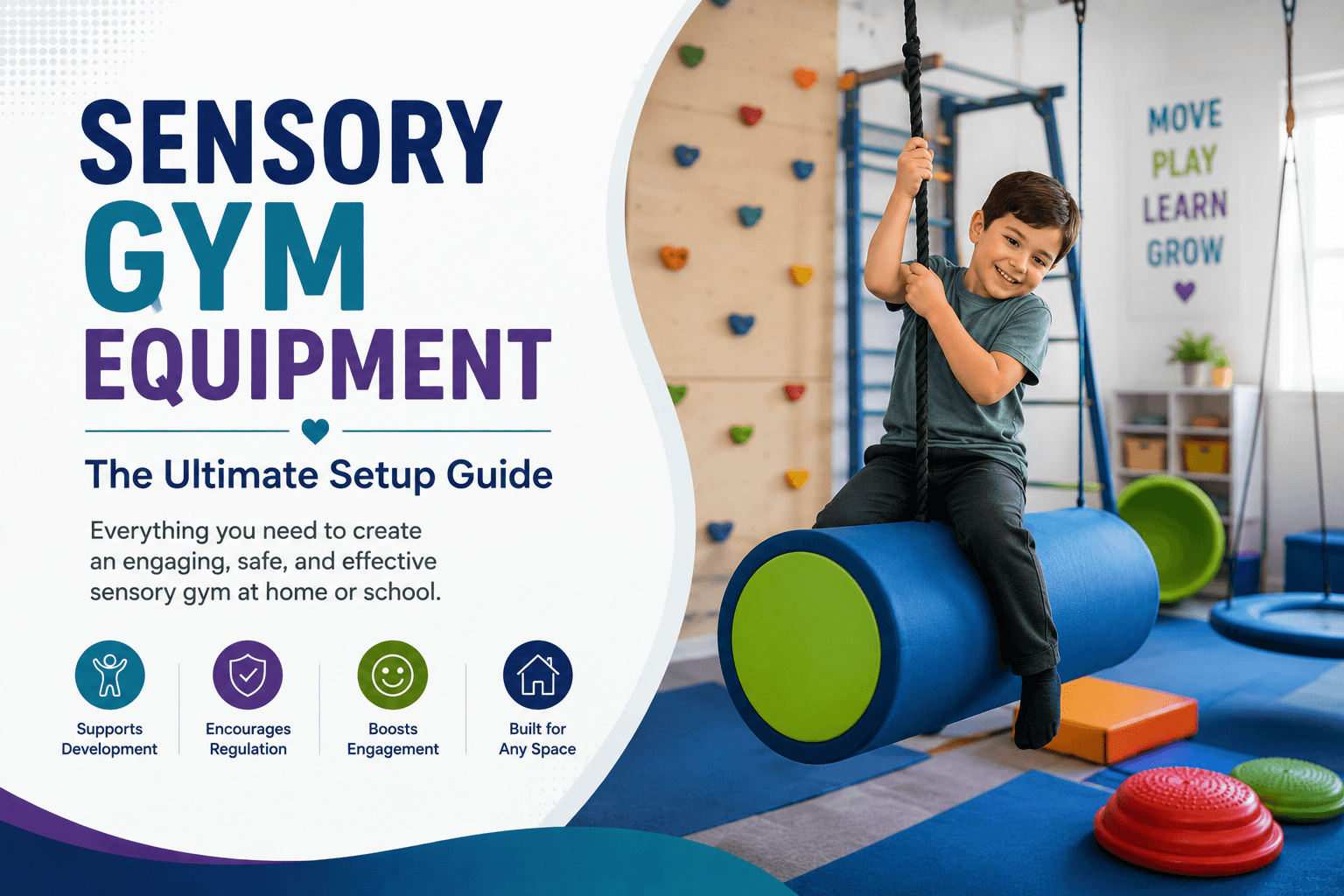
Sensory gym equipment gives children and adults a safe, structured way to move, climb, swing, balance, crash, crawl, stretch, and regulate their bodies through purposeful sensory input. For individuals with autism, sensory processing disorder, ADHD, cerebral palsy, developmental disabilities, anxiety, or motor delays, a sensory gym can be much more than a play space. It can become a therapeutic environment that supports body awareness, emotional regulation, strength, balance, coordination, and confidence.
A well designed sensory gym uses movement based equipment and calming tools to help the nervous system process sensory input more effectively. Whether you are setting up a home sensory gym, a school therapy space, or a full pediatric clinic gym, the right equipment choices matter.
This guide explains what sensory gym equipment is, who benefits from it, which products to include, how to design your space, what safety factors to consider, and how families, schools, and clinics can fund or purchase equipment with confidence.
What Is Sensory Gym Equipment?
Sensory gym equipment includes therapeutic tools designed to provide movement, balance, tactile input, deep pressure, body awareness, and motor skill practice. These products are often used by occupational therapists, physical therapists, special education teams, caregivers, and families to support sensory integration and physical development.
Common examples include therapy swings, crash mats, balance boards, climbing structures, monkey bars, ladders, tunnels, foam blocks, body socks, sensory wall panels, weighted tools, and calming chairs.
Unlike ordinary playground equipment, sensory gym equipment is selected with therapeutic goals in mind. Each product should serve a purpose, such as improving balance, building core strength, supporting sensory regulation, increasing coordination, or helping a child safely meet movement needs.
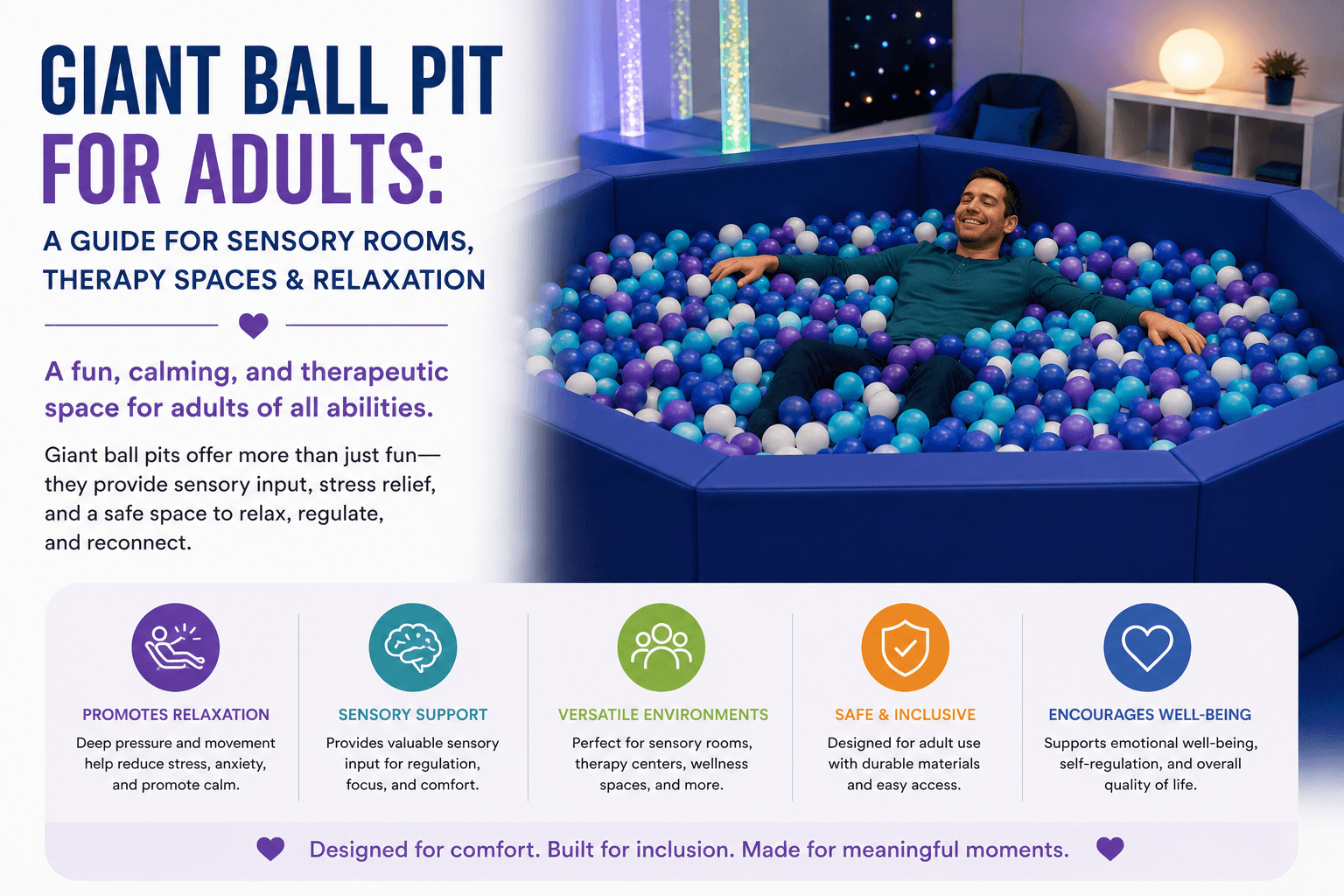
Giant Budget Ball Pit
$1,718.95
$1,935.00
The Giant Budget Ball Pit is a durable, large-format ball pit designed for sensory play, active movement, and therapy use in homes, schools, clinics, and care settings. It offers the size and function of a larger recreational ball pit for… read more

Defining a Sensory Gym: More Than Just Play
A sensory gym is a structured space designed to provide controlled sensory and movement experiences. It may look fun, colorful, and playful, but the purpose goes beyond recreation.
A sensory gym may help users:
- Improve balance and coordination
- Build gross motor strength
- Develop body awareness
- Regulate sensory input
- Practice motor planning
- Reduce anxiety or overstimulation
- Safely release energy
- Improve confidence during movement
- Participate in therapy goals
For children, a sensory gym often feels like play. They may swing, climb, crawl, jump, crash into mats, or move through obstacle courses. Behind those activities, therapists and caregivers are helping the child’s body and brain practice important developmental skills.
This is why choosing appropriate sensory gym equipment is so important. The space should be safe, intentional, and matched to the user’s needs.
Soft Play Ball Pit Steps
$471.95
The Soft Play Ball Pit Steps create a comfortable, easy access entry point for ball pits, sensory rooms, therapy spaces, and active play areas. The three step design helps children climb in and out with greater confidence while encouraging supervised… read more

The Role of Sensory Integration in Therapy
Sensory integration is the way the brain receives, organizes, and responds to sensory information from the body and environment. This includes touch, movement, balance, body position, pressure, sound, sight, and other sensory signals.
When sensory processing works well, a child can move through the day with better focus, coordination, and emotional control. When sensory processing is difficult, everyday activities may feel overwhelming, confusing, or under stimulating.
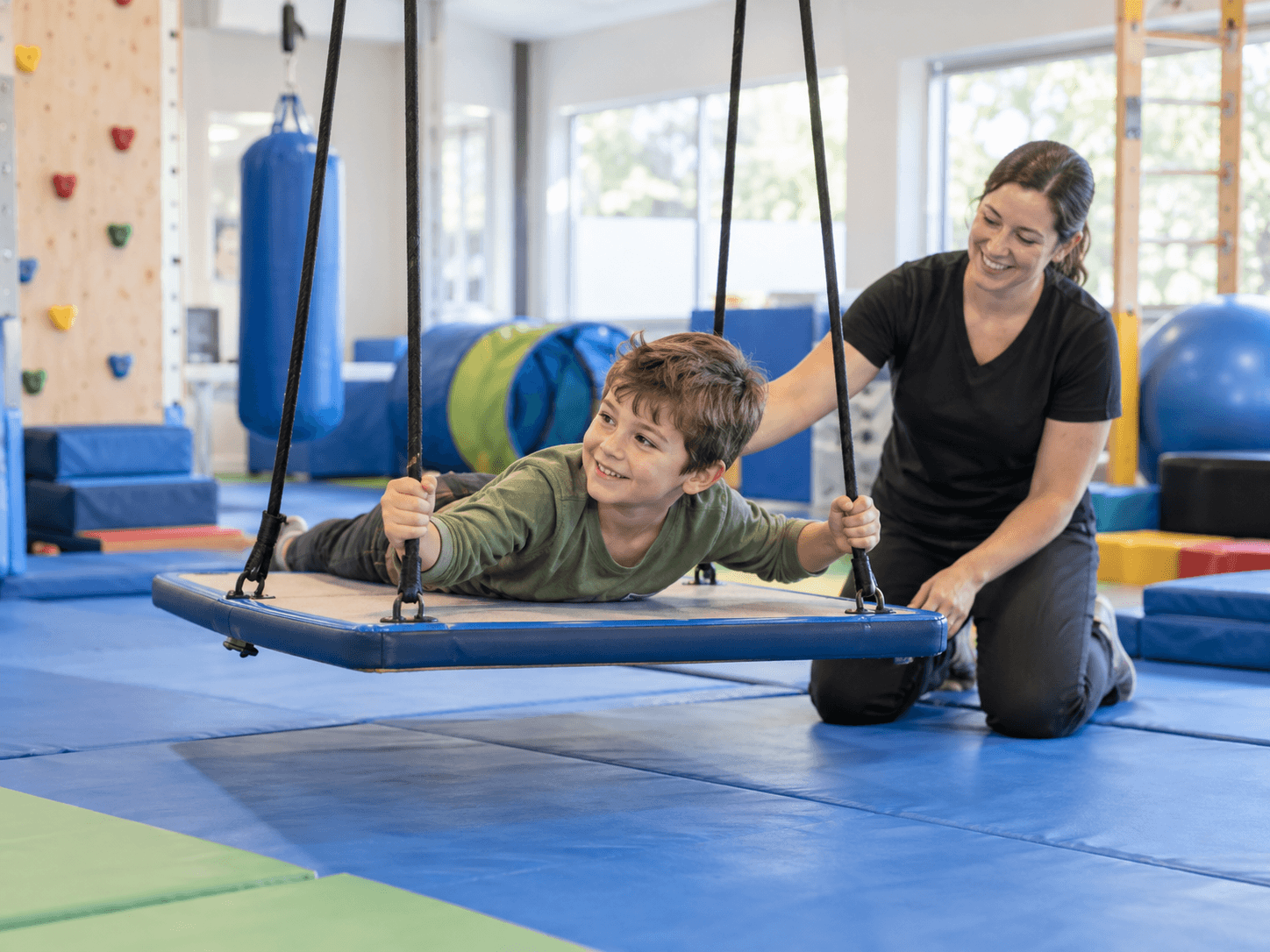
Sensory gym equipment supports sensory integration by giving the body specific types of input in a controlled way. For example, a swing may support the vestibular system, which affects balance and movement. A crash mat may provide proprioceptive input, which helps with body awareness. A tactile wall panel may support touch exploration and fine motor engagement.
Occupational therapists often use sensory gyms to create activities that are challenging but achievable. This helps the child build stronger adaptive responses over time.
Who Benefits from a Sensory Gym?
Sensory gyms can support many different users, including children, teens, and adults.
A sensory gym may benefit individuals with:
- Autism spectrum disorder
- Sensory processing disorder
- ADHD
- Cerebral palsy
- Developmental delays
- Low muscle tone
- Motor planning challenges
- Anxiety
- Coordination difficulties
- Balance challenges
- Physical disabilities
- Traumatic brain injury
- Adult developmental disabilities
Schools, therapy clinics, hospitals, day programs, and families may all use sensory gym equipment to support therapy, regulation, movement, and daily function.
The best setup depends on the user’s age, size, abilities, sensory profile, and therapy goals.
Core Therapy Goals Supported by Sensory Gym Equipment
A sensory gym should be designed around goals, not just product categories. Below are the most common therapeutic areas supported by sensory gym equipment.
Vestibular Processing and Balance
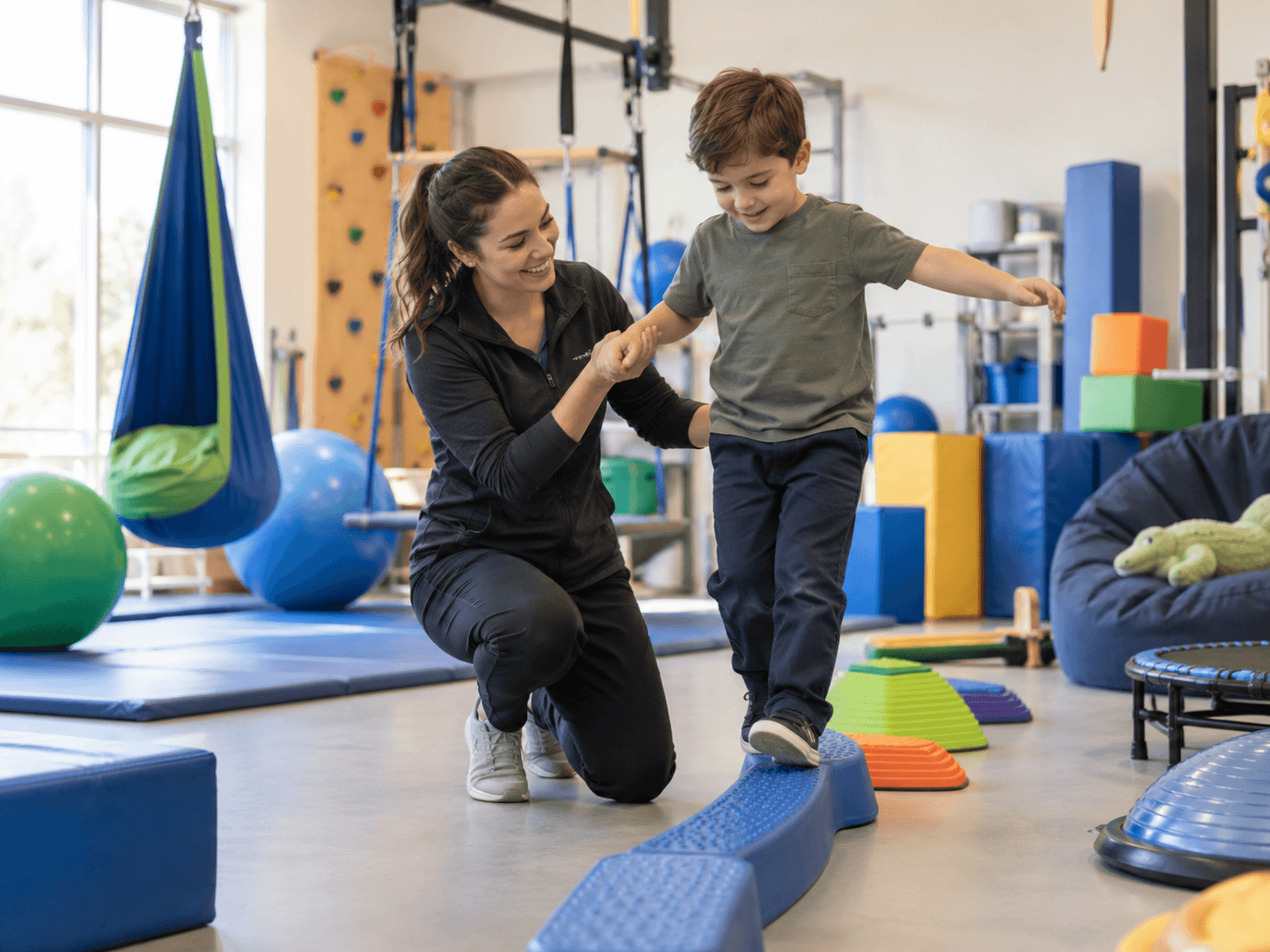
The vestibular system helps the body understand movement, balance, and spatial orientation. It is activated through swinging, rocking, spinning, tilting, and changes in head position.
Vestibular equipment may include:
- Platform swings
- Bolster swings
- Hammock swings
- Net swings
- Rocking equipment
- Balance boards
- Therapy balls
- Wobble tools
For some children, vestibular input can be calming. For others, it can be alerting or overstimulating. This is why movement equipment should be introduced carefully and, when possible, with occupational therapy guidance.
Clinical Carpeted Platform Swing
$199.95
Our Clinical Carpeted Platform Swing is the perfect sensory device. It's versatility makes it great for any setting, including clinics, schools, or home therapy sessions. This fully carpeted swing offers softness and comfort as the user glides gently back and… read more

Proprioception and Deep Pressure Input
Proprioception is the body’s sense of position and force. It comes from muscles and joints and helps a person understand where their body is in space.
Proprioceptive input is often calming and organizing. It may come from pushing, pulling, climbing, crawling, jumping, carrying, squeezing, or using weighted and compression tools.
Helpful equipment includes:
- Crash mats
- Foam pits
- Body socks
- Compression vests
- Weighted blankets
- Weighted lap pads
- Therapy tunnels
- Climbing equipment
- Resistance bands
This type of input can help users feel more grounded and aware of their bodies.
Gross Motor Skills and Strength Development
Gross motor skills involve large body movements such as running, climbing, crawling, balancing, jumping, and lifting. Many children with developmental delays, low muscle tone, autism, or physical disabilities benefit from structured gross motor practice.
Useful equipment includes:
- Climbing frames
- Monkey bars
- Ladders
- Balance beams
- Foam blocks
- Therapy balls
- Scooter boards
- Soft play shapes
- Mini trampolines designed for therapy use
A well planned sensory gym helps users build strength and confidence in a safe environment.
Emotional Regulation and Calming
Sensory gyms are not only for active movement. They should also include spaces for calming, resting, and emotional regulation.
Calming sensory gym equipment may include:
- Chill out chairs
- Weighted lap pads
- Soft mats
- Bean bags
- Deep pressure seating
- Compression tools
- Low lighting
- Noise reduction headphones
- Sensory tents
- Bubble tubes
A calming area gives users a place to reset before, during, or after active movement.
The Ultimate Sensory Gym Equipment List
Below is a practical breakdown of the most important product categories to consider.
Swings and Vestibular Equipment
Therapy swings are among the most popular sensory gym tools because they provide strong vestibular input and can be used in many ways.
Common swing types include:
- Platform swings
- Bolster swings
- Hammock swings
- Lycra swings
- Net swings
- Cocoon swings
Swings may support balance, postural control, body awareness, motor planning, and regulation. They should always be installed according to manufacturer instructions and used with proper supervision.
Climbing Frames, Monkey Bars, and Ladders
Climbing equipment supports upper body strength, grip strength, coordination, motor planning, and confidence.
Examples include:
- Wall ladders
- Climbing frames
- Monkey bars
- Rope ladders
- Soft climbing blocks
- Indoor climbing structures
This type of sensory gym equipment is especially helpful for children who need heavy work and active movement. It should be paired with appropriate fall protection and supervision.
Sensory Rope Climbing Ladder for Indoor Gyms
$99.95
Climb to new heights in physical fitness and energy burning while swinging on the rungs of our Rope Climbing Ladder. Six rungs of climbing adventure await the child looking for a way to get the vestibular stimulus some bodies crave.… read more

Balance Boards, Beams, and Wobble Tools
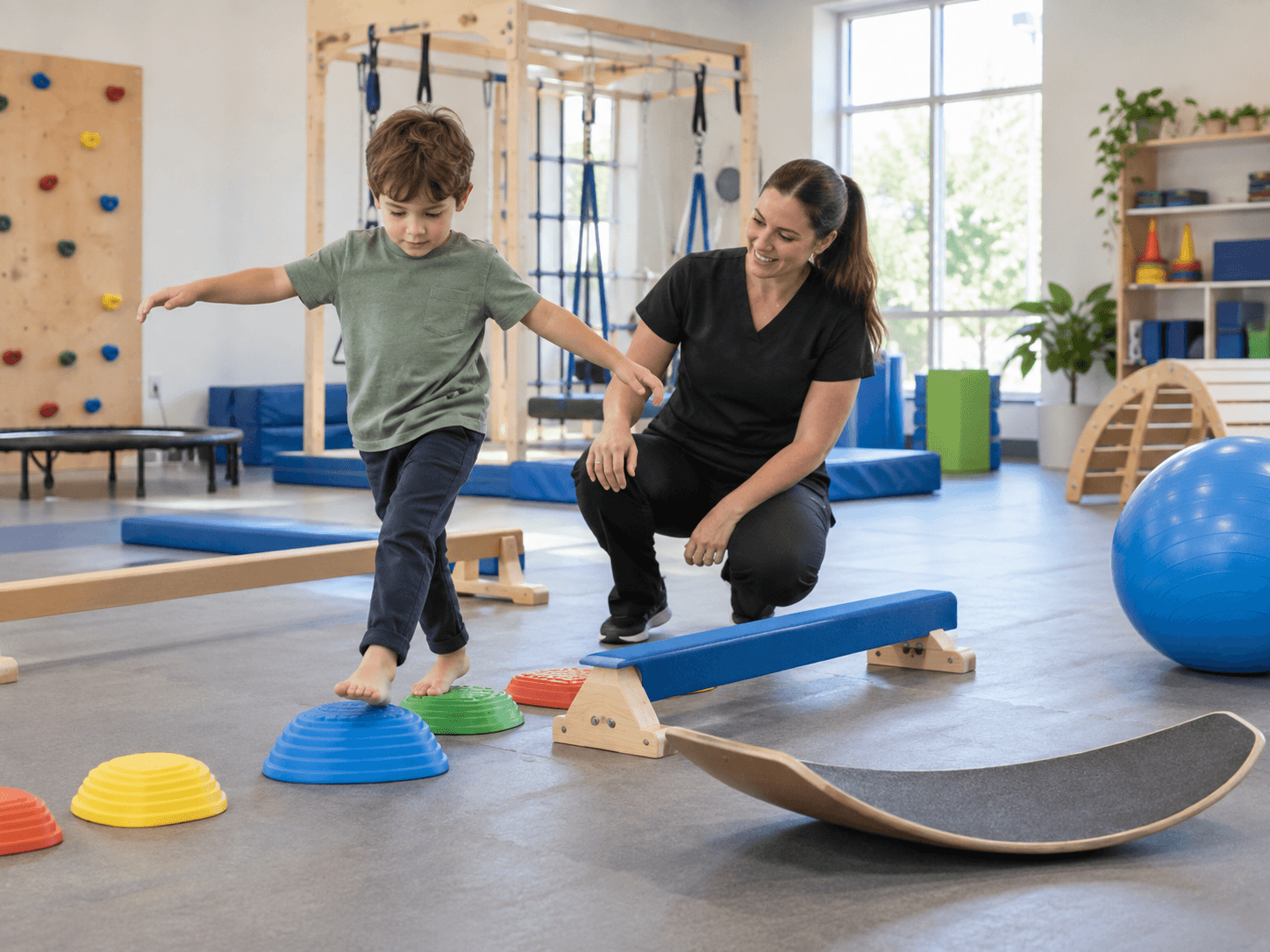
Balance tools challenge core strength, coordination, and postural control.
Options include:
- Balance boards
- Wobble cushions
- Balance beams
- Stepping stones
- Rocker boards
- Therapy balls
- Foam balance pads
These tools can be used in obstacle courses, therapy sessions, classroom movement breaks, or home sensory routines.
Crash Mats, Foam Pits, and Body Socks
Crash mats and foam pits allow users to safely jump, fall, roll, and crash while receiving proprioceptive input.
Body socks provide compression and resistance as the user moves inside stretchy fabric. They can support body awareness, motor planning, and calming.
These tools are ideal for children who seek strong sensory input through crashing, squeezing, crawling, or full body movement.
Deep Pressure Products
Deep pressure products provide firm, calming input that may help with sensory regulation and body awareness.
Examples include:
- Weighted blankets
- Weighted lap pads
- Compression vests
- Weighted shoulder wraps
- Deep pressure pillows
- Body socks
- Sensory tunnels
- Chill out chairs
Deep pressure tools can be used in sensory gyms, classrooms, calming corners, therapy clinics, and home routines.
Tunnels, Barrels, and Crawling Equipment
Crawling equipment supports bilateral coordination, motor planning, tactile processing, and spatial awareness.
Common options include:
- Therapy tunnels
- Fabric tunnels
- Foam barrels
- Crawling tubes
- Compression tunnels
- Obstacle course tunnels
Crawling activities can be especially helpful for building shoulder stability, core strength, and body awareness.
Chill Out Chairs and Calming Corners
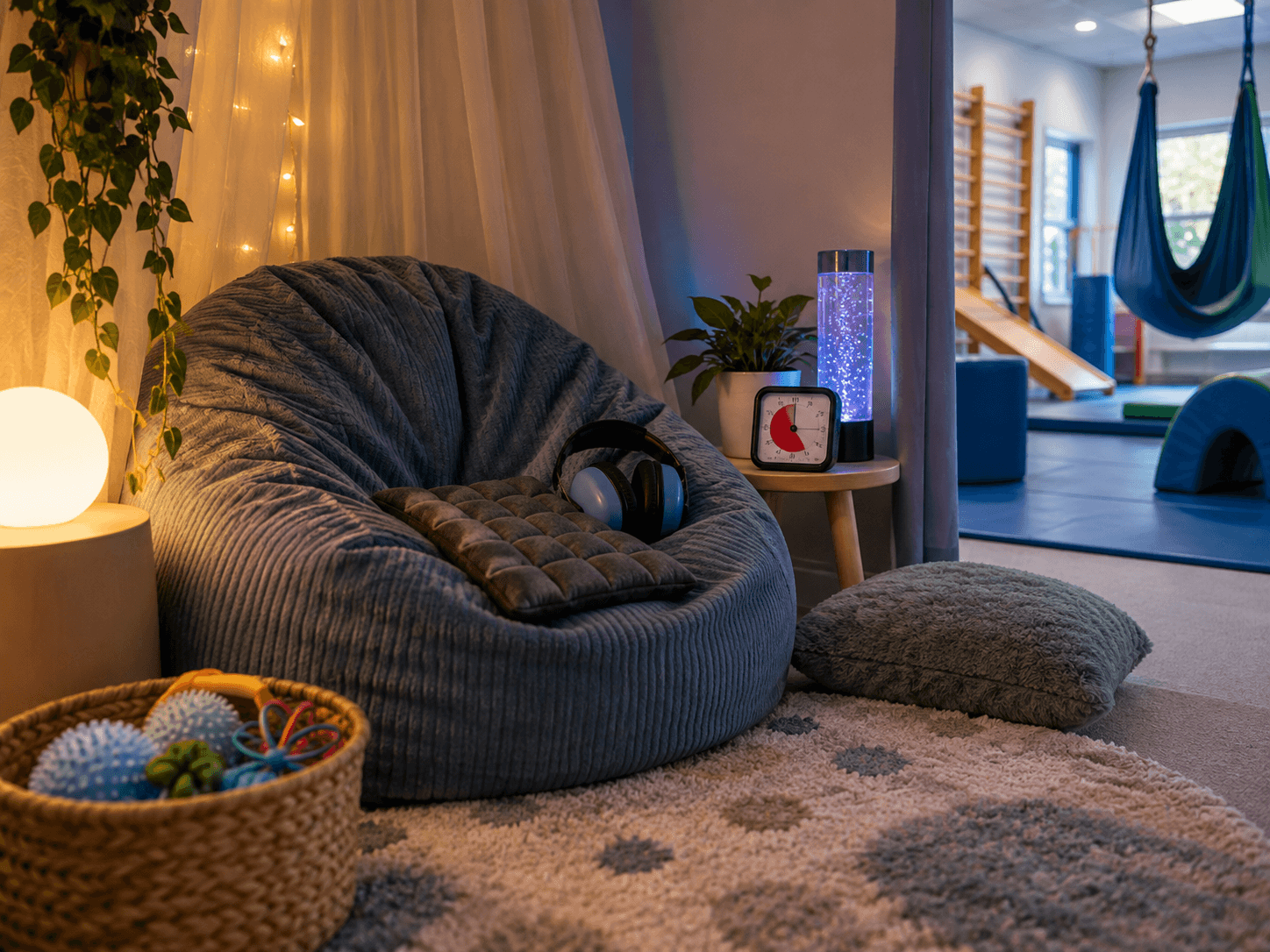
Every sensory gym should include a calming space. Active movement can be helpful, but users also need a place to rest and regulate.
A calming corner may include:
- Chill out chair
- Bean bag
- Weighted lap pad
- Soft mat
- Noise reduction headphones
- Low lighting
- Fidgets
- Sensory bottle
- Visual timer
This area should feel safe, predictable, and separate from high movement equipment.
Sensory Wall Panels and Tactile Stations
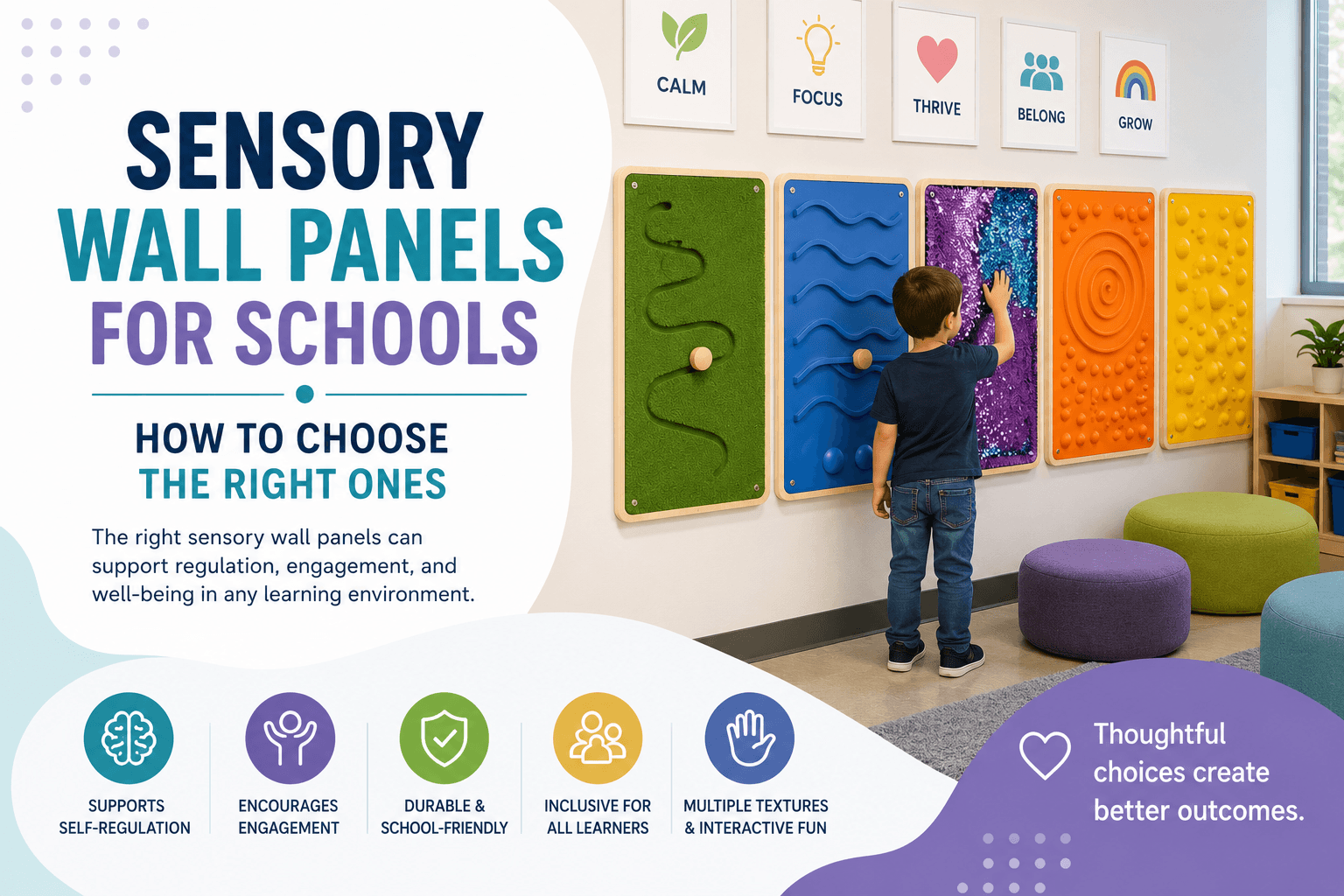
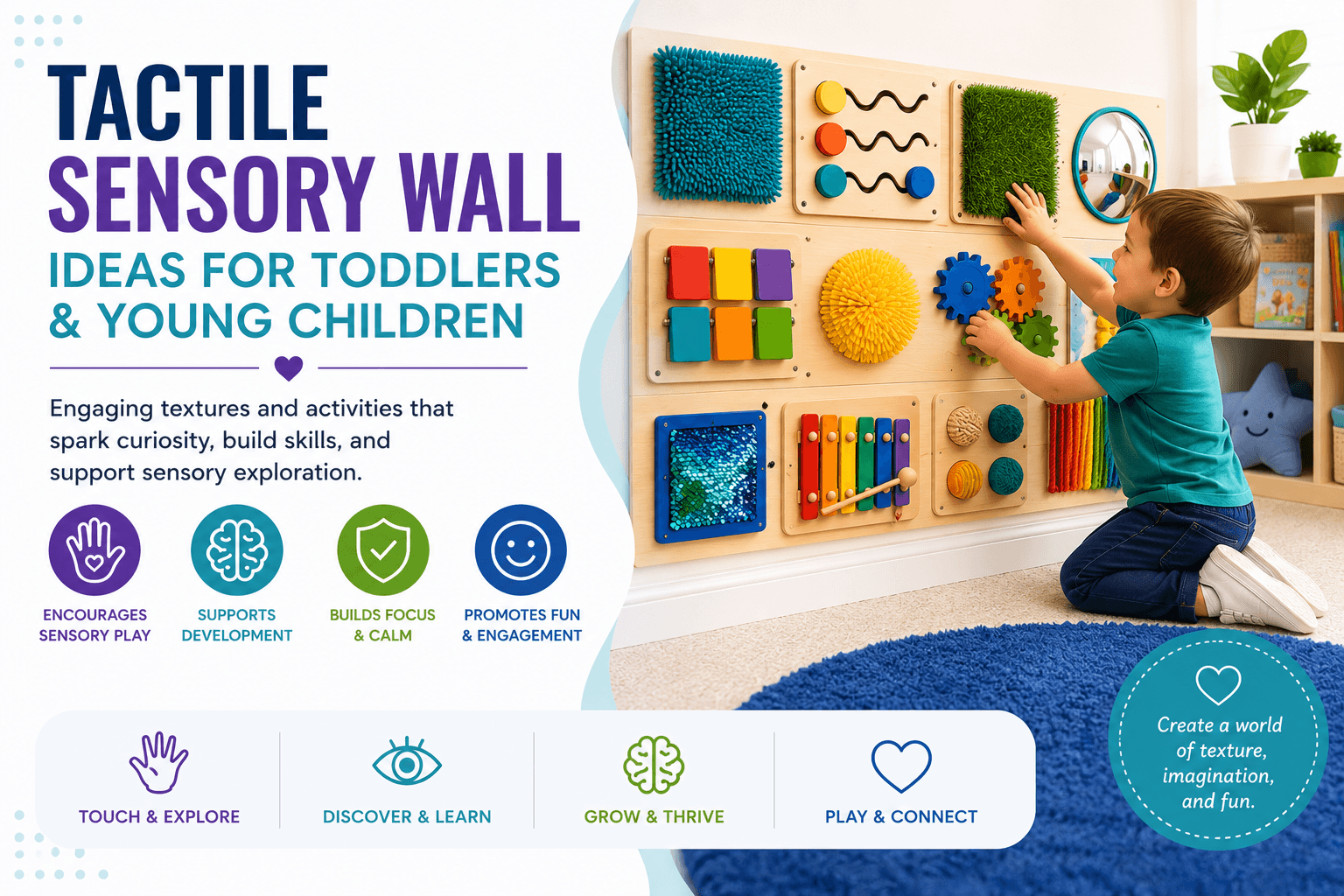
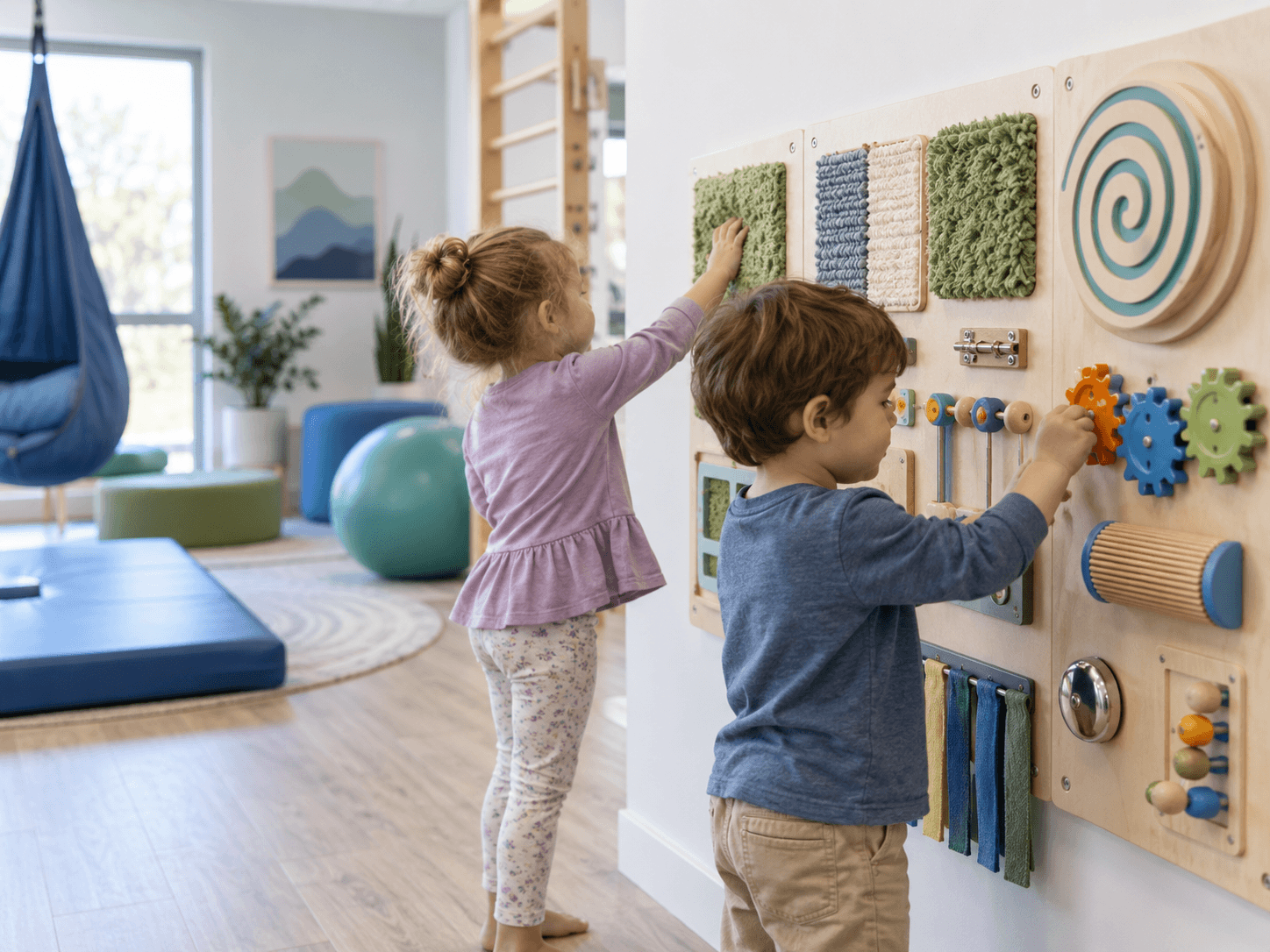
Sensory wall panels provide tactile, visual, and fine motor input without taking up much floor space.
Examples include:
- Tactile wall panels
- Busy boards
- LED marble panels
- Light up panels
- Fine motor activity boards
- Cause and effect panels
- Texture stations
Wall mounted tools are especially useful in schools, clinics, hallways, and smaller sensory gyms.
Sensory Gym Ideas: How to Design Your Space
A good sensory gym is organized, safe, and easy to use. The layout should support smooth transitions between activities.
Planning Your Layout: Zones and Flow
Divide the room into clear zones:
- Active movement zone
- Swinging or vestibular zone
- Climbing zone
- Crash and deep pressure zone
- Tactile and fine motor zone
- Calming zone
Keep high movement equipment away from quiet areas. Make sure pathways are clear and equipment does not overlap in unsafe ways.
Sensory Gym Setup for Home Use
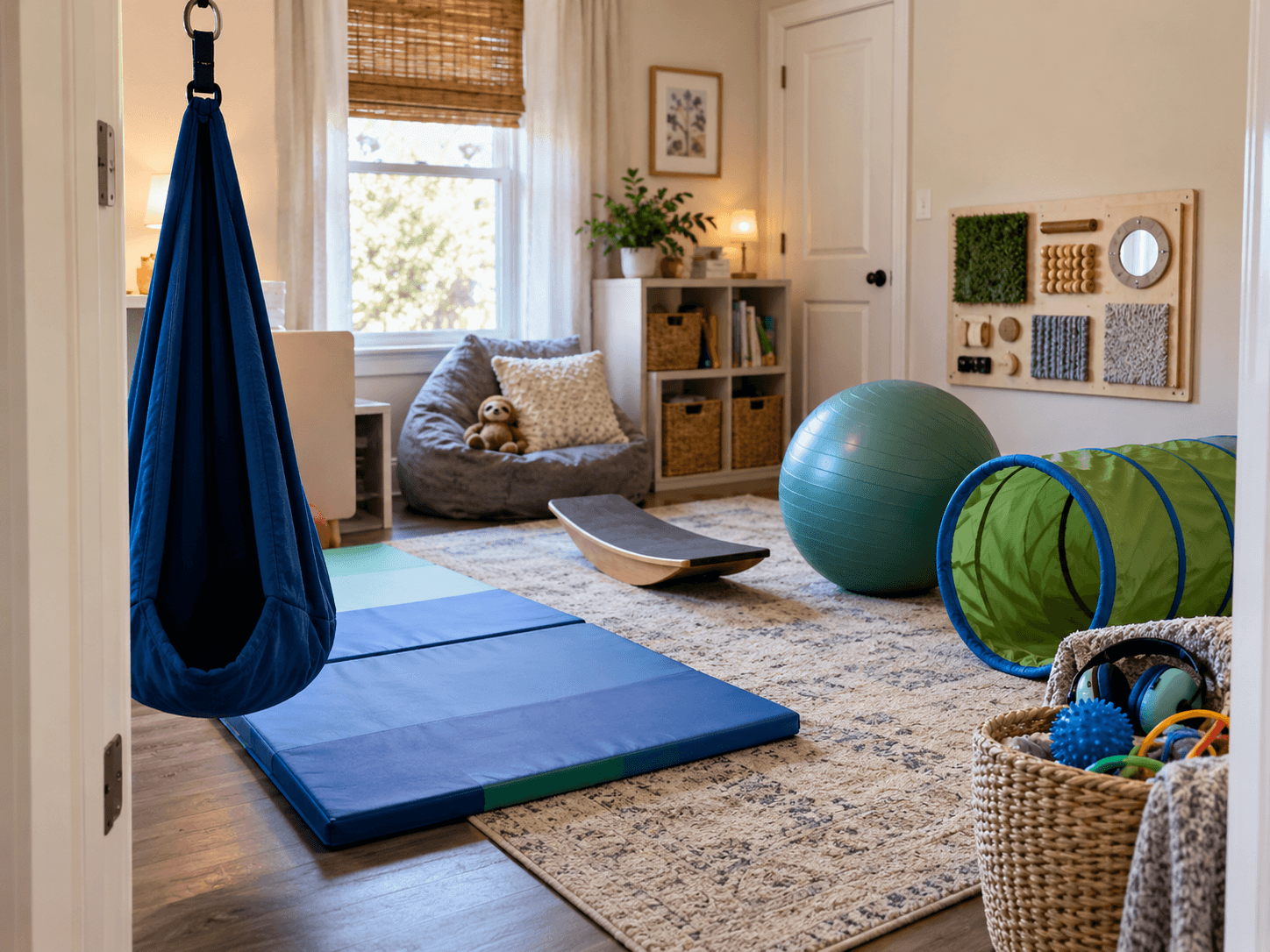
A home sensory gym can be simple or extensive. You do not need a large room to create a useful space.
Small space ideas include:
- Doorway swing with safe mounting
- Foldable crash mat
- Balance board
- Therapy ball
- Body sock
- Weighted lap pad
- Small tactile panel
- Sensory tunnel
- Soft floor mat
For larger homes, families may add climbing equipment, wall panels, foam blocks, or a dedicated movement room.
The best home sensory gym equipment is practical, safe, easy to store, and matched to the child’s daily needs.
Sensory Gym Setup for Therapy Clinics and Schools
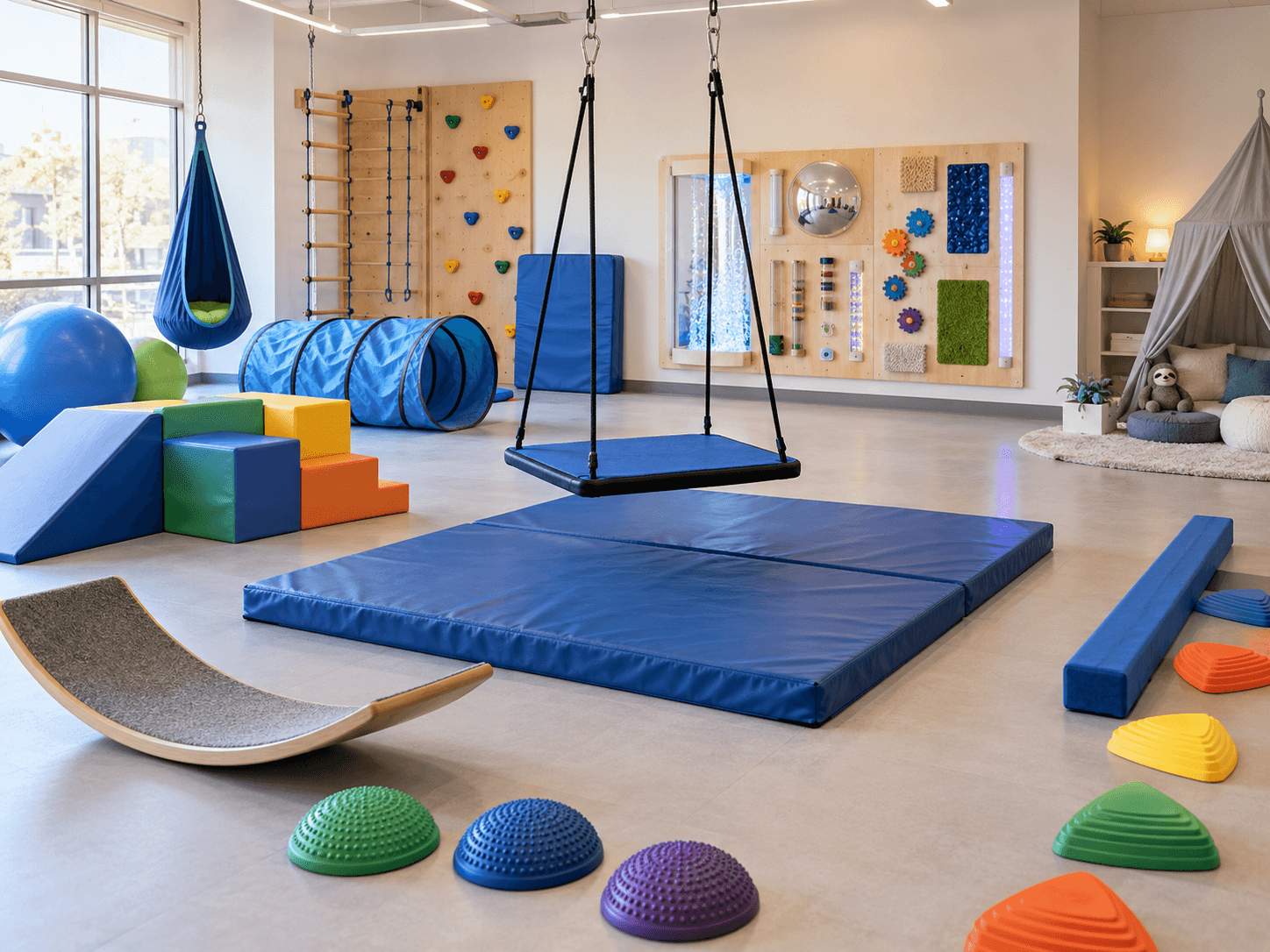
Therapy clinics and schools often serve multiple users, so equipment must be durable, flexible, and easy to clean.
Recommended products include:
- Platform swings
- Crash mats
- Climbing structures
- Balance beams
- Foam blocks
- Therapy balls
- Sensory wall panels
- Tactile stations
- Calming seating
- Deep pressure tools
- Fine motor stations
Schools may use sensory gym equipment in occupational therapy rooms, special education classrooms, sensory rooms, and movement break areas.
Sensory Room vs Sensory Gym
A sensory room and a sensory gym are related, but they are not exactly the same.
| Space Type | Main Purpose | Common Equipment |
|---|---|---|
| Sensory room | Calming, regulation, sensory exploration | Bubble tubes, lights, soft seating, wall panels |
| Sensory gym | Movement, motor development, active sensory input | Swings, crash mats, climbing equipment, balance tools |
Many spaces combine both. A therapy clinic may have an active gym area and a calming sensory room. A school may have a classroom calm down corner and a separate movement space.
Sensory Gym Equipment for Autism
Children with autism may benefit from sensory gym equipment that supports movement, deep pressure, body awareness, and calming.
Useful tools may include:
- Therapy swings
- Crash pads
- Body socks
- Weighted lap pads
- Compression vests
- Sensory tunnels
- Balance boards
- Chill out chairs
- Sensory wall panels
- Tactile tools
Autistic children have different sensory profiles. Some seek intense movement, while others are sensitive to motion. Equipment should be introduced gradually and adjusted based on the child’s response.
Building a Sensory Diet into Your Gym Routine
A sensory diet is a planned routine of sensory activities that helps the user stay regulated.
A sensory gym routine might look like:
- Start with heavy work, such as pushing or crawling
- Add vestibular input, such as swinging
- Use a balance or coordination activity
- Provide deep pressure with a crash mat or body sock
- Finish in a calming corner
The order matters. Some users need movement before sitting tasks. Others need calming input after active play. An occupational therapist can help create the right routine.
Sensory Gym Equipment for Adults with Disabilities
Adults may also benefit from sensory gym spaces, especially in rehabilitation clinics, adult day programs, group homes, and therapy settings.
Adult sensory gym equipment should account for:
- Larger body size
- Higher weight capacity
- Stronger materials
- Accessibility
- Transfer safety
- Rehabilitation goals
- Dignity and age appropriate design
Adult users may benefit from balance tools, movement therapy equipment, deep pressure products, adaptive seating, therapy mats, resistance equipment, and calming spaces.
Indoor Therapy Gym Safety
Safety is the most important part of any sensory gym setup.
Weight Limits and Installation
Always follow manufacturer instructions for:
- Swing installation
- Ceiling mounts
- Wall anchors
- Climbing structures
- Weight limits
- Hardware
- Inspection schedules
Ceiling mounted equipment should be installed only into appropriate structural supports. When in doubt, consult a professional installer.
Flooring and Fall Protection
Active sensory gyms need impact absorbing surfaces.
Options include:
- Foam mats
- Rubber flooring
- Crash mats
- Padded tiles
- Gym mats
- Wall padding where needed
Good flooring reduces injury risk during climbing, jumping, balancing, and crashing activities.
Supervision and Structured Sessions
Sensory gyms should be supervised based on the user’s age, abilities, and equipment type.
Best practices include:
- Use equipment for its intended purpose
- Keep sessions structured
- Limit overcrowding
- Inspect equipment regularly
- Remove damaged items
- Teach safe movement rules
- Keep calm zones separate from active zones
- Follow therapist recommendations
Sensory gym equipment works best when activities are purposeful, safe, and matched to goals.
Request a Free Quote from Special Needs Professionals
Choosing sensory gym equipment can feel overwhelming, especially when you are comparing sizes, weight limits, installation needs, safety features, and therapy goals.
A quote request can help families, schools, clinics, and agencies identify the right products for their space and budget.
When requesting a quote, include:
- User age range
- Diagnosis or support needs
- Space dimensions
- Therapy goals
- Budget range
- Setting, such as home, school, or clinic
- Preferred equipment categories
- Any OT or PT recommendations
Expert guidance can help you avoid costly mistakes and create a sensory gym that supports real daily needs.
Why Sensory Gym Equipment Matters
A sensory gym can be a powerful support space for children and adults with sensory, motor, developmental, and physical needs. With the right sensory gym equipment, users can safely practice movement, build strength, improve balance, receive deep pressure input, regulate emotions, and develop greater body awareness.
The best setup is not the one with the most products. It is the one designed around the user’s goals.
Start with the needs of the individual. Consider whether they need movement, calming, deep pressure, balance, strength, tactile input, or a combination of supports. Then choose equipment that fits your space, safety requirements, supervision level, and budget.
Whether you are creating a home sensory gym, school therapy space, or professional clinic environment, thoughtful planning and high quality equipment can make the space safer, more effective, and more meaningful.
eSpecial Needs can help families, educators, therapists, and institutions find sensory gym equipment that supports therapy goals, sensory regulation, motor development, and everyday participation.
FAQs
What is sensory gym equipment?
Sensory gym equipment includes therapeutic tools designed to provide movement, balance, deep pressure, tactile input, body awareness, and motor skill practice. Common examples include therapy swings, crash mats, balance boards, climbing equipment, sensory tunnels, body socks, sensory wall panels, weighted products, and calming seating.
What is a sensory gym?
A sensory gym is a structured space that uses movement and sensory equipment to support regulation, motor development, coordination, balance, strength, and body awareness. Unlike a regular playroom, a sensory gym is designed with therapeutic goals in mind.
Who benefits from sensory gym equipment?
Sensory gym equipment may benefit children, teens, and adults with autism, sensory processing disorder, ADHD, cerebral palsy, developmental delays, low muscle tone, anxiety, physical disabilities, coordination challenges, motor planning difficulties, and other sensory or developmental needs.
Is sensory gym equipment only for children?
No. While sensory gyms are often used for children, adults with disabilities, sensory needs, developmental disabilities, or rehabilitation goals may also benefit. Adult sensory gym equipment should be appropriately sized, durable, supportive, and rated for adult weight and strength.
What is the difference between a sensory room and a sensory gym?
A sensory room is often focused on calming, sensory exploration, and emotional regulation. A sensory gym is usually more active and movement focused, using equipment like swings, crash mats, climbing structures, tunnels, balance boards, and therapy balls. Many homes, schools, and clinics combine both types of spaces.
What equipment should be in a sensory gym?
A sensory gym may include therapy swings, crash mats, foam blocks, balance boards, climbing equipment, sensory tunnels, body socks, therapy balls, monkey bars, ladders, sensory wall panels, deep pressure tools, chill out chairs, and calming corner supplies. The best equipment depends on the user’s needs, space, and therapy goals.
What is the best sensory gym equipment for autism?
Helpful sensory gym equipment for autism may include therapy swings, crash pads, body socks, sensory tunnels, weighted lap pads, compression tools, balance boards, tactile panels, chill out chairs, and sensory wall panels. The right tools depend on whether the person seeks movement, avoids sensory input, or needs calming support.
How does sensory gym equipment help children with autism?
Sensory gym equipment can help autistic children receive controlled sensory input through movement, deep pressure, balance, touch, and body awareness activities. These tools may support regulation, motor planning, focus, emotional control, and safe sensory exploration.
What sensory gym equipment helps with balance?
Balance focused equipment includes balance boards, balance beams, wobble cushions, therapy balls, stepping stones, rocker boards, foam balance pads, and vestibular swings. These tools can help build core strength, coordination, postural control, and spatial awareness.
What sensory gym equipment provides deep pressure input?
Deep pressure tools include weighted blankets, weighted lap pads, compression vests, body socks, crash mats, sensory tunnels, deep pressure pillows, weighted shoulder wraps, and chill out chairs. These tools may help some users feel calmer, more grounded, and more aware of their bodies.
What sensory gym equipment supports gross motor skills?
Gross motor equipment may include climbing frames, monkey bars, ladders, soft play blocks, crash mats, therapy balls, scooter boards, tunnels, balance beams, swings, and foam ramps. These tools support strength, coordination, crawling, climbing, jumping, balance, and motor planning.
What are therapy swings used for in a sensory gym?
Therapy swings provide vestibular input, which supports balance, movement processing, spatial awareness, and postural control. Depending on the user, swinging may be calming, alerting, or organizing. Swings should be installed safely and used with appropriate supervision.
What types of swings are used in sensory gyms?
Common sensory gym swings include platform swings, bolster swings, hammock swings, Lycra swings, cocoon swings, net swings, and adaptive therapy swings. Each swing provides a different type of movement and support.
Are sensory swings safe?
Sensory swings can be safe when properly installed, matched to the user’s size and ability, used within weight limits, and supervised appropriately. Ceiling mounted swings should be installed into proper structural supports according to manufacturer instructions.
What is a crash mat used for?
A crash mat gives users a safe place to jump, fall, roll, or crash while receiving proprioceptive input. It is often used for children who seek strong movement and pressure input. Crash mats can support body awareness, regulation, and safe active play.
What is a sensory body sock?
A sensory body sock is a stretchy fabric tool that surrounds the body and provides resistance during movement. It can support body awareness, motor planning, proprioceptive input, and calming. It should be used in a safe area with supervision when needed.
What are sensory tunnels used for?
Sensory tunnels encourage crawling, pushing, pulling, and body awareness. They can support bilateral coordination, spatial awareness, tactile input, motor planning, and proprioceptive feedback. Tunnels are commonly used in home sensory gyms, therapy clinics, and classrooms.
What are sensory wall panels?
Sensory wall panels are mounted panels that provide tactile, visual, fine motor, or cause and effect activities. They are useful in sensory gyms because they add engagement without taking up floor space. They are especially helpful in schools, clinics, hallways, and small rooms.
How do you set up a sensory gym at home?
To set up a home sensory gym, start with the user’s needs and available space. A small setup may include a crash mat, body sock, balance board, sensory tunnel, therapy ball, weighted lap pad, and calming corner. Larger spaces may include swings, climbing equipment, wall panels, and soft play equipment.
Can you build a sensory gym in a small space?
Yes. A small sensory gym can be created with compact, portable, or foldable equipment. Good small space options include foldable mats, balance boards, body socks, sensory tunnels, therapy balls, doorway swings when safely installed, tactile panels, and portable calming tools.
What should be included in a school sensory gym?
A school sensory gym may include therapy swings, crash mats, climbing equipment, balance beams, foam blocks, therapy balls, sensory wall panels, tactile stations, deep pressure tools, and a calming area. Schools should choose durable equipment that can support multiple students and therapy goals.
What should therapy clinics include in a sensory gym?
Therapy clinics often need versatile, durable equipment such as platform swings, crash mats, ladders, climbing structures, balance tools, scooter boards, foam pits, tactile stations, sensory wall panels, therapy balls, and calming furniture. Equipment should support a wide range of ages, abilities, and therapy plans.
How do you design a sensory gym layout?
A good sensory gym layout uses clear zones. Common zones include an active movement zone, swing zone, climbing zone, crash and deep pressure zone, tactile or fine motor zone, and calming zone. Keep high movement areas separate from quiet areas and leave clear pathways between equipment.
What flooring is best for a sensory gym?
Impact absorbing flooring is best for sensory gyms. Options include foam mats, rubber flooring, padded tiles, gym mats, crash mats, and wall padding where needed. Good flooring helps reduce injury risk during jumping, climbing, swinging, balancing, and crashing activities.
What safety rules are important for sensory gyms?
Important safety rules include following weight limits, installing equipment correctly, inspecting equipment regularly, using fall protection, supervising users appropriately, keeping pathways clear, removing damaged items, and teaching safe movement rules. Swings and climbing equipment require special installation care.
How much does sensory gym equipment cost?
The cost depends on the size of the space and the type of equipment. A small home setup may start with lower cost items like mats, tunnels, body socks, and balance tools. Larger school or clinic sensory gyms with swings, climbing equipment, wall panels, and padded flooring may require a larger investment.
Can insurance cover sensory gym equipment?
Some sensory gym equipment may be eligible for insurance, Medicaid, waiver, grant, or school funding when it is medically or therapeutically necessary. Coverage varies by plan, program, diagnosis, and documentation requirements.
What is a letter of medical necessity for sensory gym equipment?
A letter of medical necessity is a document from a qualified professional explaining why specific equipment is needed for medical, developmental, sensory, functional, or therapeutic reasons. It may help support insurance, Medicaid, grant, or funding requests.
Can Medicaid waivers help pay for sensory gym equipment?
Some Medicaid waiver programs may help fund adaptive or therapy equipment, including certain sensory gym tools, when the equipment supports documented needs. Requirements vary by state and program, so families should check with their waiver coordinator or Medicaid office.
Can schools buy sensory gym equipment with purchase orders?
Yes. Many schools, districts, clinics, and government agencies use purchase orders to buy sensory gym equipment. Purchase orders can help with procurement, budget approvals, documentation, and bulk purchasing.
How do I choose the right sensory gym equipment?
Start by identifying the user’s needs. Consider whether they need movement, calming, deep pressure, balance, gross motor development, tactile input, or fine motor support. Also consider age, size, ability level, available space, supervision, installation needs, weight limits, and therapist recommendations.
Should I work with an occupational therapist before buying sensory gym equipment?
Yes, whenever possible. An occupational therapist can help identify which sensory gym tools match the user’s sensory profile, motor needs, safety considerations, and therapy goals. Professional guidance is especially important for swings, weighted tools, climbing equipment, and users with complex needs.
Where can I buy sensory gym equipment?
Sensory gym equipment should be purchased from a trusted adaptive equipment supplier that understands sensory, motor, therapy, and special needs products. Look for a supplier with product variety, safety information, quote support, school purchasing options, and knowledgeable customer service.
How can eSpecial Needs help with sensory gym equipment?
eSpecial Needs offers sensory gym equipment for homes, schools, therapy clinics, sensory rooms, and special education spaces. Families and professionals can find therapy swings, crash mats, balance tools, sensory tunnels, body socks, sensory wall panels, deep pressure products, soft play equipment, calming furniture, and adaptive therapy tools.