Table of Contents
- What Are Inclusive Learning Tools?
- Why Inclusive Learning Matters
- Who Uses Inclusive Learning Tools?
- Sensory Motor Tools for Regulation and Readiness to Learn
- Assistive Technology for Communication and Access
- Adaptive Seating and Positioning Equipment
- Sensory Room Equipment and Calm Down Corners
- Educational Learning Tools for Diverse Learners
- Movement Tools and Indoor Therapy Gym Equipment
- Inclusive Learning Tools That Support IEP Goals
- How to Source Inclusive Learning Tools for Your School
- Purchase Orders and School Quotes
- Building a More Inclusive Classroom
- FAQs
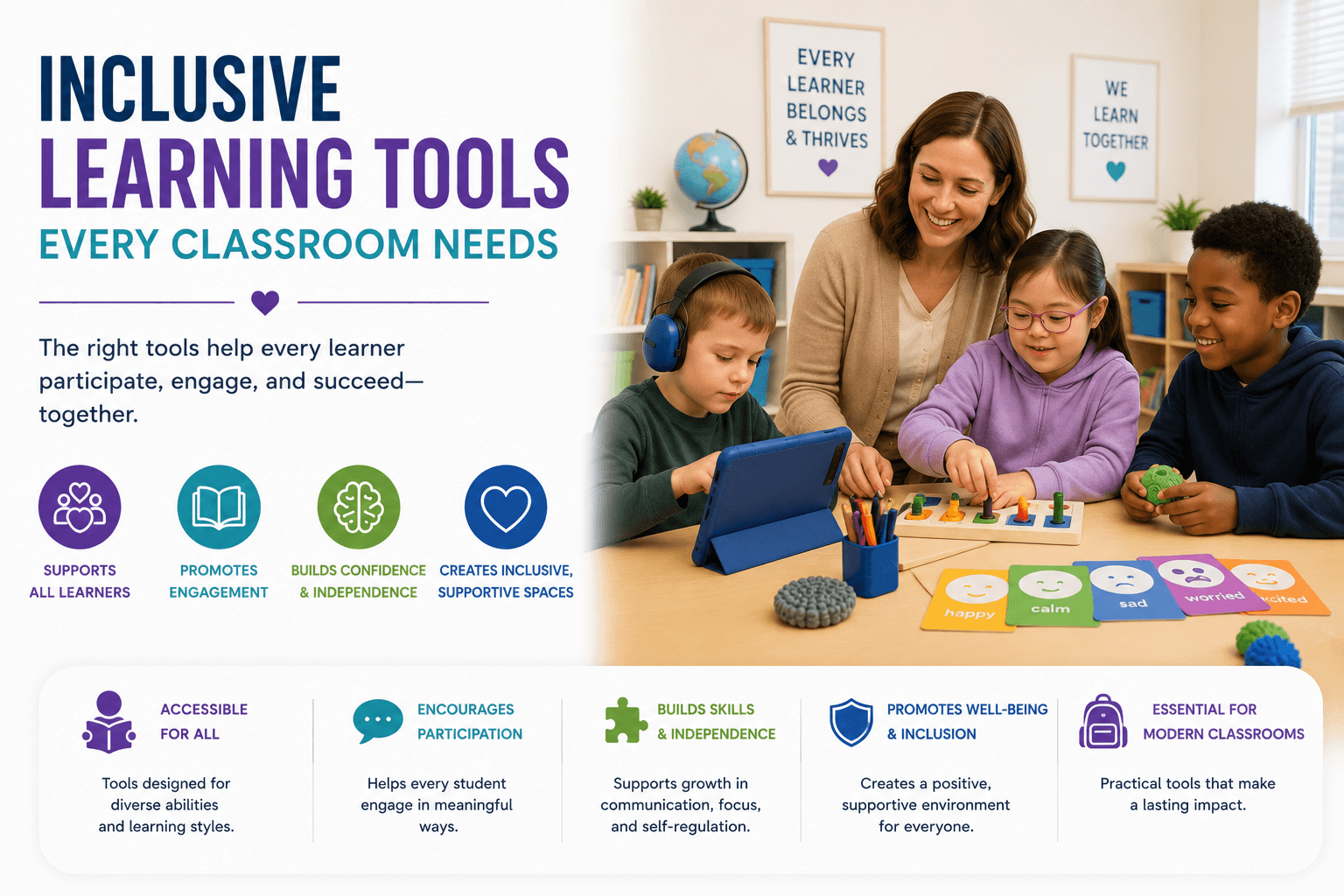
Inclusive learning tools help make classrooms more accessible, engaging, and supportive for students with different communication styles, sensory needs, motor abilities, learning profiles, and levels of independence. The goal is not to create a separate learning experience for a few students. It is to build a classroom where more students can participate, communicate, move, focus, and succeed.
For special education classrooms, inclusive preschool settings, therapy programs, intervention rooms, and general education classrooms, the right tools can make daily routines more manageable. A student may need a sensory break before circle time. Another may need adaptive seating for posture and table access. A non speaking student may need AAC tools to answer questions and make choices. Others may benefit from fine motor tools, visual supports, movement equipment, or calm down spaces.
Inclusive learning tools can support students with autism, ADHD, cerebral palsy, Down syndrome, developmental delays, sensory processing differences, communication needs, physical disabilities, low muscle tone, learning disabilities, and other developmental or medical needs.
Schools, teachers, therapists, and administrators can find classroom ready support through eSpecial Needs, including Education Products, Assistive Technology, Sensory Motor Tools, Classroom Seating, Sensory Room Equipment, and Fine Motor Tools.
What Are Inclusive Learning Tools?
Inclusive learning tools are products, equipment, and classroom supports that help students access instruction, communicate their needs, participate in activities, and build skills in ways that match their abilities.
These tools can include:
Adaptive seating
AAC devices
Visual schedules
Sensory tools
Fine motor supplies
Adapted writing tools
Fidget tools
Noise reducing headphones
Movement equipment
Sensory wall panels
Classroom timers
Positioning supports
Adapted toys and games
Switch accessible products
Calm down furniture
Inclusive learning does not mean every student uses the same tool. It means the classroom offers flexible ways to learn, communicate, move, and participate.
Let's Learn Sign Language
$20.95
Let’s Learn Sign Language is a practical set of sign language flash cards designed to help children and adults build communication skills with clear, approachable visual support. These learning cards make it easier to introduce basic sign language words without… read more

Why Inclusive Learning Matters
Students learn best when the environment supports their ability to engage. A child who is struggling to sit upright, communicate, regulate sensory input, hold a pencil, or understand a transition may have trouble showing what they know.
Inclusive classroom tools can help reduce unnecessary barriers. They may support:
Participation in instruction
Communication with adults and peers
Access to classroom materials
Fine motor skill development
Attention and regulation
Comfortable seating
Independence during routines
Academic engagement
Social participation
IEP goal support
Teacher and aide efficiency
The right tools do not lower expectations. They give students meaningful ways to access learning.
Who Uses Inclusive Learning Tools?
Inclusive learning tools can be used by many people within a school or program.
Teachers
Teachers use inclusive tools to create flexible learning environments, support transitions, adapt instruction, and help students participate in classroom routines.
Special Education Teachers
Special education teachers may use adaptive learning tools to support IEP goals, communication plans, fine motor practice, sensory regulation, daily living skills, and academic participation.
Occupational Therapists
Occupational therapists may recommend tools for handwriting, sensory regulation, fine motor development, posture, dressing, feeding, and classroom access.
Physical Therapists
Physical therapists may help select mobility equipment, gait trainers, adaptive seating, standers, and movement tools that support participation throughout the school day.
Speech Language Pathologists
Speech language pathologists may use AAC devices, communication boards, choice making tools, switches, and language materials to support student expression and participation.
Paraprofessionals and Classroom Aides
Aides can use inclusive learning tools during transitions, meals, fine motor activities, classroom centers, communication routines, and sensory breaks.
Administrators and Purchasing Teams
Administrators and purchasing teams may source inclusive classroom equipment, sensory room tools, adaptive furniture, and therapy products that support students across programs.
Sensory Motor Tools for Regulation and Readiness to Learn
Sensory motor tools can help students prepare for learning by offering movement, tactile input, body awareness activities, or calming sensory experiences. These tools are especially useful when a student needs help transitioning from active play to seated work, recovering from an overwhelming environment, or taking a planned movement break.
A sensory motor routine might include a few minutes of heavy work, a short stretch break, a fidget activity, or calm seating before returning to instruction.
Explore Sensory Motor Tools, Sensory Bundles and Kits, Tactile Stimulation Products, and Vestibular Motion Products.
Busy Bin Classroom Sensory Box
$333.95
Introducing the best classroom helper since the teacher's pet: the Busy Bin Classroom Box from eSpecial Needs! While the Busy Bin won't bring you apples or clap out your erasers after class, it WILL provide your elementary school classroom with… read more

Helpful Sensory Motor Tools for Classrooms
Useful classroom sensory tools may include:
Fidget tools
Therapy balls
Resistance bands
Tactile toys
Weighted lap pads
Visual timers
Wobble seating
Balance cushions
Noise reducing headphones
Handheld sensory tools
Sensory wall panels
Calm down kits
The best tool is one that supports the student without distracting from learning or creating unsafe use.

How to Use Sensory Tools During the School Day
Sensory tools work best when they are built into predictable routines. Students may use them:
Before morning work
During transitions
Before handwriting
After recess
During quiet reading
In a calm corner
Before therapy sessions
During waiting times
After a noisy activity
When following a visual schedule
A simple plan can make a sensory tool more useful than offering it only after a student becomes overwhelmed.
Assistive Technology for Communication and Access
Assistive technology can help students participate in classroom communication, academic tasks, computer use, literacy activities, and social interaction. Some students need technology to speak. Others need alternative ways to select answers, use a tablet, access a computer, or participate in group activities.
Explore Assistive Technology, AAC and Communication, Choice Making Tools, Single Message Communication Devices, and Switches.
AAC Devices for Non Speaking Students
AAC stands for augmentative and alternative communication. AAC tools can help students communicate needs, choices, questions, comments, and ideas when spoken language is limited or inconsistent.
AAC options may include:
Communication buttons
Single message devices
Multi message devices
Picture communication tools
Choice boards
Speech generating devices
Tablet based communication supports
Switch accessible communication devices
Communication books
AAC should be available throughout the day, not only during speech sessions. Students may use it during class discussions, snack time, centers, transitions, playground routines, and social activities.
Assistive Technology for Academic Participation
Students with fine motor, visual, physical, or communication needs may benefit from tools that make classroom tasks more accessible.
Helpful options may include:
Tablet mounts
Keyguards
Switch access tools
Alternative keyboards
Large button devices
Computer access tools
Adapted mouse options
Page turners
Writing supports
Low vision tools
The right tool should support the student’s goal without making the task unnecessarily complicated.
Adaptive Seating and Positioning Equipment
Adaptive seating can affect attention, comfort, hand use, feeding, communication, and participation. A student who is sliding, leaning, or working hard to stay upright may struggle to access learning materials.
Supportive seating can help create a stable base for classroom activities.
Explore Classroom Seating, Seating Systems, Furniture, Active Seating, and Rifton Adaptive Equipment.
Why Positioning Supports Learning
Proper positioning may help students:
Sit with more comfort
Access desks and trays
Use both hands
Reach learning materials
Maintain visual attention
Use AAC tools
Participate in feeding routines
Reduce fatigue
Improve stability for writing and cutting
Stay engaged longer
For some students, flexible seating is enough. For others, adaptive seating with foot support, trunk support, or a tray may be needed.
Types of Classroom Seating
Classroom seating can include:
Wobble chairs
Floor chairs
Bean bag seating
Balance cushions
Adaptive activity chairs
Supportive classroom chairs
Positioning wedges
Footrests
Seat cushions
Floor sitters
Adjustable tables and trays
A therapist can help determine whether the student needs movement seating, posture support, or both.
Sensory Room Equipment and Calm Down Corners
A calm down corner gives students a supportive place to regroup, use sensory tools, and prepare to return to learning. It should not be used as punishment. It should be a predictable, positive option that students can access with guidance.
A calm down corner may include:
Comfortable seating
Visual timer
Fidget basket
Noise reducing headphones
Weighted lap pad
Communication supports
Soft lighting
Sensory wall panel
Calm breathing visuals
Quiet books
Simple choice board
Explore Sensory Room Equipment, Sensory Wall Panels, and Weighted Products.
Setting Up a Classroom Calm Corner
Start small. A calm corner does not need to be a separate room.
Choose:
A low traffic area
Soft and comfortable seating
A clear visual boundary
One or two calming tools
A visual timer
Easy storage
A simple routine for use
Teach students how and when to use the space. Model that the goal is to reset and return to learning.
Sensory Room Equipment for Larger Programs
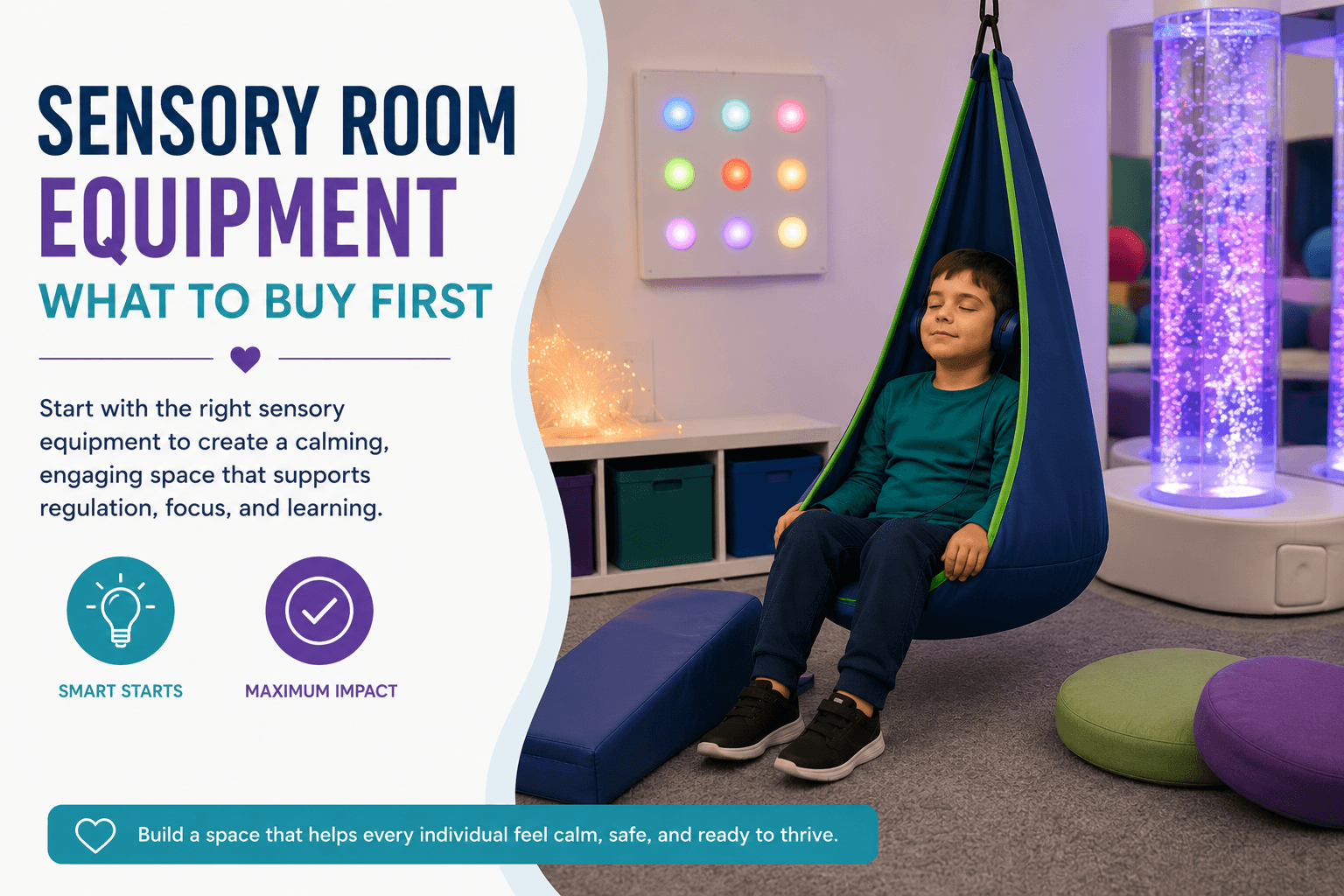
Schools with dedicated sensory rooms may add:
Bubble tubes
Fiber optic lights
Sensory wall panels
Soft play equipment
Crash pads
Sensory swings
Vibroacoustic equipment
Projectors
Tactile tools
Mobile sensory equipment
For complete setups, explore Sensory Room Packages and Turnkey Sensory Room Installation.
Educational Learning Tools for Diverse Learners
Inclusive educational tools help students learn through different formats. Some students learn best through touch, movement, repetition, pictures, matching, sound, or hands on problem solving.
Helpful educational tools may include:
Flashcards
Sorting activities
Letter and number tools
Adapted games
Hands on math tools
Visual schedules
Fine motor activities
Choice boards
Social skills games
Sign language tools
Reading supports
Cause and effect toys
Explore Education Products, Teaching Tools, Math and Numbers, Flashcards, and Sign Language Products.
Special Needs Toys That Support Learning
Many toys can support learning while still feeling like play. Adapted toys and games can encourage communication, turn taking, problem solving, fine motor development, and social interaction.
Helpful categories include:
Fine Motor and Writing Supports
Fine motor tools can help students practice grasping, cutting, drawing, writing, and manipulating learning materials.
Helpful classroom options include:
Pencil grips
Adapted scissors
Slant boards
Putty
Lacing activities
Peg boards
Tongs and tweezers games
Handwriting tools
Grip supports
Fine motor task boxes
Explore Handwriting Tools, Grips and Holders, and Scissors and Cutting Aids.
Movement Tools and Indoor Therapy Gym Equipment
Movement can support attention, regulation, motor development, and participation. Some students need active input before seated tasks. Others need planned movement breaks to stay engaged throughout the day.
Movement tools may include:
Therapy balls
Balance tools
Crawling tunnels
Scooters
Soft play pieces
Crash pads
Indoor swings
Obstacle course equipment
Stepping stones
Movement games
Adapted tricycles
Gross motor tools
Explore Movement Products, Balance Products, Crawling Products, Adaptive Swings, and Soft Play Products.
Movement Based Learning in the Classroom
Movement based learning can be as simple as a three minute stretch break, a classroom movement game, a brief obstacle course, or a planned heavy work activity before writing.
Movement activities may support:
Attention
Body awareness
Motor planning
Balance
Coordination
Transition routines
Sensory regulation
Classroom readiness
Gross motor development
Keep movement activities structured and matched to student needs.
Inclusive Learning Tools That Support IEP Goals
Many classroom tools can support common IEP goals when used intentionally. The equipment should be chosen around the student’s functional goal, not simply because it is popular or visually appealing.
Examples include:
AAC tools for communication goals
Pencil grips for handwriting goals
Sensory tools for self regulation goals
Adaptive seating for posture and participation goals
Fine motor toys for grasp and coordination goals
Visual timers for transition goals
Switches for cause and effect goals
Gait trainers for mobility goals
Adapted toys for participation goals
Sensory wall panels for sensory exploration and fine motor goals
Document how the tool is used, who supports it, and what goal it addresses.
How to Source Inclusive Learning Tools for Your School
Planning classroom equipment can feel overwhelming, especially when schools are balancing student needs, space, safety, staff training, and budget.
A helpful approach is to begin with a needs list.
Ask:
Which students need added support right now?
What classroom routines are most difficult?
Are communication tools needed?
Are students struggling with regulation?
Is seating limiting participation?
Are fine motor tasks creating barriers?
Does the classroom need a calm corner?
Is movement equipment needed?
What does the school already own?
Which tools can support multiple students?
Prioritizing daily needs can help schools make better purchasing decisions.
Purchase Orders and School Quotes
Schools, clinics, therapy centers, and organizations often need product quotes and purchase order support for classroom equipment. This can be especially helpful when ordering multiple tools for a special education classroom, sensory room, therapy area, or school wide program.
Before requesting a quote, gather:
Product names or product links
Quantity needed
Student or program needs
Room measurements
Budget limits
Delivery requirements
Purchase order contact information
Any required approval documentation
For schools planning a larger sensory space, explore Turnkey Sensory Room Installation.
Building a More Inclusive Classroom
A fully inclusive classroom is built through many small choices. It may begin with a visual timer, a pencil grip, a calm chair, or an AAC button. Over time, these tools can create a learning environment where more students have a meaningful way to participate.
Start with the areas that create the biggest barriers. Choose tools that are easy for staff to use, safe for students, and connected to real classroom routines. Then observe what helps students become more comfortable, engaged, independent, and ready to learn.
Inclusive learning tools are not extras. They are practical supports that help classrooms become more accessible for every learner.
FAQs
What are inclusive learning tools?
Inclusive learning tools are classroom products and supports that help students participate in learning, communication, movement, sensory regulation, fine motor activities, and daily routines. They may include adaptive seating, AAC devices, visual schedules, sensory tools, fine motor supplies, movement equipment, adapted writing tools, and calm down supports.
Why are inclusive learning tools important?
Inclusive learning tools help reduce barriers that can make school harder for students with different abilities and learning styles. A student may need support to communicate, sit comfortably, hold a pencil, manage sensory input, transition between activities, or access classroom materials. The right tools can help students participate more fully in instruction and daily routines.
What is the difference between inclusive learning tools and special education equipment?
Inclusive learning tools are designed to make classrooms more accessible for a wide range of learners. Some tools may be used by many students, such as visual timers, flexible seating, sensory tools, or hands on learning materials. Special education equipment may be more individualized and connected to a student’s IEP, therapy plan, communication needs, posture, mobility, or safety.
What are AAC tools?
AAC stands for augmentative and alternative communication. AAC tools help people communicate when spoken language is limited, inconsistent, or not their preferred communication method. AAC may include communication buttons, picture boards, choice boards, speech generating devices, communication books, tablet based communication tools, and switch accessible devices.
How can AAC tools be used in the classroom?
AAC tools should be available throughout the day, not only during speech sessions. Students may use AAC to answer questions, make choices, request help, participate in circle time, communicate during snack, respond during group activities, and interact with peers.
Why are visual timers helpful in classrooms?
Visual timers help students see how much time is left for an activity, transition, break, or assignment. They can support independence, reduce repeated questions, make expectations clearer, and help students prepare for a change in routine.
Can fidget tools help students focus?
Some students may focus better when their hands have a quiet, purposeful activity. Fidget tools can help certain students manage restlessness, sensory needs, or waiting time. Classroom expectations should be clear so the tool supports learning rather than becoming a distraction.
What is a classroom calm down corner?
A classroom calm down corner is a positive, supportive area where students can take a short break, use sensory tools, regulate emotions, and prepare to return to learning. It may include comfortable seating, a visual timer, fidget tools, calming visuals, noise reducing headphones, weighted products, and communication supports.
Should a calm down corner be used as punishment?
No. A calm down corner should not be used as punishment, isolation, or a place where students are sent for misbehavior. It should be a supportive tool that helps students learn how to recognize their needs, regulate, and return to participation.
What seating options support inclusive classrooms?
Inclusive seating may include flexible seating, wobble chairs, floor cushions, balance cushions, classroom chairs with foot support, adaptive activity chairs, positioning supports, bean bags, and adjustable tables. The best seating depends on whether the student needs movement, posture support, stable table access, or a quieter place to work.