Table of Contents
- Why Fireworks and Autism Can Be a Difficult Combination
- Start With a Flexible Fourth of July Plan
- Sensory Friendly Fireworks Alternatives
- Support a Noise Sensitive Child During Fireworks
- Build a Sensory Support Bag for the Fourth of July
- Choose Accessible Fourth of July Events
- Help Family and Friends Understand the Plan
- Teach Siblings and Friends About Inclusion
- Keep Food and Mealtime Flexible
- Know When It Is Time to Leave
- Celebrate in a Way That Works for Your Family
- FAQs
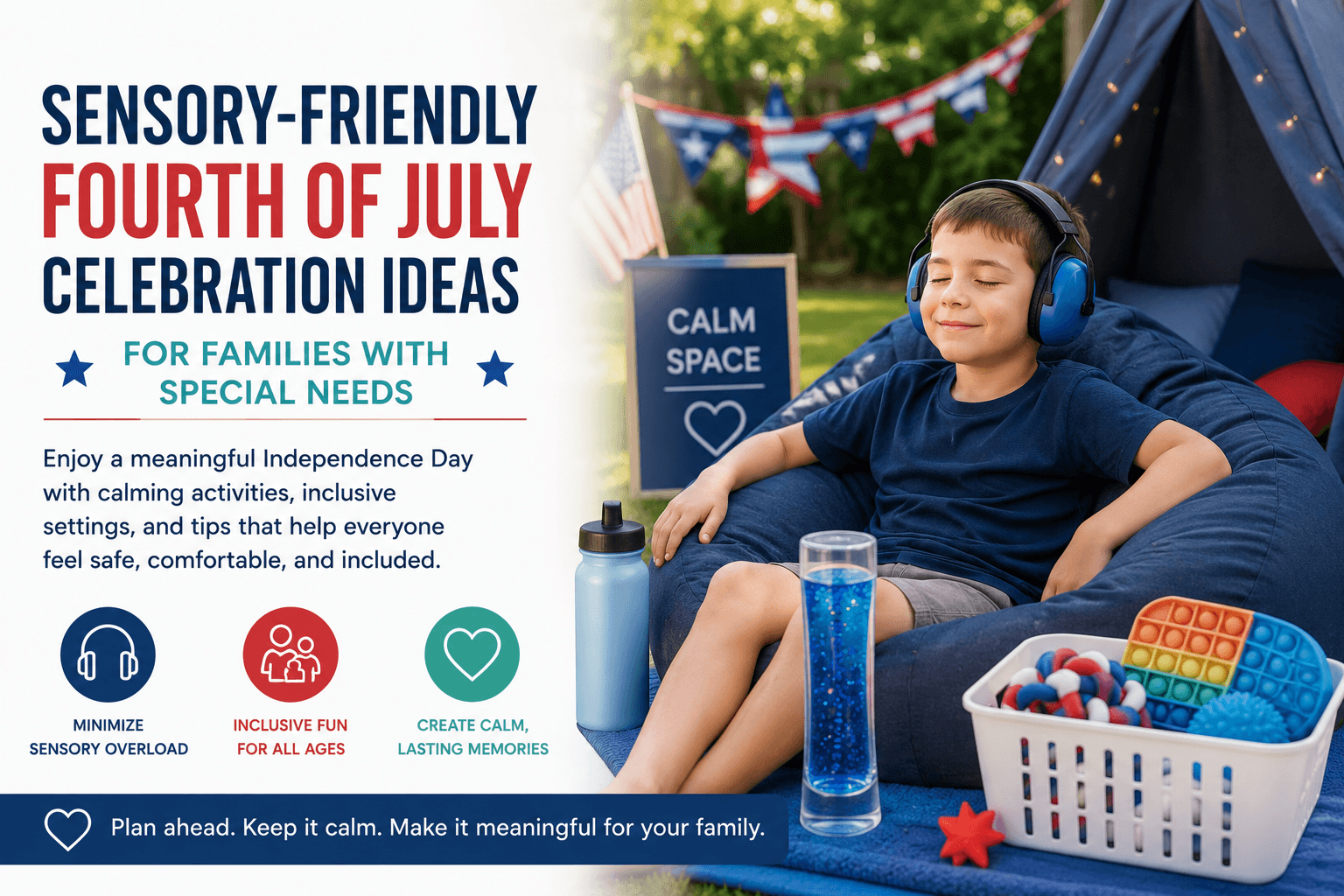
A sensory friendly Fourth of July can help children and adults with autism, sensory processing differences, mobility needs, communication needs, and other disabilities enjoy the holiday with more comfort, choice, and confidence. Fireworks, parades, crowded events, loud music, bright lights, heat, and late bedtime routines can be exciting for some families but overwhelming for others.
The goal of a sensory friendly Fourth of July is not to remove every tradition. It is to make celebrations more flexible, accessible, and enjoyable for everyone. Some families may attend a short parade, watch fireworks from a quiet distance, host a backyard picnic, use sensory friendly fireworks alternatives, or create a calm evening at home.
Fourth of July activities for special needs families can be simple, meaningful, and personalized. The best plan is one that respects each person’s sensory needs, mobility needs, communication preferences, safety considerations, and comfort level.
Why Fireworks and Autism Can Be a Difficult Combination
Fireworks and autism can be a challenging combination because fireworks involve sudden sounds, flashing light, unpredictable timing, crowded environments, and changes to normal routines. For some autistic children and adults, these sensory experiences may feel painful, confusing, or overwhelming.
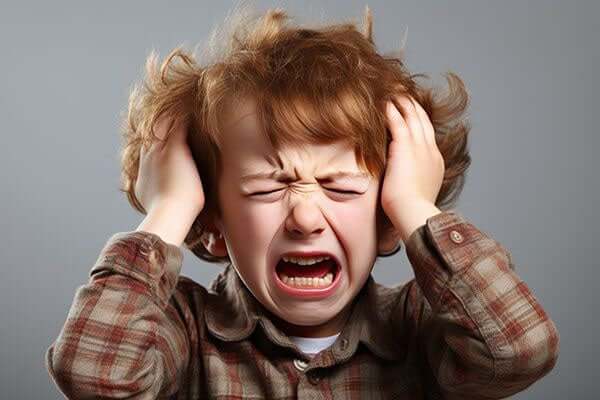
Fireworks sensory sensitivity can look different for every person. Some people may cover their ears, cry, pace, become quiet, try to leave, become more energetic, or have difficulty communicating what they need. Others may enjoy watching the lights but dislike the sound. Some may prefer to watch fireworks from inside a car, from a home window, or on television with the volume lowered.
A noise sensitive child may need more support before, during, and after a fireworks event. Preparing ahead of time can make a significant difference.
Common Fourth of July sensory challenges may include:
Loud booms from fireworks
Sudden bursts of sound
Flashing lights
Strong food smells
Crowded spaces
Long waits before events begin
Hot weather
Bright sunlight
Busy parking areas
Late bedtimes
Unfamiliar food
Changes in routine
Unexpected touching or hugging
Difficulty finding a quiet place
Autism friendly Fourth of July planning begins by noticing which parts of the holiday are enjoyable and which parts are difficult.
Start With a Flexible Fourth of July Plan
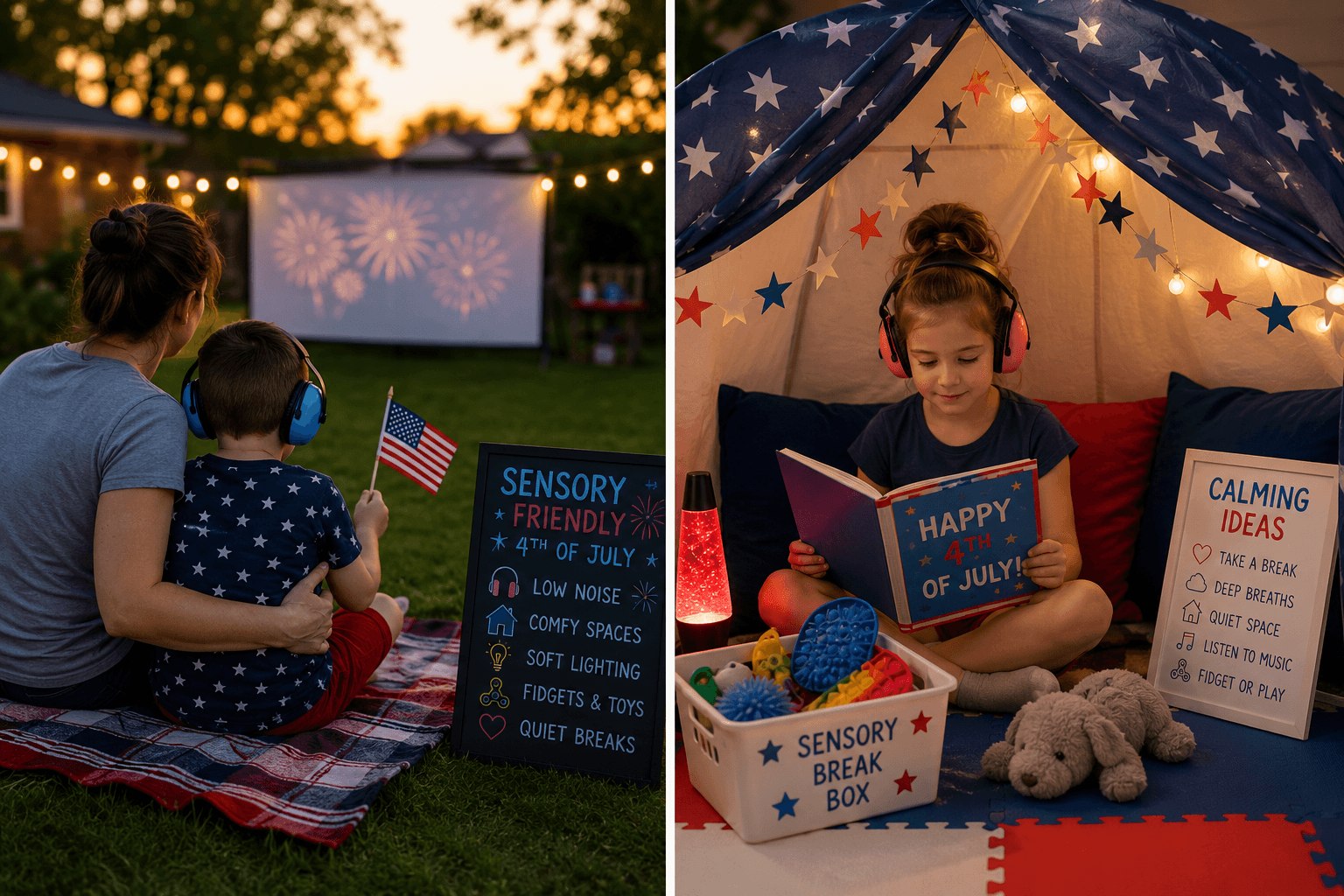
A sensory friendly holiday does not need to include a parade, fireworks show, cookout, concert, and late night event all in one day. Many families find that choosing one or two meaningful activities creates a better experience for everyone.
Before making plans, ask:
What parts of the Fourth of July does my child or family member enjoy?
Does my child like bright lights but dislike loud sound?
Is a daytime activity easier than a late night event?
Would a backyard celebration feel better than a crowded public event?
Is there a quiet area available if someone needs a break?
Can we leave easily if the event becomes too overwhelming?
Does the event have accessible parking and bathrooms?
Can mobility equipment move through the area safely?
Should we bring a visual schedule?
Is an early bedtime more important than watching fireworks?
A successful Fourth of July may look different from one family to the next. It can include a picnic, a craft, a short accessible outing, a favorite meal, a sensory activity, or a quiet evening at home.
Sensory Friendly Fireworks Alternatives
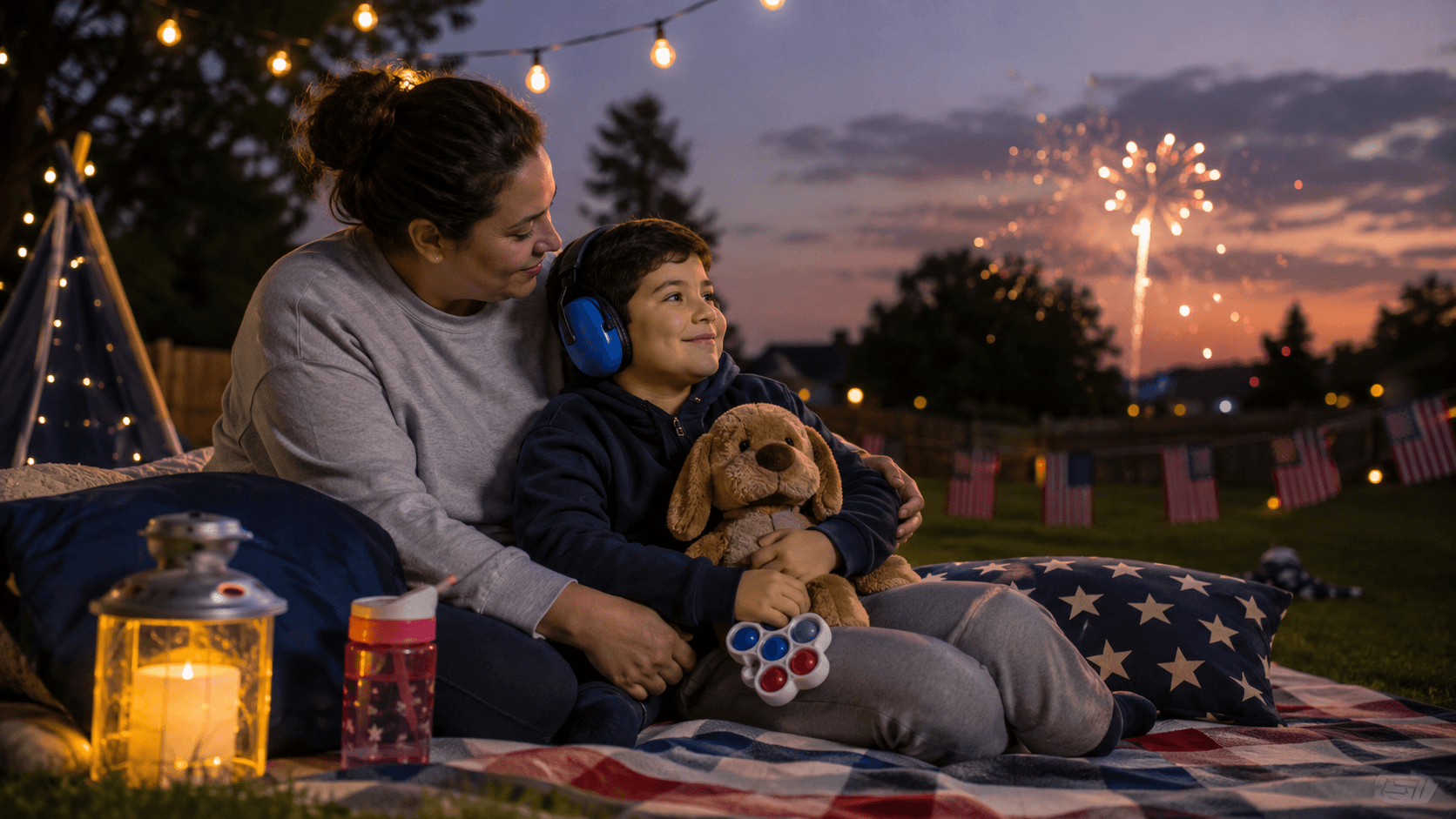
Sensory friendly fireworks alternatives can help families celebrate without the loud sound and unpredictable stimulation of traditional fireworks. These options can still create a fun red, white, and blue theme while making the evening more comfortable.
Try these sensory friendly holiday activities:
Watch fireworks on television with the sound turned down
Use a projector with gentle colorful light effects
Make glow stick bracelets and necklaces
Create a flashlight dance party
Use bubble machines outdoors
Make a red, white, and blue sensory bin
Decorate cookies or cupcakes
Create paper lanterns
Have a themed family movie night
Use light up sensory toys
Make patriotic crafts
Play with safe glow toys
Take a quiet sunset walk
Have an indoor picnic
Create a calm blanket fort with soft lighting
These autism friendly summer activities can be especially helpful for children who are sensitive to sound, adults who prefer a quieter holiday, or families who want an earlier and more relaxed evening.
Support a Noise Sensitive Child During Fireworks
A noise sensitive child may need extra planning before attending a parade, concert, backyard party, or fireworks show. Loud sounds can feel unpredictable and difficult to control, especially when they occur after a long day of activity.
Helpful sound support options may include:
Ear defenders
Comfortable earplugs for people who can safely use them
Familiar calming music
Audio stories
White noise apps
A quiet car break
A calm sensory corner
Sunglasses or a hat for bright light
A small weighted lap pad during seated waiting time
Fidget Toys can help provide a quiet activity for hands during car rides, waiting periods, family gatherings, and transitions.
Some people may not tolerate headphones or ear defenders. In those situations, focus on distance from the fireworks, a shorter event, a quiet viewing location, a car based viewing plan, or sensory friendly fireworks alternatives at home.
Sensory Fidget Fun Kit
$54.95
Fidgeting is a common stimming activity from kids who use self-stimulatory behavior to sooth themselves. The Sensory Fidget Fun Kit provides a collection of simple fidget toys that allow a child to quietly fidget without distracting others, allowing them to… read more

Build a Sensory Support Bag for the Fourth of July
A sensory support bag can make accessible Fourth of July events feel more manageable. Keep it ready in the car, backpack, stroller bag, wheelchair bag, or tote.
Useful items may include:
Comfort item
Communication board
Phone charger or charging cable
Water bottle
Preferred snacks
Sunscreen
Hat
Sunglasses
Cooling towel
Portable fan
Wet wipes
Small blanket
Change of clothes
Medication or medical supplies when needed
The goal is not to carry everything. Choose the items that are most likely to help your child or family member feel safe and comfortable.
Choose Accessible Fourth of July Events
Accessible Fourth of July events are easier to enjoy when families know what to expect before arriving. Public parades, concerts, fireworks shows, and community festivals can vary widely in accessibility.
Before attending, check:
Accessible parking
Distance from parking to the event area
Wheelchair accessible sidewalks
Curb cuts
Surface conditions such as grass, gravel, hills, or uneven pavement
Accessible restrooms
Shade availability
Seating options
Crowd size
Accessible entrance and exit routes
Emergency access
Food and water availability
Space for wheelchairs, adaptive strollers, walkers, or gait trainers
Whether the event allows service animals when relevant
Arriving early may help families find a more comfortable location with room for mobility devices and fewer people nearby.
Help Family and Friends Understand the Plan
Sharing your plan before the celebration can help family members and friends be more supportive.
You may want to explain that:
Your child may need quiet breaks
Fireworks may be difficult
Your family may leave early
Sudden hugs or touching may not be comfortable
Headphones or sensory supports may be used
Your child uses an AAC device
Your family is bringing mobility equipment
Some foods may not work for your child
You are choosing a calmer activity
Flexibility is appreciated
A simple message could say:
“We are excited to celebrate with everyone. We may use headphones, take quiet breaks, or leave before fireworks depending on how the evening goes. Thank you for helping make the day comfortable for everyone.”
Teach Siblings and Friends About Inclusion
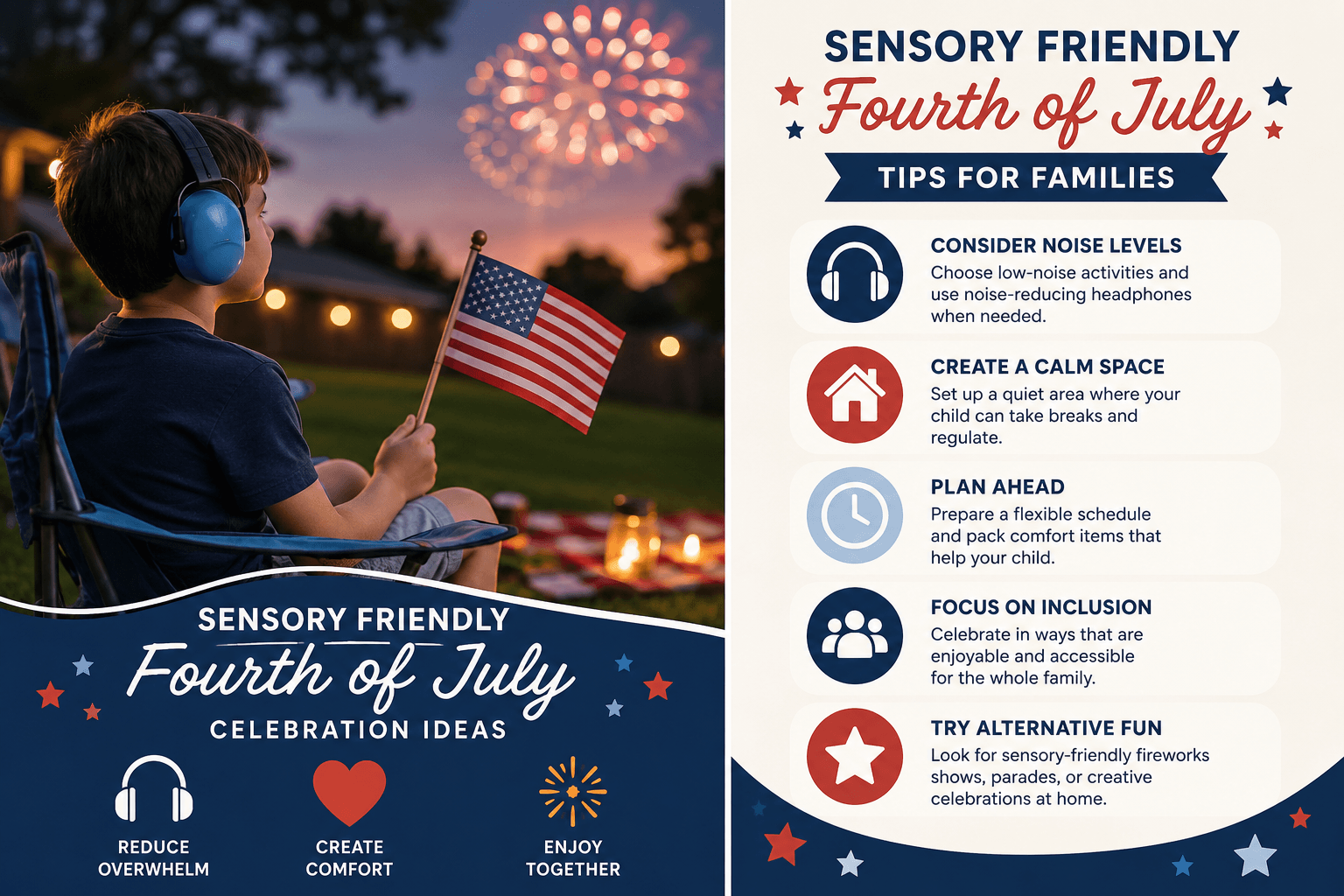
Siblings and friends can play an important role in helping everyone feel included. Encourage them to ask instead of assuming what someone wants.
Helpful inclusion ideas include:
Ask which activity the person prefers
Offer a quiet alternative
Help carry a sensory bag
Make room for a wheelchair or adaptive stroller
Include communication devices in games
Stay nearby during loud activities
Avoid teasing about headphones or mobility devices
Let everyone participate at their own pace
Celebrate small moments of participation
Respect the choice to take a break
Inclusion does not mean everyone has to do the same activity. It means everyone has a meaningful way to belong.
Keep Food and Mealtime Flexible
Holiday meals can be difficult for people with food allergies, sensory preferences, oral motor needs, medical diets, or anxiety around unfamiliar foods.
Make mealtime easier by:
Offering familiar foods
Keeping preferred utensils available
Providing a quieter eating location
Packing safe snacks
Avoiding pressure to try new foods
Offering choices
Making drinks easy to reach
Using supportive seating when needed
Planning meal times around medication or routine needs
Bringing adaptive dining tools when appropriate
A successful celebration does not depend on everyone eating the same meal.
Know When It Is Time to Leave
One of the most important Fourth of July tips for autism is knowing when to leave before the environment becomes too overwhelming.
Possible signs that someone may need a break or early exit include:
Covering ears
Increased agitation
Crying
Pacing
Withdrawal
Difficulty communicating
Escalating behavior
Overheating
Fatigue
Refusal to move
Headache
Trouble using usual coping strategies
Increased repetitive behavior
Trying to leave the area
Leaving early is not a failure. It is a supportive decision that can protect comfort and help preserve positive holiday memories.
Celebrate in a Way That Works for Your Family
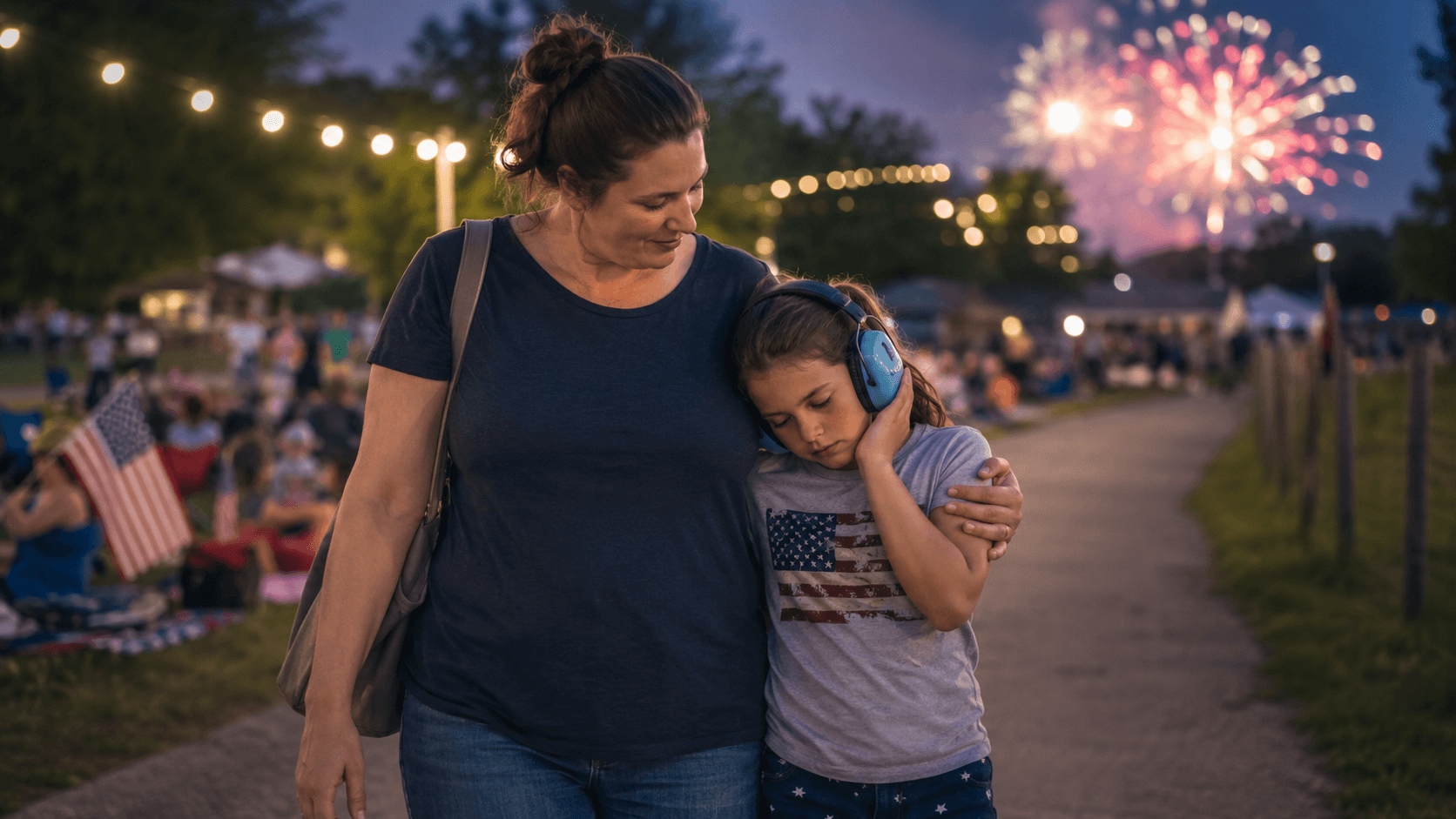
Sensory friendly family celebrations are about comfort, access, and connection. A sensory friendly Fourth of July may mean watching fireworks from a distance, using sensory friendly fireworks alternatives, attending a short accessible event, hosting a backyard picnic, or choosing a quiet home activity instead.
For some families, the best Fourth of July activities for kids with autism may be a simple craft and an early bedtime. For others, it may be a parade with headphones, a quiet car viewing spot, or a family cookout with a sensory support bag ready.
The holiday is not defined by how long you stay, how loud the fireworks are, or how many events you attend. It is defined by the meaningful moments your family can enjoy together.
FAQs
What is a sensory friendly Fourth of July?
A sensory friendly Fourth of July is a holiday celebration planned around comfort, accessibility, predictable routines, and individual sensory needs. It may include quieter activities, flexible schedules, accessible locations, noise support, visual schedules, sensory breaks, and alternatives to traditional fireworks.
The goal is to help children and adults with autism, sensory processing differences, disabilities, anxiety, mobility needs, or communication needs participate in ways that feel safe and enjoyable.
Why can fireworks be difficult for autistic children?
Fireworks can be difficult for autistic children because they often involve sudden loud sounds, flashing lights, crowds, smoke, strong smells, late bedtime routines, and unpredictable timing.
Some autistic children may enjoy watching the lights but dislike the sound. Others may find both the sound and visual stimulation overwhelming. Every person responds differently, so it is helpful to prepare ahead and have a flexible exit plan.
Can a child with autism enjoy fireworks?
Yes. Some children with autism enjoy fireworks, especially when they have support such as headphones, a familiar viewing location, a visual schedule, a comfort item, or the option to leave early.
Others may prefer to watch fireworks from inside a car, through a window, on television with low volume, or not at all. The best choice is the one that matches the child’s comfort level.
What are sensory friendly fireworks alternatives?
Popular options include:
- Watching fireworks on television with low volume
- Using a projector with colorful light effects
- Making glow stick bracelets
- Creating a flashlight dance party
- Using bubble machines
- Playing with safe light up toys
- Making red, white, and blue sensory bins
- Decorating cookies or cupcakes
- Creating patriotic crafts
- Having a family movie night
- Taking a quiet sunset walk
- Building a blanket fort with calming lights
Are noise reducing headphones good for fireworks?
Noise reducing headphones may help some children and adults feel more comfortable around fireworks, parades, concerts, and loud family events. They can reduce the intensity of sound without completely blocking out the environment.
Practice wearing headphones before the event. Some people may need time to adjust to the feeling. Others may not tolerate headphones at all, so it is helpful to have other options such as distance from the fireworks, watching from a car, or choosing a quieter activity.
What should I do if my child becomes overwhelmed?
Move to a quieter space when possible. Offer familiar calming tools, water, a comfort item, a fidget, headphones, or a preferred quiet activity. Use simple language and reduce demands.
You may also need to leave the event. Leaving early is not a failure. It is a supportive decision that can help prevent a difficult experience from becoming more overwhelming.