Table of Contents
- Key Takeaways: How to Choose Adaptive Mobility Equipment in 2026
- What Is Adaptive Mobility Equipment?
- Who Uses Adaptive Mobility Equipment?
- Types of Adaptive Mobility Equipment Explained
- How to Assess Mobility Equipment Needs
- Working with Occupational and Physical Therapists
- Selection Criteria for Gait Trainers
- Selection Criteria for Wheelchairs
- Selection Criteria for Special Needs Strollers
- Choosing Mobility Equipment for Schools and Classrooms
- Choosing Mobility Equipment for Therapy Clinics
- Choosing Mobility Equipment for Home Use
- Funding Sources for Adaptive Mobility Equipment
- Questions to Ask Before You Buy
- Common Mistakes to Avoid When Selecting Mobility Equipment
- How to Request a Quote for Complex Equipment Orders
- Maintaining Adaptive Mobility Equipment
- Building a Clear Path to the Right Mobility Equipment
- FAQs
Choosing the right adaptive mobility equipment can feel like a puzzle with too many pieces. You want equipment that fits the user's physical needs, supports their daily goals, and works in the environments where they spend the most time whether that's a classroom, a therapy clinic, or home.
For caregivers, special education coordinators, and therapy professionals, the stakes are real. The equipment you choose can shape how a child participates in school, how an adult navigates their home, and how therapy goals translate into everyday movement. eSpecial Needs helps families, schools, and clinics find mobility aids and adaptive equipment that match real-world needs.
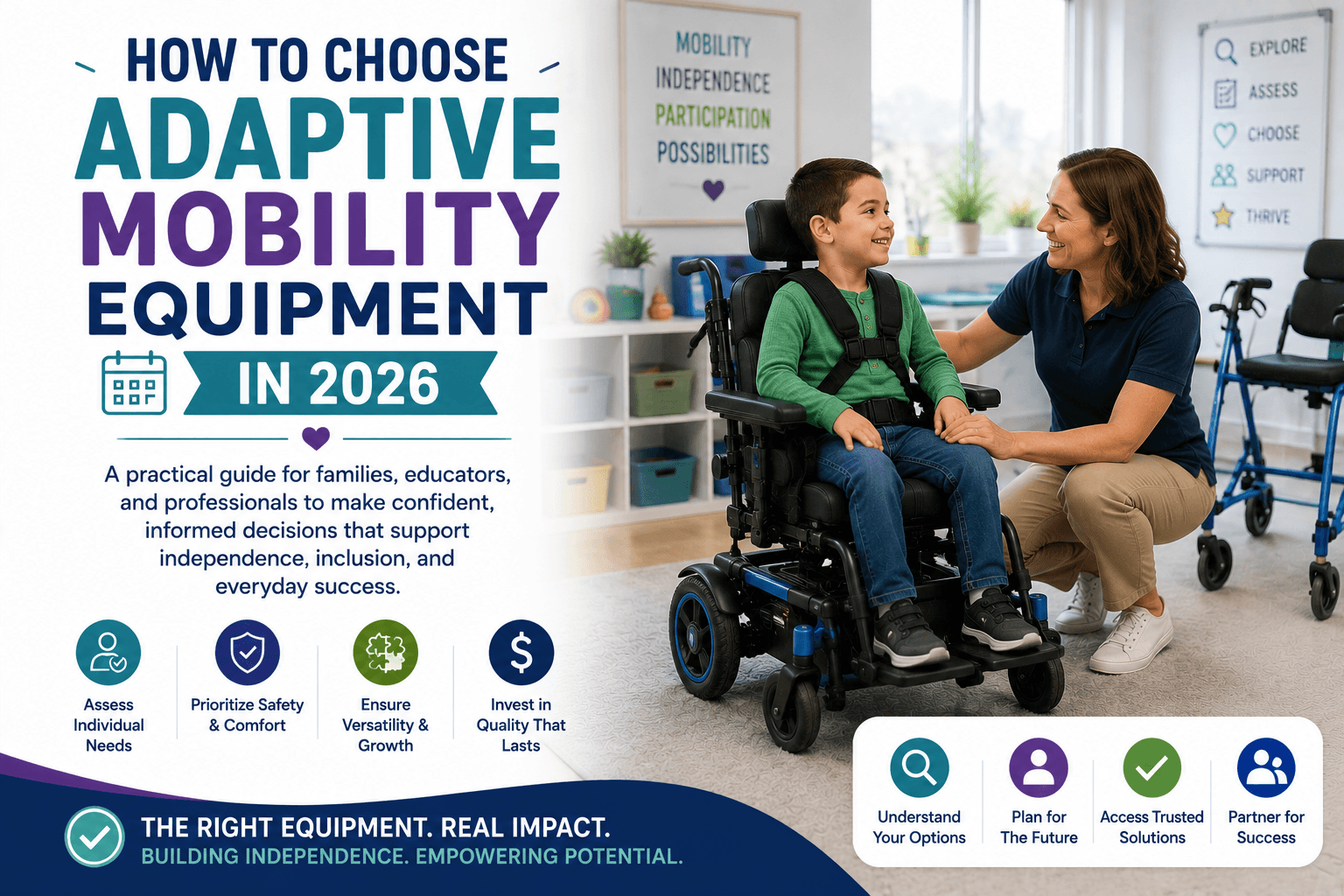
This guide walks you through everything you need to know: the main types of adaptive mobility equipment, the key selection criteria, how to work with therapists, and where to find funding support. By the end, you'll have a clear framework for evaluating walkers, gait trainers, wheelchairs, and related mobility aids so you can make confident decisions for the people you support.
Key Takeaways: How to Choose Adaptive Mobility Equipment in 2026
- Adaptive mobility equipment includes walkers, gait trainers, wheelchairs, strollers, and positioning supports designed for users who need extra stability or assistance.
- Selection depends on the user's functional abilities, body measurements, daily environments, and therapy goals not just diagnosis alone.
- Collaboration with occupational and physical therapists helps ensure the equipment matches the user's current abilities and growth potential.
- eSpecial Needs offers gait trainers, wheelchairs, and mobility aids for schools, clinics, and families, along with quote request support for complex orders.
- Funding sources such as Medicaid, IEP-related services, and grants can help offset the cost of durable medical equipment for qualifying individuals.
What Is Adaptive Mobility Equipment?
Adaptive mobility equipment refers to devices designed to help people move safely when they cannot walk independently or need additional support. These products differ from standard mobility aids because they often include specialized features like trunk supports, pelvic harnesses, positioning components, and adjustable frames.
The category spans a wide range of products:
- Gait trainers and adaptive walkers
- Manual and power wheelchairs
- Special needs strollers
- Standers and standing aids
- Transfer aids and patient lifts
Each type serves a different purpose and user profile. The right choice depends on the individual's functional abilities, the environments where they'll use the equipment, and their long-term therapy or daily living goals.
Who Uses Adaptive Mobility Equipment?
Adaptive mobility equipment serves a broad population children, teens, and adults with physical disabilities, developmental delays, neurological conditions, or injuries that affect movement.
Children and Students in K-12 Special Education
In schools, students may use gait trainers during physical therapy sessions, wheelchairs for classroom mobility, or standers to participate in activities at standing height surfaces. Special education teams often work with occupational and physical therapists to determine what equipment supports a student's IEP goals.
Adults in Rehabilitation or Long-Term Care
Adults recovering from surgery, stroke, or injury may use gait trainers or walkers to rebuild walking skills. Those with permanent mobility limitations may rely on wheelchairs or power mobility devices for daily independence.
Therapy Clinics and Pediatric Rehabilitation Centers
Outpatient therapy clinics often stock multiple sizes and configurations of gait trainers, standers, and walkers so therapists can match equipment to each client's needs during sessions.
Types of Adaptive Mobility Equipment Explained
Understanding the differences between equipment types helps you narrow down which category fits your situation. Here's a breakdown of the most common mobility aids and their intended uses.
Gait Trainers vs. Walkers: What's the Difference?
A gait trainer carries part of the user's body weight through trunk, pelvic, or harness supports. This allows someone who cannot bear full weight through their legs to practice stepping and walking in a supported way.
A standard walker, by contrast, assumes the user can bear their own weight and primarily assists with balance. If the user needs more than balance support, a gait trainer is typically the better fit.
eSpecial Needs carries pediatric and adult gait trainers from trusted brands, including anterior (front-facing) and posterior (rear-facing) configurations.
Manual Wheelchairs
Manual wheelchairs are propelled by the user or pushed by a caregiver. They work well for individuals who have upper body strength and coordination but cannot walk or can only walk short distances. When choosing a manual wheelchair, consider seat width, seat depth, backrest height, and whether the user needs positioning supports like lateral trunk supports or a headrest.
Fly-Lite Aluminum Transport Chair
$252.95
The Fly-Lite Aluminum Transport Chair is a lightweight wheelchair that can travel anywhere your special needs user can imagine. The adaptive equipment is only 14.5 lbs. and comes with many standard features, including convenient back release, swing-away footrests, wheel locks,… read more

Power Wheelchairs and Motorized Mobility
Power wheelchairs are battery operated and controlled by a joystick or alternative input device. They suit users who lack the upper body strength to self propel a manual chair. These devices often include advanced seating systems, tilt or recline functions, and custom controls for users with limited hand function.
Special Needs Strollers
Special needs strollers look similar to standard strollers but include postural supports, adjustable seating angles, and safety harnesses. They're often lighter and more portable than wheelchairs, making them a practical choice for families who need easy transport.
Special Tomato EIO Stroller Push Chair - Adaptive Stroller
$921.50
$2,062.05
The Special Tomato EIO Stroller Push Chair is a lightweight adaptive stroller designed to provide comfortable mobility and positioning support from early intervention through preadolescence. Built for children who need more support than a standard stroller, the EIO combines everyday… read more

Standers and Standing Aids
Standers support users in an upright position, which can help with bone density, digestion, circulation, and social participation. Options include prone standers (leaning forward), supine standers (leaning back), and multi-position standers.
How to Assess Mobility Equipment Needs
Selecting the right equipment starts with understanding the user's current abilities, goals, and daily environment. Here's a step-by-step approach.
Step 1: Evaluate Functional Abilities
Consider what the user can and cannot do independently. Can they bear weight through their legs? Do they have trunk control? Can they sit unsupported? These questions help determine how much support the equipment needs to offer.
Step 2: Identify Daily Environments and Use Cases
Think about where the equipment will be used most often. A gait trainer for school hallways may need to fit through standard doorways and navigate tile floors. A wheelchair for outdoor community outings may need larger wheels and durable construction.
Step 3: Take Accurate Measurements
Proper fit is essential for safety and function. Key measurements typically include:
- Seat width and depth
- Backrest height
- Hip width
- Leg length (for footrests)
- Chest and trunk circumference (for harnesses)
Step 4: Consider Growth and Adjustability
For children, growth adjustable equipment can extend the useful life of a device. Look for products with adjustable seat heights, frame widths, and support positions.
Working with Occupational and Physical Therapists
Therapists bring clinical expertise to equipment selection. They can assess the user's motor function, recommend positioning strategies, and help trial equipment before purchase.
Why Therapist Input Matters
A therapist can identify subtle issues you might miss like whether a user's hip alignment affects their ability to use a posterior gait trainer, or whether a wheelchair seat angle needs adjustment to prevent sliding.
How to Collaborate Effectively
Share your observations about how the user moves at home or in school. Ask the therapist to document specific equipment recommendations, including brand, model, and accessories. This documentation can also support funding requests.
Trial Periods and Equipment Demos
Many suppliers and manufacturers offer equipment trials or demos. This allows the user and therapist to test the device in real world conditions before committing to a purchase.
Selection Criteria for Gait Trainers
Gait trainers vary widely in design, support level, and intended use. Here's what to look for when evaluating options.
Anterior vs. Posterior Configuration
In an anterior gait trainer, the user faces the frame and walks toward it. This setup suits users who need more trunk support and tend to lean forward.
In a posterior gait trainer, the frame is behind the user, encouraging a more upright posture and natural arm swing. This configuration often supports a more typical gait pattern.
Support Features to Consider
Look for gait trainers with adjustable pelvic supports, trunk harnesses, forearm prompts, and optional seats for rest breaks. Dynamic frames, like the Rifton Pacer, allow the frame to move slightly with the user's natural gait, promoting a more fluid stepping pattern.
Sizing and Weight Capacity
Gait trainers come in pediatric and adult sizes. Verify that the device's weight capacity and adjustable range match the user's current measurements and anticipated growth.
Selection Criteria for Wheelchairs
Wheelchairs require careful attention to fit, positioning, and intended use environment.
Manual vs. Power: Making the Right Choice
Choose manual when the user has sufficient upper body strength and coordination to self-propel, or when a caregiver will push the chair. Choose power when the user lacks the strength or endurance for manual propulsion and needs independent mobility.
Seating and Positioning Supports
Users with complex postural needs may require custom seating systems, lateral trunk supports, headrests, or pelvic positioning belts. These components help maintain alignment and reduce fatigue during extended use.
Portability and Transport
If you need to transport the wheelchair frequently, consider weight, folding mechanisms, and whether it fits in your vehicle. Lightweight travel chairs and folding frames simplify transport for families on the go.
Selection Criteria for Special Needs Strollers
Special needs strollers bridge the gap between standard strollers and wheelchairs. They offer portability with more support than a typical stroller.
When a Stroller Makes Sense
Strollers work well for younger children, users who don't need all day seating support, or families who prioritize easy folding and lightweight transport. They're also practical for air travel and outings where a full wheelchair would be cumbersome.
Features to Prioritize
Look for adjustable recline angles, supportive harnesses, sun canopies, and durable wheels suited to your terrain (smooth indoor floors vs. outdoor sidewalks and parks).
Choosing Mobility Equipment for Schools and Classrooms
Schools have unique considerations: equipment must fit through doorways, work on multiple floor surfaces, and support participation in classroom activities.
Aligning Equipment with IEP Goals
The Individualized Education Program (IEP) may specify mobility-related goals, such as independent hallway navigation or participation in PE. Equipment should support these documented objectives.
Durability and Multi-User Considerations
Schools may use shared equipment across students. In these cases, prioritize devices with easy-to-clean surfaces, adjustable sizing, and durable construction that withstands daily use.
Staff Training and Safety
Ensure teachers, paraprofessionals, and therapy staff know how to properly position the student in the device, secure harnesses, and apply brakes.
Choosing Mobility Equipment for Therapy Clinics
Clinics need equipment that can accommodate a range of clients and therapy goals.
Stocking Multiple Sizes
A well-equipped clinic typically keeps several sizes of gait trainers, standers, and positioning supports so therapists can match equipment to each client without waiting for special orders.
Prioritizing Adjustability
Highly adjustable equipment reduces the number of units you need to stock. Look for devices with tool-free adjustments so therapists can quickly modify settings between sessions.
Cleaning and Infection Control
Choose equipment with smooth, wipeable surfaces. Removable fabric components should be washable or replaceable.
Choosing Mobility Equipment for Home Use
Home equipment should fit the user's living space and support daily routines like mealtimes, bathing, and play or leisure activities.
Space and Accessibility
Measure doorways, hallways, and rooms where the equipment will be used. Confirm that the device can maneuver in tight spaces and that flooring surfaces (carpet, tile, hardwood) are compatible.
Caregiver Ergonomics
Consider how caregivers will assist with transfers, positioning, and transport. Equipment that's easier to push, lift, or fold reduces caregiver strain over time.
Funding Sources for Adaptive Mobility Equipment
Adaptive mobility equipment can be a significant investment. Fortunately, several funding pathways can help offset costs.
Medicaid and Private Insurance
Medicaid covers durable medical equipment (DME) for eligible individuals when prescribed by a physician and deemed medically necessary. Private insurance plans vary, so check your specific policy for DME coverage details.
School-Based Funding and IEP Services
Equipment specified in a student's IEP may be funded through the school district. Some states also participate in Medicaid school-based programs that reimburse districts for health-related services and equipment for eligible students.
Grants and Nonprofit Assistance
Numerous foundations and nonprofits offer grants for adaptive equipment. Organizations like the United Cerebral Palsy Foundation, local Kiwanis clubs, and disease-specific foundations may help cover costs for qualifying applicants.
Letters of Medical Necessity
A Letter of Medical Necessity (LMN) documents why the equipment is required for the user's health or function. Therapists and physicians can write these letters to support insurance claims, grant applications, or school funding requests.
eSpecial Needs offers funding resources to help families and organizations navigate the funding process.
Questions to Ask Before You Buy
Before finalizing an equipment purchase, work through these questions with your team:
About the User
- What are the user's current functional abilities and limitations?
- What are the therapy or daily living goals the equipment should support?
- How much growth or change in ability is expected over the equipment's lifespan?
About the Equipment
- Does the equipment fit the user's body measurements?
- Does it offer the level of support the user needs (trunk, pelvic, head)?
- Is it adjustable enough to accommodate growth or changing needs?
About the Environment
- Will the equipment fit through doorways and maneuver in the intended spaces?
- Is it suitable for the floor surfaces where it will be used?
- Can it be transported easily if needed?
About Support and Service
- What warranty and repair options does the manufacturer offer?
- Is staff training or setup assistance available?
- Can you trial the equipment before committing?
Common Mistakes to Avoid When Selecting Mobility Equipment
Even with good intentions, equipment decisions can go wrong. Here are pitfalls to watch for.
Choosing Based on Diagnosis Alone
Two children with the same diagnosis may have very different functional abilities. Always base equipment selection on individual assessment, not diagnosis labels.
Underestimating Growth Needs
A device that fits perfectly today may be too small in six months. Build in room for growth by choosing adjustable equipment or selecting sizes with headroom.
Ignoring Environment Constraints
A gait trainer that works beautifully in a wide therapy gym may not fit through narrow school hallways. Measure your spaces before ordering.
Skipping Therapist Collaboration
Therapists bring expertise you may not have. Involve them early in the process to avoid costly mistakes or equipment that doesn't meet the user's needs.
How to Request a Quote for Complex Equipment Orders
For specialized or high-value equipment, requesting a formal quote can help you compare options and prepare funding applications. eSpecial Needs offers a quote request service for schools, clinics, and families. This service helps you get accurate pricing, clarify accessory options, and identify volume discounts for institutional buyers.
Maintaining Adaptive Mobility Equipment
Proper maintenance extends equipment life and keeps users safe.
Regular Inspections
Check bolts, wheels, brakes, and straps regularly. Tighten loose components and replace worn parts promptly.
Cleaning Protocols
Wipe down frames and supports with appropriate cleaners. Wash removable fabric components according to manufacturer instructions.
Scheduled Servicing
For power wheelchairs and complex devices, schedule periodic servicing with qualified technicians to address battery health, motor function, and electronics.
Building a Clear Path to the Right Mobility Equipment
Selecting adaptive mobility equipment doesn't have to be overwhelming. Start by understanding the user's functional abilities and daily goals. Collaborate with occupational and physical therapists to ensure the equipment matches clinical recommendations. Evaluate the environments where the equipment will be used, and explore funding options to make your purchase more accessible.
Whether you're a caregiver supporting a family member, a special education coordinator equipping a classroom, or a therapy clinic stocking your facility, the right mobility equipment opens doors literally and figuratively for the people you serve. eSpecial Needs carries a full range of gait trainers, wheelchairs, strollers, and mobility aids to support your search. When you're ready to explore specific products or request a quote, the eSpecial Needs team is here to help.
FAQs
What is adaptive mobility equipment?
Adaptive mobility equipment includes products that help children, teens, adults, and seniors move more safely, comfortably, and independently. This may include adaptive strollers, wheelchairs, gait trainers, standers, walkers, transfer aids, patient lifts, bath mobility products, and positioning supports. The right equipment depends on the person’s mobility level, posture, strength, endurance, diagnosis, environment, and daily routines.
Who needs adaptive mobility equipment?
Adaptive mobility equipment may help people with cerebral palsy, muscular dystrophy, spina bifida, developmental delays, traumatic brain injury, stroke, multiple sclerosis, spinal cord injury, low muscle tone, balance challenges, physical disabilities, progressive conditions, or age related mobility limitations. It may also help caregivers complete transfers, outings, school routines, therapy activities, and daily care with less physical strain.
How do I choose the right adaptive mobility equipment?
Start by identifying the person’s main mobility challenge. Ask whether they need help with walking, sitting, standing, transfers, outdoor access, bathing, toileting, school transport, or community outings. Then consider body size, weight capacity, posture, caregiver support, home layout, school needs, therapy goals, and funding requirements. A physical therapist, occupational therapist, seating specialist, or medical provider can help guide the decision.
What is the difference between a wheelchair and an adaptive stroller?
A wheelchair is often used for daily mobility and may allow independent movement, caregiver pushing, or custom seating. An adaptive stroller is usually caregiver pushed and designed for supported transport, community access, school use, outings, and portability. Some families use both depending on the child’s age, posture, endurance, and daily needs.
When should I choose an adaptive stroller?
An adaptive stroller may be helpful when a child or teen needs more postural support than a regular stroller, has outgrown standard stroller limits, fatigues during outings, needs help with safety in public spaces, or requires supportive seating during transportation. Families can explore special needs strollers and mobility products to compare options.
When should I choose a wheelchair?
A wheelchair may be appropriate when the user needs regular seated mobility support at home, school, work, therapy, or in the community. Wheelchairs may be manual, transport style, standard, reclining, tilt, or power based depending on the person’s needs. The right wheelchair should match the user’s measurements, posture, transfer ability, caregiver support, and daily activities.
What is a gait trainer?
A gait trainer is a walking support device that helps children or adults practice stepping, balance, upright posture, and supported walking. It is usually more supportive than a standard walker and may include trunk supports, pelvic supports, forearm prompts, hand holds, directional locks, or other positioning options. Browse gait trainers for supportive walking options.
Who may benefit from a gait trainer?
A gait trainer may help children or adults who need support for walking practice because of cerebral palsy, developmental delays, brain injury, stroke, low muscle tone, balance issues, muscle weakness, or rehabilitation needs. A physical therapist can help decide whether a gait trainer, walker, stander, or wheelchair is the best fit.
What is the difference between a gait trainer and a walker?
A walker usually provides light balance support for someone who can already stand and step with some control. A gait trainer provides more support for users who need help with posture, trunk control, pelvic alignment, balance, or step initiation. Gait trainers are often used for therapy based walking practice.
What mobility equipment helps with bathing and toileting?
Bathing and toileting mobility products may include shower chairs, bath chairs, transfer benches, reclining shower chairs, over the toilet chairs, commode chairs, grab bars, and transfer supports. These products help make hygiene routines safer and more accessible for people with limited mobility, poor balance, weakness, or caregiver assistance needs. Explore bathing and toileting aids, shower chairs, and over the toilet chairs.
Should I talk to a therapist before buying adaptive mobility equipment?
Yes, whenever possible. A physical therapist, occupational therapist, seating specialist, or rehabilitation professional can help identify the safest and most functional equipment. Professional input is especially important for gait trainers, standers, wheelchairs, patient lifts, adaptive seating, and users with complex positioning or medical needs.
What should schools and facilities consider before buying adaptive mobility equipment?
Schools, clinics, hospitals, group homes, and care facilities should consider durability, multiple user sizing, cleaning routines, staff training, storage, purchase orders, replacement parts, safety policies, and therapist recommendations. Equipment should match both individual needs and facility workflow.
What are common mistakes when choosing adaptive mobility equipment?
Common mistakes include choosing equipment without measurements, focusing only on diagnosis, ignoring home layout, skipping therapist input, overlooking weight capacity, forgetting caregiver needs, buying equipment that does not grow with the user, and failing to consider funding documentation.