Table of Contents
Classroom Tables are an important part of every learning space. The right table can help students write, read, build, create, collaborate, receive therapy support, complete hands on activities, and participate more comfortably throughout the day. Whether you are furnishing a special education classroom, preschool, therapy room, homeschool space, daycare center, or school activity area, choosing the right classroom table can make daily routines easier for students and staff.
At eSpecial Needs, the Classroom Tables collection includes durable, functional work surfaces designed for group learning, creative projects, therapy activities, and everyday classroom use. These tables help create organized learning environments where students can stay engaged, teachers can manage activities more easily, and therapists can support participation during fine motor, sensory, communication, and academic tasks.
Why Classroom Tables Matter
A classroom table is more than a surface for schoolwork. It shapes how students sit, interact, reach materials, work with peers, and participate in daily lessons. The right tables for classrooms can support comfort, access, posture, attention, and flexible instruction.
Classroom tables may be used for:
- Writing and worksheets
- Reading groups
- Art projects
- Sensory activities
- Fine motor tasks
- Therapy sessions
- Small group instruction
- Collaborative learning
- Tabletop games
- Snack routines
- Assistive technology access
- Communication activities
- Classroom centers
- Creative projects
For students with special needs, table height, shape, clearance, stability, and seating access can make a meaningful difference. A supportive classroom table should allow students to reach materials comfortably without straining, leaning, or losing posture.
Choosing the Right Classroom Table
When shopping for a classroom table, start with how the table will be used. A preschool classroom may need low activity tables for art, play, and group centers. A therapy room may need adjustable tables that support seated positioning and activity access. A special education classroom may need open layouts that allow adaptive seating, wheelchairs, mobility equipment, and staff support.
Consider these factors:
- Table shape
- Table height
- Adjustable legs
- Surface size
- Wheelchair access
- Seating arrangement
- Room layout
- Number of students
- Cleaning needs
- Edge design
- Stability
- Durability
- Storage space
- Compatibility with classroom tables and chairs
The best classroom table should fit the space, support the activity, and help students participate more comfortably.
Kidney Table Classroom Benefits
A kidney table classroom setup is popular because the curved shape allows a teacher, therapist, or aide to sit close to multiple students at once. This makes it a strong choice for small group instruction, guided reading, occupational therapy, speech therapy, math groups, tutoring, and special education support.
A kidney table for classroom use can help staff:
- Reach several students from one position
- Provide prompts and support more easily
- Keep materials within reach
- Lead small group lessons
- Support students who need closer supervision
- Encourage collaborative work
- Improve visibility during instruction
- Create a defined learning station
The Kidney Adjustable Activity Table is designed for classroom projects, therapy activities, playrooms, and clinics. It features an easy to clean laminate tabletop, rounded edges, adjustable legs, and swivel glides, making it a practical option for busy learning and therapy spaces.
Kidney Table for Classroom Activities
A kidney table for classroom activities works well when students need teacher led support. Because of its curved design, the instructor can sit in the inside curve and work closely with students seated around the outer edge.
This type of table is useful for:
- Reading groups
- One on one support
- Small group lessons
- Fine motor activities
- Speech therapy
- Occupational therapy
- Math manipulatives
- Writing practice
- Social skills groups
- Classroom intervention stations
- IEP goal work
In special education settings, a kidney table can help staff stay close enough to support communication tools, visual prompts, adaptive writing supplies, sensory tools, or modified learning materials.
Horseshoe Table for Classroom Use
A horseshoe table for classroom use is similar in purpose to a kidney table because it creates a curved teaching space. Teachers often use horseshoe style tables for small group instruction, guided practice, and therapy sessions where close support is needed.
A horseshoe table for classroom activities may work well when:
- Students need direct teacher support
- The instructor needs to face multiple students
- Materials need to stay centered
- Staff need easy access to each child
- The room needs a dedicated small group station
- Students benefit from structured seating
Whether a school chooses a kidney shape, horseshoe shape, rectangle, round table, or adjustable activity table, the main goal is to support access, comfort, and participation.
Classroom Tables and Chairs
Classroom tables and chairs should work together. A strong table setup can be less effective if the chairs do not support the student’s posture or reach. Students should be able to sit with feet supported, knees bent comfortably, and arms positioned well for table activities.
When choosing classroom tables and chairs, consider:
- Seat height
- Table height
- Foot support
- Student size
- Wheelchair clearance
- Adaptive seating needs
- Trunk support
- Arm support
- Activity type
- Room flow
- Supervision needs
For students with physical disabilities or posture needs, standard classroom chairs may not provide enough support. Pairing classroom tables with adaptive seating, positioning chairs, or sensory seating can make activities more accessible.
Explore related seating categories such as Classroom Seating, Seating, Chairs and Seating, and Positioning Products.
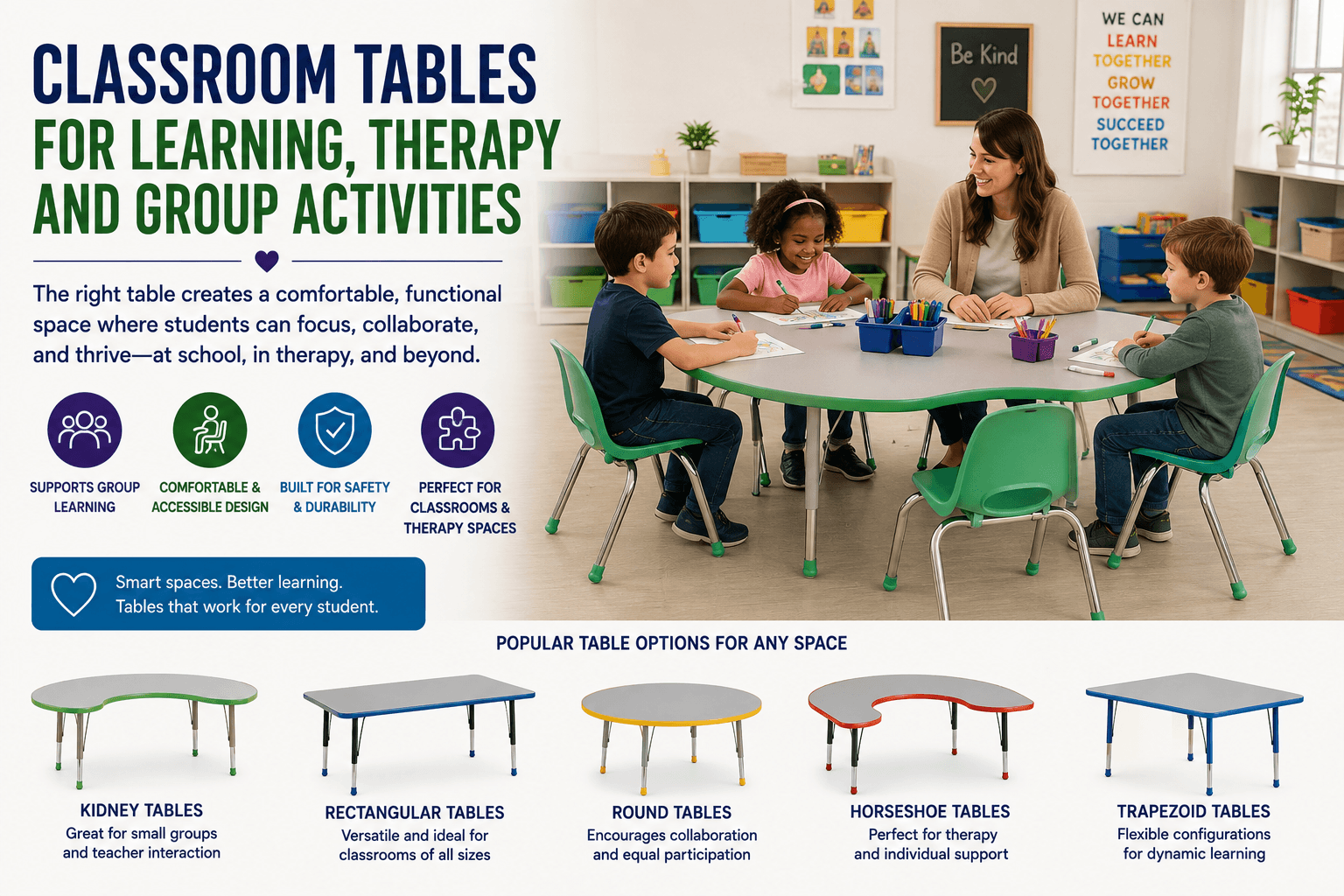
Classroom Table Shapes and Uses
Different table shapes support different classroom activities. Choosing the right shape can improve room flow, student access, and group interaction.
Kidney Tables
Kidney tables are ideal for small group instruction, therapy, reading groups, and teacher led learning.
Horseshoe Tables
Horseshoe tables support close instruction, group support, and guided activities.
Rectangular Tables
Rectangular tables work well for writing, projects, STEM activities, art, and multi student workstations.
Round Tables
Round tables encourage conversation, social interaction, games, and group collaboration.
Adjustable Activity Tables
Adjustable activity tables are useful when the room serves students of different ages, heights, or support needs.
Classroom Tables for Special Education
In special education classrooms, furniture needs to be flexible. Students may use adaptive seating, wheelchairs, standers, communication devices, visual supports, therapy tools, sensory equipment, or daily living aids. Tables should make participation easier, not create barriers.
Classroom tables for special education may support:
- Wheelchair access
- Adaptive seating use
- Fine motor therapy
- Communication device placement
- Visual supports
- Sensory table activities
- Life skills instruction
- Feeding or snack routines
- One on one instruction
- Small group learning
- Therapy carryover
- Accessible art and writing tasks
When possible, choose tables with safe edges, stable construction, easy cleaning, and height options that match student needs.
FAQs
What is the best classroom table shape for small group instruction?
Kidney and horseshoe tables are often the best choices for small group instruction because they allow the teacher, therapist, or aide to sit close to several students at once. This setup works well for guided reading, intervention groups, speech therapy, occupational therapy, and special education support.
When should I choose a kidney table instead of a rectangular classroom table?
A kidney table is a good choice when students need closer adult support, shared materials, or direct instruction. A rectangular classroom table may be better for projects, writing stations, STEM activities, art, and larger group work where students can sit across from each other.
Can classroom tables be used with adaptive seating?
Yes. Many classroom tables can be used with adaptive seating when there is enough clearance and the table height matches the student’s chair or positioning system. Before ordering, consider seat height, armrests, foot support, tray access, wheelchair clearance, and how close the student needs to sit to the table.