Table of Contents
- Key Takeaways: Choosing a Sensory Ball Pit for School Therapy
- What to Look for in a School Therapy Ball Pit
- 1. Padded Walls and Sturdy Frame Construction
- 2. Ball Size and Material for Your Student Population
- 3. Pit Dimensions That Fit Your Therapy Room
- 4. Depth That Supports Sensory Regulation Goals
- 5. Easy-Clean Surfaces for School Hygiene Standards
- 6. Compatibility With Accessories and Add-Ons
- 7. Weight Capacity and Multi-Student Use
- 8. Portability and Storage Options
- 9. Budget Alignment With School Purchasing Processes
- 10. Alignment With IEP and Therapy Program Goals
- How to Match a Sensory Ball Pit to Your School's Therapy Program
- FAQs
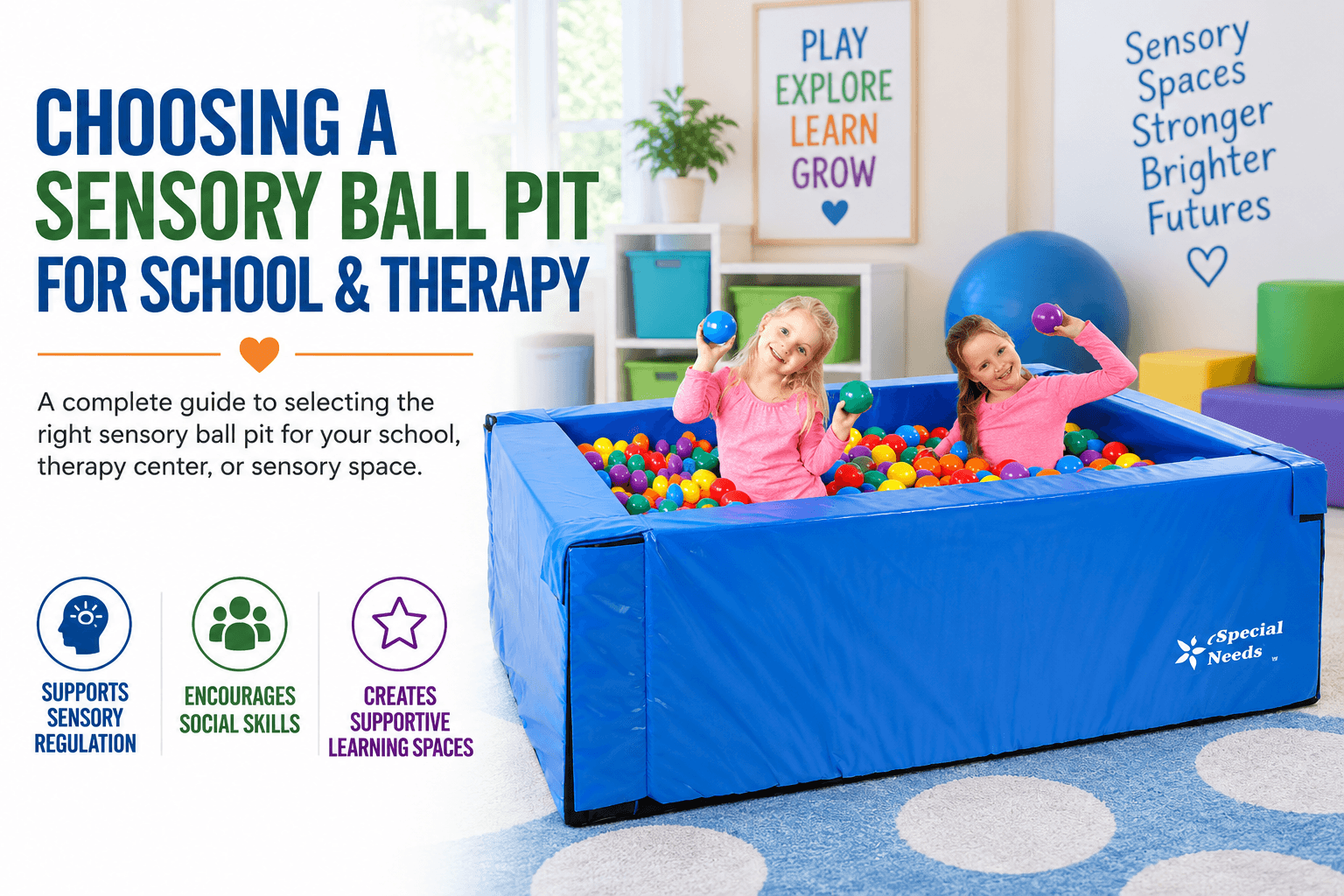
Picking the right sensory ball pit for your school therapy space takes more thought than you might expect. You need to consider everything from the size of your room to the regulation goals of your students.
eSpecial Needs offers school-ready sensory ball pits built for therapy settings, making it easier for your team to create a calming, functional environment. This guide walks you through the key factors that matter most when selecting a ball pit for school-based occupational therapy.
Below, you'll find a numbered breakdown of safety, sizing, durability, and therapeutic fit so you can make a confident, informed decision for your students.
Key Takeaways: Choosing a Sensory Ball Pit for School Therapy
- Safety standards like padded walls, non-toxic materials, and anti-microbial surfaces are non-negotiable for school ball pits.
- Ball pit sizing should match your available floor space and the age range of students using it.
- Durability matters because school ball pits face daily use from multiple students across therapy sessions.
- eSpecial Needs carries sensory ball pits designed specifically for therapy rooms, classrooms, and calming spaces.
- Regulation goals should guide your choice of ball pit depth, ball type, and accompanying accessories.
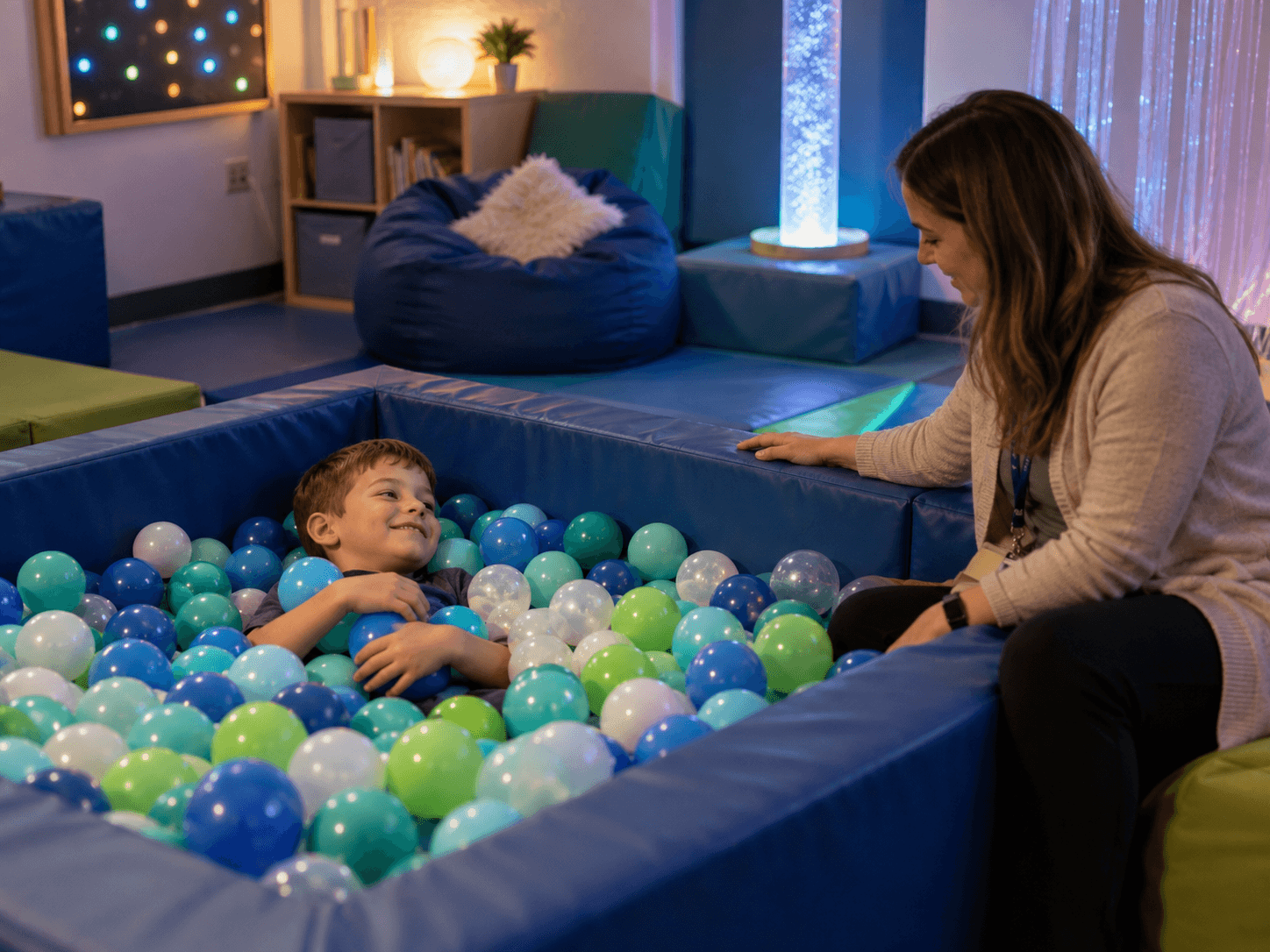
What to Look for in a School Therapy Ball Pit
1. Padded Walls and Sturdy Frame Construction
Your ball pit frame needs to hold up to daily student use without tipping or collapsing. Look for dense foam walls covered in anti-microbial, phthalate-free vinyl that can handle repeated cleaning between sessions.
A rigid frame with padded edges protects students during active therapy sessions that involve jumping, climbing, or crashing into the walls. Foam density is what keeps them safe during high-energy activities. Check the manufacturer's recommended weight limits and wall height to confirm the pit matches your student population and room setup.
2. Ball Size and Material for Your Student Population
Standard therapy-grade balls measure about 3 inches in diameter. That size works for most K-12 students while minimizing choking risk for younger children in your school program.
Choose crush-resistant, BPA-free ball pit balls that hold their shape after hundreds of therapy sessions. Softer balls suit calming activities, while firmer options support deeper proprioceptive input during active play. Your occupational therapist can help match ball firmness to each student's sensory profile so every session targets the right kind of regulation and motor response.
1000 Piece 3-1/8" Multicolor Ball Pit Balls
$610.95
These 1000 piece 3-1/8” diameter, balls are light-weight enough for children to toss and roll safely. The small size allows them to fit in small hands and allow for easy juggling. These authentic pit balls are made of durable, safe,… read more

3. Pit Dimensions That Fit Your Therapy Room
Measure your room before shopping. A ball pit that crowds your space limits your ability to run other activities alongside it, which matters for busy therapy schedules.
For individual therapy, a 4-by-4-foot pit works in most school settings. Small-group sessions may call for a 6-by-6-foot option. Make sure there's enough clearance around all sides for students to enter, exit, and move freely during sensory activities. Corner-style pits can also save floor space when your room layout is tight and you need room for other equipment.
4. Depth That Supports Sensory Regulation Goals
Ball pit depth directly affects the amount of proprioceptive input your students receive. A depth of 18 to 24 inches offers full-body coverage for most elementary-age students without the risk of a younger child becoming fully submerged.
Deeper pits increase resistance, which can be helpful for students who crave heavy input. Shallower pits are better for students who are new to ball pit therapy or are more sensitive to tactile stimulation. Match your depth to your students' sensory needs and work with your OT to adjust over time.
5. Easy-Clean Surfaces for School Hygiene Standards
Schools need sensory equipment that can be cleaned quickly between students. Anti-microbial vinyl on the pit frame and smooth plastic ball surfaces make disinfection straightforward, even on a tight daily schedule.
Set a weekly deep-cleaning routine for the balls and wipe down the frame after each use. According to a 2026 study in OTJR: Occupational Therapy Journal of Research, structured sensory-motor programs significantly improve balance and reduce atypical sensory reactivity in children with autism. That research reinforces why clean, consistent therapy tools matter for reliable student outcomes over time.
6. Compatibility With Accessories and Add-Ons
A good school ball pit grows with your program. Look for pits that work with steps and slides, ramps, or crash pads for gross motor work. These additions encourage climbing and jumping, which build coordination.
LED floor panels add a visual sensory layer, turning a standard pit into a multi-sensory station. Attachable hook-and-loop strips let you connect accessories to the pit walls without permanent modification. This flexibility is especially helpful in shared therapy rooms where equipment rotates between sessions throughout the day.
7. Weight Capacity and Multi-Student Use
School ball pits need to support repeated use by students of varying sizes throughout the day. Always check the weight rating before you buy, and compare it against your oldest or largest students.
If your therapy room serves both elementary and middle school students, you need a pit rated for older, larger kids. Reinforced stitching and commercial-grade foam prevent the pit from breaking down over a full school year. Your sensory ball pit investment lasts longer when it's built for the kind of traffic a busy school generates.
8. Portability and Storage Options
Not every school has a dedicated sensory room. If your therapy space doubles as a classroom or shared area, you may need a ball pit you can break down and store at the end of each session.
Foldable and modular designs let you set up and pack away without tools or extra hands. Sensory wall panels can supplement a temporary ball pit setup by giving students visual and tactile input even when the pit itself is stored. Portable options also make it easier to move equipment between classrooms.
9. Budget Alignment With School Purchasing Processes
School budgets often involve purchase orders, grant funding, or district approval cycles. You'll need a supplier that accepts institutional purchase orders and can quote pricing for balls, pits, and accessories together.
eSpecial Needs supports school purchasing with quote requests and bundled sensory room options that can reduce per-item costs. Planning your ball pit purchase early in the budget cycle gives you more flexibility to include accessories like extra balls, replacement covers, steps, slides, or other sensory room additions your team needs.
10. Alignment With IEP and Therapy Program Goals
Your ball pit should connect directly to the therapeutic goals in your students' Individualized Education Programs. Talk to your OTs and PTs about which sensory inputs each student needs most before selecting a model.
A ball pit focused on calming and regulation calls for softer colors and a quieter environment. A pit designed for active gross motor work should pair with ramps or slides. The right setup depends entirely on your team's clinical approach and individual student needs, not a one-size-fits-all recommendation.
How to Match a Sensory Ball Pit to Your School's Therapy Program
Selecting a sensory ball pit for your school therapy space comes down to knowing your students, your space, and your goals. Prioritize safety and durability first, then match the pit's depth, size, and accessories to the regulation and motor outcomes your therapy team is targeting.
eSpecial Needs gives you access to therapy-grade ball pits and sensory room equipment built for school environments. Explore their full catalog to find the right fit for your program.
FAQs
What safety features should a school therapy ball pit include?
A school therapy ball pit should have padded foam walls, anti-microbial vinyl covers, and crush-resistant, BPA-free balls. Stable frames and low entry points reduce fall risk for younger students.
How many ball pit balls do you need for a school sensory room?
The number of ball pit balls needed depends on your pit size and target depth. A 4-by-4-foot pit filled to 18 inches typically needs around 1,500 to 2,000 balls. Larger ball pits or deeper fills require more.
Can a sensory ball pit help with student regulation?
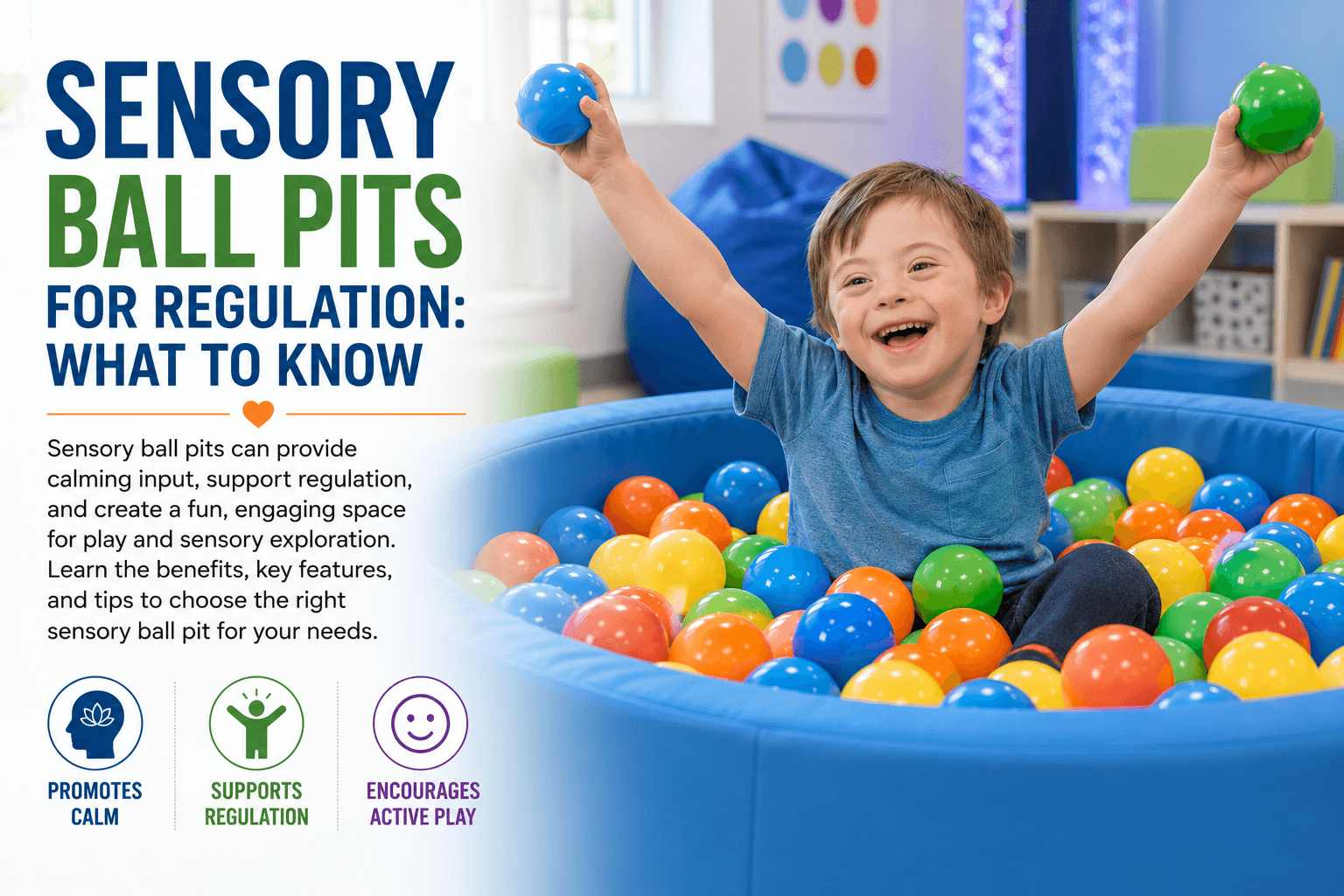
Yes. Sensory ball pits deliver proprioceptive and tactile input that helps many students calm down and refocus. Occupational therapists use them to support sensory regulation as part of structured therapy sessions.
What size ball pit works for a small therapy room?
A 4-by-4-foot ball pit fits most small therapy rooms while leaving space for entry, exit, and adjacent activities. Corner ball pit designs can save even more floor space.
How do you keep a school ball pit clean?
Wipe down the vinyl frame daily and deep-clean the balls weekly with a mild disinfectant. Smooth, non-porous ball surfaces make quick sanitation practical between student sessions.
Does eSpecial Needs sell ball pits for school use?
eSpecial Needs carries ball pits, ball pit balls, and sensory room accessories designed for schools, clinics, and therapy settings. They also accept school purchase orders and offer bundled sensory room package options.