Table of Contents
- Why Use Mirrors in a Sensory Room?
- 1. Acrylic Wall Mirrors
- 2. Acrylic Corner Mirrors
- 3. Round Acrylic Wall Mirror
- 4. Wall Mirror
- 5. HABA Pro Corner Wall Mirror With Leaf Curtains
- 6. Soft Frame Bubble Mirrors
- How Sensory Room Mirrors Support Learning and Therapy
- Choosing the Best Sensory Room Mirrors
- Where to Use Mirrors for Visual Stimulation
- Sensory Room Mirror Safety Tips
- Shop Sensory Room Mirrors at eSpecial Needs
- FAQs
Sensory room mirrors can help create a more engaging, interactive, and visually stimulating environment for children and adults with special needs. Mirrors are simple tools, but they can support self awareness, visual tracking, body recognition, movement exploration, emotional expression, and sensory room design.
For schools, therapy clinics, sensory rooms, early learning classrooms, care spaces, and homes, mirrors for visual stimulation can make a room feel brighter, larger, and more interactive. They can also help users see their own movements, facial expressions, body position, and reactions during play, therapy, communication, or calming routines.
At eSpecial Needs, the Mirrors for Visual Stimulation collection includes durable mirror options designed for sensory development, engagement, and learning.
Why Use Mirrors in a Sensory Room?
Mirrors can add visual feedback to a sensory room without requiring complicated technology. When a child moves, reaches, smiles, crawls, stands, points, or interacts with another person, the mirror reflects that action back. This can make movement and expression easier to notice.
Sensory room mirrors may support:
Visual stimulation
Visual tracking
Self awareness
Body awareness
Motor visual perception
Emotional recognition
Social interaction
Early learning
Movement exploration
Therapy activities
Sensory room design
Engagement during play
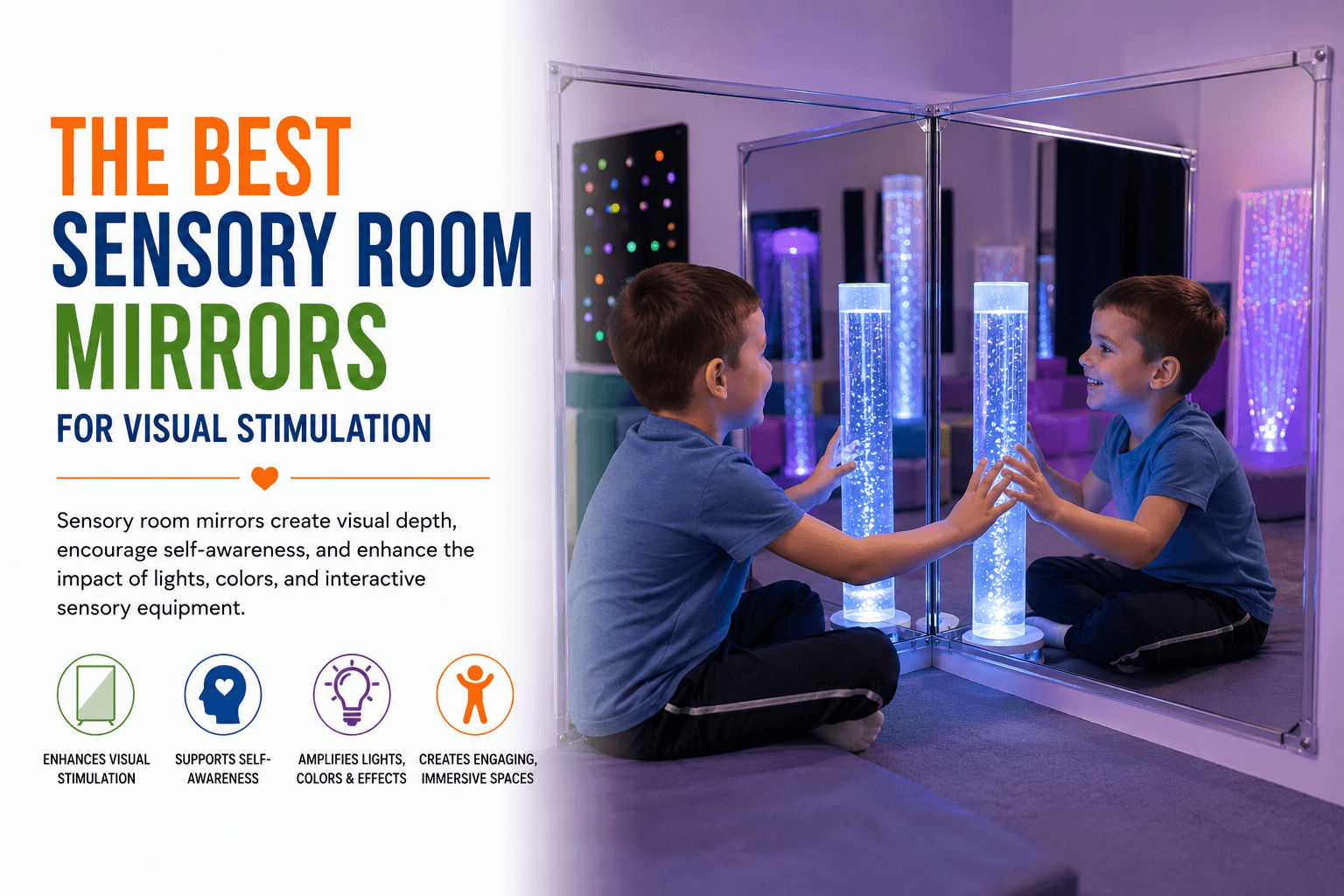
Mirrors can also reflect light from bubble tubes, fiber optics, projectors, and other visual sensory tools, helping create a more immersive sensory room setup.
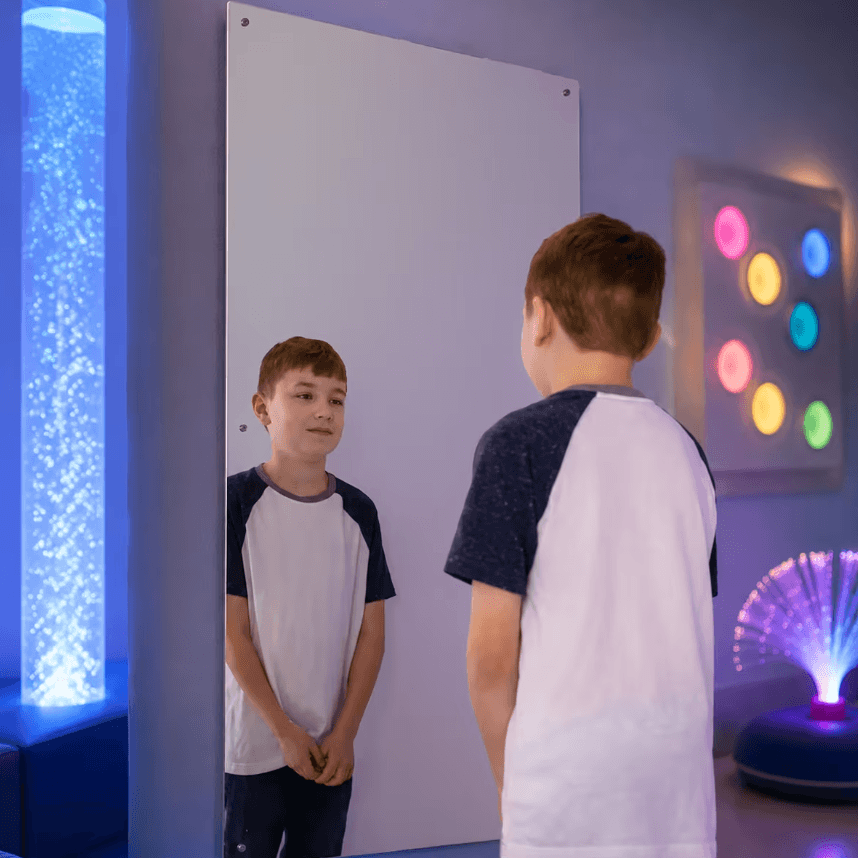
1. Acrylic Wall Mirrors
Acrylic Wall Mirrors are a versatile choice for sensory rooms, early learning environments, therapy spaces, and classrooms. These mirrors are made from safe, shatterproof acrylic and include rounded edges and corners for added safety. Wall mounting screws are included.
They are available in multiple sizes, including:
24 inch by 24 inch
24 inch by 36 inch
30 inch by 30 inch
12 inch by 48 inch
24 inch by 48 inch
Acrylic wall mirrors can help children develop self awareness, reinforce motor visual perception, support curiosity, and encourage emotional and cognitive development. They are a strong option for rooms where children need a safe reflective surface for visual feedback and movement based activities.
Best for:
Sensory rooms
Early learning classrooms
Therapy spaces
Play areas
Visual motor activities
Self recognition practice
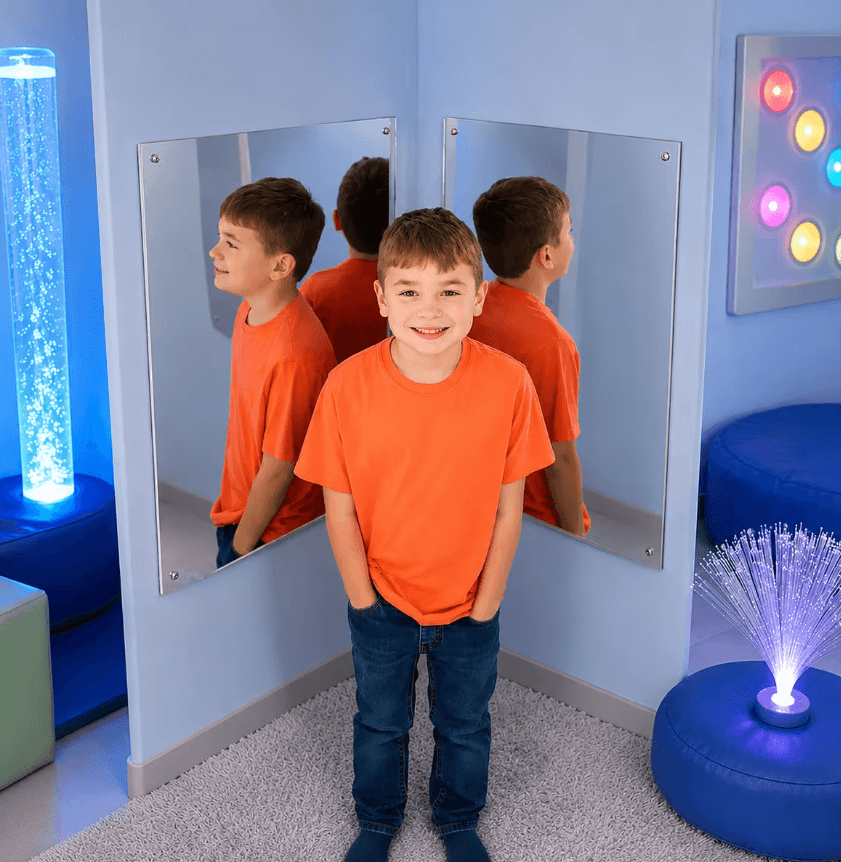
2. Acrylic Corner Mirrors
Acrylic Corner Mirrors are designed to mount in a corner, creating a visually engaging space that can enhance self image, discovery, and visual perception. These shatterproof acrylic mirrors come in pairs, and all edges and corners are rounded for safety.
Corner mirrors work especially well near bubble tubes, fiber optic lights, sensory seating, or calm visual areas. When placed in a room corner, they can make a small sensory space feel more expansive while reflecting light, color, and movement.
Available sizes include:
24 inch by 24 inch
24 inch by 36 inch
30 inch by 30 inch
12 inch by 48 inch
24 inch by 48 inch
Best for:
Sensory room corners
Bubble tube areas
Visual stimulation walls
Therapy clinics
Classrooms
Compact sensory spaces
3. Round Acrylic Wall Mirror
The Round Acrylic Wall Mirror is a 23 inch shatterproof acrylic mirror designed for sensory rooms, early education classrooms, play areas, and other interactive environments. Its round shape gives it a friendly, approachable look while still supporting visual exploration.
This mirror can help children explore light, emotions, self image, and reflection. It is lightweight, shatterproof, includes rounded edges for safety, and comes with wall mounting hardware.
Best for:
Early learning spaces
Playrooms
Sensory corners
Emotional expression activities
Self image exploration
Smaller wall areas
Round Acrylic Wall Mirror
$89.00
Our new 23" Round Acrylic Wall Mirror provides a simple and fun way to explore a child's relationship with light, emotions, self-image, and so much more. This lightweight and shatterproof mirror easily mounts to a wall (hardware included). It's a… read more

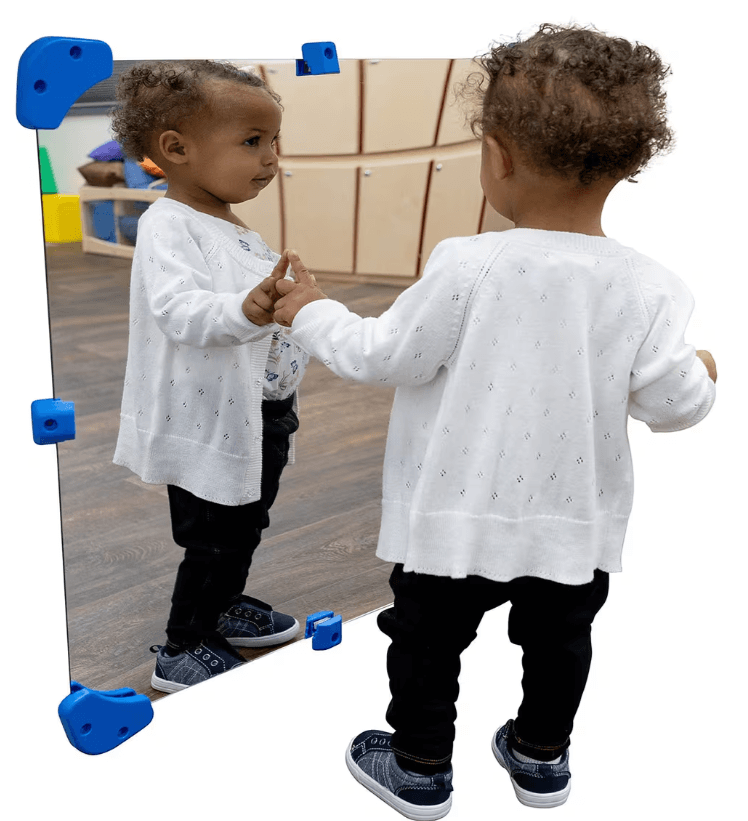
4. Wall Mirror
The Wall Mirror is a shatter resistant PET mirror designed to reinforce motor visual perception and support self image. It includes molded polyethylene corners and sides for durability, making it a useful option for spaces where children need a sturdy mounted mirror for visual feedback.
This type of therapy mirror can be used during movement activities, classroom routines, speech and language work, self recognition activities, and early learning play. Hardware is not included, so teams should plan installation needs before purchasing.
Best for:
Classrooms
Therapy rooms
Early learning settings
Visual motor activities
Self image support
Shared use spaces
5. HABA Pro Corner Wall Mirror With Leaf Curtains
The HABA Pro Corner Wall Mirror With Leaf Curtains combines reflection, tactile play, visual engagement, and imaginative interaction. Designed to mount in a corner, this mirror creates a playful space where children can hide, peek, look at reflections, and explore the leaf shaped fabric curtains.
This product can support sensory exploration, social development, body awareness, imaginative play, and self recognition. It is a strong fit for early childhood classrooms, preschools, sensory rooms, therapy environments, and inclusive educational spaces.
Best for:
Preschool classrooms
Early learning spaces
Sensory play areas
Imaginative play
Social interaction
Body awareness activities
HABA Pro Corner Wall Mirror with Leaf Curtains
$2,180.10
The HABA Pro Corner Wall Mirror with Leaf Curtains is a thoughtfully designed sensory and play feature that encourages self-awareness, exploration, and imaginative play in early learning and therapeutic environments. Designed to mount securely in a corner, this mirror maximizes… read more

6. Soft Frame Bubble Mirrors
Soft frame bubble mirrors can add playful visual distortion and sensory interest to a room. Options like the Soft Frame Convex Bubble Mirror and Soft Frame Concave Bubble Mirror create unusual reflection effects that can encourage curiosity, laughter, visual attention, and perceptual exploration.
The soft, foam filled frame with wipe clean cover makes these mirrors especially useful for interactive sensory spaces. Because the reflection changes based on distance and angle, children can explore how movement changes what they see.
Best for:
Visual perceptual play
Sensory walls
Classrooms
Therapy spaces
Playrooms
Curiosity based exploration
Soft Frame Convex Bubble Mirror
$477.25
$525.00
The Soft Frame Convex Bubble Mirror is made of shatter-resistant acrylic and framed with soft-play padding. It multiplies the image of the viewer in all nine of the bubbles. It also changes the child's shape and size. This fun mirror… read more

How Sensory Room Mirrors Support Learning and Therapy
Mirrors can be used in many therapeutic and educational activities. A child may watch their face while practicing emotions, observe body movement during therapy, imitate gestures, follow visual cues, or engage with another person through shared reflection.
Therapists, teachers, and caregivers may use mirrors for:
Visual tracking
Motor imitation
Facial expression practice
Speech sound practice
Body awareness
Posture activities
Movement feedback
Cause and effect play
Social interaction
Emotional recognition
Tummy time or floor play
Seated visual engagement
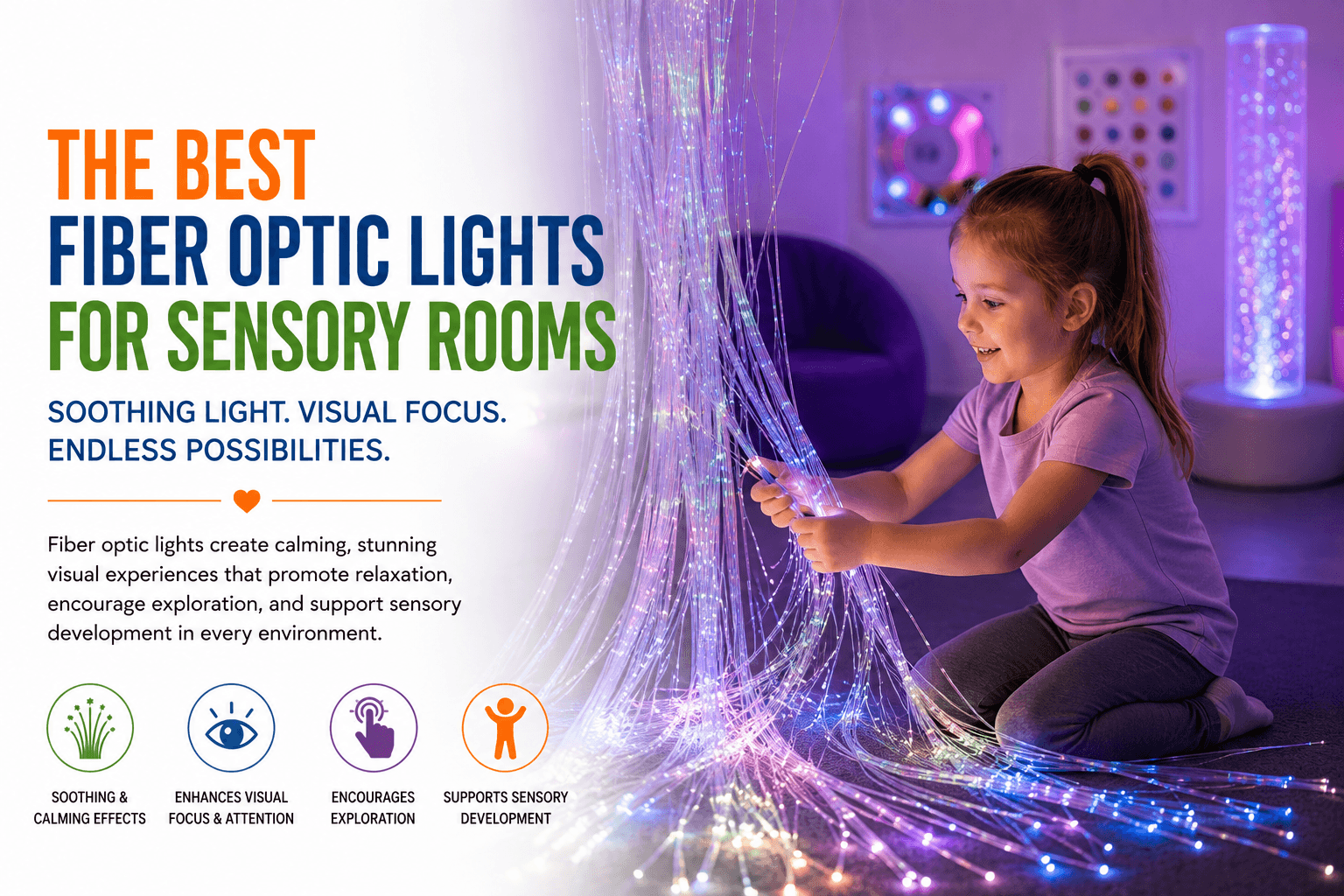
In sensory rooms, mirrors can also reflect visual tools like Bubble Tubes, Sensory Fiber Optic Lights and Strands, Projectors, and Sensory Wall Panels.
Choosing the Best Sensory Room Mirrors
The best sensory room mirrors depend on the user, space, and activity goals. Full wall sensory room mirrors may work well for movement and body awareness. Corner sensory room mirrors can create a visually immersive space. A round mirror may be a good fit for smaller rooms. Bubble mirrors may be best for playful visual exploration.
Before choosing a mirror, consider:
User age and size
Room size
Wall space
Mounting requirements
Safety features
Shatter resistant or shatterproof materials
Edge design
Visual goals
Therapy goals
Cleaning needs
Whether the mirror will reflect other sensory tools
Whether the space needs one mirror or a corner setup
For schools and clinics, safety and secure installation are especially important. Mirrors should be mounted according to product instructions and placed where users can engage without climbing, pulling, or unsafe reaching.
Where to Use Mirrors for Visual Stimulation
Mirrors can be used in many settings, including:
Sensory rooms
Early learning classrooms
Special education classrooms
Occupational therapy rooms
Speech therapy rooms
Pediatric clinics
Playrooms
Calm corners
Tummy time areas
Waiting rooms
Care environments
Home sensory spaces
They can also pair well with Sensory Room Equipment, Visual Stimulation Products, Activity Wall Panels
Sensory Room Mirror Safety Tips
Safety matters when adding mirrors to any sensory space. Choose mirrors designed for children, therapy, or sensory environments rather than standard glass mirrors. Shatterproof acrylic, shatter resistant PET, rounded edges, soft frames, and secure mounting can help make mirrors more appropriate for active settings.
Helpful safety tips include:
Use shatterproof or shatter resistant mirrors
Follow all mounting instructions
Place mirrors at an accessible height
Avoid sharp edges or exposed corners
Check mounting hardware regularly
Keep climbing furniture away from mounted mirrors
Supervise active play
Clean mirrors according to product instructions
Replace damaged mirrors right away
Consider corner mirrors for compact sensory spaces
Shop Sensory Room Mirrors at eSpecial Needs
The Mirrors for Visual Stimulation collection at eSpecial Needs includes safe, durable mirror options for sensory rooms, schools, therapy spaces, early learning classrooms, and care environments. Whether you are looking for acrylic wall mirrors, corner mirrors, round mirrors, therapy mirrors, bubble mirrors, or visual stimulation mirrors, eSpecial Needs offers practical options for interactive sensory environments.
You can also explore related categories, including Mirrors, Sensory Room Equipment, Visual Stimulation Products, Sensory Wall Panels, Bubble Tubes, and Sensory Fiber Optic Lights and Strands.
FAQs
What are sensory room mirrors used for?
Sensory room mirrors are used to provide visual feedback, encourage self awareness, support movement exploration, and make sensory spaces more interactive. They can help users notice their body position, facial expressions, gestures, and movement during play, therapy, or calming routines.
Are sensory room mirrors different from regular mirrors?
Yes. Sensory room mirrors are usually made with safer materials such as shatterproof acrylic or shatter resistant PET. They are designed for schools, therapy spaces, sensory rooms, and play areas where standard glass mirrors may not be appropriate.
Why are shatterproof mirrors important in sensory rooms?
Shatterproof mirrors help reduce the risk of broken glass in active environments. Since sensory rooms may include movement, reaching, crawling, swings, or floor play, a safer mirror material is important for schools, clinics, and home sensory spaces.
Can sensory room mirrors be used with bubble tubes or fiber optics?
Yes. Mirrors can reflect light from bubble tubes, fiber optic strands, projectors, and other visual sensory tools. This can create a more immersive visual experience in a sensory room or calming space.
Where can I buy sensory room mirrors?
You can shop Mirrors for Visual Stimulation at eSpecial Needs. You can also browse Mirrors, Sensory Room Equipment, Visual Stimulation Products, Sensory Wall Panels, and Bubble Tubes.