Table of Contents
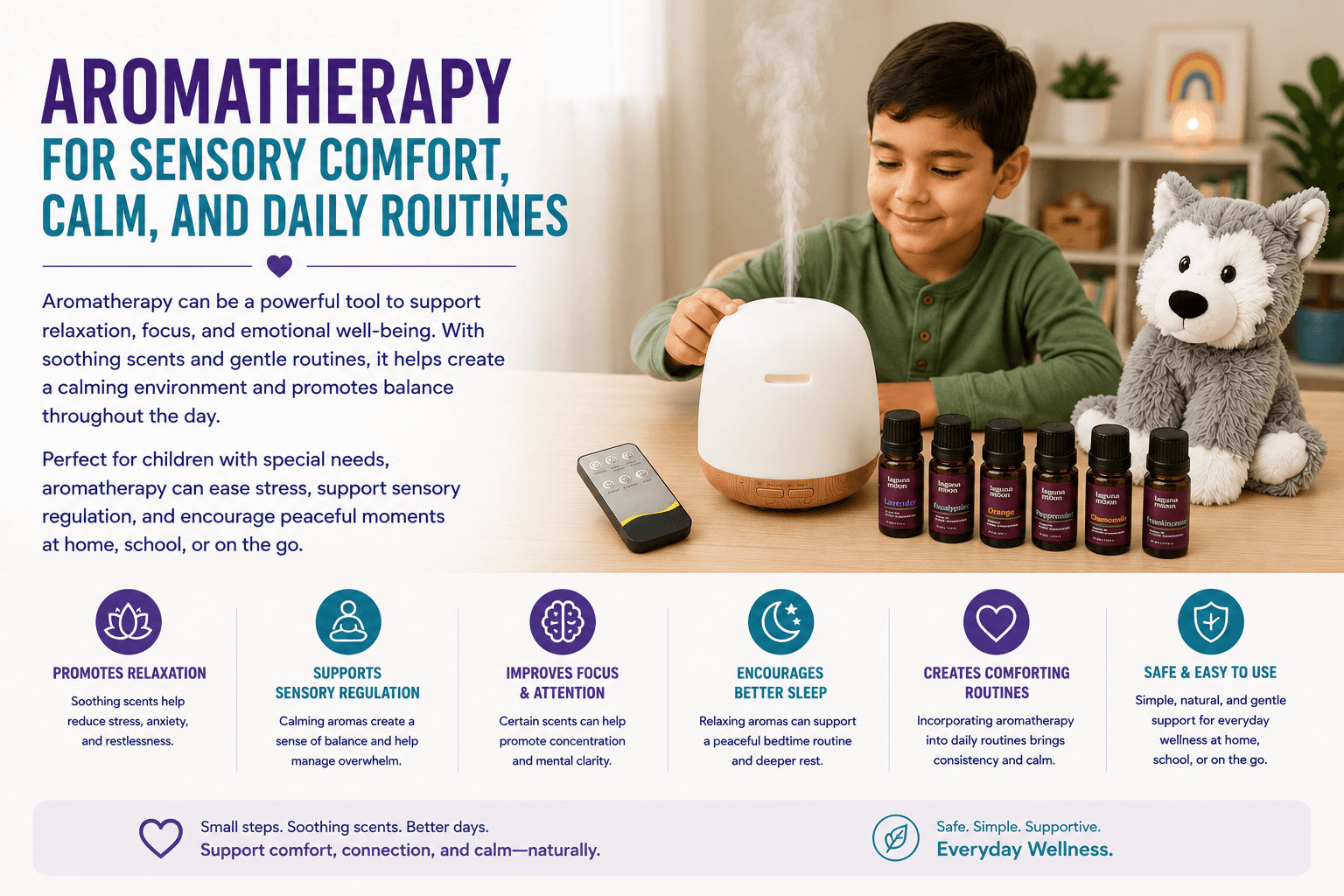
Aromatherapy can be a helpful sensory support for children and adults who respond well to calming scents, predictable routines, and soothing environments. For many individuals with autism, sensory processing needs, anxiety, ADHD, developmental delays, or emotional regulation challenges, scent can play a role in comfort, focus, and relaxation.
What Is Aromatherapy?
Aromatherapy uses scent to help create a more comfortable and relaxing environment. It often includes essential oils, diffusers, scented tools, or calming aroma products. While it's not a cure or treatment for sensory needs, many families, teachers, therapists, and caregivers use gentle scents as part of a broader sensory routine.
For some users, familiar scents can help make a space feel predictable. A calming aroma during quiet time or a consistent scent during a bedtime routine may help signal what comes next. This can be especially useful for individuals who benefit from routine, structure, and sensory cues.
Warmies Cozy Plush Husky
$23.75
$29.99
Warmies® Cozy Plush are a range of different fully microwavable soft toys. Simply warm them in a microwave for one minute to release the wonderfully soothing lavender aroma. Suitable for all ages Approximately 13 inches high. Simply warm for 90… read more

How Aromatherapy May Support Sensory Needs
Scent is one part of the sensory system. Some people are very sensitive to smells, while others seek scent input or find certain aromas comforting. Aromatherapy products may help support a calming atmosphere when used carefully and with the user’s comfort in mind.
These may be used to support:
Relaxation
Sensory breaks
Focus
Calm routines
Bedtime preparation
Classroom reset time
Therapy room comfort
Emotional regulation
Transition support
Predictable daily routines
The key is to keep scent gentle and optional. A scent that feels soothing to one person may feel too strong or unpleasant to another.
Aromatherapy for Autism and Sensory Processing
Aromatherapy may be useful for some autistic children, teens, or adults who enjoy scent based sensory input. A familiar aroma can become part of a calming routine, a sensory room setup, or a transition strategy.
However, scent should always be used thoughtfully. Many autistic individuals are sensitive to strong smells, perfumes, cleaning products, and fragrances. For this reason, caregivers should introduce aromatherapy slowly, use mild scents, and watch for signs of discomfort.
Before adding to a sensory routine, consider:
Scent sensitivity
Allergies
Asthma
Migraine triggers
Skin sensitivity
Room ventilation
School or clinic policies
Whether the user can leave the area
Whether the scent can be turned off or removed
Aromatherapy should never be forced. It works best when the individual finds the scent comfortable and calming.
Ways to Use Aromatherapy in Daily Routines
Aromatherapy can be added to routines in simple ways. The goal is not to overwhelm the room with scent, but to create a gentle sensory cue that supports comfort.
Helpful routine ideas include:
Use a calming scent during quiet reading time
Add aromatherapy to a bedtime wind down routine
Use scent during a calm down corner break
Pair a familiar aroma with deep breathing
Use a diffuser during therapy room preparation
Create a predictable scent cue for relaxation time
Use mild scent during rest or reset periods
Turn off scent immediately if the user appears uncomfortable
Aromatherapy can also pair well with other calming sensory tools, such as Calming Sensory Products, Sensory Room Equipment, Weighted Products, Deep Pressure Products, and Sensory Seating.
Choosing Aromatherapy Products
When choosing aromatherapy products, start with the user’s preferences and sensitivities. Some individuals prefer floral scents like lavender, while others may like citrus, mint, herbal, or woodsy aromas. Others may not tolerate scent at all.
Consider:
Scent strength
Ease of use
Timer settings
Room size
Supervision needs
Cleaning requirements
User preference
Sensory sensitivities
Safety instructions
School or clinic policies
Aromatherapy should be part of a flexible sensory plan, not the only support. It may work best alongside movement, deep pressure, visual calming tools, quiet seating, or scheduled breaks.
Shop Aromatherapy at eSpecial Needs
The Aromatherapy collection at eSpecial Needs includes calming sensory tools for homes, classrooms, therapy clinics, sensory rooms, and care settings. Whether you are building a relaxation area, creating a calming routine, or adding scent based sensory support to an existing space, aromatherapy can offer another way to support comfort and focus.
You can also browse related categories, including Sensory Products, Sensory Room Equipment, Calming Sensory Products, Sensory Bundles and Kits, Scented Putty, and Tactile Stimulation Products.
FAQs
Is aromatherapy safe for everyone?
No. Aromatherapy may not be appropriate for everyone. Some people are sensitive to scents, essential oils, fragrances, or diffusers. Extra care is needed for individuals with asthma, allergies, migraines, respiratory concerns, skin sensitivities, or strong smell sensitivity.
Should aromatherapy be used in a shared classroom?
Aromatherapy should be used carefully in shared classrooms because students and staff may have different sensitivities or medical needs. Before using scents in school, check classroom policies, caregiver permissions, allergy concerns, ventilation, and individual support plans.
What scent is best for calming?
There is no single best calming scent for every person. Some users prefer lavender, citrus, mint, eucalyptus, or mild herbal scents, while others may dislike scented products altogether. The best option is the scent the user finds comfortable and not overwhelming.
Can aromatherapy help with bedtime routines?
Aromatherapy may be used as part of a bedtime routine when the user enjoys the scent and it does not cause discomfort. A familiar, gentle scent can become a cue that it is time to relax, slow down, and prepare for sleep.
How strong should the scent be?
The scent should be mild, not overpowering. Start with a small amount, use good ventilation, and observe the user’s response. If the scent causes discomfort, coughing, headache, agitation, or avoidance, stop using it.