Table of Contents
- What Is an Adaptive Bike?
- Why Adaptive Bikes Matter
- Who Can Benefit From Adaptive Bikes?
- Adaptive Bikes vs Standard Bikes
- Types of Adaptive Bikes
- Adaptive Tricycles
- Special Needs Tricycles
- Adaptive Bicycles
- Therapy Bikes
- Adult Adaptive Bikes
- Pediatric Adaptive Bikes
- Adaptive Bikes for Autism
- Adaptive Bikes for Cerebral Palsy
- Adaptive Bikes for Low Muscle Tone
- Adaptive Bikes for Balance and Coordination
- Benefits of Adaptive Bikes
- Adaptive Bikes for Physical Therapy
- Adaptive Bikes for Schools and Programs
- Where to Find and Shop Adaptive Bikes
- How to Choose the Right Adaptive Bike
- Important Features to Look For
- Adaptive Bike Sizing
- How Much Is an Adaptive Bike?
- Does Medicaid Cover Adaptive Bikes?
- Will Medicare Pay for an Adult Tricycle?
- Non Profit Support and Grants for Adaptive Bikes
- What to Include in a Grant Request
- Letter of Medical Necessity for Adaptive Bikes
- Adaptive Bikes for Family Recreation
- Adaptive Bike Safety Tips
- Where Adaptive Bikes Can Be Used
- Adaptive Bikes for Outdoor Participation
- Common Mistakes When Buying Adaptive Bikes
- Adaptive Bike Buying Checklist
- Why Shop Adaptive Bikes at eSpecial Needs?
- FAQs
Adaptive bikes help children, teens, and adults enjoy movement, outdoor play, exercise, and independence when a traditional bicycle does not provide enough support. For riders with balance challenges, low muscle tone, developmental delays, cerebral palsy, autism, coordination difficulties, mobility limitations, or other special needs, adaptive bikes can make cycling safer, more comfortable, and more accessible.
Many families begin searching for adaptive tricycles, special needs tricycles, adaptive bicycles, supportive trikes, therapy bikes, or special needs bikes when a standard two wheel bicycle is too difficult to balance, steer, pedal, or control. The right adaptive bike can support strength, coordination, endurance, confidence, body awareness, and participation in family, school, therapy, and community activities.
At eSpecial Needs, families, therapists, schools, and caregivers can shop Tricycles and Bicycles for Special Needs, along with related Mobility Products, Sensory Motor Tools, Movement Products, and Adaptive Toys and Equipment.
What Is an Adaptive Bike?
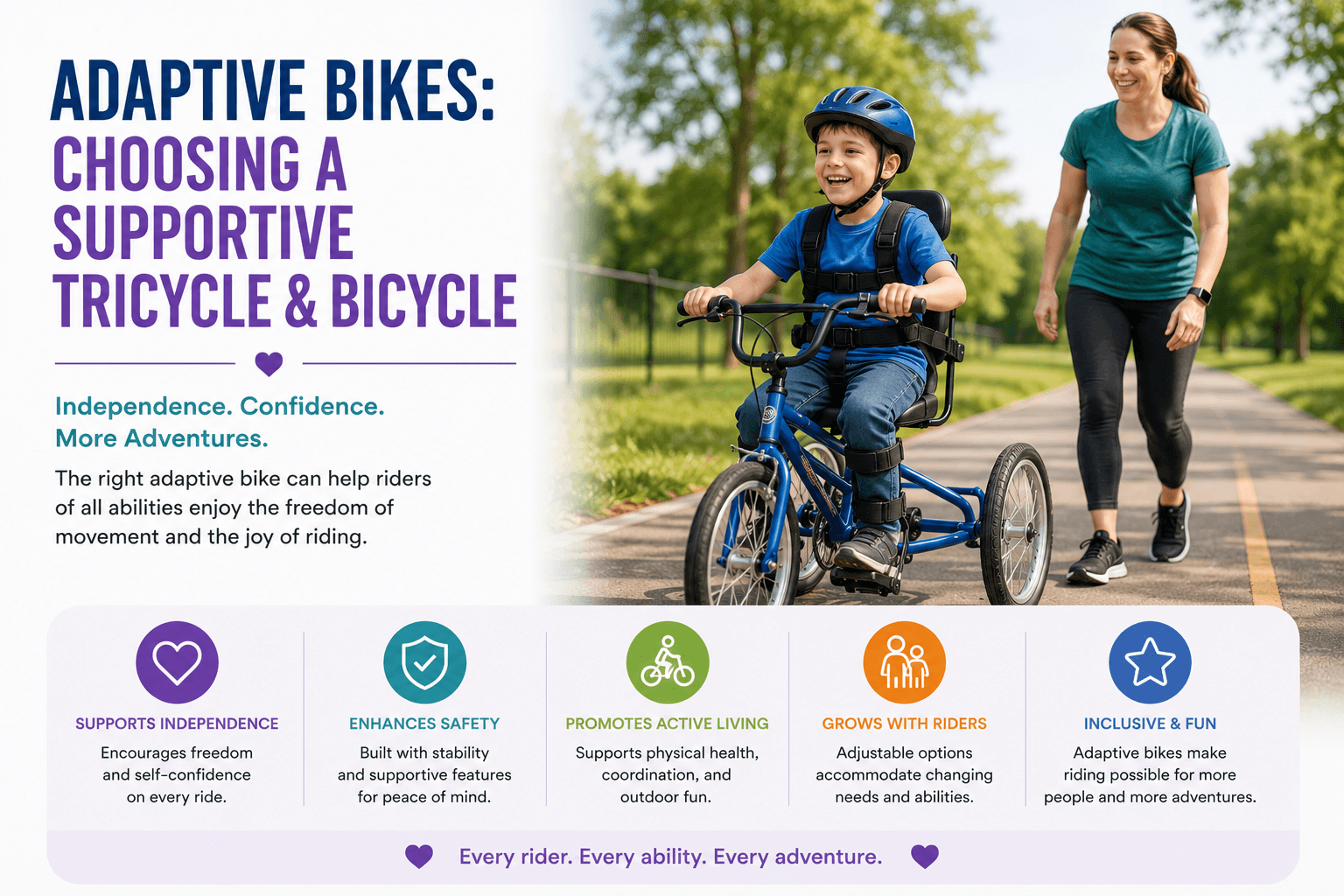
An adaptive bike is a supportive bicycle or tricycle designed to help riders with physical, developmental, sensory, or motor challenges participate in cycling. Unlike a standard bike, an adaptive bike may include a more stable frame, three wheel design, supportive seating, positioning accessories, adaptive pedals, easy grip handlebars, caregiver steering options, foot straps, trunk support, or other features that help the rider stay safer and more comfortable.
Adaptive bikes are often used by children and adults who need extra support for:
- Balance
- Coordination
- Pedaling
- Steering
- Posture
- Motor planning
- Endurance
- Body awareness
- Confidence
- Outdoor movement
- Therapy goals
- Recreational participation
For some riders, adaptive cycling is about exercise. For others, it is about independence, inclusion, sensory input, or the joy of riding with family and friends.
Why Adaptive Bikes Matter
Cycling can be a meaningful activity for children and adults with special needs because it combines movement, rhythm, outdoor participation, and personal accomplishment. A rider who cannot use a standard bike may still be able to enjoy cycling with the right adaptive support.
Adaptive bikes may help support:
- Physical activity
- Leg strength
- Endurance
- Balance
- Coordination
- Motor planning
- Body awareness
- Confidence
- Social participation
- Family recreation
- School activities
- Therapy carryover
- Outdoor routines
- Independence
A supportive cycling option can also help riders participate in activities that siblings, classmates, and peers enjoy.
Who Can Benefit From Adaptive Bikes?
Adaptive bikes may benefit children, teens, and adults with many different needs.
Common users include riders with:
- Cerebral palsy
- Autism
- Down syndrome
- Developmental delays
- Low muscle tone
- Balance challenges
- Coordination difficulties
- Spina bifida
- Muscular dystrophy
- Traumatic brain injury
- Motor planning challenges
- Sensory processing differences
- Mobility limitations
- Limited endurance
- Neuromuscular conditions
- Intellectual disabilities
- Postural support needs
The best choice depends on the rider’s size, abilities, support needs, safety concerns, and where the bike will be used.
Adaptive Bikes vs Standard Bikes
A standard bicycle usually requires balance, coordination, steering control, pedaling strength, and quick reaction time. Many children and adults with special needs need more stability or support than a standard bike can provide.
Adaptive bikes may offer:
- Three wheel stability
- Lower center of gravity
- Supportive seat options
- Adjustable frames
- Adaptive pedals
- Foot straps
- Trunk support
- Back support
- Push handles
- Caregiver steering
- Hand brakes or parking brakes
- Larger or easier to grip handlebars
- Options for therapy and recreation
A standard bike may be appropriate for some riders, but an adaptive bike can be a better choice when safety, posture, balance, or control are concerns.
Types of Adaptive Bikes
There are several types of adaptive cycling products. The right choice depends on the rider’s age, body size, motor skills, postural control, and activity goals.
Adaptive Tricycles
Adaptive tricycles are among the most common cycling options for children and adults with special needs. The three wheel design provides more stability than a traditional two wheel bike, which can help riders who have balance challenges.
Adaptive tricycles may be helpful for riders who:
- Need extra stability
- Cannot safely balance on two wheels
- Need supportive seating
- Need help with steering
- Need adaptive pedals
- Benefit from therapy based cycling
- Enjoy outdoor movement
- Need a recreational mobility option
Families can explore Tricycles and Bicycles for Special Needs to compare supportive riding options.
Special Needs Tricycles
A special needs tricycle is designed for riders who need more support than a standard tricycle. It may include positioning accessories, supportive seats, foot straps, adjustable handlebars, caregiver control options, and other adaptive features.
Special needs tricycles may support:
- Safer riding
- Better posture
- Improved pedaling practice
- Greater confidence
- Outdoor participation
- Therapy goals
- Family recreation
- School or program activities
For many riders, a special needs tricycle is the first successful cycling experience after standard bikes or trikes have not worked.
Dirt King Adult Dually Tricycle
$449.00
For the inner child inside all of us! The Dirt King® Adult Dually Trike is hand welded and constructed of heavy duty 14 and 16 gauge steel. It comes equipped with all-terrain “dual” pneumatic tires mounted on heavy duty steel… read more

Adaptive Bicycles
Adaptive bicycles may include modified two wheel bikes, supportive bikes, tandem style options, or other designs that help riders with physical or developmental challenges ride more safely. Some riders may be able to use a bicycle style product with supports, while others need the stability of an adaptive tricycle.
Adaptive bicycles may be considered when the rider:
- Has enough balance for a bike style setup
- Needs modified controls
- Needs adapted pedals
- Needs supportive seating
- Is transitioning from a trike
- Wants a more bicycle like riding experience
A therapist can help determine whether an adaptive bicycle or adaptive tricycle is more appropriate.
Therapy Bikes
Therapy bikes are often used to support movement, strengthening, coordination, endurance, and body awareness. They may be part of a physical therapy plan or home exercise routine.
Therapy bike benefits may include:
- Repetitive leg movement
- Strength building
- Coordination practice
- Endurance support
- Motor planning practice
- Outdoor motivation
- Improved participation
Therapy use should be guided by a physical therapist when the rider has complex medical, orthopedic, or mobility needs.
Adult Adaptive Bikes
Adult adaptive bikes are designed for older teens and adults who need cycling support. These may include adult sized adaptive tricycles, supportive trikes, or other adaptive cycling options with higher weight capacities and larger frames.
Adult riders may need adaptive bikes because of:
- Cerebral palsy
- Developmental disabilities
- Balance loss
- Neurological conditions
- Brain injury
- Low endurance
- Muscle weakness
- Mobility limitations
- Coordination challenges
- Need for supported recreation
Adult cycling equipment should be chosen with attention to dignity, sizing, comfort, strength, and safety.
Pediatric Adaptive Bikes
Pediatric adaptive bikes are designed for children who need extra support while learning to ride or participating in outdoor play. These products may help children build confidence, practice movement, and enjoy family recreation.
Pediatric riders may need:
- Three wheel stability
- Supportive seat
- Foot straps
- Push handle
- Caregiver steering
- Adjustable frame
- Easy grip handlebars
- Trunk support
- Adaptive pedals
A pediatric adaptive bike should be properly sized and adjusted as the child grows.
Adaptive Bikes for Autism
Some autistic children and adults enjoy cycling because it provides movement, rhythm, outdoor activity, and sensory input. An adaptive bike may help when balance, motor planning, attention, safety awareness, or endurance make standard cycling difficult.
Adaptive bikes for autistic riders may support:
- Predictable movement
- Outdoor sensory input
- Active play
- Body awareness
- Family participation
- Calming routines
- Motor planning
- Exercise
- Confidence
Some riders may need visual supports, short riding sessions, safe riding routes, and caregiver guidance.
Adaptive Bikes for Cerebral Palsy
Riders with cerebral palsy may need adaptive cycling support because muscle tone, balance, posture, coordination, and motor control can affect riding. An adaptive bike may provide the stability and positioning needed to participate more safely.
Helpful features may include:
- Supportive seat
- Back support
- Trunk support
- Foot straps
- Adaptive pedals
- Caregiver steering
- Parking brake
- Stable three wheel design
- Adjustable frame
- Easy to grip handlebars
A physical therapist can help choose the best setup for the rider’s tone, posture, strength, and mobility goals.
Adaptive Bikes for Low Muscle Tone
Low muscle tone can make it difficult to sit upright, pedal with control, or maintain balance. Adaptive bikes can help support riders by creating a more stable cycling position.
Helpful features may include:
- Supportive seating
- Foot positioning
- Stable frame
- Adjustable seat height
- Back support
- Handlebar adjustment
- Caregiver control
- Short riding sessions at first
The goal is to make riding successful without causing excessive fatigue.
Adaptive Bikes for Balance and Coordination
Many riders need adaptive cycling equipment because balancing on a traditional two wheel bike is unsafe or frustrating. Adaptive tricycles can provide a more stable base while still allowing the rider to pedal and steer.
Riders with balance and coordination challenges may benefit from:
- Three wheel design
- Wider base
- Lower riding position
- Easy steering
- Pedal supports
- Stable seating
- Caregiver assistance
- Safe riding surfaces
A supportive bike can help the rider focus on pedaling, steering, and enjoying the activity rather than fighting to stay balanced.
Discontinued - Freedom Concepts EHDU12 Upright Handcycle
$4,023.00
The Freedom Concepts EHDU12 Upright Handcycle is a therapeutic mobility device designed to promote active movement, strength building, and cardiovascular exercise for individuals with limited lower-body mobility. Featuring an upright riding position, this handcycle supports proper posture while allowing users… read more

Benefits of Adaptive Bikes
Adaptive bikes can support physical, emotional, social, and recreational goals.
Potential benefits include:
- More outdoor activity
- Improved confidence
- Better leg strength
- Increased endurance
- Improved coordination
- Motor planning practice
- Body awareness
- Family participation
- Peer inclusion
- Therapy carryover
- Recreation
- Independence
- Greater access to community activities
For many families, the biggest benefit is seeing the rider experience success, freedom, and joy.
Adaptive Bikes for Physical Therapy
Physical therapists may recommend adaptive bikes to support strength, mobility, range of motion, endurance, coordination, or participation. Riding can be motivating because it feels like play rather than exercise.
Therapy goals may include:
- Pedaling practice
- Leg strengthening
- Endurance building
- Balance support
- Motor planning
- Postural control
- Weight shifting
- Reciprocal movement
- Outdoor participation
- Confidence with movement
Ask the rider’s therapist whether adaptive cycling is appropriate and what features are needed.
Adaptive Bikes for Schools and Programs
Schools, camps, therapy centers, and community programs may use adaptive bikes to support inclusive recreation and movement activities. Cycling can be part of adaptive physical education, therapy, outdoor play, or motor skill development.
Program buyers should consider:
- Multiple rider sizes
- Adjustable features
- Durability
- Storage
- Safe riding areas
- Staff training
- Helmet policies
- Maintenance
- Purchase orders
- Product quotes
- Replacement accessories
Adaptive cycling equipment can help schools and organizations create more inclusive movement opportunities.
Where to Find and Shop Adaptive Bikes
Families and professionals can shop adaptive bikes at eSpecial Needs through the Tricycles and Bicycles for Special Needs collection. This collection includes supportive cycling solutions for children and adults who need more stability, comfort, and control than a traditional bicycle may provide.
The eSpecial Needs collection focuses on adaptive tricycles, adaptive bicycles, adaptive trikes, and special needs tricycles designed for mobility, confidence, outdoor participation, and active living.
Helpful related categories include:
- Tricycles and Bicycles for Special Needs
- Mobility Products
- Sensory Motor Tools
- Movement Products
- Adaptive Toys, Games, and Equipment
Shopping through eSpecial Needs can help families, schools, therapists, and care teams compare products designed specifically for special needs support.
How to Choose the Right Adaptive Bike
Choosing the right adaptive bike starts with the rider’s body, abilities, and goals.
Consider:
- Rider age
- Height
- Weight
- Inseam
- Trunk control
- Head control
- Balance
- Coordination
- Pedaling ability
- Steering ability
- Endurance
- Sensory needs
- Behavioral safety
- Caregiver support
- Riding surface
- Storage space
- Transportation needs
- Therapy recommendations
- Funding needs
Do not choose only by age. Measurements and support needs matter more.
Important Features to Look For
Helpful adaptive bike features may include:
- Stable three wheel frame
- Adjustable seat
- Supportive backrest
- Trunk support
- Safety belt when appropriate
- Foot straps
- Adaptive pedals
- Easy grip handlebars
- Caregiver push handle
- Caregiver steering
- Parking brake
- Adjustable frame
- Durable wheels
- Basket or storage option
- Growth adjustment
- Comfortable seat
The right features depend on how much support the rider needs.
Adaptive Bike Sizing
Sizing is one of the most important parts of choosing an adaptive bike. A bike that is too large may be hard to control. A bike that is too small may be uncomfortable or unsafe.
Important measurements include:
- Rider height
- Weight
- Inseam
- Leg length
- Seat to pedal distance
- Seat width
- Trunk support needs
- Arm reach
- Foot positioning needs
A physical therapist or product specialist can help review measurements before purchase.
How Much Is an Adaptive Bike?
The cost of an adaptive bike varies based on size, model, support features, brand, accessories, and customization. Basic supportive tricycles may cost less than larger adaptive bikes with more positioning options, caregiver steering, specialty pedals, or adult sizing.
Price factors may include:
- Pediatric or adult size
- Frame style
- Weight capacity
- Seat support
- Trunk support
- Adaptive pedals
- Foot straps
- Caregiver steering
- Push handle
- Brake system
- Accessories
- Shipping
- Assembly needs
Because prices can vary, families should review the current Tricycles and Bicycles for Special Needs collection at eSpecial Needs and request a quote when needed for funding.
Does Medicaid Cover Adaptive Bikes?
Medicaid coverage for adaptive bikes varies by state, plan, waiver program, diagnosis, medical necessity, and documentation. Some families may be able to pursue funding when the bike is recommended for mobility, therapy, exercise, positioning, or functional goals. Other plans may classify cycling equipment as recreational and deny coverage.
A Medicaid request may require:
- Physician prescription
- Therapy evaluation
- Letter of medical necessity
- Product quote
- Rider measurements
- Diagnosis
- Functional limitations
- Explanation of why the bike is needed
- Therapy goals
- Documentation that a standard bike is not appropriate
Families should check with their Medicaid plan, waiver coordinator, case manager, or therapist before assuming coverage.
Will Medicare Pay for an Adult Tricycle?
Medicare generally focuses on medically necessary durable medical equipment used in the home. An adult tricycle is often viewed as recreational or exercise equipment, so coverage may be limited or unlikely in many situations. However, individual circumstances can vary, especially if a provider is helping document medical need.
Adults who need an adaptive tricycle may want to explore:
- Medicaid waiver programs
- Private insurance
- Veterans benefits
- State assistive technology programs
- Disability grants
- Nonprofit funding
- Local service clubs
- Health savings accounts
- Flexible spending accounts
- Direct purchase
- Fundraising
A therapist or medical provider can help explain whether an adult adaptive bike supports therapy, mobility, or health related goals.
Non Profit Support and Grants for Adaptive Bikes
Adaptive bikes can be a major investment, so families often look for nonprofit support, grants, and community funding. Funding options vary by state, diagnosis, income, age, and organization.
Possible funding sources include:
- Disability focused nonprofit grants
- Local charities
- Civic organizations
- Service clubs
- Churches or community groups
- Disease specific foundations
- Children’s charities
- Therapy center grant programs
- School or recreation program funding
- State assistive technology programs
- Medicaid waiver programs
- Community fundraising
When applying for a grant, include a clear explanation of how the bike will support the rider’s physical activity, participation, therapy goals, confidence, and daily life.
What to Include in a Grant Request
A strong adaptive bike grant request may include:
- Rider’s name and age
- Diagnosis or support needs
- Mobility challenges
- Why a standard bike does not work
- Recommended adaptive bike
- Product quote from eSpecial Needs
- Therapy recommendation
- How the bike will be used
- Expected benefits
- Family or school goals
- Photos or measurements when appropriate
- Letter of support from a therapist or physician
Keep the request specific, personal, and focused on function and participation.
Letter of Medical Necessity for Adaptive Bikes
A letter of medical necessity can help support insurance, Medicaid, waiver, school, or grant requests. The letter should explain why the adaptive bike is needed and how it supports the rider.
A strong letter may include:
- Diagnosis
- Functional limitations
- Balance or coordination challenges
- Low tone or strength concerns
- Therapy goals
- Need for physical activity
- Why a standard bike is unsafe or inappropriate
- Requested bike model
- Required accessories
- Expected benefits
- Provider recommendation
- Product quote
A physical therapist, occupational therapist, physician, or rehabilitation specialist may help prepare the letter.
Adaptive Bikes for Family Recreation
One of the most meaningful reasons to choose adaptive bikes is family participation. A rider who cannot safely use a standard bike may still be able to ride with parents, siblings, classmates, or friends when the bike has the right supports.
Family riding may support:
- Outdoor time
- Shared routines
- Sibling participation
- Confidence
- Social connection
- Exercise
- Reduced screen time
- Community inclusion
- Recreation
- Joy
Start with short rides in safe, familiar spaces before progressing to longer routes.
Adaptive Bike Safety Tips
Safety should always come first.
Helpful safety tips include:
- Choose the correct size
- Use a helmet
- Ride on safe surfaces
- Avoid traffic
- Check brakes before riding
- Check foot straps
- Adjust seat and handlebars
- Supervise riders who need help
- Start with short sessions
- Avoid steep hills unless appropriate
- Follow therapist recommendations
- Inspect the bike regularly
- Do not exceed weight limits
- Teach stopping and starting
- Use caregiver steering when needed
A properly fitted bike is safer and more enjoyable.
Where Adaptive Bikes Can Be Used
Adaptive bikes may be used in many settings depending on the model and rider.
Common riding locations include:
- Driveways
- Sidewalks
- Parks
- School tracks
- Therapy clinics
- Adaptive recreation programs
- Bike paths
- Camp programs
- Community centers
- Safe neighborhood streets
- Outdoor play areas
Always choose a safe riding environment with enough space for turning, stopping, and caregiver support.
Adaptive Bikes for Outdoor Participation
Outdoor participation matters for physical and emotional well being. Adaptive bikes can help riders enjoy movement, fresh air, sensory input, and recreation in a way that feels motivating.
Outdoor riding may support:
- Sensory regulation
- Exercise
- Confidence
- Endurance
- Social participation
- Independence
- Family connection
- Community access
- Motor skill practice
For riders who need other mobility support, families can also explore Mobility Products and Adaptive Strollers.
Common Mistakes When Buying Adaptive Bikes
Avoid these common mistakes:
- Choosing by age only
- Skipping measurements
- Ignoring weight capacity
- Overlooking trunk support
- Forgetting foot positioning
- Not checking caregiver steering needs
- Buying without therapist input
- Choosing a bike that is too large
- Choosing a bike with too little support
- Forgetting storage and transport
- Assuming insurance will cover it
- Not requesting a quote for funding
- Ignoring riding surface and safety
Taking time to match the bike to the rider can prevent frustration and improve long term use.
Adaptive Bike Buying Checklist
Before choosing an adaptive bike, ask:
- What are the rider’s measurements?
- Does the rider need trunk support?
- Can the rider steer independently?
- Can the rider pedal independently?
- Is caregiver steering needed?
- Are foot straps or adaptive pedals needed?
- What riding surfaces will be used?
- Does the rider need a three wheel design?
- Is the bike for therapy, recreation, school, or home?
- Will the bike need to be transported?
- Is funding or a grant needed?
- Has a therapist recommended specific features?
- Can the bike grow with the rider?
This checklist can help families and care teams narrow their options.
Why Shop Adaptive Bikes at eSpecial Needs?
eSpecial Needs offers tricycles and bicycles for special needs riders, with products designed to support comfort, safety, stability, and participation. The Tricycles and Bicycles for Special Needs collection includes adaptive cycling options for riders who need more support than a traditional bike can provide.
Families, therapists, schools, and programs can use eSpecial Needs to shop supportive cycling products and related mobility tools in one place.
Helpful categories include:
- Tricycles and Bicycles for Special Needs
- Mobility Products
- Movement Products
- Sensory Motor Tools
- Adaptive Toys, Games, and Equipment
FAQs
Are adaptive bikes only for children?
No. Adaptive bikes are available for children, teens, and adults. Pediatric adaptive bikes are often used for early riding skills, therapy goals, and outdoor play. Adult adaptive bikes may support recreation, exercise, mobility, balance, confidence, and community participation for older riders who need more stability than a traditional bicycle.
What is the difference between an adaptive bike and a regular bike?
A regular bike usually requires strong balance, coordination, steering control, and quick reaction time. An adaptive bike is designed with extra support, such as a more stable frame, three wheel design, supportive seat, foot positioning, caregiver steering, or adaptive pedals. These features may help riders who cannot safely use a standard two wheel bicycle.
What are the main types of adaptive bikes?
Common types of adaptive bikes include adaptive tricycles, special needs tricycles, adaptive bicycles, therapy bikes, supportive trikes, and adult adaptive bikes. Some focus on stability and recreation, while others provide more postural support, caregiver control, or therapy based movement.
How do adaptive bikes help with balance?
Adaptive bikes can help with balance by using a stable frame, often with three wheels instead of two. This allows the rider to focus on pedaling, steering, and movement without needing the same level of balance required by a standard bicycle.
Can adaptive bikes help with coordination?
Yes. Adaptive bikes may support coordination by encouraging repeated pedaling, steering, visual attention, bilateral movement, motor planning, and body control. Riding can give children and adults a fun way to practice coordinated movement without making it feel like a therapy exercise.
Are adaptive bikes good for low muscle tone?
Adaptive bikes can be helpful for riders with low muscle tone when they provide enough support for posture, pedaling, and balance. Features such as a stable three wheel frame, supportive seat, backrest, foot straps, and caregiver control may help make riding more comfortable and successful.
How much is an adaptive bike?
The cost of an adaptive bike depends on size, frame style, support features, accessories, weight capacity, and customization. Larger bikes, adult models, caregiver steering, supportive seating, foot positioning, and specialty accessories may increase the price. Families can review current options on the eSpecial Needs Tricycles and Bicycles for Special Needs collection.
Can grants help pay for adaptive bikes?
Yes. Some families receive help through nonprofit grants, local charities, civic organizations, service clubs, disease specific foundations, children’s charities, therapy center programs, state assistive technology programs, or community fundraising. Grant availability varies by location, age, diagnosis, income, and organization.
Can adaptive bikes be used for family recreation?
Yes. Adaptive bikes can help riders participate in outdoor activities with siblings, parents, classmates, and friends. Many families use adaptive bikes for neighborhood rides, parks, school tracks, safe paths, and outdoor recreation.
Where can adaptive bikes be used safely?
Adaptive bikes can often be used on driveways, sidewalks, parks, school tracks, therapy areas, adaptive recreation programs, bike paths, and safe neighborhood spaces. Riders should avoid traffic, steep hills, uneven surfaces, and crowded areas unless the bike and support plan are appropriate.
What safety tips should families follow?
Choose the correct size, use a helmet, ride in safe areas, inspect brakes and foot straps, supervise riders who need help, start with short sessions, avoid unsafe surfaces, follow therapist recommendations, and do not exceed the bike’s weight limit. Caregiver steering should be used when the rider cannot steer safely on their own.
Can adaptive bikes grow with a child?
Some adaptive bikes offer adjustable seats, handlebars, supports, or frames that can help accommodate growth. Families should review adjustment options before purchase and check the fit regularly as the rider grows.
Where can I shop adaptive bikes online?
Families, caregivers, schools, and therapists can shop adaptive bikes through eSpecial Needs. The Tricycles and Bicycles for Special Needs collection includes supportive cycling options for riders who need more stability, comfort, and control than traditional bikes may provide.
What related products can support adaptive cycling goals?
Related products may include Mobility Products, Sensory Motor Tools, Movement Products, and Adaptive Toys, Games, and Equipment. These categories can support movement, outdoor play, therapy goals, and active participation.