Table of Contents
- What Is Wall Padding for Sensory Rooms?
- Why Wall Padding Matters for Special Needs Spaces
- Common Places to Use Wall Padding
- Wall Padding for Sensory Rooms
- Safety Wall Padding Features
- Choosing the Right Wall Padding
- Wall Padding for Schools and Therapy Clinics
- Wall Padding for Home Sensory Spaces
- Cleaning and Maintenance
- Shop Wall Padding at eSpecial Needs
- FAQs
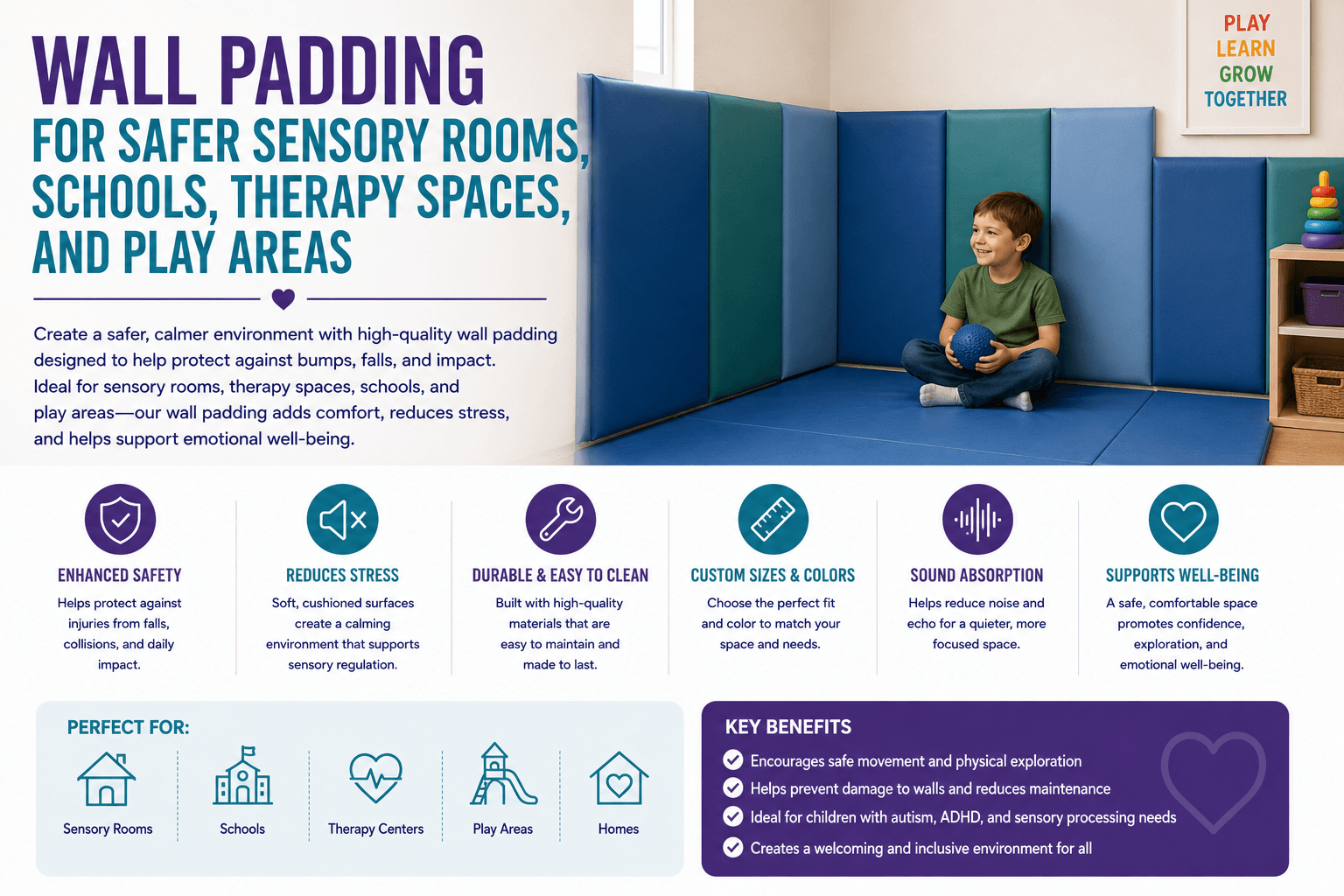
Wall padding for sensory rooms helps create safer environments for children and adults who need extra protection during movement, play, therapy, sensory exploration, or daily routines. Hard walls can become a concern in active spaces, especially for individuals with balance challenges, coordination difficulties, sensory seeking behaviors, mobility needs, or limited body awareness. Padded wall panels help soften surrounding surfaces so rooms can feel safer, more supportive, and more functional.
At eSpecial Needs, the Wall Padding for sensory rooms collection includes protective wall padding for sensory rooms, therapy rooms, classrooms, gyms, homes, clinics, and care settings. These wall padding solutions are designed to support safety, comfort, durability, and peace of mind for families, educators, therapists, and facility managers.
What Is Wall Padding for Sensory Rooms?
Wall padding is protective padding installed on walls to help reduce impact from bumps, falls, or contact with hard surfaces. It is commonly used in sensory rooms, adaptive gyms, therapy clinics, special education classrooms, playrooms, calm rooms, and recreation areas.
Wall padding may also be called:
Padded wall panels
Safety wall padding
Protective wall padding
Sensory room wall padding
Gym wall padding
Therapy room padding
Custom wall pads
The goal is to create a softer boundary around areas where users may move, jump, crash, lean, roll, climb, or need additional environmental protection.
Why Wall Padding Matters for Special Needs Spaces
Many special needs environments include movement based activities. Children may use crash pads, therapy swings, soft play pieces, balance tools, sensory motor equipment, climbing activities, or indoor therapy gyms. In these spaces, wall padding can help reduce the risk of injury from accidental contact with hard walls.
Wall padding for sensory rooms may be especially helpful for individuals who experience:
Poor balance
Limited coordination
Low muscle tone
Sensory seeking movement
Motor planning challenges
Reduced spatial awareness
Seizure related fall risk
Self injurious behaviors
Difficulty stopping movement
High activity levels
Mobility or gait challenges
Padded walls do not replace supervision, therapy guidance, or proper equipment use, but they can make active spaces safer and more forgiving.
Common Places to Use Wall Padding
Wall padding can be used in many different settings. It is often added to rooms where users need a safe place for active movement, sensory regulation, or therapy activities.
Common spaces include:
Sensory rooms
Therapy rooms
Occupational therapy gyms
Physical therapy spaces
Special education classrooms
Calm rooms
De escalation spaces
Home sensory spaces
Playrooms
Pediatric clinics
Adaptive recreation areas
School gyms
Indoor therapy gyms
Waiting areas with active users
Care facilities
For larger projects, eSpecial Needs also offers a Wall Padding Planning Guide to help buyers think through layout, measurements, and project needs.
Wall Padding for Sensory Rooms
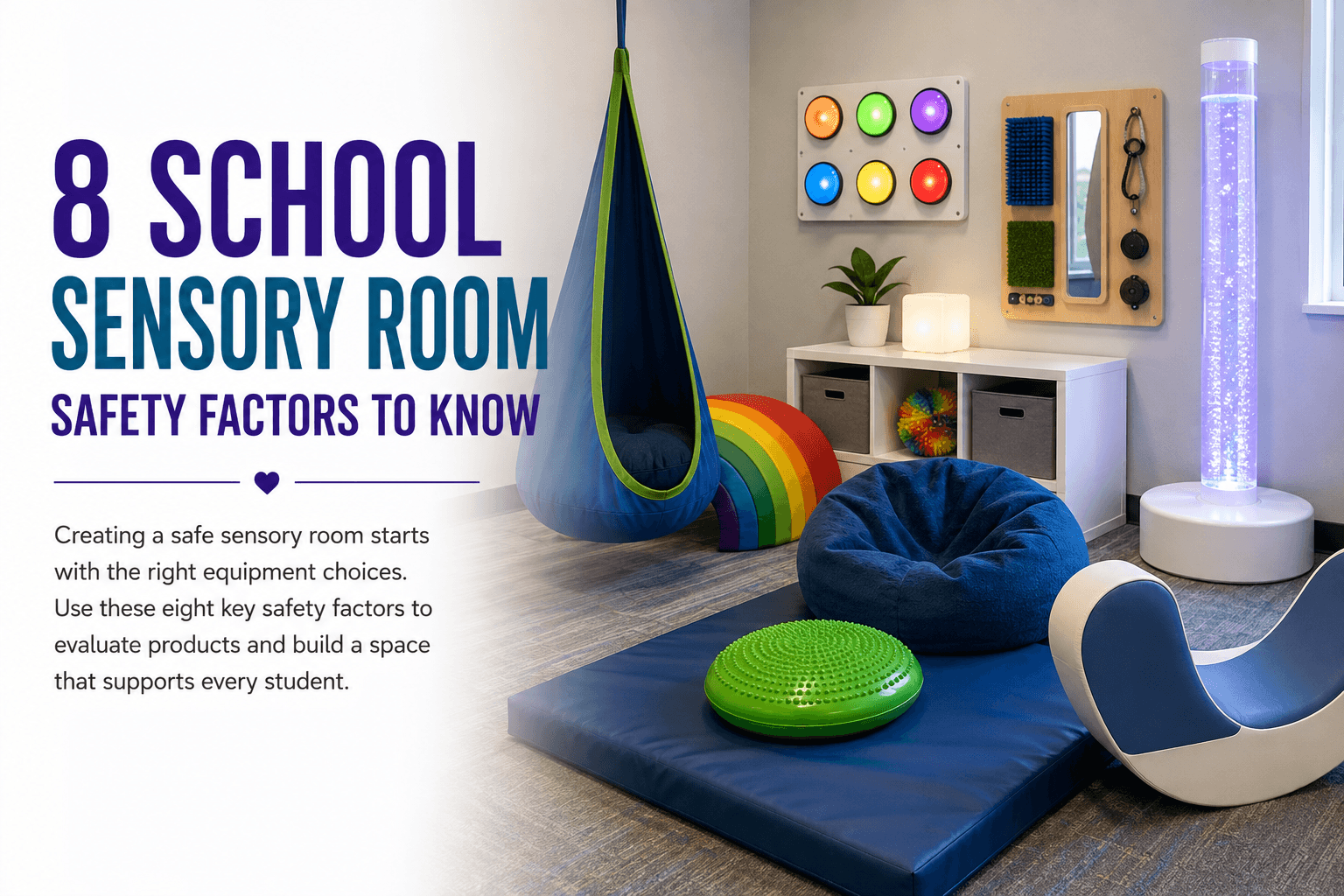
A sensory room should feel supportive, organized, and safe. When a sensory room includes movement equipment, padded walls can help protect users from hard surfaces while they explore movement and body input.
Wall padding pairs well with:
In calming sensory rooms, wall padding can also create a softer, more secure feeling. In active sensory gyms, it can help define movement zones and reduce the risk of bumps during high energy play.
Safety Wall Padding Features
The Safety Wall Padding options from eSpecial Needs are designed for commercial grade use in schools, gyms, therapy areas, and activity spaces. These indoor and outdoor foam wall panels help protect children from injury, improve the look of activity areas, and absorb noise.
Product features may include:
2 inch thick foam panel options
7/16 inch wood backing
Durable double coated flame retardant 18 ounce vinyl cover
Multiple foam types
Multiple standard height options
Custom heights
Custom configurations and layouts
Custom sizing and printing options
14 color choices
Z Clip installation option
1 inch nailing margin installation option
These features make wall padding useful for both small home projects and larger professional spaces.
Choosing the Right Wall Padding
Choosing the right wall padding starts with the space and how it will be used. A small calm room may need padding around a quiet corner. A therapy gym may need padding along multiple walls. A classroom may need padded protection near a sensory area, movement zone, or safe space.
Before ordering, consider:
Room size
Wall height
Area of concern
User age and size
Activity level
Fall risk
Type of movement equipment nearby
Indoor or outdoor use
Cleaning needs
Color preference
Installation surface
Custom sizing needs
School or facility requirements
Fire rating or code requirements
For complex spaces, a professional layout or quote request may help make sure the padding fits the room and intended use.
Wall Padding for Schools and Therapy Clinics
Schools and therapy clinics often need durable safety solutions that can stand up to repeated use. Wall padding can help support occupational therapy rooms, physical therapy areas, sensory rooms, adaptive physical education spaces, and special education classrooms.
In these environments, wall padding may support:
Safer movement breaks
Therapy obstacle courses
Adaptive recreation
Calming spaces
Gross motor activities
Sensory regulation areas
De escalation rooms
Inclusive play spaces
School based therapy goals
Schools and organizations can also use eSpecial Needs support pages for Quote Requests, Purchase Orders, and Schools and Government Agencies.
Wall Padding for Home Sensory Spaces
Families may use wall padding to make home sensory rooms, bedrooms, playrooms, or therapy areas safer. For children who jump, crash, spin, lean, roll, or seek strong movement, padded walls can help create a defined space for safer sensory play.
Home wall padding may be useful near:
Crash pads
Sensory swings
Indoor play areas
Soft play zones
Therapy mats
Climbing activities
Calm down spaces
Bedrooms where extra protection is needed
Wall padding can be especially helpful when paired with a clear safety plan, adult supervision, and age appropriate sensory motor tools.
Cleaning and Maintenance
Wall padding in shared environments should be easy to clean and maintain. Vinyl covered wall padding can often be wiped down, making it practical for schools, clinics, gyms, and care settings.
Good maintenance habits include:
Inspect pads regularly
Check seams and mounting points
Clean surfaces according to product instructions
Address damage quickly
Keep surrounding areas free from hazards
Confirm padding remains securely installed
Replace worn padding when needed
Proper maintenance helps keep the space safer and more professional looking over time.
Shop Wall Padding at eSpecial Needs
The Wall Padding collection at eSpecial Needs includes protective wall padding solutions for sensory rooms, schools, therapy clinics, gyms, homes, and care environments. Whether you are building a sensory room, adding padding to a therapy area, designing a special education classroom, or improving a movement space, padded wall panels can help create a safer and more supportive environment.
You can also explore related categories, including Protective Mats and Padding, Crash Pads, Soft Play Products, Sensory Room Equipment, Sensory Motor Tools, and Indoor Therapy Gyms.
FAQs
Is wall padding only for gyms?
No. Wall padding is often used in gyms, but it is also helpful in sensory rooms, therapy clinics, schools, homes, playrooms, care facilities, and other spaces where added impact protection is needed.
Can wall padding make a sensory room safer?
Yes. Wall padding can help reduce the impact of accidental bumps into hard wall surfaces during sensory motor play, movement breaks, therapy activities, or calming routines. It should still be used with supervision and a safe room layout.
Can wall padding be customized?
Yes. Many wall padding options can be customized by size, height, color, layout, and configuration. Custom wall padding may be helpful for unusual room shapes, corners, columns, therapy spaces, or large school projects.
Does wall padding replace adult supervision?
No. Wall padding can help make a space more protective, but it does not replace supervision, safe equipment setup, behavior support, therapy guidance, or proper room design.
What should I measure before ordering wall padding?
Measure the wall width, wall height, area needing protection, outlet locations, windows, doors, corners, columns, baseboards, and any equipment nearby. Photos and room sketches can also help when planning a custom padding layout.
Where can I buy wall padding for sensory rooms and therapy spaces?
You can shop Wall Padding at eSpecial Needs. You can also browse related categories such as Protective Mats and Padding, Crash Pads, Soft Play Products, Sensory Room Equipment, and Indoor Therapy Gyms.