Table of Contents
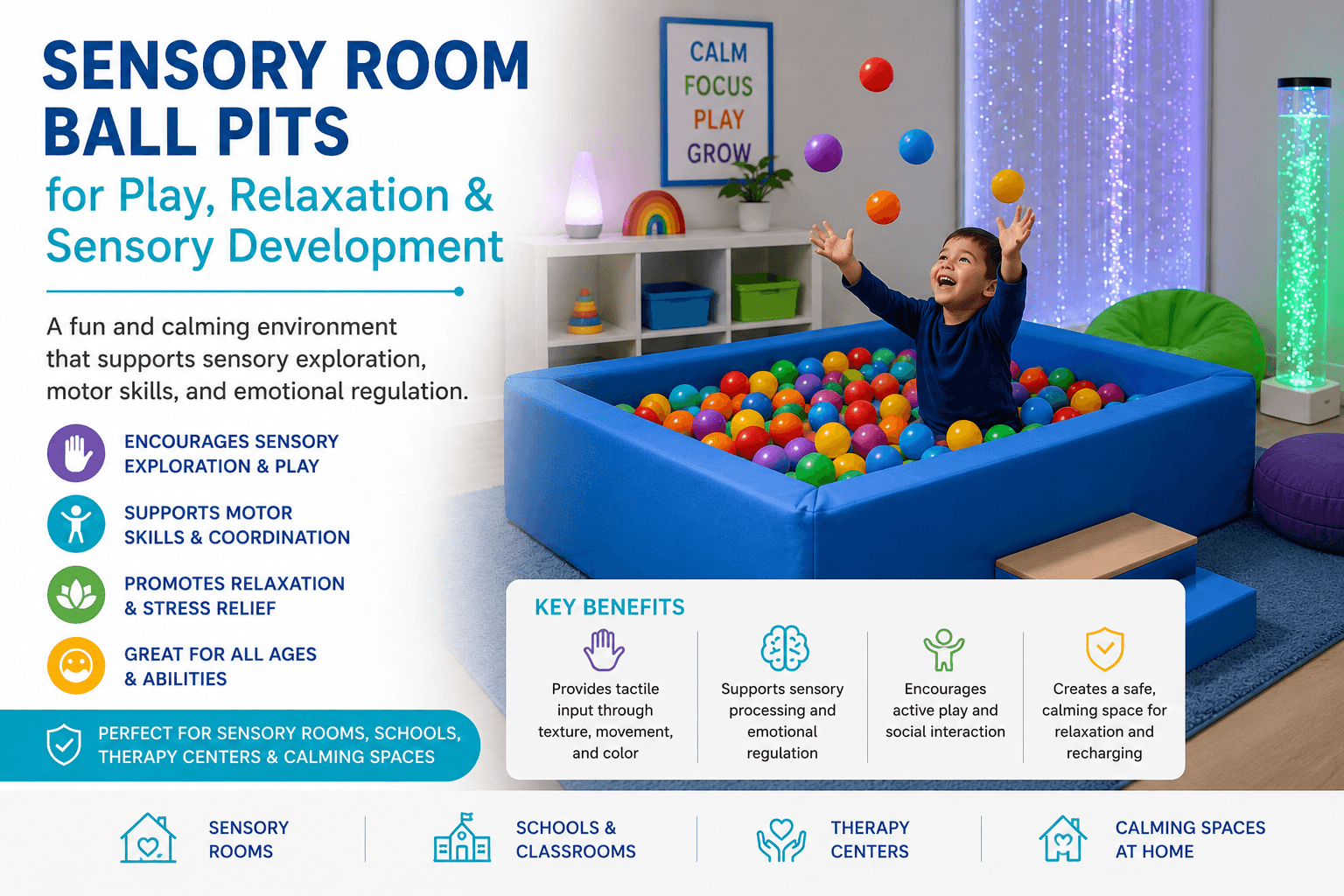
Sensory room ball pits have become a popular addition to homes, therapy clinics, schools, and sensory spaces designed for children with autism, sensory processing challenges, developmental disabilities, and other special needs. More than just a fun activity area, they can provide calming sensory input, encourage movement, and support developmental skills in a safe and engaging environment.
Modern sensory ball pits are designed with comfort, safety, and sensory engagement in mind. From soft foam walls and padded flooring to vibrant colors and interactive accessories, these sensory tools can help children explore movement and sensory experiences while feeling secure and supported.
Whether used for therapy sessions, calming breaks, or everyday play, they offer benefits that extend far beyond recreation.
What Is a Sensory Room Ball Pit?
A sensory room ball pit is a padded play area filled with lightweight plastic balls that provide tactile, proprioceptive, and movement-based sensory input. Unlike traditional playground ball pits, sensory room versions are often designed specifically for therapeutic or calming environments.
Many sensory ball pits feature:
- Soft padded walls
- Foam flooring
- Easy-access entry points
- Durable, non-toxic plastic balls
- Compact indoor-friendly designs
- Calming or visually engaging colors
Some advanced versions may also include:
- LED lighting
- Bubble tubes
- Interactive sensory panels
- Fiber optic lighting
- Soft play accessories
These features can help create a more immersive sensory environment for children who benefit from structured sensory experiences.
Benefits of Sensory Room Ball Pits
Encourages Sensory Exploration
They provide a variety of sensory experiences that can help children explore touch, movement, pressure, and body awareness in a controlled setting.
The feeling of moving through the balls can offer:
- Deep pressure input
- Tactile stimulation
- Proprioceptive feedback
- Vestibular engagement
For many children, these sensations can feel calming, organizing, and enjoyable.
Supports Sensory Regulation
Children with sensory processing challenges may seek or avoid certain types of sensory input. These play pits can provide a safe space for sensory regulation by allowing children to control how they interact with the environment.
Some children may enjoy:
- Burrowing into the balls
- Lying underneath the surface
- Tossing or sorting balls
- Gentle movement within the pit
These activities can help children feel calmer and more regulated during overwhelming moments.
Promotes Active Play and Movement
Sensory room ball pits encourage movement-based play that helps develop coordination, balance, and body awareness.
Simple activities like:
- Climbing in and out
- Crawling through the balls
- Reaching and throwing
- Rolling or shifting positions
can help support gross motor development while keeping children engaged and active.
For children who may struggle with traditional playground activities, they offer a softer and more supportive play environment.
Creates a Safe and Comfortable Environment
Many are designed with safety and comfort in mind. Soft foam walls and padded flooring help reduce the risk of injury while allowing children to explore movement more freely.
This supportive environment can help children feel:
- More secure
- Less anxious
- Comfortable during sensory play
- Confident trying new movements
For some children, the enclosed feeling of a ball pit may also provide a sense of calm and security.
Ball Pits in Therapy Settings
Occupational therapists, physical therapists, and special education professionals often use them during therapy sessions to support developmental goals.
They may be incorporated into activities that focus on:
- Motor planning
- Coordination
- Balance
- Core strength
- Sensory integration
- Social interaction
Therapists may also use them as part of calming routines or sensory breaks between more structured activities.
Because they're highly engaging, they can help motivate children to participate in therapeutic exercises through play-based learning.
Giant Budget Ball Pit
$1,718.95
$1,935.00
The Giant Budget Ball Pit is a durable, large-format ball pit designed for sensory play, active movement, and therapy use in homes, schools, clinics, and care settings. It offers the size and function of a larger recreational ball pit for… read more

Sensory Ball Pits for Home Use
Many families now incorporate sensory ball pits into home sensory rooms or play areas. Compact and portable options make it easier to create calming sensory spaces without requiring a large dedicated room.
Home ball pits can provide:
- Indoor movement opportunities
- Safe sensory exploration
- Calming breaks during the day
- Structured play routines
- A relaxing space after school or therapy
Parents often appreciate having a sensory-friendly activity that children can use independently or with siblings.
Mini Budget Ball Pit
$1,353.13
The Mini Budget Ball Pit is a durable, lower cost ball pit designed for sensory play, therapy activities, and active engagement in homes, schools, clinics, and care settings. It offers a smaller footprint than larger recreational ball pits while still providing… read more

Choosing the Right Sensory Room Ball Pit
When making a purchase, there are several important factors to consider.
Spark Sensory LED Vibro-Acoustic Ball Pit
$3,111.95
The Spark Sensory LED Vibro-Acoustic Ball Pit combines sensory play, colorful LED lighting, and music-powered vibration in one immersive sensory ball pit. Built from the Mini Budget Ball Pit design, it adds a glowing floor pad and vibro-acoustic input to… read more

Size and Space Requirements
Before purchasing, measure the available space carefully. Some families prefer compact corner designs, while therapy clinics may need larger systems that accommodate multiple children.
Consider:
- Room dimensions
- Ceiling height
- Entry and exit accessibility
- Storage needs
Safety Features
Safety is one of the most important considerations.
Look for features such as:
- Soft foam padding
- Durable construction
- Non-toxic materials
- Rounded edges
- Stable flooring
- Easy-to-clean surfaces
Adult supervision is also important, especially for younger children or children with mobility challenges.
Soft Play Steps & Slide Combo
$1,135.90
The Soft Play Steps & Slide Combo gives toddlers and preschoolers a fun, approachable way to climb, step, slide, and explore movement indoors. The foam filled soft play pieces create a safer active play area for early learning classrooms, therapy… read more

Ball Quantity and Color Options
The number of balls included can greatly affect the sensory experience. A fuller pit may provide more deep pressure input and immersion, while fewer balls create easier movement.
Many offer:
- Bright multicolor balls
- Calming neutral tones
- Custom color combinations
- Transparent or glow-style balls
Some families choose colors based on their child’s sensory preferences.
1000 Piece 3-1/8" Multicolor Ball Pit Balls
$610.95
These 1000 piece 3-1/8” diameter, balls are light-weight enough for children to toss and roll safely. The small size allows them to fit in small hands and allow for easy juggling. These authentic pit balls are made of durable, safe,… read more

Ease of Cleaning
Since sensory equipment is frequently used, easy cleaning and maintenance are important.
Many sensory ball pits now feature:
- Wipe-clean surfaces
- Removable covers
- Washable padding
- Durable plastic balls designed for sanitation
Regular cleaning helps maintain a hygienic sensory environment in both homes and clinics.
Creative Activities for Sensory Ball Pits
They can be used for more than free play. Families and therapists often create interactive activities to encourage learning and engagement.
Popular activities include:
- Color sorting games
- Hide-and-find activities
- Counting exercises
- Tossing and catching games
- Obstacle course play
- Sensory scavenger hunts
These activities can help support cognitive, motor, and social skill development while keeping children engaged through play.
Supporting Relaxation and Emotional Regulation
For many children, sensory spaces serve as calming environments where they can decompress from stress or overstimulation. They can become an important part of these routines by providing comforting sensory input and a quiet place to relax.
Combined with other sensory room equipment such as:
- Bubble tubes
- Weighted products
- Fiber optic lights
- Soft seating
- Calming music
Why Sensory Ball Pits Are Helpful
Sensory room ball pits provide far more than entertainment. They support sensory exploration, movement, relaxation, and developmental growth in a safe and engaging environment.
Whether used in therapy clinics, schools, or home sensory rooms, they can help children build confidence, improve body awareness, and enjoy calming sensory experiences through play.
With so many styles, sizes, and features available today, families and therapists can find sensory tools that fit a wide range of needs, spaces, and sensory preferences.
FAQs
What is a sensory room ball pit?
A sensory room ball pit is a therapeutic play space filled with soft plastic balls designed to support sensory exploration, movement, relaxation, and developmental skill building. Ball pits are commonly used in homes, schools, therapy clinics, and sensory rooms to provide tactile, proprioceptive, and movement based sensory input.
What are the benefits of a sensory ball pit?
Sensory ball pits can support body awareness, gross motor development, balance, coordination, sensory regulation, and calming input. The surrounding pressure of the balls can create a comforting sensory experience while encouraging active movement and exploratory play.
Are ball pits good for children with autism?
Yes. Many children with autism benefit from sensory ball pits because they provide predictable tactile input, movement opportunities, and calming deep pressure sensations. Ball pits can help support sensory regulation, body awareness, and independent sensory exploration in a safe environment.
Can ball pits help children with sensory processing disorder?
Ball pits are often used as sensory tools for children with sensory processing challenges because they provide tactile, proprioceptive, and movement based input. Depending on the child’s needs, a ball pit may help with sensory seeking behaviors, body awareness, motor planning, and calming routines.
Do sensory ball pits support occupational therapy?
Yes. Occupational therapists often use sensory ball pits to support movement exploration, motor planning, sensory integration, coordination, and body awareness. Ball pits can be incorporated into structured therapy activities or used as part of sensory regulation routines.
Are sensory ball pits calming for children?
For many children, yes. The gentle pressure created by the surrounding balls can provide a soothing sensory experience that promotes relaxation and emotional regulation. Some children use ball pits for active play, while others benefit from the calming sensory input during quiet regulation time.
What age is appropriate for a sensory ball pit?
The appropriate age depends on the size, design, and supervision requirements of the ball pit. Some sensory ball pits are designed for young children, while others can accommodate older children and therapy settings. Always follow manufacturer age and supervision guidelines.
How many balls do you need for a sensory ball pit?
The number of balls depends on the size and depth of the ball pit. Smaller home sensory ball pits may require a few hundred balls, while larger therapy or sensory room ball pits may require significantly more to create full sensory immersion.
Are sensory ball pits safe?
Sensory ball pits can be safe when used with appropriate supervision, age appropriate equipment, and regular cleaning. Schools, clinics, and families should choose durable products, maintain hygiene standards, and ensure the pit is used according to manufacturer recommendations.
How do you clean a sensory ball pit?
Cleaning requirements vary by product, but most sensory ball pits should be cleaned regularly by wiping down surfaces and sanitizing the plastic balls. In shared therapy or school environments, consistent cleaning is especially important to maintain hygiene.
Can sensory ball pits be used in schools or therapy clinics?
Yes. Sensory ball pits are commonly used in school sensory rooms, occupational therapy clinics, pediatric therapy centers, and early intervention settings. They can support both structured therapeutic activities and sensory regulation breaks.