Table of Contents
- Why power matters in a sensory room
- What is a Wi-Fi smart outlet?
- How it works, in plain terms
- Why this matters for sensory room equipment specifically
- Practical use cases at home
- Practical use cases for schools, clinics, and organizations
- What to look for when buying a Wi-Fi smart outlet for a sensory room
- Installation and safety considerations
- Bringing it together
- FAQs
Why power matters in a sensory room
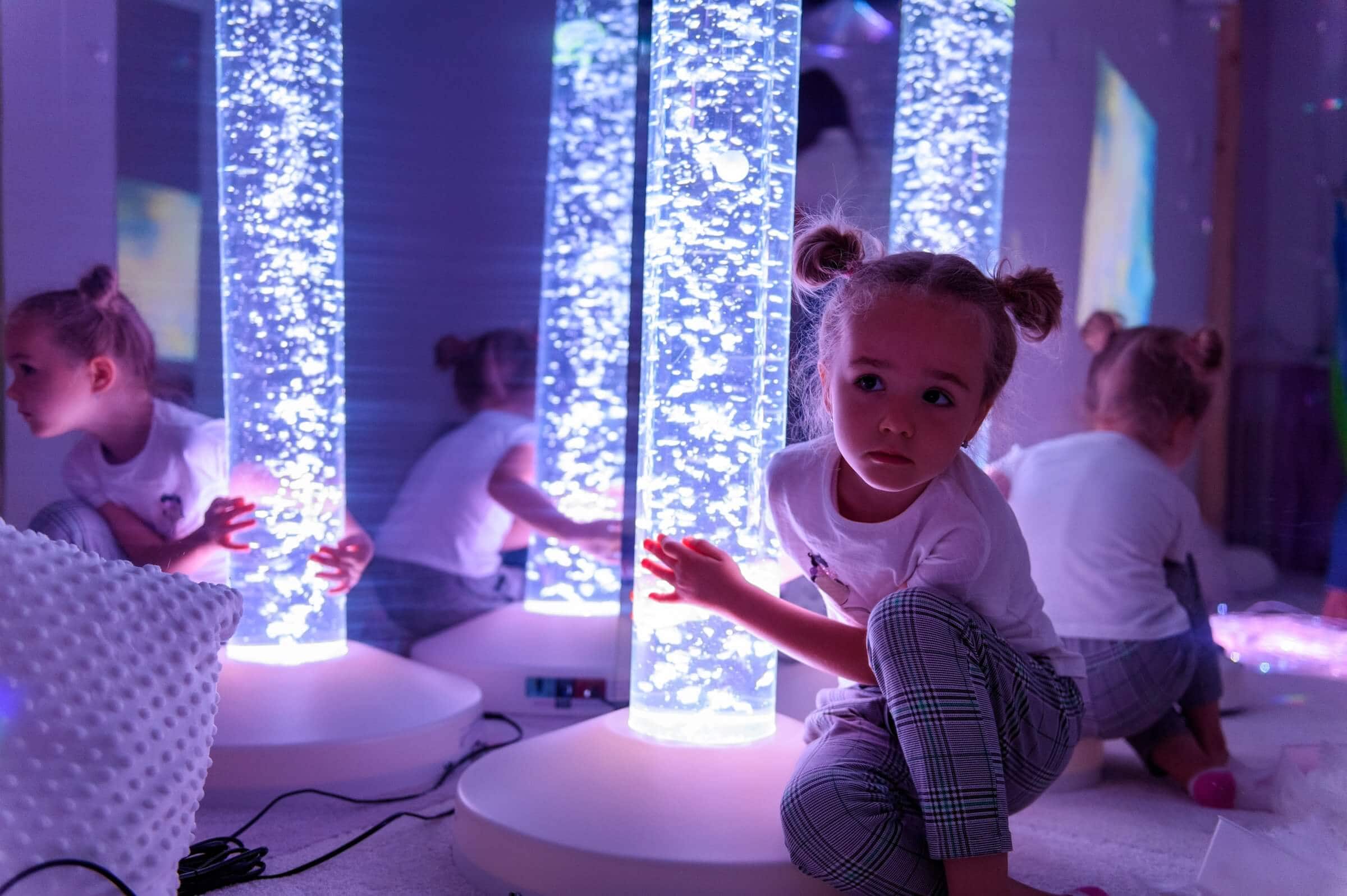
If you've ever set up a multi-sensory environment for a child with autism, a sensory processing difference, or another developmental need, you already know the dance: dim the overhead lights, turn on the bubble tube, start the projector, switch on the fiber optics, adjust the sound, and then somehow stay calm and present while you do all of it. Many sensory products are controlled by physical toggle switches that live on the back of the unit or on a power strip behind a piece of furniture. To turn them off, a parent or staff member often has to walk over and physically unplug the device. That works, but it pulls the adult out of the moment, makes transitions abrupt, and turns a calming space into one more thing to manage.A Wi-Fi smart outlet solves a small problem that, in a sensory context, has an outsized impact.
It lets you turn equipment on and off from your phone, schedule it in advance, group multiple devices, and walk into a room that is already glowing softly instead of dark and silent. For parents, that means less friction and more presence with your child. For schools, clinics, and group homes, it means staff can prepare a room without leaving the student they're with, and it means equipment doesn't get left running overnight.
What is a Wi-Fi smart outlet?
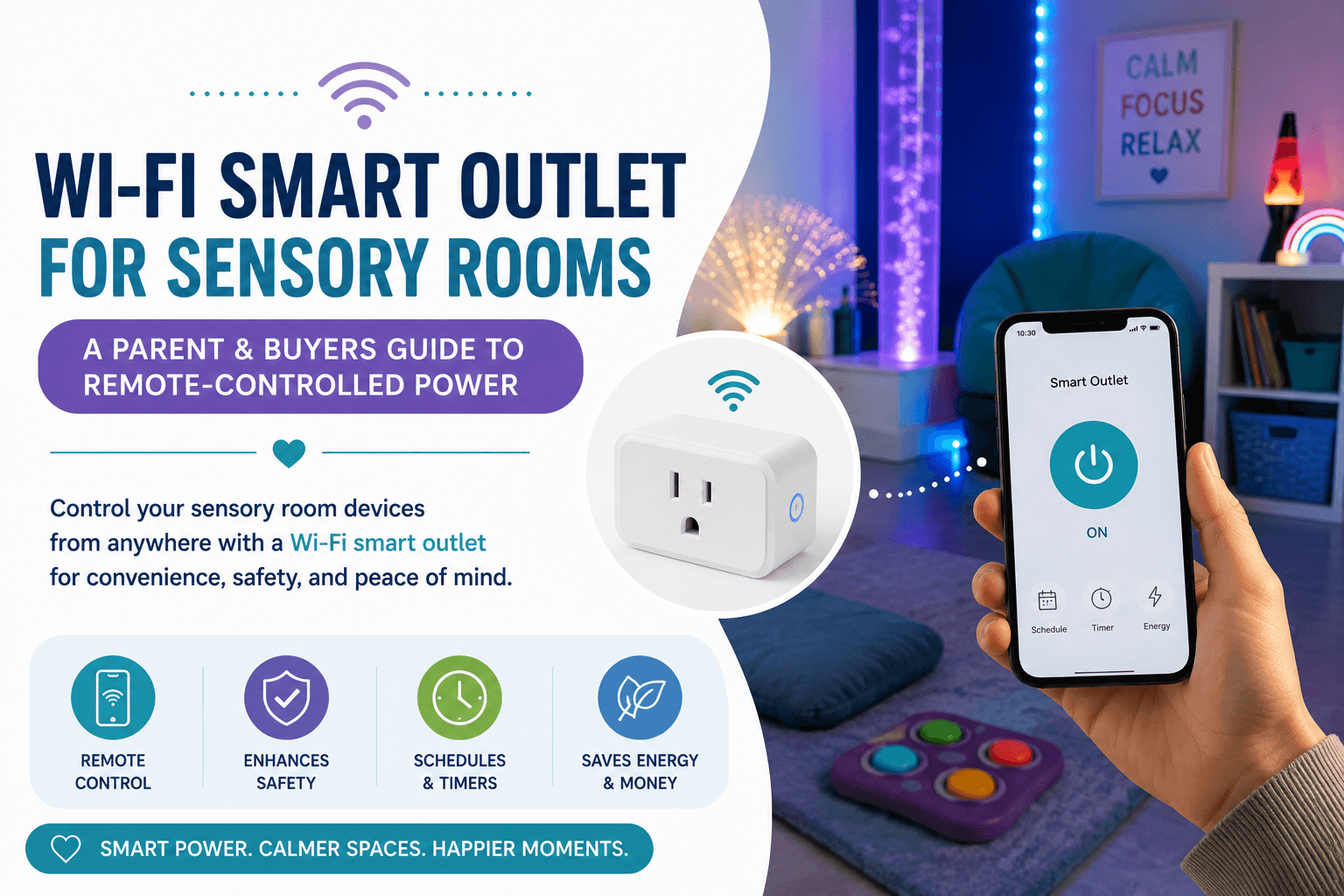
A Wi-Fi smart outlet is an electrical outlet that connects to your home or facility's wireless network and can be controlled remotely through a smartphone app, a voice assistant, or an automated schedule. The Wi-Fi Smart Outlet sold by eSpecial Needs is a duplex outlet, meaning it has two standard receptacles built into a single faceplate that installs into a standard electrical box, replacing an existing wall outlet. Once it's installed and connected to Wi-Fi, anything plugged into it, a bubble tube, an LED projector, a fiber optic light source, a sound machine, a fan, becomes a device you can control without standing next to it.
The outlet itself looks almost identical to a regular wall outlet. There's no bulky adapter sitting between your plug and the wall, no extension cord, no power strip with a remote dongle. It's a permanent, built-in solution, which matters in a sensory room where cable clutter is both a tripping hazard and a visual distraction for children who are easily overstimulated.
How it works, in plain terms
The mechanics are straightforward. Inside the outlet is a small radio that talks to your Wi-Fi router. A free app on your phone or tablet talks to the outlet through that connection. When you tap "on" in the app, the app sends a signal to the outlet, and the outlet completes the circuit, exactly the same thing that happens when you flip a physical switch. The receptacle delivers normal household current to whatever is plugged in, so a bubble tube, projector, or fiber optic light source behaves exactly as it would in any other outlet.
Setup typically follows a familiar pattern. After the outlet is installed (this is wired into the wall, so it should be installed by a qualified electrician or facility maintenance staff), you download the manufacturer's app, create an account, and follow a short pairing process that connects the outlet to your Wi-Fi network. From that point on, the outlet shows up in the app as a named device, "Sensory Room Bubble Tube," for example, and you control it with a tap.
Most smart outlets also let you do four things beyond simple on-off:
Scheduling lets you set the outlet to turn on or off automatically at specific times. A school can schedule the sensory room to power up fifteen minutes before the first session of the day and shut down at the end of the school day. A parent can schedule a child's calming bubble tube to turn on at the start of a bedtime routine.
Timers let you turn a device on for a fixed duration and have it shut off automatically. This is useful for therapy sessions with defined durations and for children who use sensory equipment as a reward or a regulated break.
Voice control through Amazon Alexa or Google Assistant lets you say "turn on the projector" without picking up a phone, helpful when your hands are full or when a child uses voice to interact with their environment.
Remote access lets you control the outlet from anywhere, not just inside the room. A teacher can verify from the hallway that equipment is off. A parent can make sure the bubble tube isn't still running an hour after their child has fallen asleep.
Why this matters for sensory room equipment specifically
Sensory equipment has a few characteristics that make remote power control unusually valuable.
Much of it is built with simple toggle switches on the unit itself, often deliberately, to keep things accessible for children using switch-adapted controls. But that means the only way to fully power down many bubble tubes, projectors, and light sources is to unplug them or kill power at the outlet. A smart outlet gives you a clean, complete shutdown from across the room or across the building.
Sensory equipment also runs for long stretches. A bubble tube humming away in an empty room burns electricity, generates heat, and shortens the life of LEDs and pumps. Scheduled shutoffs prevent the all-too-common situation where staff forget to turn off equipment at the end of the day, especially in shared spaces like school sensory rooms where the last user of the day varies.
The third reason is transitions. Children with autism and sensory processing differences often need predictable, gentle transitions in and out of stimulating environments. A smart outlet lets a caregiver fade equipment off without walking across the room and physically disturbing the space. The child sees the bubble tube quiet down on its own, no one has to reach behind a tube or pull a plug, and the session ends with the same calm cadence it began with.
Practical use cases at home
For families, a Wi-Fi smart outlet usually gets installed somewhere obvious, near a bubble tube in a basement sensory corner, behind a projector in a child's bedroom, or on the wall of a converted closet that doubles as a calm-down space. From there, parents tend to find their own rhythm with it. A common pattern looks like this:
In the morning, the outlet is scheduled off, so the room is dark and quiet when it's not in use. When a child needs a sensory break, a parent taps once on their phone and the bubble tube and projector come on together as the child walks toward the room. After a set time, fifteen minutes, twenty, whatever fits the child's regulation window, the outlet shuts off automatically and the lights come down. The child doesn't experience the abrupt "session over" cue of an adult walking over to flip switches; they experience the room itself winding down, which is much easier for many children to accept.
Parents also use smart outlets to enforce limits gently. If a child gravitates toward a sensory item to the exclusion of everything else, scheduled availability windows can make the equipment feel like a special part of the day rather than a 24/7 fixation. And when bedtime comes, parents can confirm from another room, or even another part of the house, that everything is powered down.
Practical use cases for schools, clinics, and organizations
For buyers purchasing equipment for sensory rooms at scale, schools, occupational therapy clinics, group homes, hospitals, libraries, the value proposition shifts toward operations and safety.
A typical school sensory room might contain a bubble tube, an LED projector with a wheel rotator, a fiber optic light source, a sound system, and ambient lighting, easily five or six powered devices. Without smart outlets, the room requires a checklist of switch-flipping at the start and end of every day, and equipment routinely gets left running through evenings, weekends, and holidays. With smart outlets installed at each major equipment location, the entire room can be programmed to follow the school schedule. Staff arrive to a room that's ready; at the end of the day, everything shuts down automatically. Maintenance and IT can audit usage remotely. If a piece of equipment is malfunctioning, a smart outlet can be cut from anywhere, no need to send a custodian to the back of a bubble tube to find a power strip.
For occupational therapists running back-to-back sensory sessions, scheduling reduces the cognitive load between clients. Equipment is ready when the next child arrives, and the therapist isn't fumbling with cords during transitions.
For procurement officers, smart outlets also provide a measure of risk reduction. Sensory equipment can run hot, and leaving devices unattended overnight is an avoidable liability. Scheduled shutoffs and remote-access verification create an auditable, low-effort control over that risk.
What to look for when buying a Wi-Fi smart outlet for a sensory room
Not every smart outlet is a good fit for therapeutic and special needs environments. A few specifications matter more than usual:
A duplex (two-receptacle) design is preferable to a single-outlet replacement, because most sensory equipment locations need to power at least two devices, a bubble tube and a projector, for example, and a duplex outlet keeps the install clean without resorting to splitters.
In-wall installation rather than a plug-in adapter is important in sensory rooms specifically. Adapter-style smart plugs stick out from the wall, can be pulled or hit, and add visual clutter. An in-wall outlet is flush, tamper-resistant, and indistinguishable from any other outlet, which matters in rooms where children sometimes pull on whatever is at hand.
App quality matters more than it might in a kitchen smart outlet. You'll be using it daily, sometimes in low light, sometimes one-handed. Look for an app that lets you rename devices clearly, group them, and create scenes (a "session start" scene that turns on multiple outlets at once is genuinely useful).
Scheduling flexibility is essential. A good smart outlet should let you set different schedules for weekdays and weekends and accept multiple on-off windows per day.
Voice assistant compatibility (Alexa or Google Assistant, sometimes Apple HomeKit) is worth checking if your home or facility already uses smart speakers, especially for users who interact with their environment primarily through voice.
Finally, for institutional buyers, ask about network requirements. Most consumer smart outlets need a 2.4 GHz Wi-Fi network and may not work on the 5 GHz networks that some schools default to. Your IT department will want to know.
Installation and safety considerations
Because a Wi-Fi smart outlet replaces an existing wall outlet, installation involves working with household wiring. This is not a DIY job for most people. A licensed electrician should install it, especially in commercial, educational, and healthcare settings where local code and inspection requirements apply. The job itself is short, often less than thirty minutes per outlet for an experienced electrician, but it must be done with the circuit breaker off, the wiring connected correctly, and the outlet seated properly in the box.
Once installed, a smart outlet is as safe as any other outlet. The smart components are sealed inside the unit and run on low-voltage circuits separate from the receptacles. The receptacles themselves are tamper-resistant on most models, the same safety feature found in modern code-compliant outlets in homes with children.
Two operational considerations worth flagging:
If your Wi-Fi network goes down, the outlet will typically still function as a regular outlet, anything plugged in continues to receive power, you just lose remote control until the network comes back. Some equipment, however, may default to "off" when power is restored after an outage. Test this with each piece of sensory equipment before relying on automated schedules.
And finally, a wi-fi smart outlet is not a substitute for proper supervision in a sensory room. They're a tool to make supervision easier and more present, not a way to leave equipment running unattended with a child.
Bringing it together
A Wi-Fi smart outlet is a small, almost invisible upgrade that quietly changes how a sensory room works. For a parent, it means fewer interruptions during the moments you most want to be present with your child. For a school or clinic, it means a room that runs on a schedule instead of a checklist, with less wasted energy, less missed equipment, and a cleaner, calmer space.
The WiFi Smart Duplex Outlet from eSpecial Needs is purpose-built for exactly this use case, and pairs naturally with the bubble tubes, projectors, and fiber optic light sources that make up most multi-sensory environments. If you're building or refreshing a sensory room, it's the kind of behind-the-scenes detail that's easy to overlook and surprisingly hard to live without once you've used it.
Have questions about setting up power management for your sensory room? Contact eSpecial Needs for guidance on installation, compatible equipment, and bundling smart outlets with your sensory room build.
Wi‑Fi Power Outlet KP200 – In-Wall Smart Duplex Outlet with Alexa & Google Assistant
$30.00
Upgrade Any Room with Smart In-Wall Control The Kasa Smart Wi-Fi Power Outlet KP200 transforms a standard wall outlet into a smart home control hub without requiring a separate hub. Designed for easy in-wall installation, this smart duplex outlet allows… read more

FAQs
What is a Wi-Fi smart outlet?
A Wi-Fi smart outlet is an electrical outlet that connects to a wireless network so plugged in devices can be controlled through a smartphone app, voice assistant, timer, or schedule. In a sensory room, it can be used to turn equipment like bubble tubes, projectors, fiber optic lights, sound machines, fans, or calming lights on and off remotely.
How does a Wi-Fi smart outlet help in a sensory room?
A Wi-Fi smart outlet helps caregivers, teachers, and therapists control sensory equipment without walking across the room, reaching behind furniture, or unplugging devices manually. This can make sensory room transitions smoother, reduce visual and physical disruption, and help ensure equipment is turned off when not in use.
What sensory room equipment can be plugged into a smart outlet?
Common sensory room devices that may work with a smart outlet include bubble tubes, LED projectors, fiber optic light sources, sound machines, calming lamps, fans, and other plug in sensory tools. Always check the wattage, amperage, and manufacturer recommendations for both the outlet and the device before use.
Can a smart outlet control a bubble tube?
Yes. A Wi-Fi smart outlet can often be used to turn a bubble tube on or off remotely, as long as the bubble tube’s power switch allows it to resume operation when power is restored. Test the bubble tube after setup to confirm that it turns back on correctly when the outlet is activated.
Can a Wi-Fi smart outlet control multiple sensory devices?
Yes, depending on the outlet and setup. A duplex smart outlet has two receptacles and may allow two devices to be plugged in. Some apps also allow multiple smart outlets to be grouped together so a caregiver or staff member can turn several sensory room devices on or off at the same time.
What is a duplex Wi-Fi smart outlet?
A duplex Wi-Fi smart outlet has two standard plug receptacles in one wall outlet. This is helpful in sensory rooms because many equipment areas may need to power more than one item, such as a bubble tube and projector, without relying on bulky adapters or extra power strips.
Is an in-wall smart outlet better than a plug in smart plug?
For sensory rooms, an in-wall smart outlet is often a cleaner and safer option than a plug in smart plug. It sits flush with the wall, reduces visual clutter, is harder to pull out, and helps minimize cords or bulky adapters that could distract users or create trip hazards.
Do Wi-Fi smart outlets work with Alexa or Google Assistant?
Many Wi-Fi smart outlets are compatible with voice assistants such as Amazon Alexa or Google Assistant. This can allow caregivers, teachers, or users to control sensory equipment with simple voice commands when supported by the outlet, app, and smart speaker system.
Can a smart outlet be scheduled automatically?
Yes. Many Wi-Fi smart outlets allow users to create schedules. For example, a parent can schedule a calming light to turn on during bedtime, or a school can schedule sensory room equipment to power up before therapy sessions and shut off at the end of the day.
Can a smart outlet help with sensory room transitions?
Yes. A smart outlet can make transitions gentler by allowing equipment to turn off automatically or remotely without a caregiver interrupting the space. For some children, seeing lights or sensory equipment wind down gradually may feel less abrupt than watching an adult walk over and flip switches or unplug devices.
Can a Wi-Fi smart outlet help save energy?
Yes. Scheduling and remote shutoff can help reduce wasted electricity by preventing sensory equipment from running when the room is not in use. This is especially useful in schools, clinics, group homes, and sensory rooms with multiple powered devices.
Can a smart outlet extend the life of sensory equipment?
It may help. Many sensory products, such as projectors, light sources, pumps, and bubble tubes, may experience wear when left running unnecessarily. Using schedules and timers can reduce unnecessary operating hours and may help preserve equipment over time.
Is a Wi-Fi smart outlet safe for sensory rooms?
A Wi-Fi smart outlet can be safe when properly installed, used according to manufacturer instructions, and matched to the electrical load of the equipment. In-wall outlets should be installed by a licensed electrician or qualified facility maintenance staff, especially in schools, clinics, or commercial settings.
Does a Wi-Fi smart outlet require professional installation?
An in-wall Wi-Fi smart outlet replaces a standard wall outlet, so it involves electrical wiring. It should be installed by a licensed electrician or qualified facility professional. Plug in smart plugs usually do not require installation, but they may not be ideal for all sensory room environments.
Can parents install a Wi-Fi smart outlet themselves?
Most parents should not install an in-wall Wi-Fi smart outlet unless they are qualified to work with electrical wiring. Because the outlet connects to household wiring, professional installation is recommended for safety and code compliance.
What should schools consider before installing smart outlets?
Schools should consider electrical code requirements, IT network compatibility, Wi-Fi access, device security, maintenance responsibility, scheduling needs, staff training, and which sensory devices will be controlled. Facility managers or IT departments should be involved before installation.
Do Wi-Fi smart outlets need a 2.4 GHz network?
Many smart outlets require a 2.4 GHz Wi-Fi network rather than a 5 GHz network. This is important for schools, clinics, and organizations because some managed networks may need IT configuration before the outlet can connect properly.
What happens if the Wi-Fi goes down?
If Wi-Fi goes down, many smart outlets continue functioning like regular outlets, but remote control, scheduling updates, or app access may be unavailable until the network returns. Some sensory devices may also respond differently after power interruptions, so each device should be tested.
Will sensory equipment turn back on after a power outage?
It depends on the equipment. Some devices turn back on when power is restored, while others may stay off until manually restarted. Test each sensory room device with the smart outlet before relying on automation for routines or schedules.
Can a Wi-Fi smart outlet replace supervision in a sensory room?
No. A Wi-Fi smart outlet is a convenience and safety support tool, but it does not replace adult supervision. Children and adults using sensory rooms may still need monitoring, support, and safe equipment use.
Can smart outlets be used in school sensory rooms?
Yes. Smart outlets can be useful in school sensory rooms because they allow staff to schedule equipment, turn devices on before sessions, shut everything down at the end of the day, and reduce the need to physically access switches behind equipment.
Can smart outlets be used in therapy clinics?
Yes. Occupational therapy clinics, pediatric therapy centers, and sensory integration clinics may use smart outlets to prepare rooms between sessions, control equipment from one location, and reduce the time therapists spend adjusting cords and switches.
Can smart outlets be used in group homes or care facilities?
Yes. Group homes, residential programs, and care facilities may use smart outlets to control calming sensory equipment, reduce energy waste, support routines, and help staff manage shared sensory spaces more efficiently.
Can a smart outlet help with bedtime routines?
Yes. Parents can use a smart outlet to schedule calming lights, bubble tubes, projectors, or sound machines as part of a bedtime routine. Timers can also help equipment shut off automatically after the child has settled.
Can a smart outlet help limit sensory equipment use?
Yes. Timers and schedules can help set boundaries around sensory equipment use without requiring a caregiver to manually interrupt. This can be helpful when a child fixates on a preferred sensory item or has difficulty transitioning away from it.
What should I look for when buying a Wi-Fi smart outlet for a sensory room?
Look for a reliable app, scheduling options, timer functions, voice assistant compatibility, proper electrical rating, duplex receptacles if needed, tamper resistant design, 2.4 GHz Wi-Fi compatibility, and a clean in-wall installation when appropriate.
Are plug in smart plugs good for sensory rooms?
Plug in smart plugs can work for some basic uses, but they may stick out from the wall, create visual clutter, be easier to pull out, and add bulk around outlets. In-wall smart outlets are often a better choice for dedicated sensory rooms, schools, and clinics.
Can a smart outlet reduce cord clutter?
An in-wall Wi-Fi smart outlet can help reduce clutter compared with plug in adapters or extra remote controlled power strips. Less clutter can make the sensory room safer, cleaner, and less visually distracting.
Can a Wi-Fi smart outlet be used with a power strip?
Using a smart outlet with a power strip depends on the outlet rating, power strip rating, and total electrical load of the connected devices. Avoid overloading the outlet. Schools and families should consult an electrician or facility professional if multiple devices will be connected.
How do smart outlet timers help therapy sessions?
Timers allow sensory equipment to run for a set amount of time and shut off automatically. This can help therapists structure sessions, support predictable transitions, reduce overuse of equipment, and keep the room schedule consistent.
Can a Wi-Fi smart outlet make a sensory room more accessible?
Yes. Remote and voice controlled power can make sensory equipment easier to access for caregivers, staff, and in some cases users with mobility or communication needs. Voice control may be especially helpful when a user can operate supported smart assistants.
Are Wi-Fi smart outlets useful for sensory rooms at home?
Yes. Families can use smart outlets to control calming lights, bubble tubes, projectors, fans, or sound machines from a phone. This can help parents manage sensory breaks, bedtime routines, and equipment shutoff without disrupting the child’s environment.
Are Wi-Fi smart outlets useful for large sensory rooms?
Yes. Larger sensory rooms often include several powered devices. Smart outlets can help organize control, reduce missed shutoffs, support scheduled routines, and allow staff to manage equipment without moving around the room during sessions.
Do smart outlets work with all sensory room products?
No. Some sensory products may not restart automatically when outlet power is restored, and some may have specific electrical or manufacturer requirements. Always test compatibility before relying on a smart outlet for routine use.
How can eSpecial Needs help with Wi-Fi smart outlets for sensory rooms?
eSpecial Needs offers Wi-Fi smart outlet solutions and sensory room equipment designed for homes, schools, therapy clinics, and special needs environments. Families and organizations can use eSpecial Needs to find sensory room products, request quotes, and choose equipment that supports safer, easier remote control of powered sensory tools.