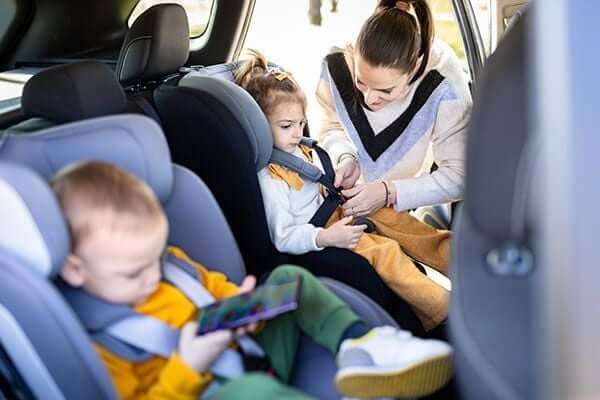
According to the CDC, "In the United States, motor vehicle crashes are a leading cause of death among children. In 2018, 636 children 12 years old and younger died in motor vehicle traffic crashes, and more than 97,000 were injured. Of the children 12 years old and younger who died in a crash in 2018 (for which restraint use was known), 33% were not buckled up." Typical children can progress through rear-facing car seats, forward-facing car seats, and eventually a booster seat for vehicle safety. A backseat seat belt fit is recommended when typical children are about 4 feet 9 inches tall and aged 9"“12 years.
Safety for Taller Riders
What about your child who is 5 feet tall or 9 years of age and older who does not have the trunk control to sit in the car with only a seat belt or a non-verbal individual who gets anxious in the car and will undo their seatbelt throughout transportation? There are adaptive tools for all abilities that can help keep you and your loved one safe while being transported. While most people's priority is keeping their child safe it is just as important that the caregiver or person driving the vehicle is just as safe from distraction or physical harm. Other factors that are considered include federal guidelines and safety standards for car seats as well as attachments that are appropriate for larger individuals.
Items as simple as a seat belt buckle guard to a supportive EZ-ON Vest can help provide safety, security, and safety for children in most vehicles. These tools prevent unwanted unbuckling, pulling the shoulder strap off, or climbing out of the seat. The EZ-ON vest can support a variety of ages, sizes, abilities, and positioning needs using a variety of buckles and buttons including a version to support someone who cannot sit upright in a lying down position. From standard family vehicles to bus transportation these are important tools that can keep everyone safe.
Just because someone has a disability does not mean they will stop growing. Car seats for individuals with disabilities can provide support for individuals taller than 5 feet and weighing up to 165 pounds. Booster seats offer more growth for riders even when they need some additional support. Models like the Churchill Backless Booster Seat support a rider up to 72" tall.
Accessories such as wedges and head/neck supports are important for individuals who have head and trunk control. A variety of materials are important for those with incontinence or sensitive skin. Extra safety straps can support involuntary movements or muscle spams that could cause an individual to thrust their body forward or swing an arm into the window causing injury.
Addressing Sensory Sensitivities
Some individuals may have sensory sensitivities that make riding in the car difficult including not liking to be restrained in a seat, sensitivity to the brightness of the sun or movement seen out the window, or becoming upset when the vehicle stops moving. Using weighted or compression wearables can be helpful during these transitions. A sun shield to make the lighting less harsh and reduce irritability from sensitivity. Having a backpack with other items such as fidget toys, your childs favorite character or book, or headphones can also be helpful to make a car ride successful.