Does your child treat your furniture like an American Ninja Warrior course? Chances are you are probably not alone. Kids are often active but are able to slow down their engine eventually. Others are in a constant state of being "on the go" and have a difficult time regulating their energy level without supports or frequent movement breaks. Most kids are not jumping off the couch or swinging from the fan to be "bad", the just need to be shown more appropriate ways to meet their movement needs. Children learn BEST through movement.
Children Learn Through Movement
Weight-bearing activities such as crawling or climbing, resistance activities such as hanging/pushing/pulling, running, and jumping all provide sensory feedback to the body called proprioception. Proprioception is your muscles and joints telling your body how to move in a coordinated pattern. Proprioceptive input can mean different things for different people. It can be very calming for those who are easily overwhelmed by sensory stimulation or it can be alerting for those who need increased sensory stimulation for improved attention and learning.
Activities such as swinging, spinning, and rocking provide sensory feedback to the body called vestibular input. Our vestibular system requires our inner ear, eyes, and body working together to tell you where your body is in space. You may notice your child putting their bodies in different positions such as lying on their stomach or hanging upside down to seek this vestibular input. Ever tried upside down bowling? It's a fun one!
Tips to Create an Indoor Movement Space
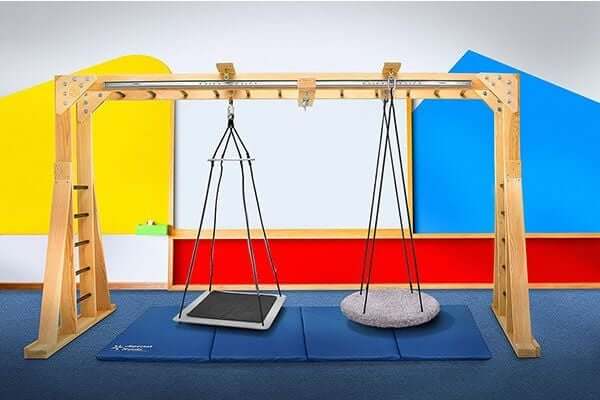
Unless you're willing to bundle up multiple times a day the winter month's can be especially hard to meet kids movement needs. Indoor gyms, rock walls, and swings can be great additions to any home and bring the fun inside for a safe experience! Swings provide the opportunity go swing or spin fast (alerting) or slow (calming). A platform swing is great for lying on the stomach (putting the head in a different vestibular position) to do activities such as puzzles or shape sorters while using their hands to walk around while their body is spinning. Swinging in a standing position is great for core strength and balance while the child is holding on to the ropes for support and supervision from an adult. Another great activity is trying to hit a target while swinging example: shooting a basketball into a hoop or hitting a picture on the wall with a fly swatter. This is great for eye hand coordination! Climbing rungs of a ladder is read for alternate movement and motor planning of arms and legs and once at the top children can get that proprioceptive input through their shoulders by hanging from the monkey bars at the top. We recommend using a thicker padded floor or mats for safety under these structures.
Creating a planned movement space in your home and creating sensory activities that involve swinging, spinning, climbing, or hanging provide your child with the stimulation they need throughout the day, reduce sensory seeking that is not safe in the home, and decrease dysregulation and sensory-related meltdowns.