Table of Contents
- Key Takeaways: Traveling With Special Needs Strollers in 2026
- What Is a Special Needs Stroller and Why Does It Matter for Travel?
- How Do Special Needs Strollers Differ From Regular Strollers?
- Traveling by Air: How to Navigate Airports With a Special Needs Stroller
- How to Transport a Special Needs Stroller by Car
- Using Public Transit With a Special Needs Stroller
- What Features Should You Look for in Travel-Friendly Special Needs Strollers?
- How to Prepare Your Child for Travel With a Special Needs Stroller
- Checklist for Traveling With a Special Needs Stroller
- Common Travel Challenges and How to Address Them
- How School-Based Therapists Can Plan Field Trips With Special Needs Strollers
- Why Postural Support Matters During Travel
- Working With Your Therapist to Choose Travel Equipment
- Planning Your Next Trip With Confidence
- FAQs
Traveling with a child who uses a special needs stroller requires more planning than a typical family trip. From navigating airport security to fitting equipment in your vehicle, each step brings unique considerations. eSpecial Needs offers special needs strollers designed to support comfortable, safe travel for children and adults with mobility challenges.
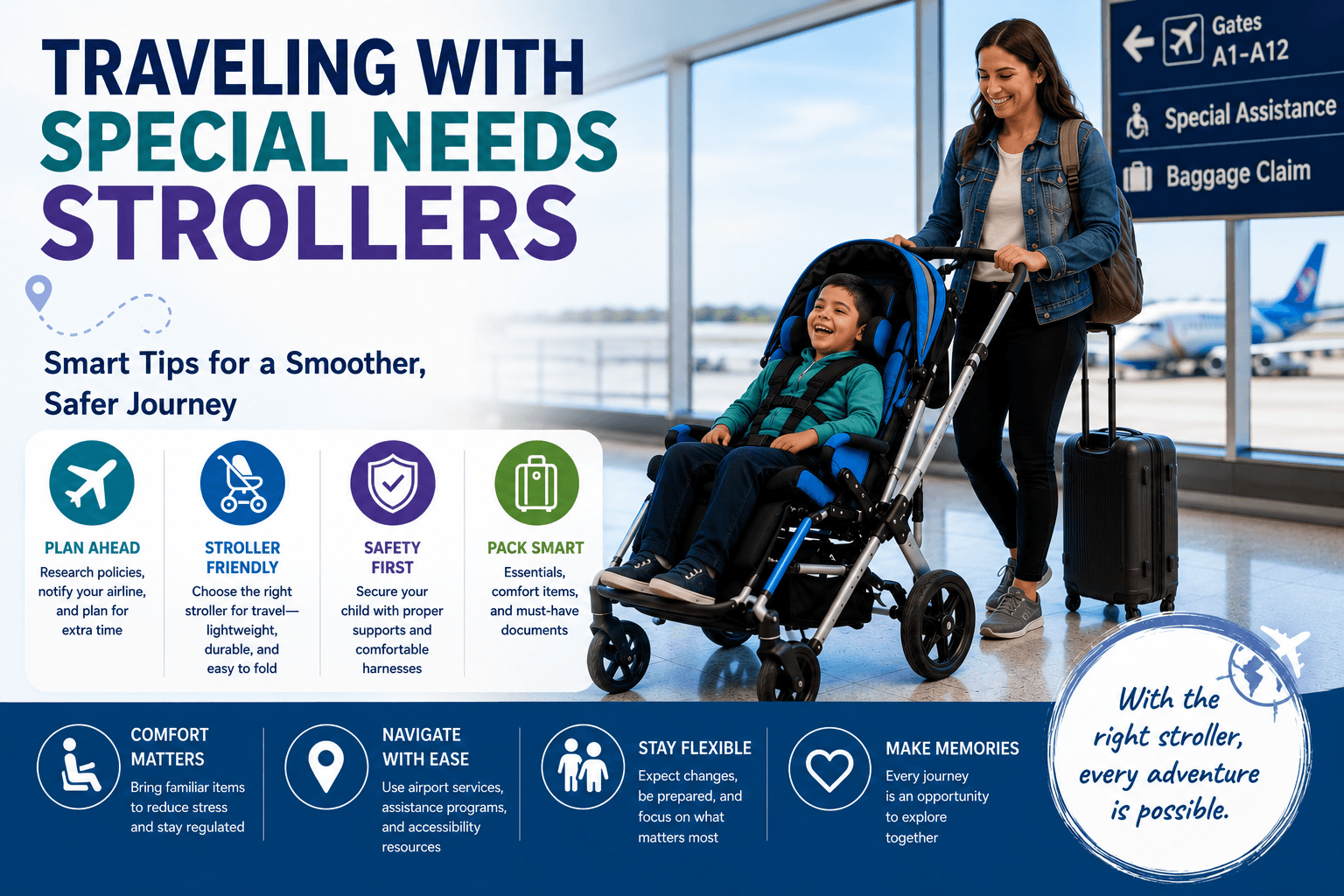
This guide walks you through everything you need to know about traveling with adaptive strollers. You'll find practical tips for airports, car transport, and public transit—plus guidance on choosing the right equipment for your travel needs.
By the end, you'll have a clear checklist and confidence to plan your next outing, field trip, or family vacation with your special needs stroller.
Key Takeaways: Traveling With Special Needs Strollers in 2026
- Special needs strollers offer postural support, safety harnesses, and positioning features that regular strollers cannot match during travel.
- Contact TSA Cares at least 72 hours before flying to arrange assistance with adaptive equipment and medical devices at security checkpoints.
- Look for strollers with WC-19 crash test certification when you need safe transport on school buses or accessible vehicles.
- eSpecial Needs carries lightweight and tilting strollers designed for easy folding, quick transport, and daily mobility support.
- Create a travel checklist covering medications, comfort items, documentation, and backup positioning supplies before every trip.
What Is a Special Needs Stroller and Why Does It Matter for Travel?
A special needs stroller is a mobility device designed for children and adults who need more support than a standard stroller offers. These strollers include features like head and trunk support, adjustable positioning, and secure harness systems.
Unlike regular strollers, adaptive models can accommodate older or larger individuals. They often support weight capacities of 100 pounds or more, and some models extend to 150 pounds or higher.
For travel, this matters because your child or student needs consistent postural support whether you're at an airport, in a car, or on public transit. The right special needs strollers keep them safe and comfortable throughout the journey.
How Do Special Needs Strollers Differ From Regular Strollers?
Regular strollers are built for typically developing infants and toddlers. They assume the child can sit upright independently and has adequate trunk control. Special needs strollers are engineered differently.
Postural Support and Positioning
Special needs strollers include head support, lateral trunk supports, and pelvic positioning straps. These components help maintain proper alignment and prevent secondary injuries like pressure sores or muscle shortening.
Many models feature tilt-in-space functions that allow the entire seat to recline while keeping the hip angle constant. This helps with pressure relief and respiratory function during longer outings.
Safety Features for Travel
Five-point harness systems are standard on special needs strollers. These secure the child at the shoulders, hips, and between the legs to distribute forces evenly during movement or sudden stops.
Some strollers meet WC-19 crash test standards, making them safe for use on school buses and accessible vehicles with tie-down systems. This certification is essential for school-based therapists planning field trips.
Durability and Weight Capacity
Special needs strollers are built to last through years of daily use. Their frames handle higher weight capacities and accommodate growth, so you won't need to replace equipment as frequently as you would a standard stroller.
Traveling by Air: How to Navigate Airports With a Special Needs Stroller
Air travel with a special needs stroller requires advance preparation. Airports have specific procedures for adaptive equipment, and knowing these ahead of time makes your experience smoother.
Contact TSA Cares Before Your Flight
TSA Cares is a helpline for travelers with disabilities and medical conditions. Contact them at least 72 hours before your flight by calling (855) 787-2227 or filling out their online form.
A specially trained Passenger Support Specialist can meet you at security. They understand how to screen adaptive equipment and can help you move through the checkpoint with less stress.
Preparing Your Stroller for Security Screening
TSA agents will inspect your stroller by hand and may swab it for explosive residue. Remove any bags attached to the stroller and place them in bins for X-ray screening separately.
If your child cannot stand or transfer easily, let the TSA agent know. Your child can remain in the stroller while receiving a pat-down and wand screening. You also have the right to request a private screening area.
Gate-Checking Your Special Needs Stroller
Most airlines allow you to gate-check adaptive strollers at no additional cost. This means you can use the stroller all the way to the aircraft door, where airline staff will take it to the cargo hold.
Ask the airline to tag your stroller as "medical equipment" to ensure careful handling. Some families pack a simple tool kit in their carry-on bag for quick adjustments if needed after landing.
What to Pack in Your Carry-On
Keep essential items accessible during your flight. Pack medications in a clear plastic bag—liquid medications over 3.4 ounces are allowed if they're medically necessary, but notify TSA at the checkpoint.
Bring comfort items like a favorite blanket or noise-canceling headphones. If your child has sensory sensitivities, these familiar objects can help them stay calm during the unfamiliar airport environment.
How to Transport a Special Needs Stroller by Car
Car travel gives you more control over your environment, but it comes with its own considerations. Fitting adaptive equipment in your vehicle and keeping your child positioned correctly are the main priorities.
Choosing a Travel-Friendly Stroller
Lightweight strollers with compact folding mechanisms fit more easily into standard car trunks. Many models fold with one hand and weigh between 15 and 30 pounds, making them manageable for a single caregiver.
eSpecial Needs offers a range of lightweight strollers designed for families on the go. These combine portability with the postural support your child needs during outings and trips.
Securing the Stroller During Transport
When not in use, secure your folded stroller in the trunk or cargo area to prevent it from shifting during sudden stops. Some families use bungee cords or cargo nets to keep equipment stable.
If your child uses a car seat with the stroller, check that both devices are properly installed according to manufacturer guidelines. Consult your occupational or physical therapist for positioning recommendations.
Planning for Long Drives
Children with special needs may need frequent position changes during long car trips. Plan rest stops every 1-2 hours to allow your child to stretch, change positions, or use the stroller for a short walk.
Bring extra positioning supports like cushions or rolled towels. These can help maintain alignment in the car seat if your child tends to lean or slide during the drive.
Special Tomato EIO Stroller Push Chair - Adaptive Stroller
$921.50
$2,062.05
The Special Tomato EIO Stroller Push Chair is a lightweight adaptive stroller designed to provide comfortable mobility and positioning support from early intervention through preadolescence. Built for children who need more support than a standard stroller, the EIO combines everyday… read more

Using Public Transit With a Special Needs Stroller
Public transit presents accessibility considerations that vary by city and transit system. Most buses and trains have designated spaces for wheelchairs and strollers, but advance planning helps.
Understanding Bus and Train Accessibility
Many public transit systems require strollers to be folded during peak hours. However, special needs strollers classified as mobility devices are often exempt from this rule. Check your local transit authority's policy before traveling.
Accessible buses have ramps or lifts and designated securement areas. If your stroller meets WC-19 standards, it can be secured using the bus's tie-down system for safer transport.
Navigating Subway and Metro Systems
Not all subway stations have elevators, which can make navigation difficult with a heavy stroller. Research your route ahead of time and identify elevator-accessible stations along your path.
Many transit apps now include accessibility information. Look for apps that show elevator status, accessible entrances, and platform gap warnings to plan your journey more effectively.
Tips for Smoother Public Transit Trips
Travel during off-peak hours when possible. Less crowded trains and buses give you more space to maneuver and reduce sensory overload for your child.
Bring a copy of your child's medical documentation in case you need to explain why your stroller cannot be folded. Transit staff are generally accommodating when they understand your needs.
What Features Should You Look for in Travel-Friendly Special Needs Strollers?
Not all special needs strollers are designed equally for travel. When choosing equipment for frequent outings or trips, certain features make a significant difference.
Lightweight Frame and Compact Fold
A lightweight aluminum frame reduces the effort needed to lift the stroller in and out of vehicles. Look for models under 30 pounds that fold quickly with minimal steps.
Quick-fold or umbrella-fold mechanisms are especially helpful in airports and crowded spaces. The stroller should fold down small enough to fit in your car trunk or an airplane's overhead compartment on some carriers.
Adjustable Positioning Options
Travel can be tiring, and your child may need to rest or change positions. Strollers with recline and tilt-in-space features allow you to adjust positioning on the go.
eSpecial Needs carries tilting strollers that help with fatigue management and pressure relief during extended outings. These models support head, trunk, and pelvic alignment while allowing flexibility for different activities.
All-Terrain Wheels and Suspension
If your travels include outdoor activities, parks, or uneven surfaces, look for strollers with larger wheels and shock absorption. Pneumatic tires and suspension systems smooth out bumps for a more comfortable ride.
All-terrain strollers handle grass, gravel, and sand better than standard wheels. This opens up more destinations for field trips and family outings.
WC-19 Crash Test Certification
For school-based travel, WC-19 certification is essential. This standard means the stroller has been crash-tested and approved for use with vehicle tie-down systems on school buses and accessible vans.
Strollers with this certification include specific tie-down points and reinforced frames. Always confirm the certification before using a stroller for school transportation.
How to Prepare Your Child for Travel With a Special Needs Stroller
Preparation goes beyond packing equipment. Helping your child understand what to expect can reduce anxiety and make the trip more enjoyable for everyone.
Practice Runs and Social Stories
If your child has autism or sensory processing differences, consider a practice run before your actual trip. Some airports offer walkthrough programs that let families experience security screening and boarding without the pressure of a real flight.
Social stories with pictures showing each step of the travel process can also help. Review what will happen at the airport, in the car, or on the bus so your child knows what to expect.
Packing Comfort and Sensory Items
Familiar items reduce stress in unfamiliar environments. Pack your child's favorite toy, weighted blanket, or comfort object in an easily accessible bag.
Noise-canceling headphones can help block overwhelming sounds in airports and train stations. Tablets loaded with familiar videos or music give your child something calming to focus on during waits.
Creating a Visual Schedule
A visual schedule with pictures or icons showing each part of the trip helps your child anticipate transitions. Include images of the car, airport, security, airplane, and destination.
Review the schedule together before you leave and reference it during the trip. This gives your child a sense of control and predictability throughout the journey.
Checklist for Traveling With a Special Needs Stroller
Use this checklist to prepare for your next trip. Covering these items ahead of time reduces last-minute stress and helps ensure a smooth experience.
Documentation and Medical Information
- Printed list of your child's medications from your physician
- Insurance cards and in-network provider information for your destination
- Emergency contact card in your child's pocket or stroller bag
- TSA Disabilities and Medical Notifications Card (printable from the TSA website)
- Letter from your child's doctor explaining medical equipment if needed
Stroller and Equipment Preparation
- Check that all bolts and fasteners are tight
- Confirm harness straps are properly adjusted
- Pack a basic tool kit (Allen wrenches, zip ties) in your carry-on
- Verify WC-19 certification if using school bus transport
- Test folding mechanism to ensure smooth operation
Comfort and Safety Items
- Medications in original containers or with pharmacy printout
- Extra positioning supports (cushions, rolled towels)
- Change of clothes for your child
- Favorite comfort items and sensory tools
- Snacks and water in accessible containers
Common Travel Challenges and How to Address Them
Even with preparation, challenges can arise. Knowing how to handle common situations helps you stay calm and problem-solve on the spot.
Stroller Damage During Air Travel
Gate-checked equipment sometimes arrives with damage. Document your stroller's condition with photos before checking it, and report any damage to airline staff immediately upon arrival.
Airlines are required to compensate for damaged mobility equipment under the Air Carrier Access Act. File a claim at the airport and follow up in writing if needed.
Sensory Overload in Busy Environments
Airports, train stations, and crowded transit can overwhelm children with sensory sensitivities. Look for quiet areas or family restrooms where your child can take a break.
The Hidden Disabilities Sunflower Program is available at many airports. Wearing a sunflower lanyard signals to trained staff that your child may need additional patience or assistance.
Unexpected Schedule Changes
Flight delays and missed connections happen. Pack enough supplies in your carry-on to handle an extra day of travel, including medications, food, and comfort items.
If you need to rebook, mention your child's disability to the airline representative. They may be able to prioritize your rebooking or arrange additional assistance.
How School-Based Therapists Can Plan Field Trips With Special Needs Strollers
School therapists and special education coordinators face unique considerations when planning off-campus activities. Safety, accessibility, and student needs all factor into successful outings.
Assessing Transportation Requirements
Before planning a field trip, inventory the mobility equipment each student uses. Confirm that all strollers intended for bus transport have WC-19 certification and appropriate tie-down compatibility.
Coordinate with your district's transportation department to ensure buses have enough securement spaces. Some districts have purchased all-terrain wheelchairs specifically for outdoor field trips, as schools in Wisconsin and Colorado have done.
Site Accessibility Evaluation
Visit the field trip destination in advance to assess accessibility. Check for ramps, accessible restrooms, elevator availability, and terrain conditions for strollers.
National parks and many museums offer accessibility guides online. The National Park Service has an Access Pass program that grants free lifetime entry to visitors with permanent disabilities.
Staff Training and Communication
Ensure all staff accompanying the trip understand how to assist students with mobility equipment. Review proper transfer techniques, harness adjustments, and emergency procedures.
Create a communication card for each student that includes their name, school contact information, medical needs, and communication preferences. This helps first responders or venue staff assist appropriately if needed.
Why Postural Support Matters During Travel
Proper positioning isn't just about comfort—it affects your child's health, safety, and ability to participate in activities at your destination.
Preventing Secondary Injuries
Children who spend extended time in one position risk developing pressure sores, muscle shortening, and postural deformities. Special needs strollers with tilt-in-space and recline functions allows you to redistribute pressure during long travel days.
Lateral trunk supports and pelvic positioning keep your child's spine aligned. This is especially important during car rides when road vibrations can cause the body to shift.
Supporting Respiratory and Digestive Function
Proper positioning helps with breathing and digestion. A child slumped forward may have restricted lung capacity, while one positioned too far back may experience reflux.
Work with your child's therapist to determine the optimal seat angle for travel. Adjustable strollers let you fine-tune positioning based on how your child responds during the trip.
Reducing Fatigue for Longer Participation
Good postural support reduces the energy your child expends just to stay upright. This means they'll have more energy to enjoy activities at your destination rather than feeling exhausted upon arrival.
Strollers with shock absorption also reduce the physical impact of uneven terrain. Your child arrives at the zoo, museum, or park feeling more rested and ready to engage.
Working With Your Therapist to Choose Travel Equipment
Your child's occupational or physical therapist is a valuable resource when selecting a stroller for travel. They can assess your child's specific needs and recommend features that support safe, comfortable mobility.
Assessment and Measurement
Getting the right fit requires precise measurements of hip width, seat depth, and lower leg length. Your therapist can take these measurements and match them to appropriate stroller specifications.
eSpecial Needs offers measurement guides and product specialists who can help you select the right size. The strollers collection includes options for mild, moderate, and complex positioning needs.
Trial Periods and Adjustments
If possible, arrange for a trial period with your chosen stroller before a major trip. This gives you time to make adjustments and ensure your child is comfortable with the equipment.
Your therapist can help fine-tune harness tension, headrest position, and footrest height. Small adjustments often make a significant difference in comfort and safety.
Funding and Insurance Considerations
Many insurance plans and Medicaid cover special needs strollers when prescribed as durable medical equipment. Your therapist can document medical necessity and help you navigate the approval process.
Keep all receipts and documentation organized, some equipment qualifies for tax deductions as medical expenses. Check with your insurance representative to understand your coverage before purchasing.
Planning Your Next Trip With Confidence
Traveling with a special needs stroller takes more preparation than a typical family outing, but the effort opens up possibilities. With the right equipment and advance planning, you can navigate airports, cars, and public transit while keeping your child safe and comfortable.
Start by choosing a stroller that matches your child's positioning needs and your travel lifestyle. Contact TSA Cares before flights, research accessibility at your destination, and pack a checklist of essential items. Each trip builds experience and confidence.
Your child deserves to experience the world—field trips, family vacations, and everyday outings. The right special needs stroller makes those experiences accessible, safe, and enjoyable for your whole family.
FAQs
Can I gate-check my special needs stroller at the airport?
Yes, most airlines allow you to gate-check adaptive strollers at no additional cost. Your stroller goes to the cargo hold at the aircraft door and returns when you land.
Ask airline staff to tag it as medical equipment for careful handling. eSpecial Needs carries strollers with quick-fold designs that make gate-checking easier.
Do special needs strollers require TSA screening?
Yes, TSA agents will inspect your stroller by hand and may swab it for explosive residue. Your child can remain in the stroller during screening if they cannot stand or transfer.
Contact TSA Cares at least 72 hours before your flight to arrange assistance from a trained Passenger Support Specialist.
What is WC-19 certification and why does it matter?
WC-19 is a crash test standard for mobility devices used in motor vehicles. Strollers with this certification have been tested and approved for use with tie-down systems on school buses and accessible vans.
For school field trips or transportation services, WC-19 certification ensures your child's stroller is secured safely during transport.
How do I choose between a lightweight stroller and a tilting stroller for travel?
Lightweight strollers are easier to transport and fold quickly, making them ideal for frequent travelers. Tilting strollers offer more positioning options for children who need pressure relief or fatigue management.
eSpecial Needs helps you match your child's support needs with the right travel features. Consult with your therapist to determine which style fits your situation.
Can I use public transit with a special needs stroller?
Yes, most public transit systems accommodate special needs strollers as mobility devices. Accessible buses have ramps and designated securement areas for adaptive equipment.
Check your local transit authority's policy before traveling. Strollers with WC-19 certification can be secured using the bus's tie-down system.
What should I pack for a flight with my child's special needs stroller?
Pack medications in original containers, comfort items, a change of clothes, and a basic tool kit in your carry-on. Include emergency contact information and your child's medical documentation.
Keep essential positioning supports accessible in case you need to make adjustments during the flight or layover.