Table of Contents
- Why knowing how to swim is important for safety
- Swimming is great for exercise and physical development
- Swimming is an amazingly therapeutic experience designed as fun
- Get the right special needs products for swimming
- Don't fear swimming by finding a good swim teacher
- Where to find special needs swim lessons
- Keep moving forward
- Quick Special Needs Swimming Checklist for Families
- FAQs
Summertime and swimming, the two go together like peanut butter and jelly. For individuals with disabilities or special needs, special needs swimming can be a bit more of a challenge than it is for neurotypical kiddos.
Some special needs kids might have different sensory reactions to the activity of swimming, or more physical limitations than their typically developing peers.
That being said, swimming is just as important for individuals with special needs as it is for neurotypical kids.
Why knowing how to swim is important for safety
Many individuals with special needs tend to elope. By eloping, we mean that an individual wanders out of the care and safety of their caregiver and into a potentially dangerous situation.
Elopement can be especially scary when a body of water is involved. According to the National Autism Association, "Drowning is among the leading causes of death of individuals with autism," and the instances in which an individual drowns are due to elopement. Elopement can be really scary! Teaching your kiddo how to swim might help save their life.
Swimming is great for exercise and physical development
Physical exercise is key for a healthy body and mind. Swimming is one of the most holistic methods for anyone of any ability to get the exercise they need.
Swim lessons provide kiddos an opportunity to move independently, increase cardiovascular health, and build strength and confidence
Swimming is an amazingly therapeutic experience designed as fun
In its own way, swimming is the best kind of ninja therapy! From helping with sensory processing difficulties to encouraging task completion, swimming is a great therapeutic activity disguised as fun. Just about every kiddo loves swimming. Swimming is an important way for your kiddo to interact and integrate with their environment.
From the feeling of water, a swimsuit, sand or silt, pool noodles, bubbles, splashing water, it engages almost every sense. Kids can see the water move, feel the vestibular input of the water, feel the stony sensation of a pool or the sand of a beach, hear the waves or splash of the water, feel the sunlight, smell the scents of chlorine, saltwater, or sunscreen, and so much more.
Kiddos can get great vestibular input from the rocking and soothing motion of water moving. Swimming encourages proprioceptive feedback by helping kiddos understand where their body begins and ends in space by having direct resistance from the water on their bodies and muscles in a manner that frees mobility.
It can be important for environmental integration for a kiddo to experience all of the sensory input that swimming has to offer. Acquainting your kiddo to that environment at home in the bathtub or a kiddie pool can help ease the transition into swim lessons or beachfronts.
As a bonus, swim lessons help your kiddos interact with peers! Swim lessons are often done as a class, so your kiddo gets socialization as well, which can help fight off the blues and depression some children with special needs experience.
Get the right special needs products for swimming
Finding adaptive swimming accessories is easier said than done. We offer a few products that you might have been looking for.
If your kiddo has trouble with incontinence in the pool, check out some swim diapers here. If your kiddo needs a little head and neck support, we've got just the floaties you've been looking for. If your child has hearing difficulties or hates the feeling of water in their ears, we've got the Ear Band-It and some putty. eSpecial Needs has got you covered.
Don't fear swimming by finding a good swim teacher
Many parents of individuals with special needs worry for their children in the pool. While it might seem like swimming is going to be a difficulty for your kiddo, they'll be okay!
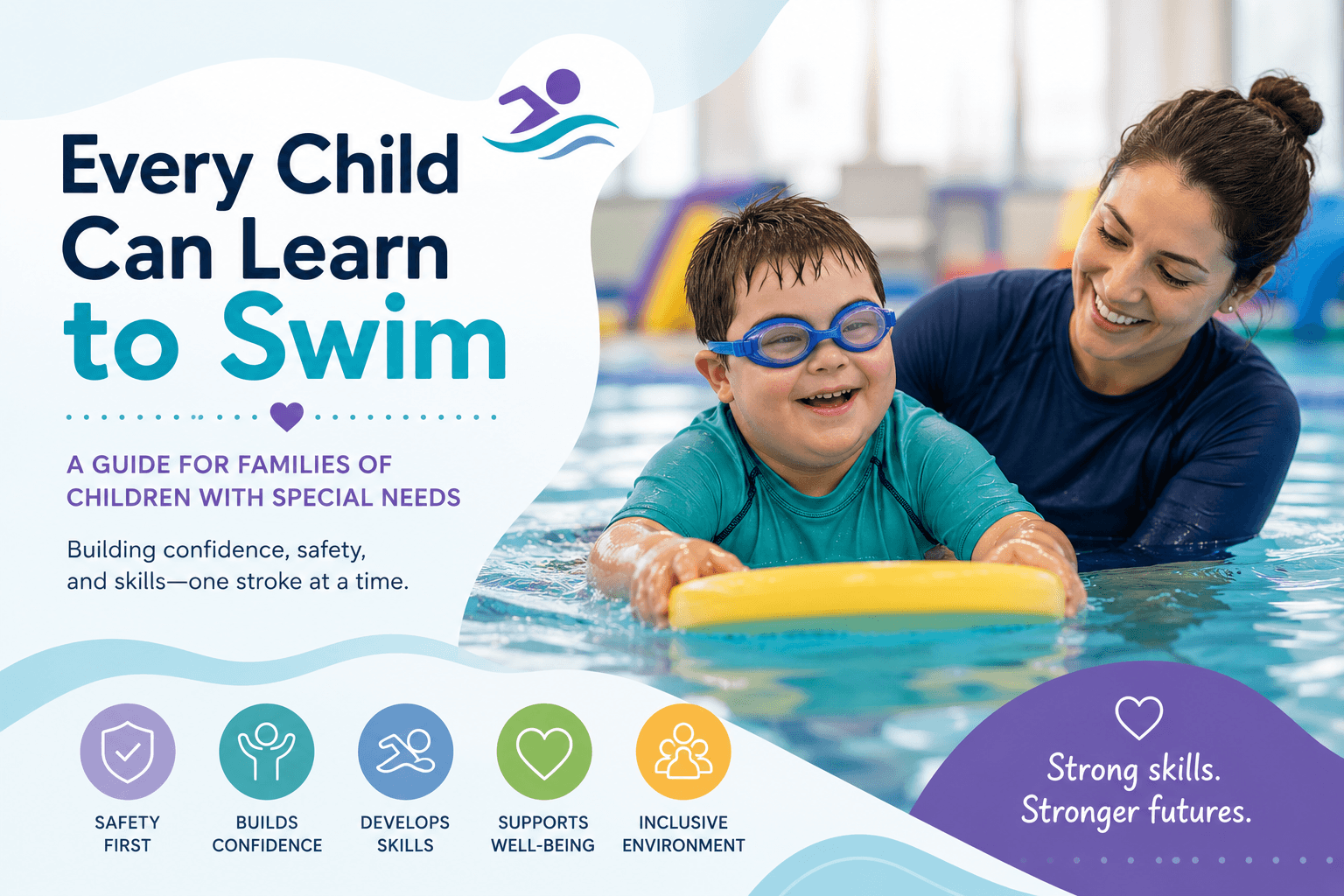
Finding a good swim teacher is necessary. While your child might not swim like you, they'll still swim in their own way using their unique abilities.
Where to find special needs swim lessons
The YMCA is an inclusive institution that has staff that is trained and well equipped to teach your kiddos how to swim. Many communities have a YMCA or a pool that teaches swimming. If you're having trouble finding the right program for you, ask around! Your pediatrician, therapist, or specialist might be able to give you a few names of referrals for your little one with special needs to learn to swim.
Keep moving forward
Swimming isn't always easy. One of the toughest things to do is to keep moving forward, even when it feels like you might be taking a step back. Your kiddo might not be the happiest about learning how to swim but keep trying.
Remember, you're both human, so work within your means. If it's the first day of swim lessons and your kiddo has a meltdown from sensory overload, it might be time to go. That's okay! Try again another day. If that doesn't work, keep trying. Not everything is going to be perfect or idea on the first try. Encouraging your kiddo's safety is a top priority.
Quick Special Needs Swimming Checklist for Families
| Before You Swim | What to Check |
|---|---|
| Swim safety plan | Make sure an adult is always within arm’s reach and knows the child’s needs. |
| Adaptive swim gear | Bring flotation supports, swim diapers, ear protection, goggles, or comfort items if needed. |
| Sensory comfort | Consider noise, water temperature, lighting, chlorine smell, swimsuit texture, and crowd level. |
| Communication supports | Use visual schedules, picture cards, simple cues, or gestures if helpful. |
| Pool access | Check for ramps, lifts, zero-entry access, family changing rooms, and quiet areas. |
| Instructor experience | Ask whether the swim teacher has experience with autism, sensory needs, or physical disabilities. |
| Break plan | Have a calm space ready if your child becomes overwhelmed or tired. |
| Emergency readiness | Confirm barriers, rescue equipment, and caregiver CPR knowledge when possible. |
Shop All Special Needs Swimming Products

FAQs
Why is swimming important for children with special needs?
Swimming is important for children with special needs because it supports water safety, physical activity, confidence, sensory exploration, and social participation. For some children, learning basic water safety skills may also help reduce risk around pools, lakes, beaches, or other bodies of water.
Can children with special needs learn to swim?
Yes. Many children with special needs can learn to swim with the right instruction, patience, adaptive supports, and safety planning. Some children may learn traditional swim strokes, while others may focus on water comfort, floating, safe entry and exit, breath control, or survival swim skills.
What is special needs swimming?
Special needs swimming refers to swim instruction, water activities, or aquatic therapy designed for children or adults with disabilities, developmental delays, autism, sensory processing challenges, physical limitations, or other support needs. It may include adapted teaching methods, specialized flotation supports, sensory preparation, and one on one instruction.
Is swimming safe for children with autism?
Swimming can be safe for autistic children when proper precautions are in place. Families should use close supervision, appropriate flotation support when needed, secure pool access, water safety education, and instructors experienced with autism or sensory needs. Because some autistic children may be drawn to water or wander, water safety skills are especially important.
Why is water safety especially important for children who elope or wander?
Children who elope or wander may leave a safe area unexpectedly, which can be dangerous near pools, ponds, lakes, or beaches. Teaching water safety, using door alarms or barriers, supervising closely, and practicing safe swim skills can help reduce risk.
What are the benefits of swimming for children with disabilities?
Swimming may support strength, endurance, coordination, balance, cardiovascular health, confidence, sensory processing, social interaction, and relaxation. Water can also provide gentle resistance and buoyancy, which may make movement easier for some children with physical disabilities.
Can swimming help with sensory processing challenges?
Yes. Swimming can provide rich sensory input, including touch, movement, pressure, sound, temperature, and visual stimulation. Water offers proprioceptive and vestibular input that may help some children feel calmer, more organized, or more aware of their bodies.
Can swimming help children with sensory overload?
Swimming may help some children regulate, but it can also be overstimulating for others. Pool noise, chlorine smell, splashing, bright sunlight, water temperature, swimsuits, and crowded spaces may trigger sensory overload. Gradual exposure, quiet swim times, sensory preparation, and adaptive swim gear can help.
How can I prepare a sensory sensitive child for swimming?
Start slowly. Let your child explore water at home in a bathtub, kiddie pool, or quiet pool setting before formal lessons. Practice wearing a swimsuit, touching water, hearing pool sounds, using goggles, and getting used to towels or sunscreen. Visual schedules and social stories can also help.
What should I do if my child has a meltdown during swim lessons?
If your child becomes overwhelmed, pause the activity and move to a calmer area. Do not force the lesson to continue. Offer comfort, reduce sensory input, and try again another day. Building water comfort may take time, and progress may happen gradually.
What swim gear is helpful for children with special needs?
Helpful adaptive swim gear may include flotation systems, swim diapers, ear bands, swim ear plugs or putty, goggles, swim vests, adaptive flotation collars, pool noodles, supportive swimwear, waterproof communication cards, and sensory friendly towels or cover ups.
What flotation devices are best for children with special needs?
The best flotation device depends on the child’s size, strength, head control, motor abilities, comfort, and swimming goals. Some children may need adaptive flotation systems with head or trunk support, while others may only need temporary support during instruction. Always choose swim products designed for the user’s needs and supervise closely.
Are floaties enough for children with special needs?
Arm floaties are not always enough, especially for children with low muscle tone, poor head control, motor delays, or limited body awareness. Some children need more supportive flotation equipment. Families should consult a swim instructor, therapist, or healthcare provider when choosing swim supports.
Can children with cerebral palsy benefit from swimming?
Yes. Swimming and water based movement may support children with cerebral palsy by providing buoyancy, gentle resistance, movement practice, relaxation, and opportunities for physical activity. The right support depends on the child’s tone, strength, head control, mobility, and safety needs.
Can children with ADHD benefit from swimming?
Yes. Swimming can provide structured movement, exercise, sensory input, and a way to release energy. For some children with ADHD, swim lessons may support focus, confidence, coordination, and self regulation.
Can children with sensory processing disorder benefit from swimming?
Yes. Children with sensory processing disorder may benefit from the deep pressure, movement, temperature, and resistance provided by water. However, some children may need gradual exposure if they are sensitive to splashing, pool sounds, water temperature, or swimsuit textures.
Can nonverbal children learn to swim?
Yes. Nonverbal children can learn swim and water safety skills with adapted teaching methods. Instructors may use visual supports, gestures, modeling, picture cards, routines, and consistent cues. Families should make sure the instructor understands the child’s communication needs.
How do I find swim lessons for a child with special needs?
Look for swim instructors or programs with experience teaching children with disabilities, autism, sensory needs, or physical challenges. Local YMCAs, adaptive recreation programs, pediatric therapy clinics, community pools, hospitals, and disability organizations may offer adaptive swim lessons or referrals.
What should I ask before enrolling in special needs swim lessons?
Ask whether the instructor has experience with your child’s diagnosis or needs, whether one on one instruction is available, how they handle sensory overload, what safety procedures are used, whether adaptive equipment is allowed, and whether parents can stay nearby during lessons.
Should my child take group or private swim lessons?
It depends on your child’s needs. Some children enjoy group lessons and benefit from peer interaction. Others need private lessons because of sensory sensitivities, communication needs, safety concerns, attention challenges, or physical support requirements.
How can swimming support social skills?
Group swim lessons can offer opportunities for turn taking, following directions, peer interaction, imitation, shared play, and confidence building. For children who struggle socially, water activities may provide a fun and motivating way to engage with others.
What if my child is afraid of water?
Start with small, low pressure steps. Let your child sit near the water, touch water with hands or feet, play with cups or toys, watch others swim, or practice in shallow water. Avoid forcing full submersion. A patient instructor can help build trust gradually.
What if my child loves water too much and has poor safety awareness?
Children who are strongly drawn to water need extra safety planning. Use barriers, locks, alarms, supervision, clear rules, and water safety training. Teach safe entry, waiting for permission, floating, turning toward the wall, and exiting the pool.
How often should children with special needs practice swimming?
Consistency helps. Some children benefit from weekly swim lessons, while others may need shorter, more frequent practice. The best schedule depends on the child’s tolerance, energy level, sensory needs, and family routine.
Can swimming be part of therapy?
Yes. Swimming or water based activities can support therapeutic goals related to movement, sensory processing, strength, endurance, coordination, balance, relaxation, and confidence. Some children may participate in aquatic therapy with trained professionals.
What is aquatic therapy?
Aquatic therapy is therapy performed in water by a qualified professional, such as a physical therapist or occupational therapist. It uses the properties of water, including buoyancy and resistance, to support movement, strength, coordination, and functional goals.
Is aquatic therapy the same as swim lessons?
No. Swim lessons focus on water safety and swimming skills. Aquatic therapy focuses on therapeutic goals such as strength, mobility, balance, coordination, or sensory regulation. Some children may benefit from both.
What should my child wear for swimming?
Choose swimwear that is comfortable, secure, and appropriate for your child’s sensory and physical needs. Some children prefer snug suits, soft materials, rash guards, swim diapers, ear protection, goggles, or adaptive flotation supports.
Are swim diapers necessary for children with incontinence?
Yes. Children who are not toilet trained or who have bowel or bladder incontinence should use swim diapers or approved swim containment products. Many public pools require them for hygiene and safety.
How can I help my child tolerate swim diapers or swimsuits?
Practice wearing swim gear at home before going to the pool. Let your child touch the material, wear it for short periods, and pair it with a preferred activity. Choose soft, properly fitting products that do not rub, pinch, or create unnecessary sensory discomfort.
Can ear protection help children who dislike water in their ears?
Yes. Ear bands, swim ear plugs, or swim putty may help children who dislike water in their ears or have ear sensitivity. Always choose products appropriate for swimming and ask a healthcare provider if your child has ear tubes, infections, or medical ear concerns.
Should children with hearing aids or cochlear implants swim?
Families should follow manufacturer and healthcare provider guidance. Some hearing devices are not waterproof and must be removed before swimming unless specifically designed for water use. Plan communication strategies before entering the pool.
What safety rules should families follow around water?
Important safety rules include constant adult supervision, secure pool barriers, never swimming alone, using properly fitted flotation when needed, teaching safe entry and exit, keeping rescue equipment nearby, and making sure caregivers know CPR and emergency procedures.
Can adaptive swim equipment replace adult supervision?
No. Adaptive swim equipment can support safety and participation, but it does not replace direct adult supervision. Children with special needs should always be closely supervised around water.
How can I make pool time less overwhelming?
Choose quieter swim times, bring familiar towels or toys, use visual schedules, avoid crowded pools when possible, prepare for sounds and smells, allow breaks, use sensory friendly swim gear, and keep expectations flexible.
What are signs my child needs a break from swimming?
Signs may include crying, covering ears, trying to leave, becoming stiff, refusing directions, increased agitation, fatigue, shivering, clinging, shutdown, or rapid changes in behavior. A break can prevent overload and help the child return more successfully later.
How can eSpecial Needs help with special needs swimming?
eSpecial Needs offers adaptive swimming products and special needs swim supports, including flotation systems, swim diapers, ear protection, and other helpful equipment for families preparing for safe and comfortable swimming experiences.