Table of Contents
- Sensory Integration at a Glance
- How the Brain Organizes Sensory Input
- Why Sensory Integration Matters for Child Development
- The History of Sensory Integration Theory
- Who Was Dr. A. Jean Ayres?
- Key Milestones in Ayres Sensory Integration Research
- How Sensory Integration Became Part of Occupational Therapy
- Core Principles of Sensory Integration Theory
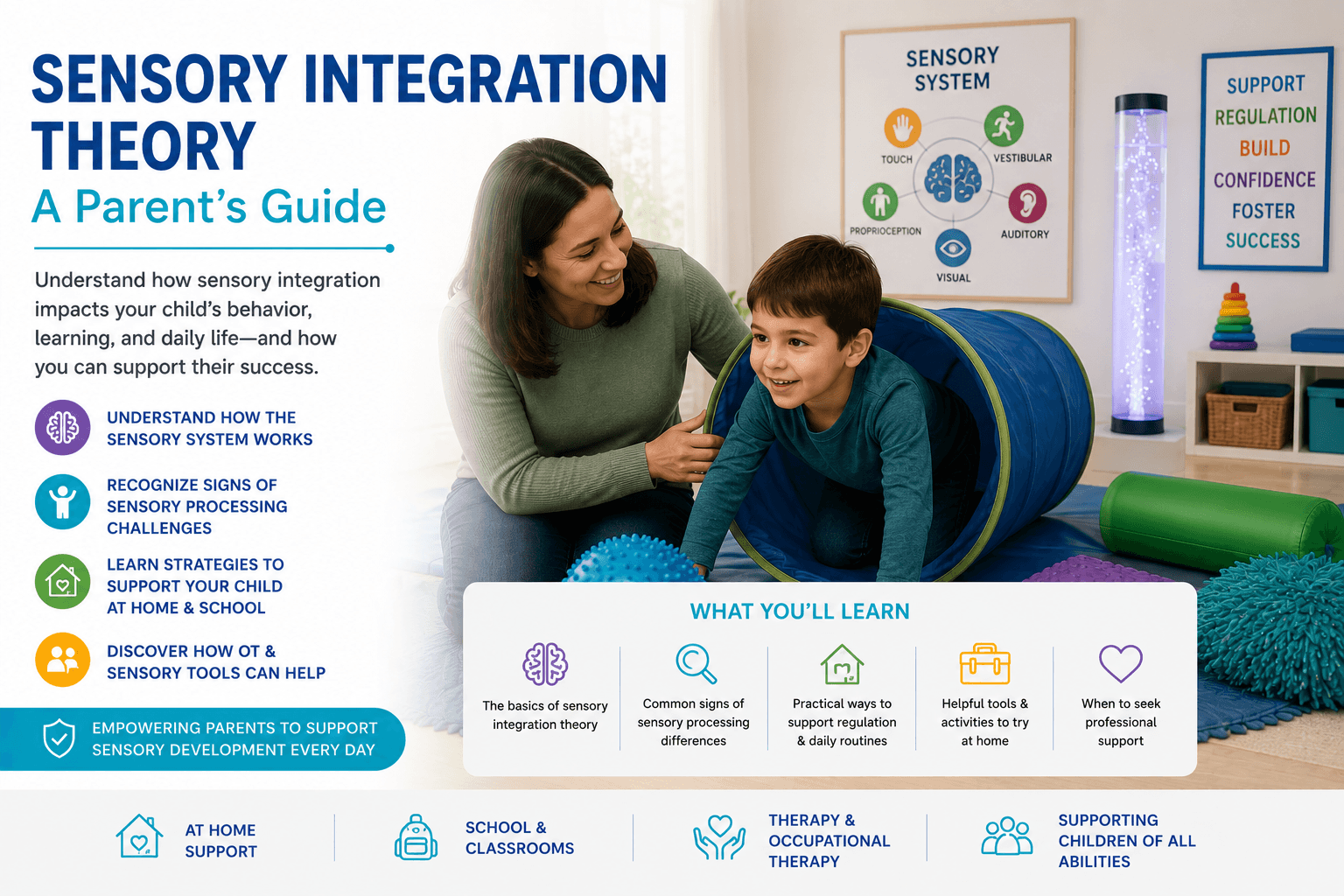
- The Seven Sensory Systems
- 1. Visual System
- 2. Auditory System
- 3. Tactile System
- 4. Taste System
- 5. Smell System
- 6. Vestibular System
- 7. Proprioceptive System
- What About Interoception?
- Adaptive Responses: How the Brain Learns Through Sensation
- The Role of the Nervous System
- Neuroplasticity and Why Early Support Matters
- Understanding Sensory Integration Disorder
- Common Sensory Integration Disorder Symptoms in Children
- Sensory Over Responsivity vs Under Responsivity
- Sensory Integration Theory Over Responsivity
- Sensory Under Responsivity
- Sensory Seeking
- Sensory Integration Disorder ICD 10: What Parents Should Know
- When to Seek a Professional Evaluation
- Sensory Integration Disorder vs Sensory Processing Disorder
- How Diagnosis and Treatment Differ
- The Sensory Integration Approach in Occupational Therapy
- What Does Sensory Integration Therapy Look Like?
- Sensory Integration Examples Used in Therapy
- The Role of the Occupational Therapist
- Ayres Sensory Integration vs Other Sensory Based Approaches
- Extending Sensory Integration Support Beyond the Clinic
- Creating a Sensory Supportive Environment at Home
- Sensory Room Equipment and Tools That Support Integration
- Deep Pressure Products, Sensory Motor Tools, and Movement Equipment
- Building a Sensory Diet
- How to Start a Sensory Diet
- How to Access Sensory Integration Therapy and Adaptive Equipment
- Insurance, Medicaid, and Letters of Medical Necessity
- Funding Resources and Budget Friendly Options
- Where eSpecial Needs Can Help
- Why Sensory Integration Theory Matters
- FAQs
What Is Sensory Integration?
Sensory integration theory is the way the brain receives information from the body and the world, organizes it, and uses it to respond appropriately.
For a child, sensory integration is happening all day long. It helps them know how hard to hold a pencil, how to stay balanced on a playground, how to ignore background noise in a classroom, how to tolerate clothing textures, and how to calm down after an overwhelming experience.
A simple way to think about sensory integration is to imagine the brain as a traffic controller. Sensory messages are constantly arriving from the eyes, ears, skin, muscles, joints, inner ear, internal organs, taste, and smell. When the brain organizes those messages well, the child can respond in a smooth and functional way. When the brain has trouble sorting those messages, daily activities can feel confusing, stressful, or overwhelming.
Sensory integration affects much more than comfort. It can influence movement, learning, attention, behavior, sleep, emotional regulation, communication, and social participation.
Occupational therapist and neuroscientist Dr. A. Jean Ayres developed sensory integration theory after studying how the nervous system processes sensory information and how that processing supports children’s ability to participate in everyday life. Ayres Sensory Integration remains an important framework in occupational therapy today.
Sensory Integration at a Glance
| Topic | Parent Friendly Explanation |
|---|---|
| What it means | The brain organizes sensory information so the body can respond |
| Why it matters | It supports movement, learning, behavior, focus, and emotional regulation |
| Common challenges | Sensitivity to sound, touch, movement, clothing, food textures, or busy environments |
| Professional support | Occupational therapists often evaluate and treat sensory integration challenges |
| Helpful tools | Swings, sensory wall panels, weighted items, deep pressure tools, tactile toys, and movement equipment |
| Best next step | Ask an occupational therapist for an evaluation if sensory challenges affect daily life |
How the Brain Organizes Sensory Input
Every second, your child’s brain receives sensory information from the environment and from inside the body.
That includes:
- What they see
- What they hear
- What they smell
- What they taste
- What they feel through touch
- How their body moves
- Where their body is in space
- What is happening inside their body, such as hunger, thirst, or needing the bathroom
Most people think of the five basic senses: sight, sound, touch, taste, and smell. Sensory integration also includes proprioception, vestibular processing, and interoception. These hidden senses help the body understand movement, balance, body position, pressure, and internal signals.
When sensory integration theory works well, the brain filters what matters and reduces the importance of what does not. A child can sit in class even with background noise. They can climb stairs without watching every step. They can eat lunch without being distracted by every smell in the cafeteria.
When sensory integration theory is difficult, the brain may treat ordinary sensations as too intense, too weak, or too confusing. That can lead to avoidance, meltdowns, restlessness, clumsiness, fear of movement, trouble with clothing, difficulty sitting still, or challenges with transitions.
Why Sensory Integration Matters for Child Development
Sensory integration helps children build the foundation for daily skills.
A child needs sensory information to:
- Learn how to move safely
- Develop balance and coordination
- Use both hands together
- Sit upright
- Write, cut, color, and manipulate small objects
- Pay attention in class
- Participate in play
- Manage emotions
- Build independence with dressing, bathing, and eating
- Understand personal space
- Join social activities
Sensory integration theory does not happen separately from development. It is part of how children learn through movement, touch, play, and interaction.
When the nervous system can organize sensory input, children are more available for learning. When the nervous system feels overwhelmed, under responsive, or disorganized, even simple daily tasks can become difficult.
Tactile Sensory Kit
$67.95
The Tactile Sensory Kit includes many of our most popular tactile items for sensory motor massage and texture stimulation on-the-go. With nine handheld sensory toys that each feature a different tactile experience, it's a great go-to bag for occupational therapists,… read more

The History of Sensory Integration Theory
Sensory integration theory grew from the work of Dr. A. Jean Ayres, an occupational therapist, psychologist, and neuroscientist who studied how sensory processing affects learning and behavior.
Ayres developed, practiced, and tested sensory integration theory throughout her career. She believed sensory integration was foundational to children’s ability to participate successfully in daily activities. She also developed assessments and therapeutic equipment that shaped how occupational therapists evaluate and treat sensory integration challenges.
Who Was Dr. A. Jean Ayres?
Dr. A. Jean Ayres, PhD, OTR, lived from 1920 to 1988. She is widely recognized as the pioneer behind sensory integration theory.
Her work helped explain why some children with no obvious physical impairment still struggled with coordination, attention, motor planning, learning, or behavior. She proposed that the issue could be related to how the nervous system processes sensory information.
Ayres described sensory integration as a neurological process that organizes sensations from the body and environment so the body can be used effectively in daily life. Her work became a major foundation for occupational therapy practice.
Key Milestones in Ayres Sensory Integration Research
Ayres’ work helped create a structured way to understand sensory processing and its impact on function.
Important contributions included:
- Developing sensory integration theory
- Creating assessments to measure sensory integration abilities
- Linking sensory processing to motor planning, learning, and behavior
- Designing therapy equipment and activities to support adaptive responses
- Establishing a clinical framework used by occupational therapists
Later occupational therapy researchers continued to refine Ayres Sensory Integration, including how it is measured, delivered, and evaluated. AOTA research publications describe how Ayres’ early work in measurement shaped the evolution of the theory and its clinical use.
How Sensory Integration Became Part of Occupational Therapy
Occupational therapy focuses on helping people participate in meaningful daily activities. For children, that may include play, school, dressing, eating, social interaction, movement, and self care.
Sensory integration theory gave occupational therapists a way to understand how sensory processing affects those daily activities. Today, occupational therapy using Ayres Sensory Integration is described as a theory based and evidence informed intervention that uses individualized, play based activities and clinical equipment after an evaluation of the child’s needs.
Core Principles of Sensory Integration Theory
Sensory integration theory is based on several key ideas:
- The brain and nervous system organize sensory input from the body and environment
- Sensory processing affects movement, learning, attention, behavior, and emotional regulation
- Children learn through active sensory experiences
- The right challenge can help the brain build stronger responses
- Therapy should be individualized to the child
- Play and motivation are important parts of effective intervention
- Progress often depends on repeated, meaningful sensory motor experiences
These ideas help explain why sensory integration therapy often looks like play, even though it is guided by clinical reasoning.
The Seven Sensory Systems
Sensory integration includes more than sight, sound, and touch.
1. Visual System
The visual system processes what we see. It helps children track moving objects, read, recognize faces, avoid obstacles, and understand visual space. A child with visual sensory challenges may become overwhelmed by bright lights, busy walls, crowded rooms, or screens.
2. Auditory System
The auditory system processes sound. It helps children understand speech, locate sounds, follow directions, and filter background noise. A child with auditory sensitivity may cover their ears, avoid loud places, or become distressed by alarms, hand dryers, cafeterias, or assemblies.
3. Tactile System
The tactile system processes touch. It helps children understand texture, pressure, temperature, pain, and the feeling of objects against the skin. Tactile challenges may show up as distress with clothing tags, seams, messy play, haircuts, toothbrushing, certain food textures, or unexpected touch.
4. Taste System
The taste system helps children identify flavors and food characteristics. Taste sensitivities may contribute to picky eating, food refusal, or strong reactions to certain flavors.
5. Smell System
The smell system processes odors. Smell can strongly affect comfort, appetite, memory, and emotional response. Some children are highly sensitive to perfumes, food smells, cleaning products, or classroom odors.
6. Vestibular System
The vestibular system is located in the inner ear and helps with balance, movement, posture, and spatial orientation. A child may seek vestibular input by spinning, swinging, jumping, or rocking. Another child may avoid movement, fear playground equipment, or become carsick easily.
7. Proprioceptive System
The proprioceptive system uses muscles and joints to tell the brain where the body is in space. Proprioception helps children climb, push, pull, carry, jump, use the right amount of force, and feel organized in their bodies. Proprioceptive input often feels calming and grounding. Activities like carrying heavy objects, crawling, climbing, squeezing, and using weighted or compression tools can support body awareness and regulation.
What About Interoception?
Many occupational therapists also discuss interoception, which is the sense of internal body signals. Interoception helps a child notice hunger, thirst, pain, temperature, fatigue, bathroom needs, and emotional body cues. Interoception can be especially important for self regulation because children need to understand body signals before they can respond to them.
Adaptive Responses: How the Brain Learns Through Sensation
An adaptive response is a successful action the child makes in response to a sensory challenge.
For example:
- A child climbs onto a swing and learns how to keep balance
- A child touches a new texture and gradually tolerates messy play
- A child pushes a heavy cart and feels calmer afterward
- A child crawls through a tunnel and improves body awareness
- A child practices catching a ball and improves coordination
In sensory integration theory therapy, the occupational therapist creates activities that are challenging but achievable. The goal is not to force a child through discomfort. The goal is to help the child experience success, build confidence, and develop more organized responses over time.
The Role of the Nervous System
The nervous system includes the brain, spinal cord, and nerves throughout the body. It receives sensory information, interprets it, and sends signals that guide movement, behavior, attention, and emotional response.
When sensory processing is disrupted, the nervous system may:
- Overreact to ordinary input
- Miss important sensory information
- Seek intense input to feel organized
- Struggle to coordinate movement
- Have trouble calming after stress
- Respond unpredictably to daily routines
This is why sensory challenges can look like behavior problems. A child may refuse shoes, avoid playgrounds, crash into furniture, melt down during transitions, or struggle in noisy classrooms because the nervous system is having difficulty processing sensory input.
Neuroplasticity and Why Early Support Matters
Neuroplasticity means the brain can change and build new connections through experience. This is one reason early support can be powerful. When children receive the right sensory motor experiences, therapy activities, environmental supports, and daily routines, the nervous system may become better at processing and responding to sensory information.
Ayres Sensory Integration is often described in connection with neuroplasticity, developmental science, and occupational therapy principles. Early intervention does not mean older children cannot make progress. It means parents should not wait if sensory challenges are affecting daily life, school participation, safety, or emotional well being.
Understanding Sensory Integration Disorder
Sensory integration disorder is a term some parents and professionals use when a child’s brain has difficulty processing and organizing sensory information.
You may also hear terms such as:
- Sensory processing disorder
- Sensory processing differences
- Sensory modulation challenges
- Sensory integration challenges
- Sensory motor challenges
The terminology can be confusing because different professionals, clinics, schools, and insurance systems may use different language.
The most important point for parents is this: sensory challenges are real when they interfere with daily life, even if labels vary.
Common Sensory Integration Disorder Symptoms in Children
Parents may notice sensory integration challenges in daily routines.
Common signs include:
- Covering ears in noisy places
- Strong dislike of clothing tags, seams, socks, or shoes
- Avoiding messy textures such as paint, sand, or sticky foods
- Frequent crashing, jumping, climbing, or spinning
- Difficulty sitting still
- Poor body awareness
- Bumping into people or furniture
- Fear of swings, stairs, or playground equipment
- Trouble with handwriting or fine motor skills
- Extreme picky eating related to texture, smell, or temperature
- Meltdowns during transitions
- Difficulty calming after excitement or frustration
- Avoiding grooming tasks such as haircuts or toothbrushing
- Trouble participating in groups or busy environments
- Seeming unaware of pain, temperature, or messes
- Seeking tight hugs, compression, or heavy blankets
These signs do not automatically mean a child has a disorder. But if sensory difficulties are affecting daily life, it may be time to seek professional guidance.
Sensory Over Responsivity vs Under Responsivity
Children can respond to sensory input in different ways.
Sensory Integration Theory Over Responsivity
A child who is over responsive notices sensory input too strongly or too quickly.
Examples include:
- Crying when the vacuum turns on
- Refusing certain clothes
- Avoiding playground movement
- Becoming overwhelmed in stores
- Gagging at food smells
- Disliking light touch
These children may seem anxious, avoidant, rigid, or easily upset.
Sensory Under Responsivity
A child who is under responsive may not notice sensory input as much as expected.
Examples include:
- Not responding when their name is called
- Seeming unaware of messy hands or face
- Not noticing pain right away
- Slumping in chairs
- Moving slowly or seeming tired
- Needing extra prompting to engage
These children may seem passive, distracted, or hard to motivate.
Sensory Seeking
Some children actively seek intense sensory input.
Examples include:
- Spinning
- Jumping
- Crashing into cushions
- Chewing objects
- Climbing furniture
- Touching everything
- Asking for tight hugs
- Making loud noises
Sensory seeking is often the child’s way of trying to get enough input to feel organized.
Sensory Integration Disorder ICD 10: What Parents Should Know
Parents often search for an ICD 10 code for sensory integration disorder or sensory processing disorder because insurance, therapy referrals, or medical paperwork may require a diagnosis code.
This area is complicated. Sensory processing disorder is not a stand alone diagnosis in the DSM, and there is not one universally accepted ICD 10 code used in every setting. Some sources note that clinicians may use related codes such as F88, R44.8, or other diagnosis codes depending on symptoms, evaluation findings, and payer requirements. ICD 10 data lists R44.8 as “other symptoms and signs involving general sensations and perceptions.”
Parents should not try to choose a code on their own. A physician, occupational therapist, psychologist, or other qualified provider should guide documentation based on the child’s full clinical picture and the requirements of the insurer or program.
When to Seek a Professional Evaluation
Consider asking for an occupational therapy evaluation if sensory challenges interfere with:
- Sleep
- Feeding
- Dressing
- Bathing
- Grooming
- School participation
- Social activities
- Play
- Safety
- Emotional regulation
- Transitions
- Family routines
A professional evaluation can help determine whether sensory processing is contributing to the child’s challenges and what supports may help.
Sensory Integration Disorder vs Sensory Processing Disorder
Sensory integration disorder and sensory processing disorder are closely related terms. Historically, sensory integration was the term connected to Ayres’ original theory. Over time, sensory processing disorder became a more common term used to describe difficulties receiving, interpreting, and responding to sensory information.
Some professionals use the terms differently. Others use them almost interchangeably. Parent education resources often explain that the language has evolved and that both terms relate to how the brain processes sensory messages. For families, the practical question is usually not which term is perfect. The practical question is whether the child’s sensory differences affect daily function and whether occupational therapy or environmental supports could help.
How Diagnosis and Treatment Differ
Because sensory processing disorder is not always treated as a stand alone medical diagnosis, children may receive services based on functional needs, developmental delays, autism, ADHD, anxiety, motor coordination challenges, or school based concerns.
Treatment often focuses on:
- Improving participation in daily routines
- Supporting regulation
- Building motor skills
- Improving tolerance for sensory input
- Creating safer movement opportunities
- Supporting school participation
- Helping parents and teachers understand sensory needs
An occupational therapist can help parents understand what terminology matters for therapy, school documentation, and insurance.
The Sensory Integration Approach in Occupational Therapy
The sensory integration approach is a structured occupational therapy framework that uses individualized sensory motor activities to support the nervous system’s ability to organize sensory input. This is different from simply giving a child a fidget toy or weighted blanket.
Ayres Sensory Integration involves skilled clinical reasoning, assessment, play based activities, specialized equipment, and activities designed to help the child make adaptive responses. AOTA describes ASI interventions as individually tailored, play based, and provided by occupational therapy practitioners after evaluation.
What Does Sensory Integration Therapy Look Like?
A sensory integration theory therapy sessions may look like play, but it is carefully planned.
A child might:
- Swing on a platform swing
- Climb over foam blocks
- Crawl through a tunnel
- Crash safely into a crash pad
- Pull themselves on a scooter board
- Play with textured materials
- Balance on therapy equipment
- Complete obstacle courses
- Use weighted or resistance based tools
- Practice motor planning through play
The therapist watches how the child responds and adjusts the activity. The goal is to provide the right level of challenge so the child can succeed, adapt, and build stronger sensory motor skills.
Sensory Integration Examples Used in Therapy
Here are examples of sensory integration activities and what they may support.
| Activity | Sensory Input | Possible Goal |
|---|---|---|
| Swinging | Vestibular input | Balance, regulation, postural control |
| Crawling through tunnels | Proprioceptive and tactile input | Body awareness and motor planning |
| Crash pad play | Deep pressure and proprioception | Calming and safe sensory seeking |
| Tactile bins | Touch input | Texture tolerance and fine motor play |
| Climbing foam shapes | Movement and body awareness | Strength, coordination, planning |
| Scooter board activities | Proprioception and vestibular input | Core strength and bilateral coordination |
| Weighted lap pad use | Deep pressure | Focus and calming during seated tasks |
The Role of the Occupational Therapist
An occupational therapist may help by:
- Evaluating sensory processing patterns
- Observing motor skills and regulation
- Identifying functional challenges
- Creating therapy goals
- Designing sensory based activities
- Recommending home and school strategies
- Helping develop a sensory diet
- Recommending adaptive equipment
- Supporting caregivers and teachers
OTs do not just look at sensory behaviors. They look at how those behaviors affect daily life.
Ayres Sensory Integration vs Other Sensory Based Approaches
Not every sensory strategy is Ayres Sensory Integration. For example, a classroom may use fidgets, flexible seating, or a calm down corner. These can be helpful sensory based strategies, but they are not the same as full ASI therapy.
Ayres Sensory Integration is a specific intervention approach with fidelity principles, individualized assessment, clinical reasoning, and therapeutic equipment. Recent occupational therapy literature describes OT using ASI as a manualized, evidence based intervention designed to address sensory integration and processing challenges.
This distinction matters because parents may hear the word sensory used in many ways.
Extending Sensory Integration Support Beyond the Clinic
Sensory support should not stop when the therapy session ends. Children often need consistent support across home, school, and community settings.
That may include:
- A sensory friendly bedroom
- A classroom sensory corner
- Movement breaks during homework
- Visual schedules
- Noise reduction headphones
- Deep pressure tools
- Sensory room equipment
- Calming routines before bed
- Heavy work activities throughout the day
- Teacher and caregiver education
The goal is to help the child function better in everyday life.
Creating a Sensory Supportive Environment at Home
Parents can make the home more sensory supportive by reducing triggers and adding helpful sensory input.
Ideas include:
- Create a quiet calming corner
- Use soft lighting instead of harsh overhead lighting
- Offer noise reduction headphones when needed
- Provide safe movement opportunities
- Keep routines predictable
- Offer clothing options with fewer irritating textures
- Use weighted or compression tools when recommended
- Provide tactile play opportunities
- Build breaks into busy routines
- Keep sensory tools accessible but organized
Small changes can make a big difference.
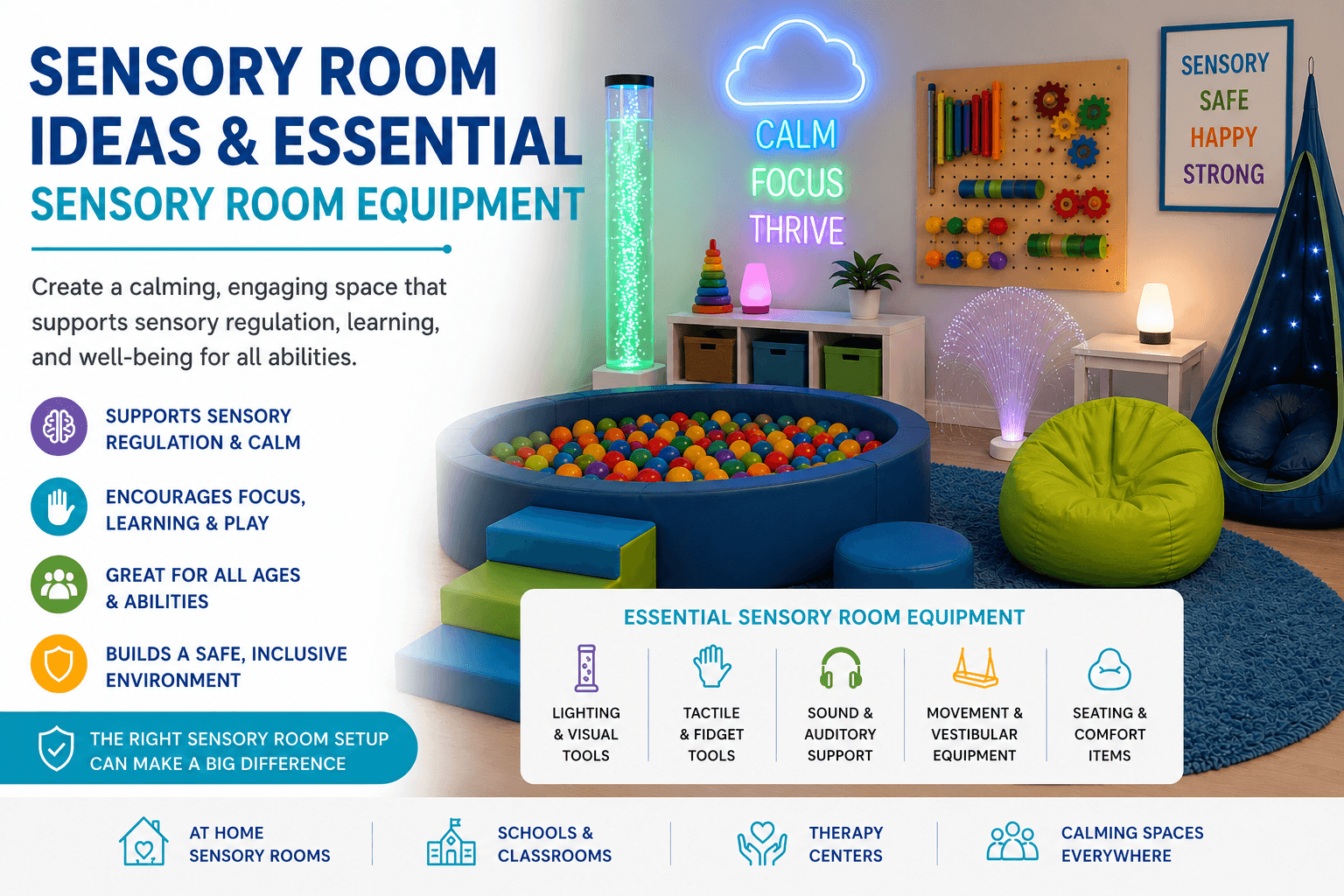
Sensory Room Equipment and Tools That Support Integration
Sensory room equipment can support therapeutic goals at home, school, or in clinics when chosen carefully.
Helpful equipment may include:
- Sensory swings
- Crash pads
- Bubble tubes
- Sensory wall panels
- Fiber optic lighting
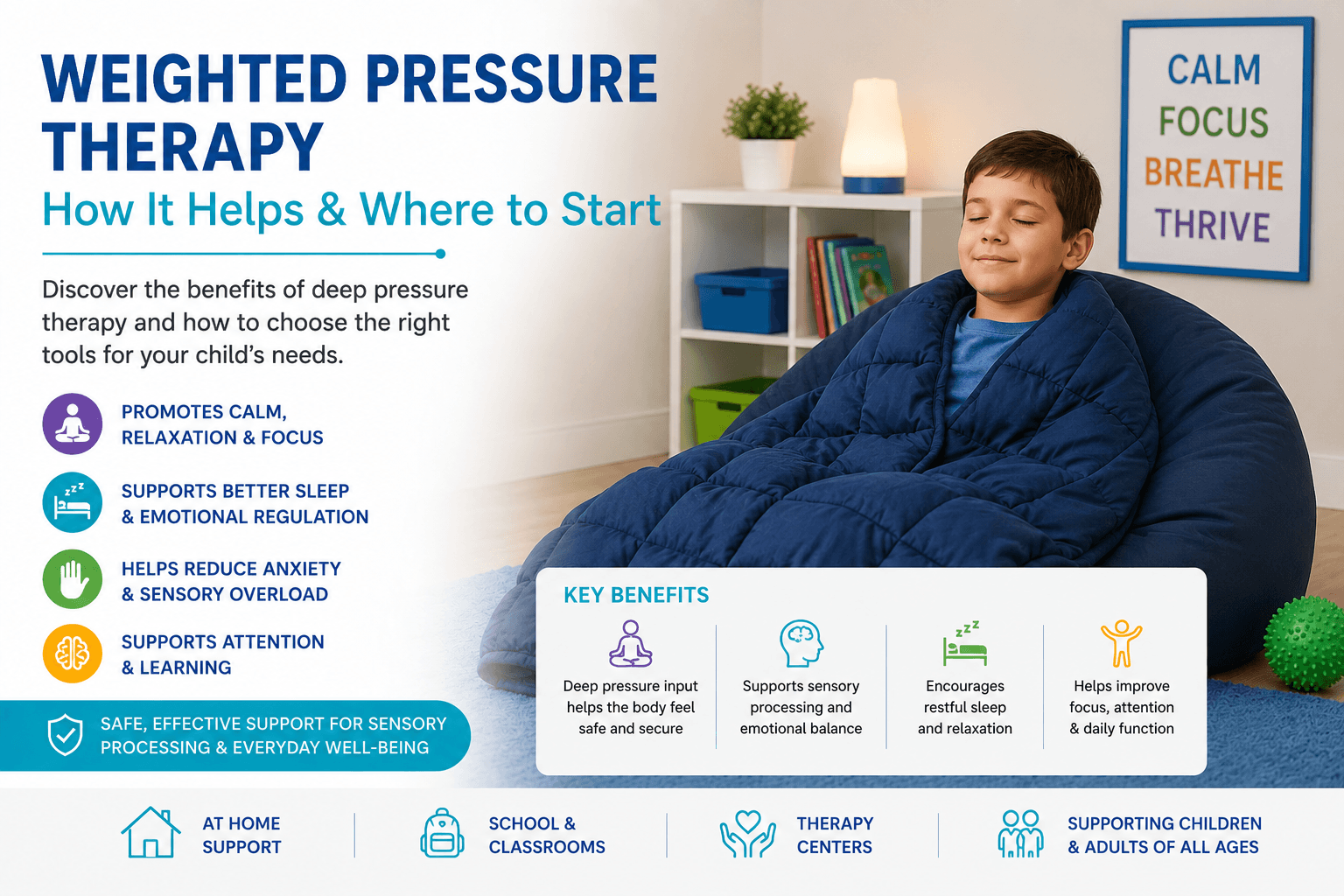
- Weighted blankets
- Weighted lap pads
- Compression tools
- Therapy balls
- Balance boards
- Tactile panels
- Soft play equipment
- Body socks
- Deep pressure pods
- Fine motor activity boards
The best sensory equipment is equipment that matches the child’s needs, space, safety requirements, and therapy goals.
Deep Pressure Products, Sensory Motor Tools, and Movement Equipment
Different tools support different sensory systems.
| Tool Category | Examples | What It Supports |
|---|---|---|
| Deep pressure products | Weighted blankets, lap pads, compression vests | Calming, body awareness, regulation |
| Sensory motor tools | Balance boards, scooter boards, therapy balls | Coordination, movement, motor planning |
| Movement therapy equipment | Swings, crash pads, climbing blocks | Vestibular input, proprioception, strength |
| Tactile tools | Sensory bins, texture panels, putty | Touch tolerance and fine motor skills |
| Visual sensory tools | Bubble tubes, LED panels, projectors | Calming focus and visual engagement |
Parents should ask an occupational therapist which tools are appropriate for their child.
Building a Sensory Diet
A sensory diet is a personalized plan of sensory activities used throughout the day to help a child stay regulated.
It is not a food diet. It is a schedule or routine of sensory input.
A sensory diet may include:
- Morning heavy work
- Movement breaks before school
- A weighted lap pad during homework
- A quiet break after noisy activities
- Swinging before seated work
- Tactile play after school
- Deep pressure before bedtime
A sensory diet should be individualized. What calms one child may overstimulate another.
How to Start a Sensory Diet
Start with these steps:
- Identify the hardest times of day
- Notice what sensory input your child seeks or avoids
- Ask an occupational therapist for guidance
- Choose safe activities that match your child’s needs
- Add sensory breaks before problems escalate
- Track what helps and what does not
- Adjust the plan as your child grows
A sensory diet works best when it is practical and consistent.
How to Access Sensory Integration Therapy and Adaptive Equipment
Families can start by speaking with:
- Pediatricians
- Occupational therapists
- School special education teams
- Early intervention programs
- Developmental pediatricians
- Therapy clinics
- Insurance care coordinators
Ask whether a sensory processing evaluation is appropriate and whether occupational therapy services may help.
For equipment, families may need product recommendations, quotes, and documentation if they are seeking funding.
Insurance, Medicaid, and Letters of Medical Necessity
Some sensory integration therapy services or adaptive equipment may be covered by insurance, Medicaid, waiver programs, school funding, or grants. Coverage depends on the child’s diagnosis, plan rules, state requirements, and documentation.
Families may need:
- A provider referral
- Therapy evaluation
- Diagnosis information
- Treatment plan
- Product quote
- Letter of medical necessity
- Prior authorization forms
- School documentation when equipment is education related
A letter of medical necessity explains why a product or service is needed for the child’s medical, developmental, or functional needs.
Funding Resources and Budget Friendly Options
Families may explore several funding options for sensory integration support and adaptive equipment.
Possible options include:
- Insurance benefits
- Medicaid
- Medicaid waiver programs
- School based supports
- Grants
- Nonprofit assistance programs
- Flexible spending accounts
- Health savings accounts
- Financing options
- Community fundraising
- Price match programs when available
Because funding rules vary, families should keep copies of evaluations, therapy recommendations, product quotes, and medical documentation.
Where eSpecial Needs Can Help
Finding the right sensory integration equipment can feel overwhelming, especially when parents are trying to match products to therapy goals, space limits, safety needs, and budget. eSpecial Needs helps families, schools, clinics, and caregivers explore sensory room equipment, deep pressure products, movement tools, adaptive seating, sensory motor equipment, therapy products, and special needs supplies in one place.
Parents can use eSpecial Needs to:
- Compare sensory equipment options
- Explore products for home, school, and therapy
- Request product quotes
- Gather product details for funding documentation
- Find sensory room tools and adaptive equipment
- Support recommendations from occupational therapists
Why Sensory Integration Theory Matters
Sensory integration theory is the brain’s ability to organize sensory information so a child can move, learn, play, focus, and participate in daily life. When sensory integration theory is working well, children can respond to the world in more organized and comfortable ways. When sensory processing is difficult, everyday routines may become overwhelming, frustrating, or exhausting.
The good news is that support is available. Occupational therapy, sensory integration theory strategies, sensory diets, home adaptations, school supports, and the right sensory equipment can help children build confidence and participate more successfully.
Parents do not need to figure it out alone. Start by observing your child’s sensory patterns, speaking with a qualified occupational therapist, and choosing tools that match your child’s real daily needs. With the right support, sensory challenges can become easier to understand, easier to manage, and easier to build around.
FAQs
What is sensory integration?
Sensory integration is the way the brain receives, organizes, and responds to sensory information from the body and environment. It helps children understand what they see, hear, feel, smell, taste, and experience through movement, balance, body awareness, and internal body signals.
Why is sensory integration important for children?
Sensory integration supports many everyday skills, including movement, balance, coordination, attention, learning, emotional regulation, play, social interaction, dressing, eating, and school participation. When the brain organizes sensory input well, children can respond to daily activities more comfortably and successfully.
What are the seven sensory systems?
The seven sensory systems are sight, sound, touch, taste, smell, vestibular processing, and proprioception. Vestibular processing helps with balance and movement, while proprioception helps the body understand position, force, and body awareness.
What is interoception?
Interoception is the sense that helps a child notice internal body signals, such as hunger, thirst, pain, temperature, fatigue, bathroom needs, and emotional body cues. Many occupational therapists include interoception when discussing sensory processing and self regulation.
Who developed sensory integration theory?
Sensory integration theory was developed by Dr. A. Jean Ayres, an occupational therapist, psychologist, and neuroscientist. Her work helped explain how sensory processing affects movement, learning, behavior, and everyday participation.
What is sensory integration disorder?
Sensory integration disorder is a term used when the brain has difficulty processing and organizing sensory information. A child may be overly sensitive to certain sensations, under responsive to input, or constantly seeking movement, pressure, sound, touch, or other sensory experiences.
Is sensory integration disorder the same as sensory processing disorder?
The terms are closely related and are often used in similar ways. Sensory integration disorder comes from the original sensory integration theory, while sensory processing disorder is a more commonly used modern term. Both describe challenges with how the brain receives, organizes, and responds to sensory input.
What are common signs of sensory integration challenges?
Common signs may include covering ears in noisy places, avoiding certain clothing textures, resisting haircuts or toothbrushing, seeking constant movement, crashing into furniture, difficulty sitting still, picky eating related to texture, fear of playground equipment, poor coordination, or meltdowns during transitions.
What is sensory over responsivity?
Sensory over responsivity means a child reacts strongly to sensory input that may seem ordinary to others. For example, a child may become upset by loud sounds, bright lights, clothing tags, food textures, unexpected touch, or crowded spaces.
What is sensory under responsivity?
Sensory under responsivity means a child may not notice sensory input as much as expected. They may seem unaware of messes, pain, temperature, their name being called, or body position. These children may need stronger sensory input to become engaged or alert.
What is sensory seeking behavior?
Sensory seeking behavior happens when a child looks for extra sensory input to feel organized. Examples include spinning, jumping, climbing, chewing objects, making loud noises, touching everything, crashing into cushions, or asking for tight hugs.
When should parents seek a sensory integration evaluation?
Parents should consider an occupational therapy evaluation when sensory challenges interfere with daily routines, school participation, sleep, feeding, dressing, bathing, grooming, play, social activities, safety, emotional regulation, or family life.
Who evaluates sensory integration challenges?
Occupational therapists commonly evaluate sensory integration and sensory processing challenges. They may observe how a child responds to movement, touch, sound, body awareness, balance, motor planning, attention, and daily routines.
What does sensory integration therapy look like?
Sensory integration therapy often looks like guided play. A child may swing, climb, crawl through tunnels, use crash pads, play with textures, complete obstacle courses, balance, pull themselves on scooter boards, or use weighted and resistance based tools. The occupational therapist adjusts activities based on the child’s needs and responses.
Is sensory integration therapy the same as using sensory toys?
No. Sensory toys and tools can be helpful, but sensory integration therapy is a structured occupational therapy approach. It involves professional evaluation, individualized goals, therapeutic equipment, clinical reasoning, and activities designed to help the child build more organized sensory responses.
What sensory room equipment supports sensory integration?
Helpful sensory room equipment may include sensory swings, crash pads, bubble tubes, sensory wall panels, fiber optic lighting, weighted blankets, weighted lap pads, therapy balls, balance boards, tactile panels, body socks, deep pressure pods, and soft play equipment.
How can parents support sensory integration at home?
Parents can support sensory integration by creating predictable routines, reducing sensory triggers, offering movement breaks, using calming spaces, providing tactile play, using soft lighting, offering noise reduction tools, and following sensory strategies recommended by an occupational therapist.
What is a sensory diet?
A sensory diet is a personalized plan of sensory activities used throughout the day to help a child stay regulated. It may include movement breaks, heavy work activities, deep pressure tools, swinging, tactile play, quiet breaks, or calming routines.
Can sensory integration challenges affect school performance?
Yes. Sensory integration challenges can affect attention, handwriting, sitting tolerance, transitions, behavior, participation, social interaction, and the ability to handle noisy or busy classroom environments.
Can sensory integration challenges affect behavior?
Yes. Sensory challenges can sometimes look like behavior problems. A child may avoid tasks, melt down, run away, refuse clothing, crash into objects, or struggle with transitions because their nervous system is overwhelmed, under responsive, or seeking input.
Can insurance cover sensory integration therapy or equipment?
Coverage varies by insurance plan, Medicaid program, diagnosis, provider recommendations, and documentation. Families may need a referral, occupational therapy evaluation, treatment plan, product quote, prior authorization, or letter of medical necessity.