Home Modifications: Stairs, Floors, and Hallways
What Are Home Modifications for Those with Special Needs?
Creating an accessible home involves thoughtful design and modifications to accommodate individuals with mobility challenges. Here are some key considerations for accessible stairs, floors, and hallways in homes:
1. Entrance and Exits:
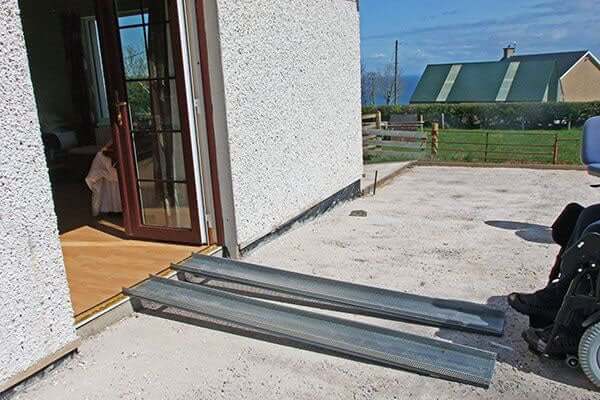
- Ramps: If possible, install ramps instead of stairs at entrances to make it easier for wheelchair users to enter and exit. Permanent or installed ramps come in three main materials including aluminum, wood, and concrete. The ADA requires that all business and public use wheelchair ramps adhere to a 1:12 slope ratio, meaning that for every inch of vertical rise there must be 12 rise. However, for residential purposes, a 2:12 ratio may be more feasible for space and gives is not too challenging for wheelchair users and cuts the length of a potential ramp in half.
- Thresholds: Ensure that thresholds are flush or beveled to prevent tripping. Threshold or transition ramps can be accommodated for as small as ½". Most of these are made with a rubber or metal material.
2. Stairs:
- Stair Lifts or Elevators: Install stair lifts or elevators to provide access to multiple floors for individuals who cannot use stairs. It's important that the stair lift carriage extends past the top and bottom steps to allow for safe transfers.
- Handrails: Install handrails on both sides of staircases for stability. It's important that individuals with weakness on one side have stability with their stronger side when ascending and descending stairs.
- Gentle Slope: If stairs are necessary, consider a gentler slope with wider steps to make it easier for people with mobility aids. A standard step height is between 7-7 ½". Some older homes or homes where the foundation has shifted may have steps up to 9-10", which is much steeper to navigate.
- Lighting: Lighting along stairs or above stairs is important for proper visual awareness.
- Evacuation Chair: An evacuation chair or stair climber may be an option for individuals to safely access the upper or lower levels of their home if a stair lift is not possible due to structural reasons. This chair allows caregivers to guide individuals up and down the stairs safely.
3. Floors:
- Smooth Flooring: Choose flooring materials that are smooth and slip-resistant, such as hardwood, tile, or low-pile carpet. Having the same flooring throughout the home eliminates the need for transition strips which can be a tripping hazard. Carpeting can make navigating a wheelchair or Hoyer lift difficult. The weight of these items will also wear carpeting over time.
-
No Rugs or Mats: Remove unnecessary throw rugs or mats, as they can be tripping hazards.
Color Contrast: Ensure good color contrast between the floor and walls to help individuals with visual impairments identify changes in the floor surface.
4. Hallways:
- Width: Design hallways to be wide enough for easy passage of wheelchairs and other mobility aids. Aim for a minimum width of 36 inches. This can prevent wheelchair damage to corners and walls due to having a wider turn.
- Material: Wainscoting, wall guards, or wall paneling can help protect drywall from wheelchair damage.
- Obstacle-Free: Keep hallways clear of furniture, clutter, and other obstacles.
- Good Lighting: Ensure proper lighting to help those with visual impairments navigate safely.
- Smooth Transitions: Ensure smooth transitions between different flooring materials to prevent tripping.
5. Doors:
- Wider Doorways: Ensure that doorways are wide enough to accommodate wheelchairs. A minimum of 32 inches is recommended, with a maximum of 36 inches allowing for a wider turn radius. About an inch can be added to a doorway with the use of swing-away or offset hinges.
- Kickplates: Kickplates may be beneficial for exterior doors to prevent wheelchair damage.
- Lever Handles: Install lever-style door handles instead of knobs, which are easier to operate for individuals with limited hand strength or dexterity.
6. Technology:
- Smart Home Features: Consider incorporating smart home features, such as voice-activated controls, to enhance accessibility.
- Occupational Therapists: Consult with occupational therapists or accessibility experts to ensure that your modifications are effective and meet individual needs.
7. Consult with Professionals:
- Smart Home Features: Consider incorporating smart home features, such as voice-activated controls, to enhance accessibility.
The Benefits of Creating an Accessible Home
By incorporating these features, you can create a more accessible and inclusive home environment for individuals with varying levels of mobility. It's essential to consider the specific needs of the individuals who will be using the space and to seek professional advice when needed.