What Is Vestibular Input?
Vestibular input refers to sensory information related to balance, positioning of body in space, and movement that is processed by the vestibular system, located in the inner ear. This sensory system helps individuals maintain their balance and coordinate movements. It contributes to balance and posture. Vestibular input impacts our daily functioning starting from very young and includes various daily activities, including walking, sitting upright, riding a bike, or playing sports.
How Can Vestibular Motion Affect Those With Over or Under-Responsive Systems?
There are three ways our brains and bodies can react to sensory input: under-responsive, over-responsive, and just right. An example of an over-responsive vestibular system is the child who perceives too much movement information and avoids movement.
Over-responsive children could have aversions to certain activities. For example, they may avoid participation in PE, sports, sitting on the toilet, lying back on the changing table, or playing on the playground. They may experience frequent headaches or motion sickness. They will particularly dislike fast movements like being pushed or pulled on a riding toy and backwards movements or spinning movements like on a swing. They may also dislike sudden changes in movement such as avoiding chasing games or running activities. These children may also refuse to use equipment or engage in movement which involves their feet being off the ground as they experience gravitational insecurity. Using equipment such as climbing rock walls and ropes may increase anxiety, causing them to feel dizzy and nauseous.
Over-responsive children may be more likely to participate in activities that involve up/down movements like jumping or walking, which is easier to tolerate and process than forward/backward or spinning movements. They would benefit from activities where their feet are planted on the ground or have a surface that provides stability and support. This will help provide body awareness and may include a toilet seat that has a footrest or sitting on a ball that is small enough for their feet to touch. This child may benefit from a trampoline with a handle to provide additional support and stability while jumping. Obstacle courses, like jumping along mats, crawling through a tunnel, climbing over a bench, and scooter board activities, can help continue working on strength and improve motor planning while also allowing the child to have control over speed and direction of movement.
On the other hand, an under-responsive vestibular system is a child who is not processing enough movement information and, therefore, seeks movement. They may often seem "on the go," have difficulty sitting in their chair, seem impulsive during play, and become disengaged or tired after sitting for a long time. This may indicate that they need movement breaks to stimulate and re-engage the brain.
Furthermore, under-responsive children may benefit from sensory supports or seating alternatives to meet their movement needs, such as a move-n-sit cushion, sitting on a ball chair or wobble stool, or having TheraBand or wiggle cushion under their feet. An Occupational Therapist can help suggest sensory diets or strategies to help meet a child's movement needs more appropriately depending on when the child needs the break, how long the break should last, how often it should occur, and what tools or activities would be most appropriate to participate in.
Teaching the language to understand the difference between fast and slow movements can help with impulsivity. Activities such as red light-green light or freeze dance are great ways to work on following these directions. Using a visual program to identify energy levels like How Does Your Engine Run or Zones of Regulation may also be beneficial for when students are running too high or too low.
How To Help Your Child Achieve Optimal Comfort and Balance
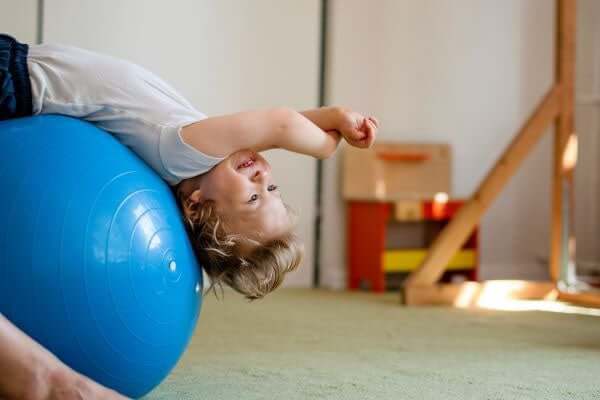
Do you often find your child upside down on the playground or on the couch? There are natural benefits to this position, including calming and regulating the nervous system, providing vestibular input, obtaining both calming and alerting input and helping to avoid sensory overload and consequent meltdowns by meeting those regulation needs. Being upside down can also ease back pain and promote spinal health with the use of gravity. Just a short time spent upside down can provide benefits that last for hours. Activities like yoga, rolling on an exercise ball, monkey bars, and activities like gymnastics can provide many upside-down opportunities.
The Importance of Professional Assistance and Parental Guidance
Occupational therapists can work with parents and teachers to help children receive the right type and amount of vestibular input to address these challenges effectively. It's important to closely monitor these activities because there can be a visceral response to input, such as hanging upside down or spinning.