Table of Contents
- Quick guide: 8 therapist-recommended special needs strollers for older children
- How we chose the therapist-recommended strollers for older kids
- The 8 therapist-recommended strollers for older children and teens
- 1. Convaid Cruiser: Umbrella-fold for daily school transport
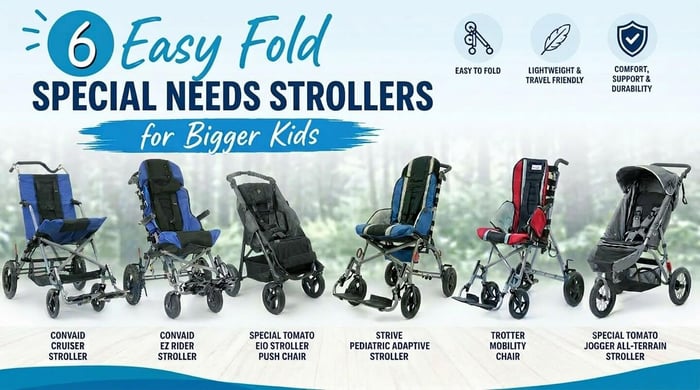
- 2. Special Tomato EIO Push Chair: Lightweight for caregivers on the go
- 3. Special Tomato Jogger: All-terrain for outdoor therapy
- 4. Thomashilfen Swifty2: Full recline for extended comfort
- 5. Convaid Rodeo: Tilt-in-space for teens
- 6. Adaptive Star Axiom Lassen 4: High capacity for larger teens
- 7. Trotter Mobility Chair: Adjustable growth frame
- 8. Strive Pediatric Adaptive Stroller: Lightweight mobility support with advanced positioning options
- Comparison table: Therapist-recommended special needs strollers for older kids
- What weight capacity do special needs strollers for teens need?
- How do therapists recommend special needs strollers for theme park visits?
- Why eSpecial Needs offers the best strollers for older children
- FAQs about therapist-recommended special needs strollers for older kids
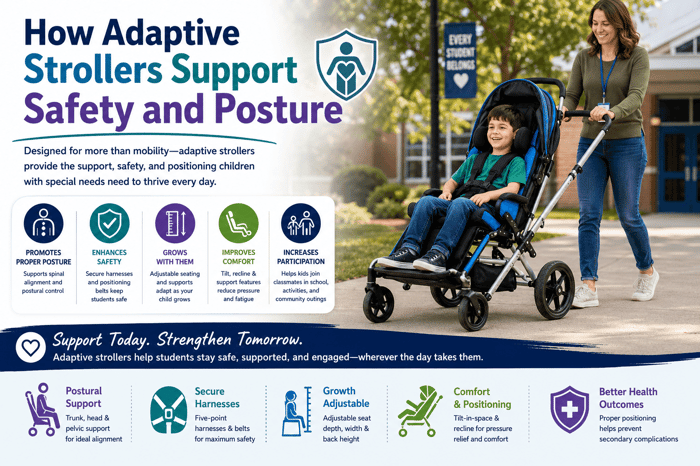
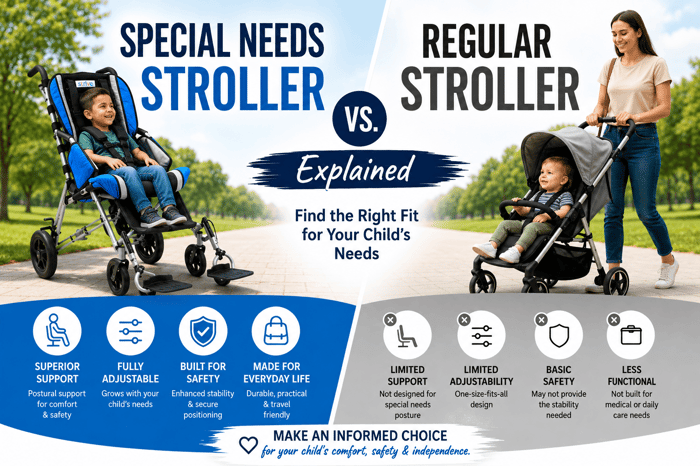
Finding special needs strollers for an older child or teen can feel overwhelming. Most adaptive strollers on the market focus on younger children, leaving families of bigger kids with fewer options that still offer proper positioning and support.
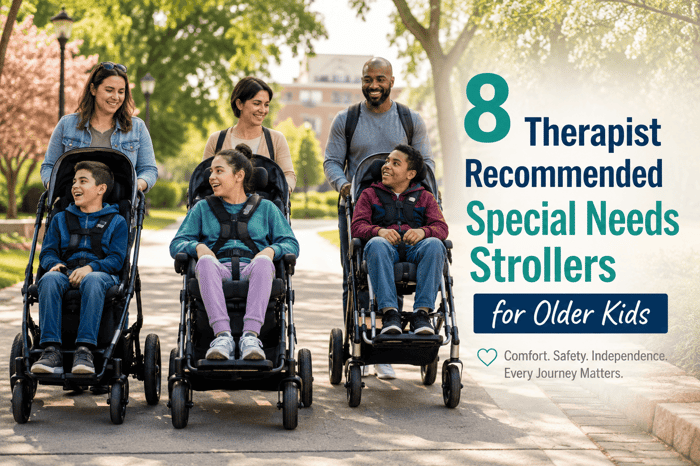
This guide ranks eight therapist-recommended special needs strollers based on criteria that matter most to occupational therapists and physical therapists. eSpecial Needs offers an extensive selection of these adaptive strollers, making it easier for you to find mobility solutions that support your child's comfort and independence.
Below, you'll find detailed breakdowns of each adaptive stroller, including callouts for theme parks, lightweight travel, easy folding, and comfort for bigger kids.
Quick guide: 8 therapist-recommended special needs strollers for older children
- Convaid Cruiser: Umbrella-fold design with 250 lb capacity for school and daily transport
- Special Tomato EIO Push Chair: Lightweight option with mild-to-moderate positioning for ages up to preadolescence
- Special Tomato Jogger: All-terrain capability for outdoor adventures and therapy sessions
- Thomashilfen Swifty 2: Full recline to 180° for children needing lying positioning
- Convaid Rodeo: Tilt-in-space design for teens and young adults up to 170 lbs
- Adaptive Star Axiom Lassen 4: High weight capacity reaching 200 lbs for larger teens
- Trotter Mobility Chair: Adjustable frame that grows with your child up to 250 lbs
- Circle Specialty Strive Stroller: Lightweight, tilt-in-space, easy-fold in 4 sizes
How we chose the therapist-recommended strollers for older kids
Occupational therapists and physical therapists evaluate adaptive strollers based on specific clinical criteria. We applied these same professional standards when selecting special needs strollers for this guide, focusing on features that directly affect your child's comfort and safety during daily activities.
- Weight capacity for older children: Each stroller on this list supports at least 90 lbs, with several accommodating teens and adults up to 250 lbs.
- Positioning support options: We prioritized strollers with adjustable tilt, recline, and trunk support to help maintain proper posture during longer outings.
- Folding and transport ease: Caregivers need strollers that fold compactly for car trunks, airplane travel, and tight storage spaces.
- Terrain versatility: From smooth mall floors to theme park paths, these strollers handle various surfaces without compromising rider comfort.
- Safety certifications: WC19 crash-tested models are noted for families who need school bus or van transport capability.
- Durability for long-term use: Therapists recommend equipment that can last through years of daily use without frequent repairs.
The 8 therapist-recommended strollers for older children and teens
eSpecial Needs benefits
- Expert product selection: Every adaptive stroller in their collection has been vetted for quality, durability, and clinical appropriateness for children with special needs.
- Quote request service: Their specialists help you identify the right stroller based on your child's measurements, positioning needs, and lifestyle requirements.
- Strollers for all ages: Options range from pediatric sizes through adult strollers, supporting users as they grow.
- Positioning accessory availability: Head supports, trunk laterals, footrest options, and harness systems are available to customize your stroller.
- Price-match guarantee: You can shop with confidence knowing you're getting competitive pricing on quality equipment.
eSpecial Needs pros and cons
1. Convaid Cruiser: Umbrella-fold for daily school transport
The Convaid Cruiser features a 30° fixed tilt that helps position your child's upper body for improved head control and breathing. Its Self-Tensio seating system creates a hammock-like support that promotes neutral pelvic alignment during extended sitting.
Available in seat widths from 10 to 18 inches, the Cruiser accommodates users weighing up to 250 lbs. The umbrella-style fold makes it one of the more compact options when collapsed, fitting easily into car trunks. A WC19 transit option allows for safe school bus transport.
Convaid Cruiser features
- Self-Tensio seating: The flexible mesh support adjusts automatically as the frame opens, reducing pressure points.
- Five years of growth: Seat depth extension accommodates your child as they grow taller.
- Quick-release rear wheels: Removes easily for more compact storage and transport.
Convaid Cruiser pros and cons
Pros:
- Compact umbrella fold fits in smaller vehicle trunks
- Transit-ready option meets WC19 crash-test standards
- Made in the USA with lifetime frame guarantee
Cons:
- Fixed 30° tilt does not adjust for children needing variable positioning
- Scout all-terrain version adds weight to the base unit
- Positioning accessories require separate purchase
2. Special Tomato EIO Push Chair: Lightweight for caregivers on the go
The Special Tomato EIO weighs only 22 lbs while supporting children up to 90 lbs. Its seat back reclines from 25° to 75°, giving you flexibility for rest periods during long outings. The stroller includes twelve features as standard, including padded laterals, a head pillow, and an adjustable leg rest.
Therapists often recommend the EIO for children needing mild-to-moderate positioning support. The seat dimensions fit children through preadolescence, making it a good choice for families who want a stroller that works for theme park days and everyday errands alike.
Special Tomato EIO features
- No-remove wheel fold: The stroller folds without detaching wheels, speeding up transitions.
- Swivel wheel locks: Front wheels lock for straight-line pushing on uneven surfaces.
- Shopping basket: Built-in storage holds supplies for day trips.
Special Tomato EIO pros and cons
Pros:
- Lightweight frame reduces caregiver fatigue during pushing
- Standard accessories included rather than sold separately
- Removable canopy protects from sun during outdoor activities
Cons:
- 90 lb weight limit excludes larger teens
- Does not include WC19 transit certification
- Seat dimensions may not fit children over 8 years depending on size
3. Special Tomato Jogger: All-terrain for outdoor therapy
The Special Tomato Jogger features a three-wheel design with pneumatic tires that handle grass, gravel, and park trails. The stroller supports children up to 100 lbs while maintaining a relatively light frame for a jogging stroller. Therapists recommend it for families who want to include their child in active outdoor routines.
The recline function allows your child to rest during longer walks or runs. An adjustable handlebar accommodates caregivers of different heights, reducing strain during exercise sessions.
Special Tomato Jogger features
- Pneumatic tires: Air-filled wheels absorb bumps on uneven terrain.
- Hand brake: Provides controlled stopping during downhill sections.
- Recline adjustment: Seat angles from upright to reclined positions.
Special Tomato Jogger pros and cons
Pros:
- Handles outdoor trails that standard strollers cannot navigate
- Allows caregivers to maintain fitness routines with their child
- Suspension system reduces jarring from rough surfaces
Cons:
- Three-wheel design is wider than umbrella-fold strollers
- Pneumatic tires require occasional inflation maintenance
- Not designed for bus or van transport tie-downs
4. Thomashilfen Swifty2: Full recline for extended comfort
The Thomashilfen Swifty 2 stroller offers 180° recline capability, allowing your child to lie flat when needed. Its Balance Safety System automatically shifts the center of gravity as the seat position changes, preventing tip-over risk. The soft suspension absorbs road vibrations during transport.
Available in two sizes, the Swifty 2 stroller accommodates children through adolescence with seat capacities up to 88 lbs. The seat can face forward or rearward, helpful for younger children who benefit from face-to-face interaction during outings.
Thomashilfen Swifty 2 features
- 180° recline: Creates a lying surface for children who need positioning breaks.
- Single-lever tilt: One-hand adjustment changes seat angle quickly.
- Reversible seat: Faces forward or toward the caregiver without tools.
Thomashilfen Swifty 2 pros and cons
Pros:
- Full recline option supports children with complex positioning needs
- Automatic stability system maintains balance in all seat positions
- Cushioned seat covers are removable and washable
Cons:
- Weight capacity of 88 lbs limits use for larger teens
- Two-piece design (seat and chassis) adds complexity to transport
- Larger footprint than compact umbrella-fold strollers
5. Convaid Rodeo: Tilt-in-space for teens
The Convaid Rodeo combines tilt-in-space functionality with full recline capability for teens and young adults up to 170 lbs. Its larger frame dimensions accommodate older users who have outgrown pediatric-sized strollers. The Rodeo folds compactly despite its larger size.
Therapists recommend tilt-in-space strollers for users who need pressure relief throughout the day. The Rodeo's transit-ready configuration meets WC19 standards for school bus and accessible van transport.
Convaid Rodeo features
- Tilt and recline: Independent adjustments address different positioning needs.
- Transit-ready: WC19 certification allows for safe vehicle transport.
- Compact fold: Reduces to manageable size despite larger frame.
Convaid Rodeo pros and cons
Pros:
- Accommodates teens who have outgrown smaller adaptive strollers
- Transit option allows daily school bus use
- Tilt function helps with pressure management during long sitting periods
Cons:
- Heavier than pediatric-sized models due to larger frame
- 170 lb capacity is lower than some competing adult-sized options
- Custom options extend manufacturing lead time
6. Adaptive Star Axiom Lassen 4: High capacity for larger teens
The Adaptive Star Axiom Lassen supports users up to 200 lbs with seat dimensions designed for older children and teens. Its high backrest measures over 63 cm, providing support for taller users. The ergonomic footrest positions at 43 cm from the seat, ensuring proper leg support.
Disney and Universal theme parks accept the Axiom Lassen's dimensions, making it a popular choice for family vacations. The stroller handles park terrain while keeping your teen comfortable throughout long days.
Adaptive Star Axiom Lassen features
- High weight capacity: 200 lb limit accommodates larger teens and young adults.
- Theme park compatible: Meets size requirements for major Orlando parks.
- Spacious seat: 37.5 cm wide by 40.6 cm deep seat supports bigger frames.
Adaptive Star Axiom Lassen pros and cons
Pros:
- Supports older teens who exceed typical stroller weight limits
- Dimensions work within theme park stroller policies
- High backrest supports taller users properly
Cons:
- Larger size requires more storage space when not in use
- Heavier frame weight than lightweight travel strollers
- May not fit in smaller vehicle trunks
7. Trotter Mobility Chair: Adjustable growth frame
The Trotter Mobility Chair adjusts in seat width, depth, and back height to grow with your child over several years. Its 250 lb weight capacity makes it suitable from childhood through adulthood for many users. The lightweight aluminum frame keeps the overall weight manageable despite its high capacity.
Families appreciate the Trotter's foldable design and its availability in multiple sizes. The stroller works for daily activities, school transport, and community outings.
Trotter Mobility Chair features
- Growth adjustability: Seat dimensions expand as your child grows.
- High capacity: 250 lb limit serves users into adulthood.
- Foldable frame: Collapses for transport and storage.
Trotter Mobility Chair pros and cons
Pros:
- Long-term use potential reduces need for replacement strollers
- High weight capacity serves larger users
- Multiple size options available for different starting points
Cons:
- Requires adjustment as child grows rather than automatic sizing
- Positioning options are more basic than rehab-focused strollers
- Some configurations require additional accessories
8. Strive Pediatric Adaptive Stroller: Lightweight mobility support with advanced positioning options
The Strive Pediatric Adaptive Stroller combines lightweight portability with rehab-style positioning support for children and teens with mobility challenges. Available in multiple sizes with weight capacities up to 250 lbs, the Strive is designed to grow with your child while remaining easy for caregivers to transport and fold for travel.
Its adjustable seat depth, tension-adjustable back, and 20-degree tilt-in-space feature help support posture, comfort, and pressure relief during longer outings. The stroller folds easily for storage in vehicles or at home, while the five-point harness and adjustable footrest provide secure positioning throughout the day.
Strive Pediatric Adaptive Stroller features
Tilt-in-space seating: 20-degree tilt helps improve comfort and positioning support.
Adjustable seat depth: Accommodates growth and changing seating needs.
Lightweight folding frame: Easy transport and storage for caregivers.
Strive Pediatric Adaptive Stroller pros and cons
Pros:
Higher weight capacities accommodate older children and teens.
Adjustable positioning features provide more support than basic adaptive strollers.
Lightweight aluminum frame folds for easier transportation and storage.
Cons:
Heavier than standard umbrella strollers at 33–36 lbs depending on size.
Larger frame may require more vehicle storage space.
Optional accessories for advanced positioning may increase overall cost.
Comparison table: Therapist-recommended special needs strollers for older kids
| Stroller | Weight Capacity | Fold Type | WC19 Transit |
|---|---|---|---|
| Convaid Cruiser | 250 lbs | Umbrella | ✓ |
| Special Tomato EIO | 90 lbs | Umbrella | ✗ |
| Special Tomato Jogger | 100 lbs | Standard | ✗ |
| Thomashilfen EASyS | 88 lbs | Separating | ✗ |
| Convaid Rodeo | 170 lbs | Umbrella | ✓ |
| Axiom Lassen | 200 lbs | Standard | ✗ |
| Trotter | 250 lbs | Foldable | ✗ |
| Circle Specialty Strive | 250 lbs | Foldable | ✗ |
What weight capacity do special needs strollers for teens need?
Most teens with special needs require strollers rated for at least 100 to 150 lbs. Larger teens and young adults may need models supporting 200 lbs or more. Checking the weight capacity before purchasing prevents the need for early replacement.
Therapists recommend choosing a stroller with capacity above your child's current weight. This accounts for growth and ensures the frame handles the load safely over several years of use.
eSpecial Needs carries strollers across all weight capacity ranges, from pediatric models through adult-rated equipment. Their specialists can help match your child's current size and projected growth to the right stroller frame.
How do therapists recommend special needs strollers for theme park visits?
Theme parks require special needs strollers that meet specific size dimensions while still supporting your child's positioning needs. Most major parks limit stroller width to 31 inches and length to 52 inches. Confirming measurements before your trip prevents issues at park entry gates.
Therapists also recommend adaptive strollers with good suspension and comfortable seating for all-day park visits. Standing in lines and navigating crowds puts extra strain on both rider and caregiver. A well-designed stroller makes long park days more manageable for everyone.
Consider terrain capability when choosing a park stroller. Pneumatic tires handle outdoor surfaces better than hard plastic wheels, reducing jarring for your child during transport between attractions.
Why eSpecial Needs offers the best strollers for older children
eSpecial Needs delivers expert guidance that helps you find the right adaptive stroller for your child's specific needs. Their curated selection includes options from multiple manufacturers, giving you access to the full range of features and price points available in the market.
Unlike general retailers, eSpecial Needs understands the clinical criteria that occupational therapists and physical therapists use when recommending mobility equipment. This expertise translates into better product recommendations and fewer costly mistakes. When you shop with eSpecial Needs, you're getting the benefit of specialized knowledge alongside quality products.
Ready to find the right special needs strollers for your older child or teen? Browse the full stroller collection at eSpecial Needs or request a quote from their team of special needs professionals who can recommend equipment matched to your child's measurements and daily activities.
FAQs about therapist-recommended special needs strollers for older kids
What is the difference between a special needs stroller and a pediatric wheelchair?
Special needs strollers is designed for caregiver pushing and prioritizes compact folding and transport ease. A pediatric wheelchair typically allows for self-propulsion and offers more granular seating adjustments.
Many families prefer special needs strollers for community outings because of their lighter weight and simpler operation. eSpecial Needs carries both strollers and wheelchairs to match different mobility requirements.
Are adaptive strollers covered by insurance?
Many adaptive strollers qualify for coverage through Medicaid, Medicaid waivers, or private insurance with a doctor's prescription. A letter of medical necessity from your child's therapist typically strengthens approval chances.
eSpecial Needs can help you understand what documentation you may need for insurance submissions. Coverage varies by state and insurance provider, so confirming with your plan before purchasing is recommended.
What does WC19 transit certification mean?
WC19 certification indicates the stroller has been crash-tested and approved for use with vehicle tie-down systems on school buses and accessible vans. Strollers without this certification should not be used as vehicle seating.
If your child rides a school bus daily, choosing a WC19-certified stroller like the Convaid Cruiser or Rodeo ensures safe transport. eSpecial Needs identifies transit-ready models in their product descriptions.
How do I know what size stroller my child needs?
Proper stroller sizing requires measurements of hip width, seat depth, and lower leg length taken while your child is seated. Matching these measurements to stroller specifications ensures comfortable positioning.
eSpecial Needs offers quote request services where their specialists help identify the right fit based on your child's specific measurements and positioning needs.
Can special needs strollers be used at Disney World and other theme parks?
Yes, most special needs strollers meet theme park size requirements. Disney parks allow strollers up to 31 inches wide and 52 inches long. Checking your specific stroller's dimensions against park policies before your trip prevents entry issues.
The Adaptive Star Axiom Lassen and other models in the eSpecial Needs collection are specifically noted for theme park compatibility, making family vacations more accessible.
Special Tomato EIO Stroller Push Chair

$898.75
$1,874.59
The Special Tomato EIO Stroller Push Chair is a lightweight adaptive stroller designed to provide comfortable mobility and positioning support from early intervention through preadolescence. Built for children who need more support than a standard stroller, the EIO combines everyday… read more