Table of Contents
- How we chose the best special needs strollers for schools and families
- What makes special needs strollers different from standard strollers?
- How do you choose the right adaptive stroller for a student?
- Why eSpecial Needs is the best source for special needs strollers
- 10 Daily-Life Wins of Special Needs Strollers in 2026
- 1. Easier Community Outings
- 2. Better Positioning and Support
- 3. Reduced Caregiver Strain
- 4. Increased Safety in Busy Environments
- 5. Improved Participation in Family Activities
- 6. Easier Transportation and Travel
- 7. Sensory Regulation Support
- 8. Greater Independence for Older Kids
- 9. Better Outdoor Accessibility
- 10. More Confidence for Caregivers
- Choosing the Right Special Needs Stroller
- FAQs
Getting children with mobility challenges out into the world—whether for school field trips, therapy appointments, or weekend adventures—requires equipment that does more than standard strollers can offer. eSpecial Needs offers special needs strollers designed specifically for families, educators, and therapists who need reliable positioning support and everyday convenience in one package.
In this article, you'll find 10 specific ways adaptive strollers solve real mobility problems better than standard options. We'll also compare top sources for special needs strollers so you can make a confident decision for your child or student.
How we chose the best special needs strollers for schools and families
Finding the right adaptive stroller takes more than browsing a product catalog. We focused on the features that matter most to K-12 educators, school-based therapists, and families who need equipment that works in real-world settings.
- Postural support and positioning: Does the stroller help maintain healthy alignment during school days and outings?
- Terrain versatility: Can it handle hallways, playgrounds, sidewalks, and uneven outdoor surfaces?
- Foldability and transport: Will it fit in a car trunk or school bus storage area?
- Safety features: Does it include secure harnesses, wheel locks, and stable frames?
- Growth adaptability: Can the stroller adjust as a child grows to extend its useful life?
- Caregiver ease of use: Is it lightweight enough for teachers, therapists, and parents to manage independently?
What makes special needs strollers different from standard strollers?
Standard strollers are designed for typically developing children who can sit upright independently. They usually lack adjustable positioning features, secure harness systems, and the durability needed for daily use with children who have mobility challenges.
Special needs strollers include features like adjustable seat angles, tilt-in-space positioning, five-point harness systems, and frames built to accommodate higher weight capacities. Many models also include mounting points for medical equipment such as oxygen tanks or feeding pumps.
For school settings, adaptive strollers offer additional benefits:
- Positioning that supports attention and engagement during activities
- Frames designed to fit through standard doorways and hallways
- Foldable designs that store in classrooms or vehicle compartments
- Safety certifications for school bus transport
How do you choose the right adaptive stroller for a student?
Selecting the right stroller starts with understanding the student's individual positioning needs rather than focusing only on diagnosis. Two children with similar conditions may require very different levels of support based on their trunk control, sensory sensitivities, and daily activities.
Key questions to consider include:
- How much trunk and head support does the student need while seated?
- Will the stroller be used primarily indoors, outdoors, or both?
- Does the student need to be transported in the stroller on a school bus?
- How easily can caregivers fold and lift the stroller?
Working with an occupational or physical therapist can help identify specific measurements and features. Many schools include stroller recommendations in a student's Individualized Education Program (IEP) as part of assistive technology planning.
Why eSpecial Needs is the best source for special needs strollers
eSpecial Needs understands that choosing a stroller for a child with mobility challenges is about more than checking off a product list. The team brings expertise in adaptive equipment selection, with a focus on helping schools, therapists, and families find solutions that work for real-life situations.
Unlike broader medical equipment catalogs, eSpecial Needs curates products specifically for the special needs community. This means you'll find strollers selected for their positioning features, durability, and everyday usability, not just generic product descriptions. eSpecial Needs makes the selection process simpler by matching you with products that fit your specific situation.
Ready to find the right adaptive stroller for your child or student? Browse the eSpecial Needs stroller collection to explore options and request a quote.
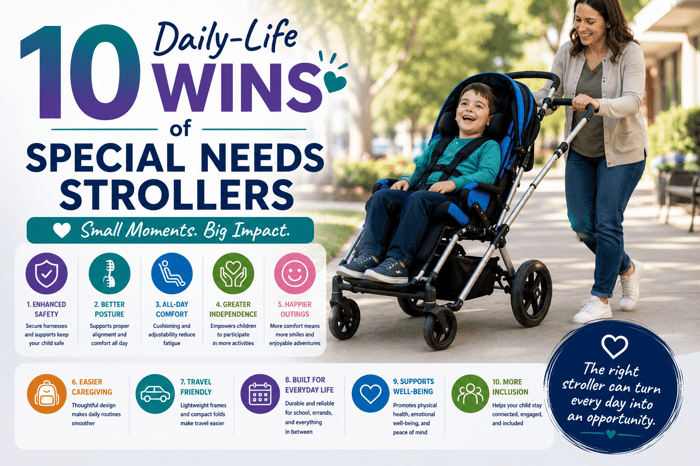
10 Daily-Life Wins of Special Needs Strollers in 2026
1. Easier Community Outings
Trips to stores, parks, family gatherings, and community events become more manageable with adaptive strollers designed for older children and teens.
Many models offer:
- Smooth maneuverability
- Comfortable seating
- Larger weight capacities
- Better support for long outings
Families often find they can stay out longer because their child remains comfortable and properly positioned throughout the day.
2. Better Positioning and Support
Children with physical or developmental disabilities may need additional trunk, head, or leg support during daily activities.
Many special needs strollers include:
- Adjustable tilt and recline
- Lateral supports
- Headrests
- Foot positioning systems
- Secure harnesses
These features can help improve comfort and reduce fatigue during extended outings.
3. Reduced Caregiver Strain
Transporting older children can place physical strain on caregivers. Adaptive strollers are designed to make daily transportation easier with:
- Lightweight frames
- Ergonomic handles
- Improved suspension systems
- Easier steering and control
Many caregivers appreciate how these features simplify errands, appointments, and daily routines.
4. Increased Safety in Busy Environments
Crowded or overstimulating places can be challenging for children with sensory sensitivities or mobility limitations.
A supportive adaptive stroller helps create a secure seating environment in busy settings like:
- Airports
- Shopping centers
- School events
- Medical appointments
- Community activities
Positioning systems and safety harnesses also provide additional peace of mind for caregivers.
5. Improved Participation in Family Activities
Special needs strollers help children participate more comfortably in everyday family life.
Whether attending a sibling’s sporting event, taking a walk, or going on a family outing, adaptive strollers can help children stay involved without becoming overly fatigued.
Many models are designed for both indoor and outdoor use, making them practical for a variety of activities.
6. Easier Transportation and Travel
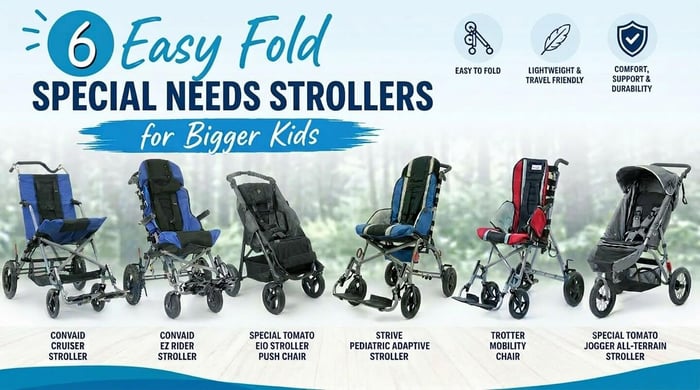
Many adaptive strollers in 2026 are designed with portability in mind.
Helpful features may include:
- Compact folding systems
- Lightweight construction
- Travel-friendly sizing
- Easier vehicle loading
These improvements can make transportation simpler for therapy visits, school, vacations, and everyday travel.
7. Sensory Regulation Support
For some children, adaptive strollers provide a calming and predictable environment during overwhelming situations.
Features such as:
- Deep seating
- Recline options
- Sun canopies
- Positioning supports
can help children remain more comfortable and regulated during outings.
8. Greater Independence for Older Kids
Finding mobility equipment for larger children and teens can sometimes be difficult. Many modern special needs strollers are now designed with higher weight capacities and larger seating options.
This allows older children to participate more comfortably in:
- School activities
- Community outings
- Outdoor recreation
- Family travel
without becoming overly tired.
9. Better Outdoor Accessibility
All-terrain adaptive strollers help families spend more time outdoors by handling surfaces like:
- Grass
- Gravel
- Uneven sidewalks
- Trails
- Parks
Larger wheels and improved suspension systems can make outdoor activities more accessible and enjoyable.
10. More Confidence for Caregivers
One of the biggest benefits of a special needs stroller is the added confidence it gives caregivers during daily routines.
When children are properly supported and comfortable, families often feel more prepared to:
- Attend community events
- Stay active
- Travel more comfortably
- Participate in family activities
The right adaptive stroller can help make everyday life more manageable for the entire family.
Special Tomato Jogger All Terrain Stroller

$1,018.25
$2,124.14
The Special Tomato Jogger All Terrain Stroller is a lightweight adaptive pushchair designed for children who need reliable mobility support without sacrificing comfort, positioning, or maneuverability. Built with a super-light aluminum frame, pneumatic tires, rear suspension, and a reclining padded… read more
Choosing the Right Special Needs Stroller
When selecting an adaptive stroller, families often consider:
- Weight capacity
- Foldability
- Positioning support
- Transportation needs
- Indoor or outdoor use
- Long-term growth accommodations
Occupational therapists, physical therapists, and mobility specialists can also help recommend features based on a child’s individual needs.
FAQs
What age can a child use a special needs stroller?
Special needs strollers are available for children from infancy through adulthood. Many models accommodate users up to 200 pounds or more, making them useful well beyond the age when standard strollers become impractical. eSpecial Needs carries strollers sized for both pediatric and adult users.
Are special needs strollers safe for school bus transport?
Many adaptive strollers include WC19 crash-tested tie-down systems that meet school bus safety requirements. When ordering, look for models that specify transit compatibility. eSpecial Needs product listings include this information to help you select equipment approved for student transportation.
How much do special needs strollers cost?
Adaptive stroller prices vary based on features, brand, and customization options. Insurance, school district funding, and grant programs may help offset costs. Contact eSpecial Needs to request a quote and discuss available options for your budget and needs.
Can a regular stroller be modified for special needs?
Standard strollers typically cannot be modified to meet the positioning and safety requirements of children with mobility challenges. Purpose-built adaptive strollers include engineering features like reinforced frames, adjustable support systems, and secure harnesses that modifications cannot replicate.
What is the difference between a special needs stroller and a pediatric wheelchair?
Special needs strollers are designed to be pushed by a caregiver and prioritize compact folding and everyday portability. Pediatric wheelchairs often include self-propulsion features and more granular seating adjustments. eSpecial Needs carries both options to help you match equipment to individual mobility needs.