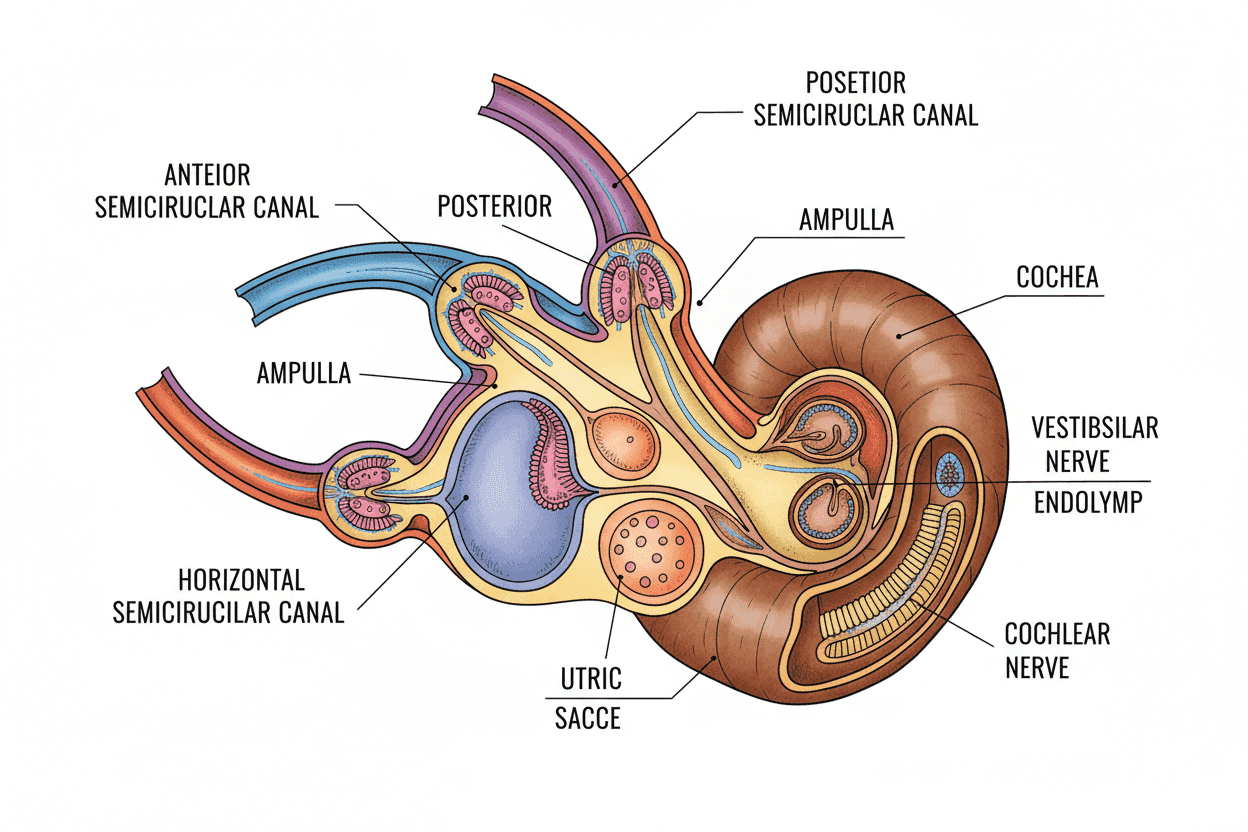
The vestibular system is an apparatus in the inner ear. The system consists of two structures in the bony labyrinth: utricle and saccule, which process linear (straight line) movements of the head. The system also includes the semi-circular canals, which process rotational movements of the head.
The vestibular system is the sensory system that provides our central nervous system (brain, eyes, spinal cord) information about our body's position in space. If you have ever wondered why a child may continue to push the boundaries of how high they're climbing or far they're jumping, it's because the larger the movements, the greater amount of vestibular feedback they are receiving.
The vestibular system also connects our proprioceptive, vision, and auditory systems. If the vestibular system is under-developed or there are processing problems, you might see difficulties with the following:
- Inability to sit still or often have their feet in their chair
- Poor handwriting
- Poor core strength (such as with sitting or often leaning on table for support)
- Frequent loss of balance or falls
- Poor motor planning (has difficulty with obstacle course or navigating playground equipment)
- Poor attention or frequently off task
- Fear or caution with movement activities
The vestibular system can be alerting (fast movements) which can help improve attention or calming (slow movements) which can improve self-soothing and focus. This system can impact people differently from those seeking the input, to those who avoid this input.
Goals for vestibular system therapy: to self-regulate, tolerate and accept typical environmental sensory input
Ultimately a therapist's goal is to find the "just right" challenge to either help an individual self-regulate or tolerate and accept typical sensory input in their environment. We never want to force a child to participate in a sensory activity, especially vestibular.
Some examples for strategies to help may include, starting movement where the child's feet can be grounded on the floor or giving them control of moving the object/toy. In addition, encourage expressing emotions like feeling scared or dizzy, and maintaining points of contact on shoulders or waist so they feel secure, may be helpful.
Slow linear movements (back and forth rocking or swinging) like putting a baby to sleep, is often a calming vestibular movement. Fast rotational movements like riding a roller coaster or doing a forward roll, is often an alerting vestibular movement. In a classroom setting or the workplace, taking a movement break, can help with difficulty focusing or participating on a task. This could include going for a walk, rocking in a chair, or doing yoga.
It's important to use extreme caution when utilizing vestibular activities as sensory overload could be triggered and negative reactions to vestibular movement may not be apparent for several hours after the activity is over. Sensory overload can appear as pupil dilation, sweaty palms, changes in respiration, and disorientation.
Below is a list of vestibular system improving activities that your child may enjoy participating in (with supervision).
Vestibular system improving activities that do not involve additional materials:
- Animal Walks
- Rolling
- Lying on your stomach to read a book or do a puzzle
- Walking on your tip toes
- Going up or down stairs
- Music and Movement (Head, Shoulders, Knees & Toes, Ring Around the Rosey, etc)
Vestibular system improving activities with products you can easily find or buy from eSpecial Needs:
- Swinging "“ back and forth, spinning, lying on stomach (try our fully carpeted platform swing)
- Sliding, on a slide at the park or with the motion provided by the Broda Tranquille Auto-Locking Glider (for smaller children check out the Broda Aspire Pediatric Glider).
- Scooter Boards or Sledding
- Balance Beams
- Trampolines (like our Launch Pad)
- Stepping Stones
- Tunnels (try our Tickle Me Geo Tunnel)
- Rock Wall (check out our Adjustable Indoor Climbing Wall)