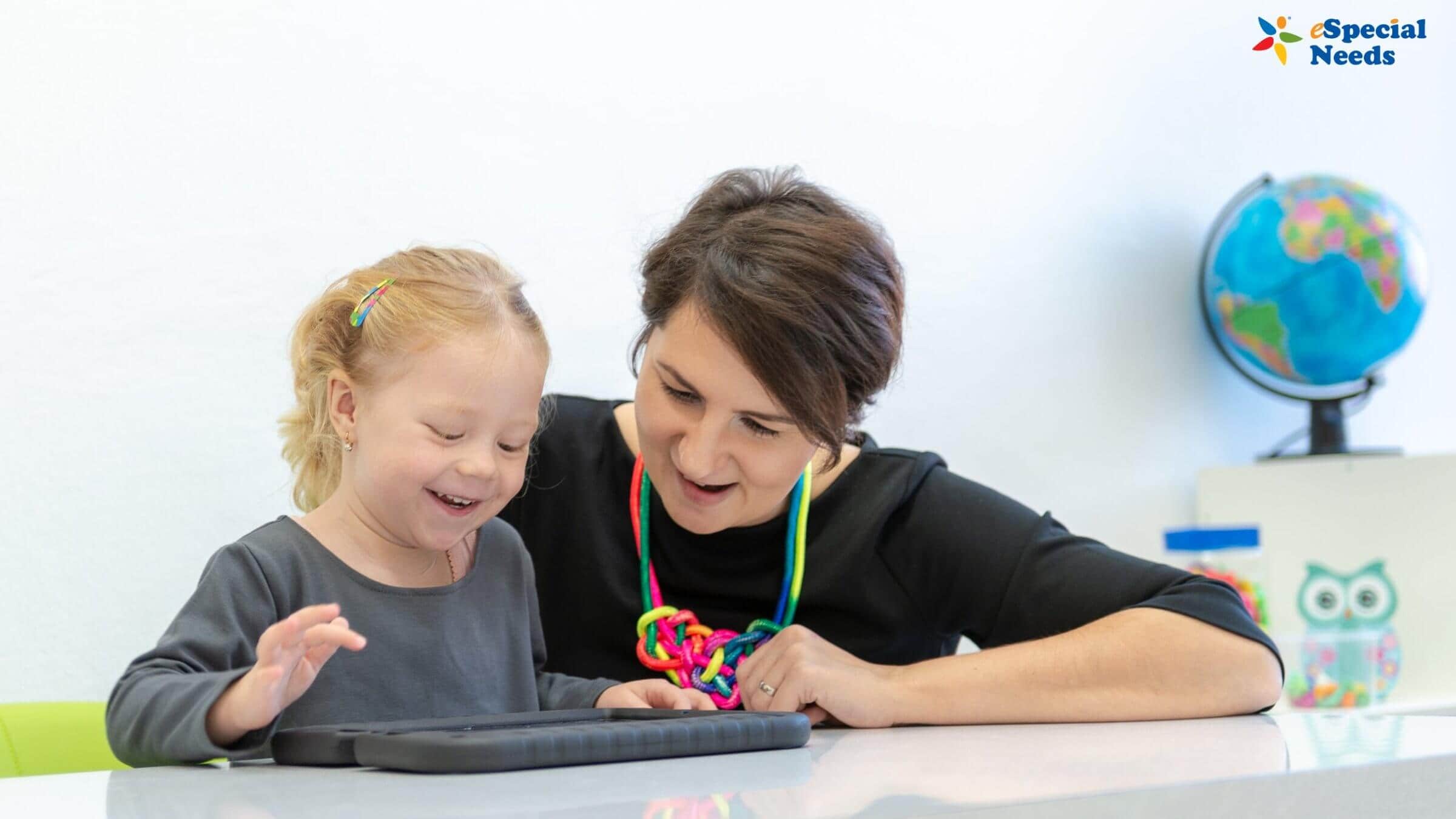
eSpecial Needs' occupational therapist Shannon Wylie, MOT, OTR/L gives tips to teachers about how to work best with your school's occupational therapist. She also expands on describing the roles of occupational therapists in the school setting, and how they can support special needs students and you (the teacher).
Helpful Tips for Educators About Working With Your School Occupational Therapist
Occupational Therapists help individuals with participation and independence with daily occupations. In the school setting a child's occupation of being a student can involve many different skills. These skills can include but are not limited to writing their letters, cutting with scissors, painting, playing with other children, washing their hands, eating snack, walking in the hallway, and sitting for an activity.
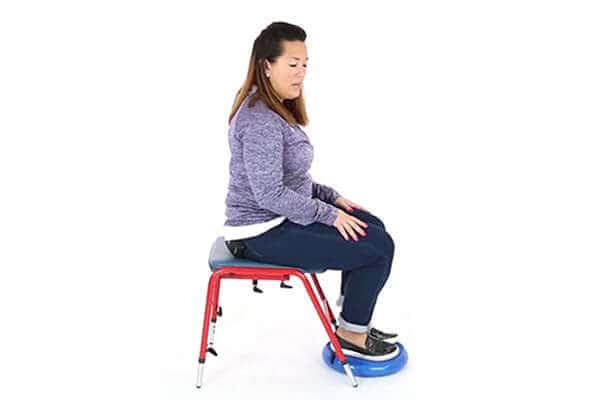
Just as every child learns differently, this also means that children may need different interventions or tools to help them be independent. It can be very difficult for some children to follow classroom expectations and they don't always "know better". For example a common expectation in the classroom yet not feasible for every child is sitting "criss-cross applesauce" during circle time. This sitting position can be challenging for kids who have poor core strength or coordination which then causes wiggly bodies or disengagement. Your OT may suggest lying on their stomach, sitting in a cube chair, or another alternative seat to help that child be more successful and participate instead of focusing on their sitting posture. Sitting in a standard chair can also be difficult for some BUT turning the chair around to sit backwards so the back of the chair is supporting them in front could be a good solution. Try having a backwards day in your room to see if you notice a difference with your students!
With sensory supports or consultations its important that the use of sensory strategies and tools be tied back to a function in the educational setting. Why does this child need a movement break? Maybe it because we want them to improve their attention at circle time. Why does this child need a chew necklace? Maybe to meet their oral seeking needs appropriately instead of putting other toys and objects in their mouth. Your school OT is aware that you as an educator have a lot on your plate and cannot always cater to one child in the moment. It is important that they (your OT) communicate and educate your paraprofessional staff who can dedicate that time to implementing strategies and tools in the moment for that student.
An OT can support you with adaptive skills and behaviors during the school day. Maybe you have students struggling with toileting routines. Your OT could help create a visual for sequencing the steps needed to wash hands or toilet, the coordination for your student to pull their pants up and down, and tolerate the sound of flushing the toilet or the feeling of soap when washing their hands. Lunch and snack time is also an area an OT can help your students with independence including social interactions (asking for more or help), opening food packages, expanding food variety, and cleaning up when finished.
You are probably most familiar with your school OT supporting your students with fine motor skills such as handwriting. Occupational therapists often assess the mechanics of handwriting including, strength, coordination, pencil grasp, letter formation, speed, pressure, and spatial awareness. Concerns with spelling, grammatical elements, or pragmatics are typically not within our scope of practice. Interventions for handwriting can range from adapted paper, pencil grips, fine motor box (to work on strength), etc.
The most important thing to have with your occupational therapist is communication. Ask for a schedule when the children in your room are being seen with understanding there may be some flexibility. Schedule a time to meet every couple of weeks to discuss what is working and what is not working with your students. Share visual examples of your students work or ask for an observation during a certain time of day.
Your school OT is there to support the child and you, the educator, to improve independence and success in the classroom.