Table of Contents
- Key Takeaways: Special Needs Stroller vs Regular Stroller
- What Is a Special Needs Stroller?
- How Do Special Needs Strollers Differ from Regular Strollers?
- What Safety Features Do Special Needs Strollers Include?
- Why Do Schools Choose Adaptive Strollers for Daily Mobility?
- What Positioning Options Help Children with Disabilities?
- How Do Adaptive Strollers Support Daily Living Activities?
- Are Special Needs Strollers Covered by Insurance?
- In Summary: Choosing the Right Mobility Solution for Your Students
- FAQs About Special Needs Strollers vs Regular Strollers
- What is the main difference between a special needs stroller and a regular stroller?
- Can a regular stroller work for a child with mild special needs?
- How long can a child use a special needs stroller?
- Are special needs strollers safe for school bus transportation?
- What terrain can special needs strollers handle?
Choosing the right special needs stroller for a child with special needs takes careful consideration—especially in school settings where daily routines, transfers, and outdoor activities all come into play. eSpecial Needs offers specialized strollers designed with adjustable positioning, enhanced safety supports, and accessibility features that standard strollers simply cannot match.
This article explains the core differences between special needs strollers and regular strollers. You'll learn about key positioning options, safety features, and practical applications for classrooms and community outings. As a result, you'll be better prepared to select the right mobility solution for your students or family members.
Key Takeaways: Special Needs Stroller vs Regular Stroller
- Special needs strollers include adjustable head, trunk, and pelvis supports that regular strollers lack for postural stability.
- Adaptive strollers feature tilt-in-space and recline functions to improve comfort and reduce pressure during extended use.
- Five-point harness systems and crash-tested frames make special needs strollers safer for students with mobility challenges.
- eSpecial Needs carries adaptive strollers designed to accommodate growth, medical equipment, and varied terrain for school and community use.
- Regular strollers are designed for typically developing children and do not address positioning or therapeutic support requirements.
What Is a Special Needs Stroller?
An adaptive stroller is a mobility device designed for children and adults who require more postural support, stability, and safety than a standard stroller can offer. According to KidsHealth, an adaptive stroller is a lightweight chair on wheels for kids ages 3 and older who need trunk or head support.
These strollers feature adjustable components that support the head, trunk, and pelvis. This customization helps maintain proper alignment and prevents secondary complications like muscle shortening or pressure sores.
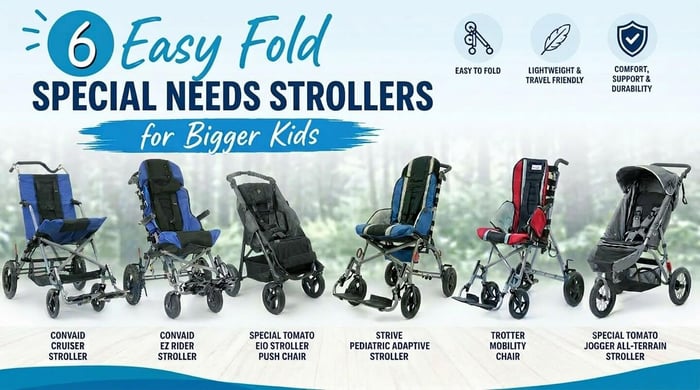
Special needs strollers are also built to handle various terrains. Features like shock absorption and flexible steering make them practical for school hallways, outdoor play areas, and field trips alike.
How Do Special Needs Strollers Differ from Regular Strollers?
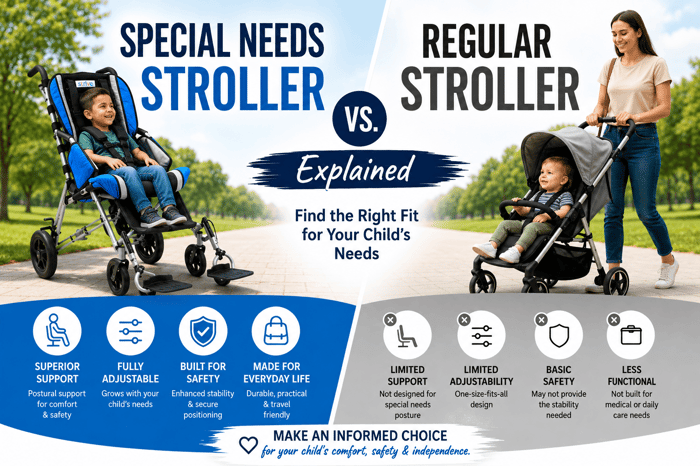
Regular strollers are designed for typically developing infants and toddlers who can sit upright independently. They lack the adjustable positioning systems, therapeutic supports, and safety features required for children with physical or developmental challenges.
Special needs strollers offer tilt-in-space and recline options that regular models do not. These functions help caregivers adjust the child's position for feeding, resting, or improved respiratory function throughout the day.
The frame construction also differs significantly. Adaptive strollers are built to accommodate higher weight capacities and often include crash-tested frames for safe transport on school buses.
Positioning Support Comparison
Regular strollers typically offer a basic upright seat with minimal adjustment. In contrast, special needs strollers include contoured seating surfaces with adjustable lateral supports.
Head and neck support systems in adaptive strollers help children maintain proper alignment during movement. This is particularly important for students with low muscle tone or limited head control.
What Safety Features Do Special Needs Strollers Include?
Safety is a primary concern when selecting mobility equipment for students with special needs. Adaptive strollers address this through multiple built-in protection systems.
Five-point harness systems keep riders securely positioned and prevent sliding or falls. Many models also include padded chest straps and pelvic belts for added security during transfers and transport.
Crash-tested frames that meet WC-19 standards are another critical feature. This certification means the stroller has been tested for safe use as a seat on school buses and accessible vehicles—an important consideration for special education transportation.
Why Do Schools Choose Adaptive Strollers for Daily Mobility?
Schools and therapy clinics benefit from adaptive strollers because they support participation in daily routines. Students can move between classrooms, join outdoor activities, and attend assemblies with proper positioning support.
eSpecial Needs stocks adaptive strollers that fold compactly for storage in classrooms and therapy rooms. This portability makes them practical for facilities with limited space.
For school-based therapists, these strollers support therapeutic goals during functional activities. A child can practice sitting balance, engage with peers, and participate in movement activities while receiving the postural support they need.
What Positioning Options Help Children with Disabilities?
Adjustable positioning is what separates a therapeutic mobility device from a standard stroller. Special needs strollers offer multiple points of adjustment to match each child's unique needs.
Tilt-in-space systems allow the entire seat to angle backward while maintaining the hip-to-trunk angle. This helps redistribute pressure and can improve alertness for students who fatigue easily.
Recline functions let you adjust the back angle independently. This flexibility supports children during feeding, rest periods, and transitions between activities throughout the school day.
Head, Trunk, and Pelvis Support Options
Adjustable head supports help children with limited neck control maintain safe positioning. Many systems include contoured headrests that cradle the head during movement.
Lateral trunk supports prevent leaning and promote midline orientation. Pelvis supports and positioning belts keep the hips stable, which is essential for maintaining proper seated posture.
How Do Adaptive Strollers Support Daily Living Activities?
Mobility support goes beyond transportation. The right stroller helps children participate in daily living activities that contribute to their development and independence.
With proper positioning support from an adaptive stroller, students can engage in classroom activities, social interactions, and sensory experiences. This participation is essential for cognitive and social development.
Caregivers also benefit from ergonomic features like adjustable push handles and easy-fold mechanisms. These design elements reduce physical strain during daily use in school and home settings.
Are Special Needs Strollers Covered by Insurance?
Many health insurance plans and Medicaid cover adaptive strollers when medical necessity is documented. Coverage typically requires a prescription from a physician and supporting documentation from a physical or occupational therapist.
The specific coverage depends on your insurance plan and state Medicaid policies. Working with your child's healthcare team helps ensure proper documentation for approval.
eSpecial Needs assists families and schools by offering detailed product specifications that support funding requests. Their team can help you gather the information needed for insurance or school district purchasing.
In Summary: Choosing the Right Mobility Solution for Your Students
Special needs strollers differ from regular strollers in their positioning systems, safety features, and accessibility design. For children who need trunk or head support, adaptive strollers offer adjustable components that standard models cannot match.
When selecting a stroller for school or home use, consider the child's specific support needs, transportation requirements, and growth potential. The right adaptive stroller can serve your student for several years with proper adjustments.
Working with therapists, physicians, and equipment specialists helps ensure you select a stroller that meets both current and future mobility needs.
FAQs About Special Needs Strollers vs Regular Strollers
What is the main difference between a special needs stroller and a regular stroller?
The main difference is positioning support. Special needs strollers include adjustable head, trunk, and pelvis supports along with tilt and recline functions that regular strollers lack.
These features help children with disabilities maintain proper posture and participate safely in daily activities.
Can a regular stroller work for a child with mild special needs?
Regular strollers may work for very short outings but do not offer the positioning support most children with special needs require. Even children with mild challenges often benefit from adaptive features.
Consulting with your child's therapist helps determine the appropriate level of support needed.
How long can a child use a special needs stroller?
Many adaptive strollers accommodate children through adolescence and even into adulthood. eSpecial Needs carries models designed to grow with your child through adjustable components and higher weight capacities.
Regular assessment ensures the stroller continues to meet your child's changing needs over time.
Are special needs strollers safe for school bus transportation?
Yes, many special needs strollers meet WC-19 crash-test standards for safe use as a seat during bus transportation. Look for this certification when selecting a stroller for school use.
eSpecial Needs offers crash-tested models specifically designed for school and transit applications.
What terrain can special needs strollers handle?
Adaptive strollers are designed for varied terrain including indoor floors, outdoor paths, and playground surfaces. Features like larger wheels, shock absorption, and flexible steering systems improve maneuverability.
This versatility makes them practical for school campuses, therapy appointments, and community outings.
Special Tomato Jogger All Terrain Stroller

$1,018.25
$2,124.14
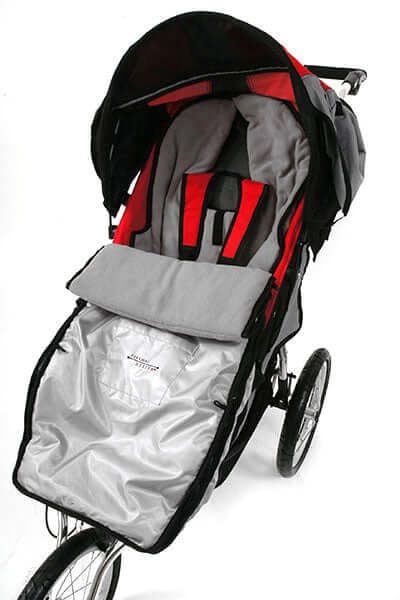
The Special Tomato Jogger All Terrain Stroller is a lightweight adaptive pushchair designed for children who need reliable mobility support without sacrificing comfort, positioning, or maneuverability. Built with a super-light aluminum frame, pneumatic tires, rear suspension, and a reclining padded… read more