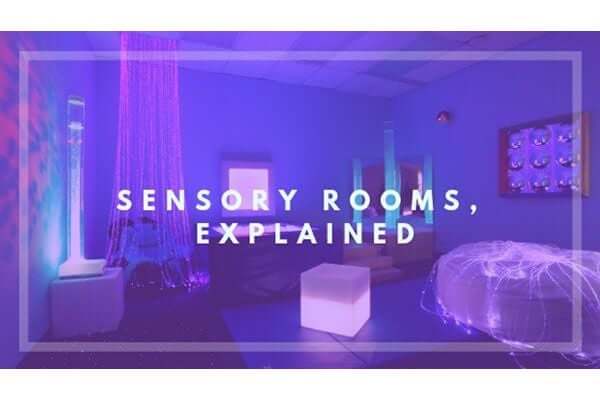
Imagine a softly lit, quiet space filled with captivating lights, soothing sounds, and cozy swings. It's like a playground but intended for taking a breather instead of burning off excess energy. That's right, we're talking about a sensory room or multi-sensory environment. Everything in the space is carefully chosen and placed so that individuals with SPD, ASD, or have difficulties integrating their senses can chill and play in an engaging and calming manner.
History of Sensory Rooms
Sensory rooms have been around for a while. They started in the early 1970s by Dutch therapists Jan Hulsegge and Ad Verheul, whose ultimate goal was to help people with disabilities enjoy their environments by slowly integrating play and sensory experiences.
With the rise of technology and social media, their popularity has grown a lot in recent years. You can find sensory rooms in homes, schools, clinics, nursing homes, and even workplaces nowadays.
Sensory integration, proprioception, and stimming
Sensory rooms are designed to help the following: sensory integration, proprioception, and stimming. All of the aforementioned words are important in understanding the core of what it is that sensory rooms do and how they can help people.
Sensory integration, according to Research Autism, is
"¦an innate neurobiological process and refers to the integration and interpretation of sensory stimulation from the environment by the brain. In contrast, sensory integrative dysfunction is a disorder in which sensory input is not integrated or organized appropriately in the brain and may produce varying degrees of problems in development, information processing, and behavior.
Individuals who have sensory integrative dysfunction are often referred to as "sensory seekers." These individuals who are categorized as sensory seekers are individuals that may be diagnosed with Sensory Processing Disorder (SPD). An individual with SPD may have trouble processing any of the sensory input in different settings. The senses ultimately manifest as signals in our neurological pathways, and those signals might not be interpreted differently than individuals without SPD.
Proprioception is kind of related to sensory integration, in that proprioception is understanding where one's body begins and ends in space based on the interpretation of feedback an individual is receiving from their environment. Many individuals with special needs particularly struggle with proprioceptive feedback because many they have difficulty with sensory processing and sensory integration.
Stimming, otherwise known as self-stimulation, is a by-product of sensory integrative dysfunction. The behaviors liken to that of hand flapping, jumping, rocking, and yes, chewing on everything. These behaviors can be relatively pronounced, frequent, and repetitive behaviors. Individuals often engage in stimming due to the fact that their environment is not providing them with enough sensory stimulation. Sensory rooms provide additional stimulation in a focused and controlled manner.
Who can benefit from a sensory room or a multi-sensory environment?
Short answer, anyone. While these environments are typically associated with children, individuals of all ages and abilities can benefit from a safe space where they can regulate themselves and renew focus. People are starting to take notice of those benefits, too. Sensory rooms used to only be found in homes, clinics, and schools. Now they can be found in nursing homes, workplaces, and public areas like zoos and museums.
Why might an individual benefit from a sensory room?
The reasons why an individual might benefit from a sensory room is ultimately reliant upon the individual sensory needs of the user.
The three things we mentioned in the previous section, sensory integration, proprioception, and stimming are highly benefitted from a sensory space. Sensory seekers can engage with tactile feedback that can stimulate their senses, as well as provide proprioceptive input. For example, a Snug Hug Cozy Swing can benefit all three of the previously mentioned deficits within any individual.
In helping calm the senses, multi-sensory environments can help focus an individual who is otherwise often distracted. Visually and physically engaging an easily distracted individual with their environment has proven to increase their attention span over time.
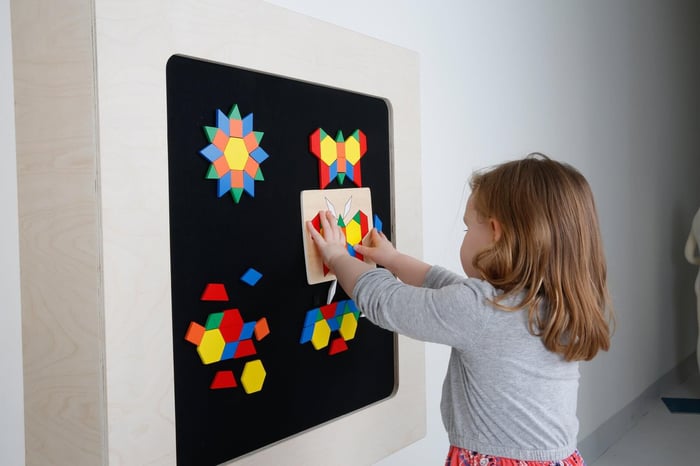
Some of the items in a multi-sensory environment or sensory room can be items that require an individual to engage their fine motor development. For example, kiddos with poor fine motor skills can work on sharpening their dexterity by playing in a ball pit, throwing balls, playing in a sensory sandbox, or engaging in wall panel work.
Sensory rooms provide a much-needed break from the hustle and bustle of real life and engage a child in their most important work"”play"”while also giving them the added benefit of some ninja therapy.
What types of things work well together in a sensory room?
Planning a multi-sensory environment starts with the sensory needs of the intended user or users of that space. Sensory room bundles and kits can be a convenient starting point, but there's really no one-size-fits-all sensory experience. An occupational therapist who can provide a sensory screen can help you pinpoint what items will be most beneficial.
Space is also a consideration. Multi-sensory environments are often defined by how much space can be dedicated to them. That's not to say an entire room is any more effective than a small corner of a home. Smaller spaces just require a little more imagination and forethought as you're planning.
All that being said, here's a quick list of some of the most popular sensory room items at eSpecial Needs.
One of the most engaging and durable items for a sensory room or a multi-sensory space is anything of the fiberoptic category. From a fiberoptic waterfall to a sensory bean bag with a spray of fiber optic lights, fiber optics can fulfill some of the sensory needs of its users.
The gentle, color shifting lights of the LED Glow Panel can cast a calming hue of bright colors across a room. The slow changing effect of the panel can visually stimulate the user as well as provide them with an overall calming effect.
This is the tactile item that engages the user's sense of touch. The small sensory sand pellets are designed for proprioceptive feedback in a way that doesn't stick to the user's skin in the same way that sand sometimes will. Not to mention the sandbox itself shifts colors slowly between a full spectrum of the rainbow.

You can't not have fun with a ball pit in the room. Kids of any age can jump in and have fun. The ball pits are safe, soft, and fun ways to make sure that kids get the sensory integration and proprioceptive feedback that they might need, while also sharpening their hand-eye coordination skills and some fine motor skills.
There are so many things in this world that you're not allowed to jump on, but the crash pad is not one of them. Anyone can flop themselves into the squishy foam of the crash pad and not get in trouble for it. Crashing in a safe manner can help kids improve their proprioception by directly interacting with their environment.
The Opti Aura Projector provides shifting colors and pictures in a calm manner is another great tool to help kids focus. The Multi-Colored Solar Liquid Effect Wheel is consistent, yet ever-changing, in a way that is both surprising and predictable. It casts a calming hue of light across space.
Bubble tubes are one of the coolest and simplest toys in a sensory room. They engage in auditory and visual senses.
You really can't go wrong with a swing. Whether it's a snug hug, a clinical platform swing, or just a good ol' net swing, they're a great way to encourage both proprioceptive feedback, vestibular feedback, and normalize centripetal motion.

Fine motor tools never looked so good. Activity wall panels are a great way to help individuals who need fine motor skills sharpen their dexterity in a fun and engaging way.