Table of Contents
Parents are thrilled by their child's first steps and share the moment with others. A common question physical therapists are asked of children with special needs "Will my child walk?" and "When?" These queries are hard to answer and require a lot of hard work for the child, family, and therapist to give the child independent mobility. Gait trainers are one way to do this.
What and How Does a Gait Trainer Work?
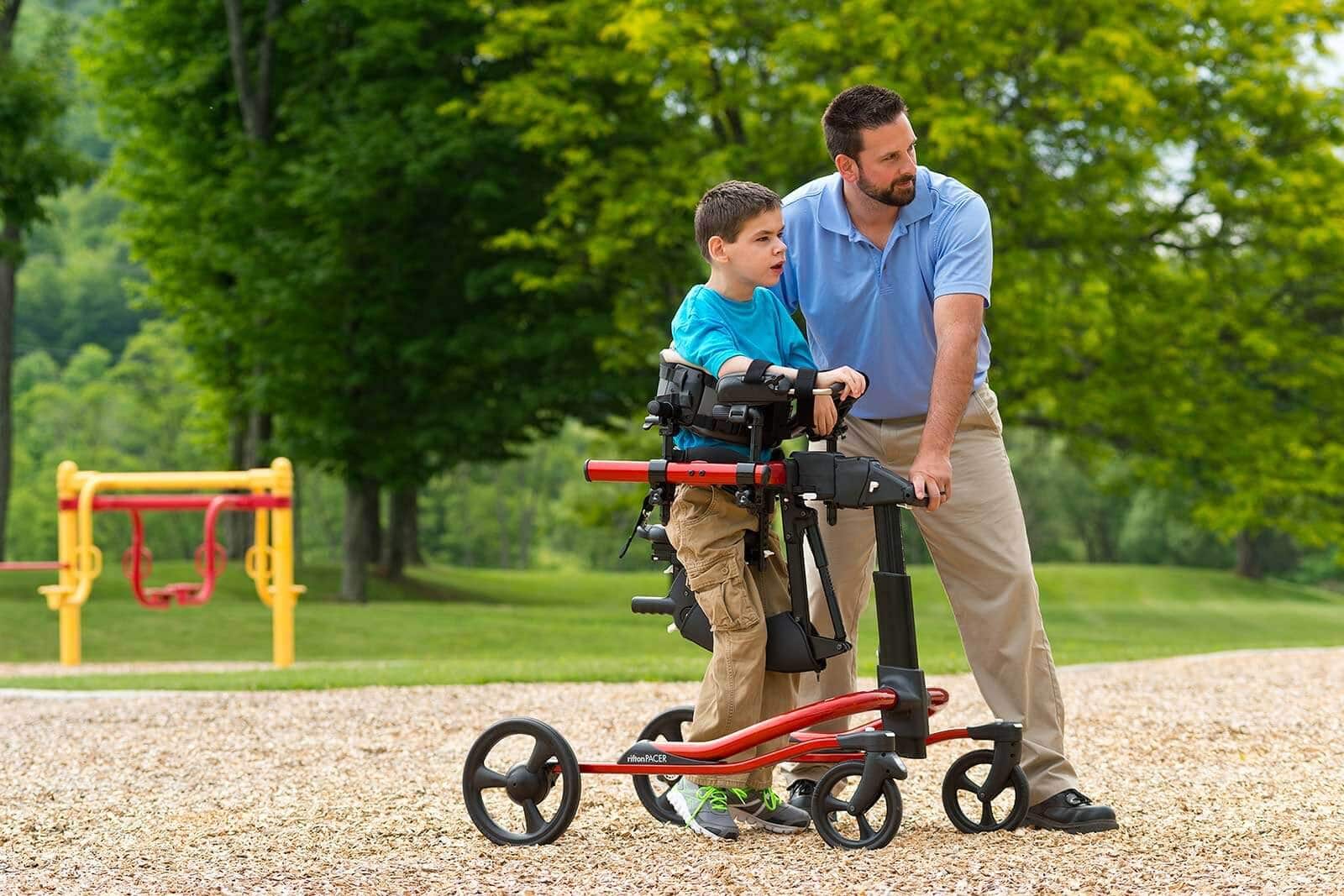
A gait trainer is a device that is used to help individuals learn or improve their ability to walk. It is a type of assistive device that provides support and stability to people who have difficulty standing or walking on their own due to physical disabilities or developmental delays. Gait trainers are often used in physical therapy to help individuals develop strength, balance, and mobility, and can be used by people of all ages.
There are several types of gait trainers available, including walkers, standing frames, and treadmills. Walkers are the most common type of gait trainer and are designed to support the user's weight while they are learning to walk or need additional stability. Standing frames are used to help individuals develop their standing balance and can be adjusted to different levels of support. Treadmills are often used in conjunction with other gait trainers to help individuals practice walking in a controlled environment.
Gait trainers are typically used in physical therapy settings, but can also be used at home to support the user's mobility and independence. It is important to work with an experienced physical therapist to determine the appropriate type of gait trainer and to ensure that it is used safely and effectively.
Why is walking so important?
Walking is an important milestone for children with special needs, as it allows them to explore and interact with their environment in a way that is not possible when they are sitting or lying down. Walking can also improve their physical and cognitive development, as it requires the use of many different muscle groups and cognitive skills.
Independent mobility and walking are critical for urinary and digestive health, preventing contractures, increasing bone density, developing muscles, lung capacity, mental skills, and visual awareness.
Choosing a gait trainer
There are several factors to consider when choosing a gait trainer for a child. These include:
- The child's age and developmental level: Different gait trainers are designed for different age groups and developmental levels. It is important to choose a trainer that is appropriate for your child's age and abilities.
- The child's physical abilities: It is important to choose a gait trainer that provides the right amount of support for your child's needs. This may include support for balance, weight-bearing, or mobility.
- The child's mobility needs: Some gait trainers are designed for children who are just learning to walk, while others are more advanced and can be used by children who have already developed some independent walking skills.
- The child's physical therapy goals: Gait trainers can be used to help children improve their balance, strength, and mobility. It is important to choose a gait trainer that aligns with your child's physical therapy goals.
- The child's comfort and fit: It is important to choose a gait trainer that fits your child well and is comfortable for them to use. Use our Gait Trainer & Walker measurement form to guide you on the important measurements and selections that go into finding the best gait trainer or walker for you or your child.
- It is always a good idea to consult with an experienced physical therapist before choosing a gait trainer for your child. They can help you determine the best type of gait trainer for your child's needs and ensure that it is used safely and effectively.
If you have any questions about choosing the right gait trainer or walker, contact out Customer Support team and they will be happy to guide you.