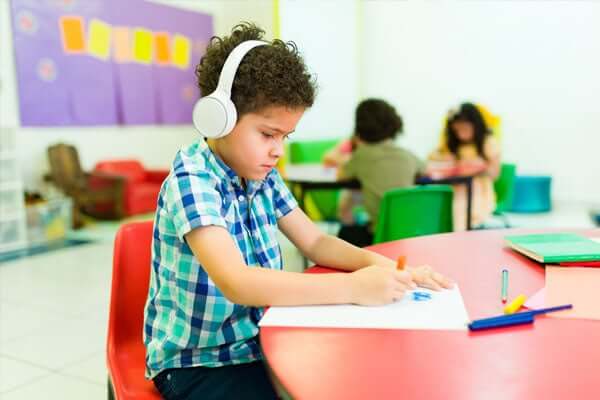
How many times have you seen this scenario? You are out with your child and they start to cover their ears when they hear certain sounds. It may not even have to be a loud sound either. This can then escalate to agitation with the child and even aggression, tantrums or crying. As a father to a 15 year old with autism and extremely sensitive auditory issues, I have seen him cycle through all moods for a variety of sounds that you may not expect. For example, I can take him to a busy, loud shopping mall and this is no problem but put him in the car without the radio on and both ears are covered. Sound sensitivities cause constant anxiety, discomfort and even physical pain for the children (and it's a source of anxiety for the parents since you never know what sound will set the child off). I have seen different approaches to desensitize the problem. One approach has been to find actually recordings or digital files of these sounds and have the child listen to them with headphones. Start the listening with short, low volume increments to benchmark what they can tolerate. It may only be a few seconds. Slowly try to progress the length (5 second increments max.) and volume of the sound. Go as slowly as the child needs in order to build their confidence in handling the sound increases. Headphones and Ear Plugs Sounds that are not typically noticed by others can be troublesome and distracting for children with autism. This can impact their mood and ability to focus on learning in the classroom. I have seen all types of headphones and earplugs on kids with auditory issues. My son has used both styles with a lot of success. The headphone style typically have some sort of foam behind the ear cup to act as a baffle to reduce the sound. These styles completely cover the ear of the child and can typically provide relief to the child. Earplugs are designed with a soft, squishy foam which are designed to be inserted into the ear of the child. Some children are very sensitive to having their ears touched, much less, putting something (other than their fingers) inside of them. These foam earplugs are typically connected by a string so they can hang around the neck and are very inexpensive. The foam earplugs are considered more age appropriate for older kids since they do not stand out and work very well for reducing noise. They are also small enough for you to keep extra pairs in the car or your pocket just in case the child leaves their pair at home or gets lost. MP3 Players and Headphones Another recommendation is to consider investing in an MP3 player. My son has really gotten into music (especially songs heavy on the drums). Find out the type of music your child likes (whether it is nursery songs or pop music) and try downloading them onto a MP3 player. MP3 players are so inexpensive now "“ my son uses an iPod Shuffle which are $49 now. They are easy to use, have a long battery life and don't have the involved touch screen. You can choose from headphones that either cover the ear or insert inside the ear (both styles are also available with noise cancelling features that work even better). Make sure the music is turned down low. I have found that my son now has the benefits of the earphones inside the ear (even without the music on) and he can then listen to his favorite songs and dance around the room. I can't explain why this does not produce discomfort in his ears but he thoroughly enjoys it. It may not work for every child so approach carefully with them. It may be a slow progress to get them even interested.
Auditory Issues with Children with Autism
Listen to article
Audio generated by DropInBlog's Blog Voice AI™ may have slight pronunciation nuances. Learn more